
A 2.1kW tabletop electric patio heater with a rattan base is a genuinely useful bit of outdoor kit for small patios, balconies, and covered seating areas, but it works best when you know exactly what it can and can't do. At 2.1kW, you're looking at a heater designed to warm people sitting within about 2 to 3 metres of it, not an entire garden space. The rattan base gives it a furniture-friendly look that blends into most outdoor setups, and the tabletop format means no floor space lost and no freestanding poles to trip over. If that matches your setup, this style of heater is one of the most practical compact electric options on the market right now. If you are specifically considering the Kettler Universal Lantern Patio Heater 80cm, it helps to look at the latest reviews to confirm performance and build quality for real outdoor use Kettler Universal Lantern Patio Heater 80cm reviews.
2.1kW Tabletop Electric Patio Heater With Rattan Base Buying Guide

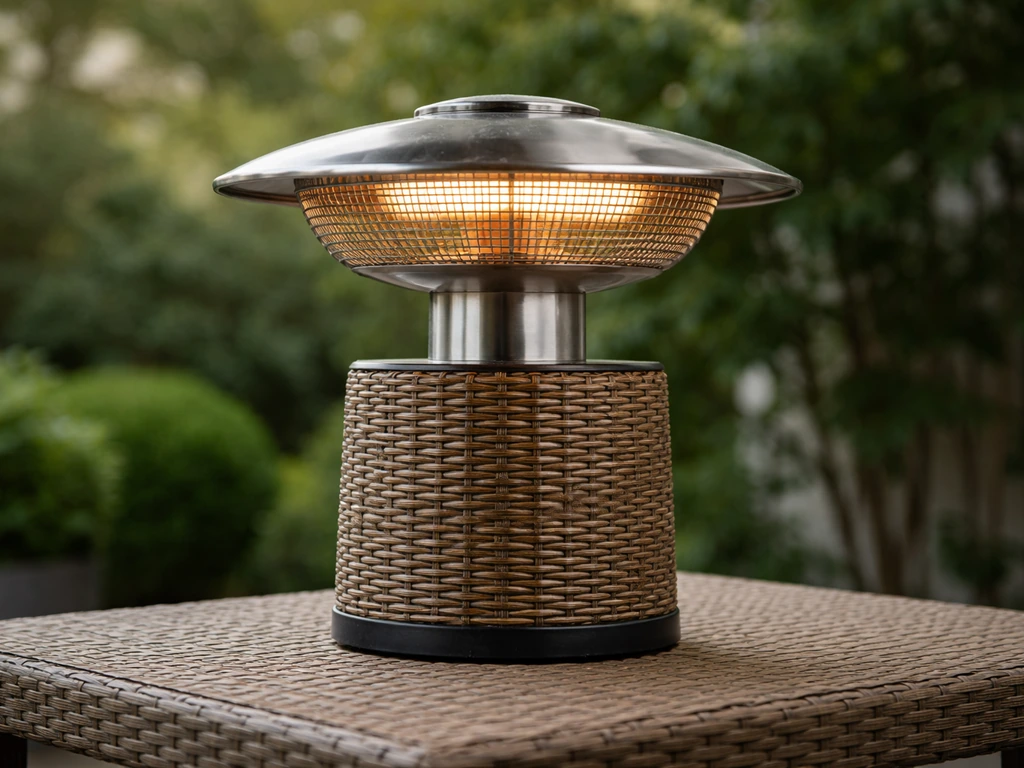
What a 2.1kW tabletop electric heater can realistically heat
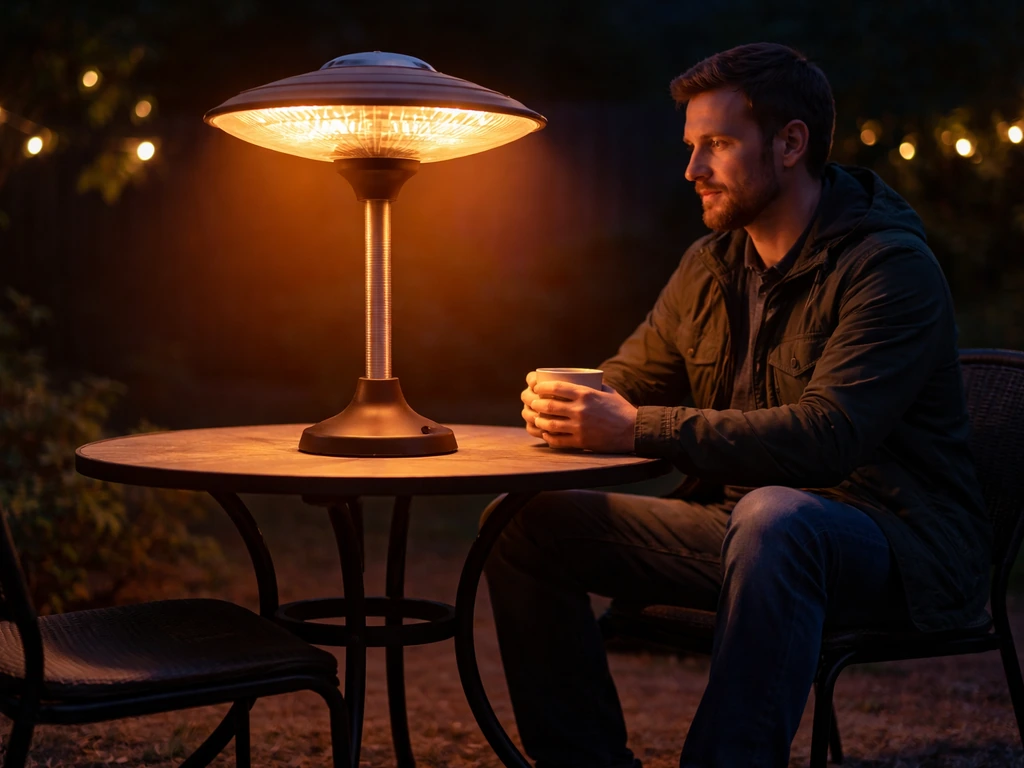
Think of a 2.1kW tabletop heater as a focused personal warmth solution, not a space heater. It's designed to radiate heat downward and outward from a central table position, typically covering a seating area of around 4 to 6 square metres effectively. In practice, that means four people sitting around a dining or bistro table will feel the benefit, but anyone beyond about 2.5 metres away will notice a sharp drop-off in warmth.
How quickly it warms depends on the element type. Most 2.1kW tabletop models use infrared technology, which heats people and surfaces directly rather than heating the surrounding air. That means you feel the heat within seconds of switching it on, which is a real advantage outdoors where warming the air is essentially pointless. Don't expect it to cope with a large exposed patio in January, though. This is a spring-through-autumn heater, or a year-round option for covered, sheltered spaces.
Infrared vs other electric patio heating styles (and how it actually feels)
Most tabletop electric patio heaters at this wattage use one of two technologies: infrared (usually halogen or quartz elements) or convective heat (a fan-assisted element). The difference in how they feel outdoors is significant, and it's worth understanding before you buy.
Infrared heaters work like sunshine. They emit radiant heat that travels in a straight line and warms whatever it hits, whether that's your arms, a tabletop, or the back of a chair. One example is the Heat Outdoors Shadow Diffusion 2.1kW tabletop model, which uses a quartz halogen lamp with a tungsten element. This kind of direct radiant heat is exactly what you want outdoors because wind can't carry it away. You feel it even on a breezy evening because the heat is absorbed by your body, not dispersed into the air around you.
Convective heaters, by contrast, warm the air. Outdoors, that warm air just drifts off the moment there's any movement. They're better suited to enclosed or semi-enclosed spaces like a glazed veranda. For a typical open patio, infrared wins every time. The one minor trade-off with halogen infrared elements is the visible orange glow they produce. Some people find this atmospheric, others find it a bit harsh. If glare bothers you, look for models marketed as 'low glow' or 'shadow' heaters, which use diffusion filters or carbon elements to reduce visible light while maintaining the radiant warmth.
Key specs to check on rattan-base tabletop models
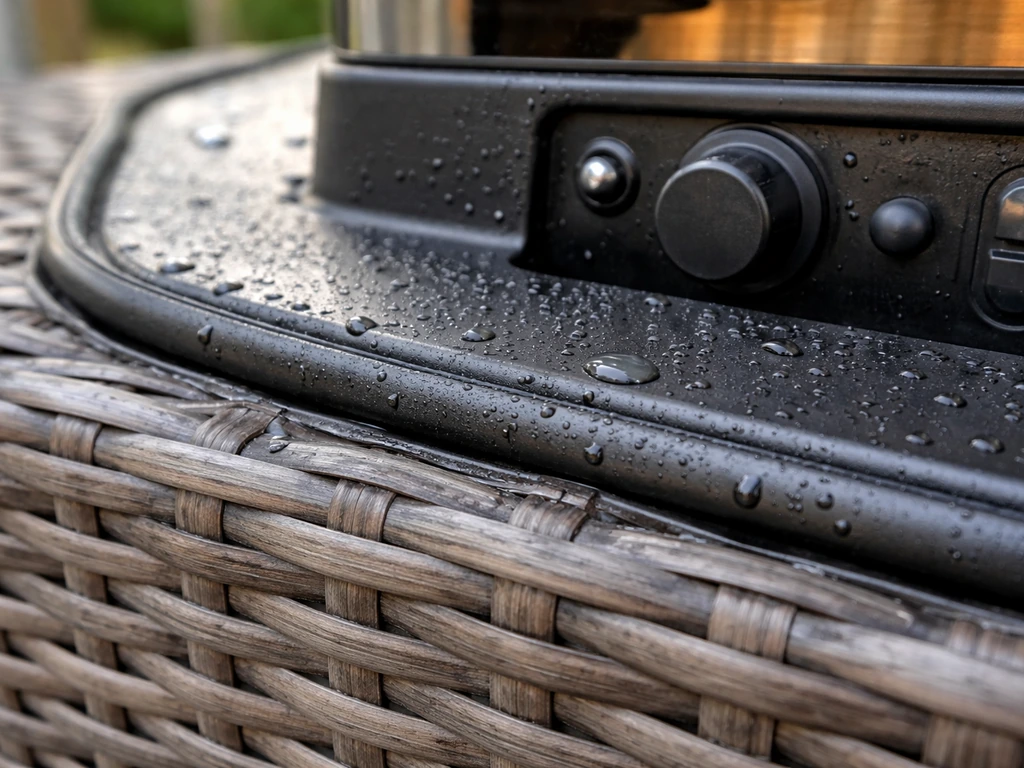
IP rating and weather resistance
For any outdoor electric heater, the IP (Ingress Protection) rating is non-negotiable. The minimum you want for a patio heater is IPX4, which means the unit is splash-proof and can handle rain coming from multiple directions. The Heat Outdoors Shadow Diffusion 2.1kW tabletop model is rated IPX4, which puts it at the baseline for outdoor use. If you're placing a heater in a spot that gets direct rain or heavy condensation, consider looking for IPX5 or above. Never use a heater rated only for indoor use on a patio, regardless of how sheltered it seems.
Safety features
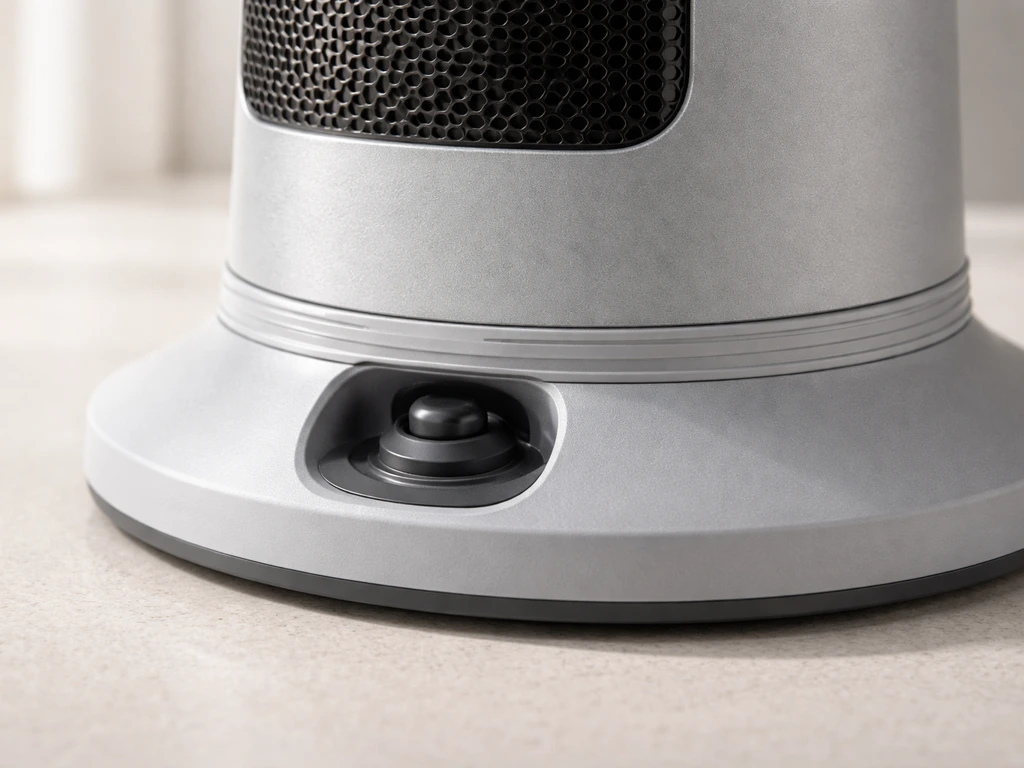
Tabletop placement introduces specific safety considerations that floor-standing models don't face in the same way. Check these before buying:
- Tip-over protection: an automatic cut-off that triggers if the heater is knocked over, essential for a tabletop unit
- Cool-touch housing: the outer casing should stay at a safe temperature during use, especially if children or pets are nearby
- Protective guard or grille: covers the heating element to prevent accidental contact
- Overheat protection: shuts the unit down if internal temperatures exceed safe limits
- Stable base design: the rattan base needs to be weighted or wide enough that it won't topple on a small table
Rattan base: real vs synthetic
The 'rattan' on most of these heaters is synthetic resin wicker, not natural rattan cane. That's actually a good thing for outdoor use. Natural rattan absorbs moisture, can crack in frost, and discolours over a season or two outdoors. Synthetic rattan (polyethylene or similar resin weave) handles rain, UV exposure, and temperature changes far better and is much easier to wipe clean. When a product page says 'rattan base,' always check whether it specifies 'synthetic,' 'resin wicker,' or 'poly rattan.' If it doesn't say, assume synthetic and confirm with the retailer. The weave pattern and density also matter: a looser weave lets water collect in the base, while a tighter finish tends to drain and dry faster.
Energy use and running cost basics
A 2.1kW heater running continuously uses 2.1 units of electricity per hour. At an average UK electricity rate of around 24p per kWh (as of mid-2026), that works out to roughly 50p per hour at full power. Many models include multiple heat settings, so if you run at the lower setting (say 1. The Heat Outdoors Shadow Diffusion 2.1kW table-top heater manual describes blank" rel="noopener noreferrer">switching on at a 900W output and using selectable power levels. 05kW), you halve that cost to around 25p per hour. Over a three-hour evening session, you're looking at £1.50 at full power, which is competitive compared to a small gas tabletop heater once you factor in canister costs.
The heater plugs into a standard 13A UK socket, so no special wiring is needed. That said, always use an outdoor-rated extension lead if you need to extend the cable, and make sure the lead is rated for the wattage. Electrical Safety First advises not to overload an extension lead, so check that the combined load does not exceed the maximum current rating stated on the lead (commonly 13 A, but sometimes lower) always use an outdoor-rated extension lead if you need to extend the cable, and make sure the lead is rated for the wattage.. The standard cord on most tabletop models is between 1.5 and 2 metres, which can be short if your nearest outdoor socket is on a wall behind you. Check the cord length on any specific model before buying; it's one of those specs that rarely makes the headline feature list but matters enormously in practice.
Placement, coverage, and how wind affects performance
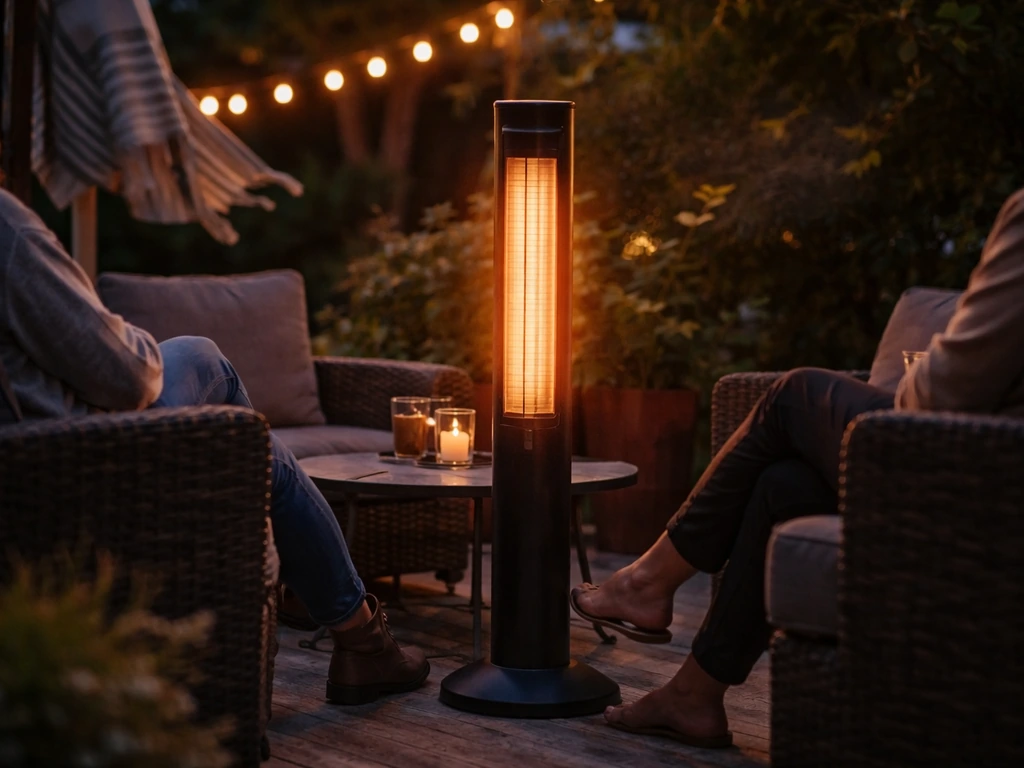
Central table placement is the key advantage of this format. Because the heater sits in the middle of your seating group, the radiant heat reaches everyone roughly equally in all directions. Height matters too: most tabletop heaters work best when the element is around 50 to 80cm above the table surface, which directs warmth down toward seated guests at face and shoulder level. If your table is very low (like a coffee table), the heater may be pointing heat at legs rather than bodies, which is less efficient.
Wind is the biggest performance variable for any outdoor heater. Infrared radiation itself doesn't get blown away, but wind chill rapidly removes heat from your skin surface, effectively competing with the heater's output. On a sheltered patio or covered veranda, a 2.1kW tabletop heater feels noticeably warmer than the same unit in an exposed garden on a windy night. If your space is exposed, consider positioning the heater on the windward side of the table so radiant heat is directed into the wind rather than away from guests. A pergola, wall, or even a freestanding screen on the windward side will make a measurable difference to how effective the heater feels.
For covered patios with a ceiling or pergola overhead, a tabletop heater is genuinely one of the best formats to choose. The radiant heat bounces off nearby surfaces and the enclosed geometry keeps warmth closer to occupants. Compare this to a 4kW tabletop gas heater, which needs more ventilation and has flame-related safety considerations under a roof. If you are looking specifically at a garden glow 4kw table top patio heater, that higher power is usually chosen for more coverage than a 2.1kW electric tabletop model 4kW tabletop gas heater. If you're comparing against a 4kw table top gas patio heater firefly, check the ventilation needs and whether it has flame and tip-over safety features rated for outdoor use 4kW tabletop gas patio heater. The electric tabletop format is simpler, safer under cover, and requires no fuel storage.
How to choose between similar 2.1kW rattan-base models
When two heaters share the same headline specs (2. If you're comparing options, a firefly table top electric patio heater is the kind of model that fits this same compact, targeted heating approach 2.1kW tabletop electric heater. 1kW, tabletop, rattan base, infrared), it's easy to assume they're equivalent. They rarely are. Here's what actually differs between models at this spec level, and what to prioritise.
| Feature | What to look for | Why it matters |
|---|---|---|
| Heater element type | Quartz halogen tungsten or carbon infrared | Carbon elements produce less visible glare; halogen is more common at this price point |
| IP rating | IPX4 minimum; IPX5 preferred for exposed spots | Determines safe outdoor use in rain or condensation |
| Heat settings | 2 or 3 settings (e.g. 1050W and 2100W) | Flexibility for milder evenings and lower running costs |
| Tip-over cut-off | Should be listed as a feature | Non-negotiable safety requirement for tabletop use |
| Cord length | 1.8m or longer preferred | Short cords create trip hazards or force awkward extension lead setups |
| Rattan base material | Synthetic resin wicker specified | Natural rattan degrades outdoors; synthetic lasts significantly longer |
| Protective guard | Mesh or grille over element | Prevents accidental burns from contact with element |
| Warranty | 2 years minimum for UK buyers | Reflects brand confidence and after-sales support quality |
| Weight and dimensions | Check table load capacity matches | Heavier bases are more stable but may be too heavy for some tables |
Brand reputation matters more than you might expect in this product category. Established names in electric patio heating tend to have better quality control on the heating element itself, more rigorous IP testing, and parts available if something goes wrong. Lesser-known imports may hit the same wattage but with cheaper guards, shorter cords, and no meaningful after-sales support. If you're comparing a budget unbranded model against something from a recognised outdoor heating brand, the price gap usually reflects real differences in build quality and safety testing, not just margin.
It's also worth comparing this format against other tabletop options in your budget. A firefly tabletop electric heater or a Kettler tabletop model, for example, may offer different element types, heat settings, or design touches that suit your space better. If you’re specifically shopping around Kettler Kalos models, it also helps to read dedicated Kettler Kalos patio heater reviews to compare real-world warmth and build quality Kettler tabletop model. It’s also worth paying attention to the heat output and controls on a fire sense patio heater table top model so it matches your patio size and how windy your space is firefly tabletop electric heater. Similarly, if you're considering stepping up in power, a 4kW tabletop heater covers a significantly larger area, though it draws more power and costs more to run per hour. For most small to medium patio tables seating four, 2.1kW is genuinely sufficient in a sheltered or semi-sheltered spot.
Maintenance, storage, and keeping rattan bases in good shape
Electric patio heaters are lower maintenance than gas models, but they still need regular attention to stay safe and look good. The rattan base is usually the part that shows age first, so it's worth protecting it properly from the start.
- Cover the heater when not in use: a fitted outdoor cover or a breathable furniture cover keeps moisture out of the element housing and prevents the base from fading or collecting algae over winter
- Wipe the rattan base monthly with a damp cloth and mild detergent: for synthetic rattan, avoid abrasive cleaners that scratch the resin coating; for any dirt trapped in the weave, a soft brush or old toothbrush works well
- Check the heating element and guard seasonally: look for any signs of discolouration on the quartz tube, cracks in the guard, or loose fixings around the element housing
- Inspect the cord and plug before each season: look for any cracking in the cable insulation, especially near the plug and where the cord enters the heater housing; replace immediately if damaged
- Store indoors over winter if possible: even a well-rated IPX4 heater will last longer if stored out of prolonged frost and standing water; a garage or shed is fine
- Avoid pressure washing: the IPX4 rating covers splashwater, not high-pressure jets; pressure washing can force water into the element housing and damage internal components
One thing people often overlook is the connection between the heater head and the rattan base. On most models, this is a screw or clip fitting, and the threads or clips can corrode or loosen over a season of outdoor use. Check this joint at the start of each season and tighten or lubricate as needed. A wobbling heater head on a tabletop is a stability risk, particularly if the table itself isn't perfectly level.
Overall, a 2.1kW tabletop electric heater with a rattan base is a smart, low-fuss choice for anyone who wants practical outdoor warmth without gas canisters, permanent installation, or large footprint. If you're specifically comparing it with a 4kw table top patio heater, pay attention to coverage area and how much more power you will be drawing. Verify the IP rating, confirm the base is synthetic rattan, check the cord length suits your setup, and make sure tip-over protection is listed. Do those four things and you'll be choosing between genuinely solid options rather than hoping for the best.
FAQ
Is 2.1kW enough for a 6-person table, or should I size up to 4kW?
If your seating is within roughly 2 to 3 metres, 2.1kW can work for 4 people, with diminishing warmth further out. For 6 people, the deciding factor is table geometry and how exposed the space is, if you have wind or people will sit at the outer edge often, 4kW is usually the safer choice.
Do I need a special outdoor socket, or will a normal UK 13A socket work?
A normal 13A socket is fine if it is outdoors-rated (or under an outdoor cover) and protected by a suitable RCD/GFCI device. Avoid using indoor sockets without weather protection, and never run an extension lead across areas where it can get wet, stepped on, or damaged.
What extension lead should I use, and how long can it be?
Use an outdoor-rated extension lead with a sufficient current rating for the heater’s wattage, shorter is better because voltage drop can reduce performance. If the cable feels warm during operation or the heater cycles, switch to a shorter lead and check for damage before continuing.
How do I tell if the heater is truly infrared and not fan-based convection?
Look for element language such as halogen, quartz, or “radiant” for infrared, and “fan” or “convective” for air heating. The feel will differ immediately outdoors, infrared should warm people quickly even in light wind, convection will feel weaker when air movement is present.
Will the rattan base handle winter frost and rain?
It depends on whether the base is synthetic resin wicker rather than natural rattan cane. Synthetic rattan typically withstands rain and UV better and cleans easily, if the listing does not explicitly say synthetic or resin, confirm with the retailer before relying on it outdoors in cold months.
Is “IPX4” enough, or should I aim for IPX5 or IP65?
IPX4 is a baseline for splash resistance, if the heater will be under heavy rain, close to downpours, or exposed to frequent condensation, IPX5 or higher is the safer target. Avoid using heaters with no outdoor-grade IP rating, even if the location seems sheltered.
Do I need tip-over protection, and what should I look for?
Yes, it’s important for tabletop units, look for a clearly stated tip-over shutoff or stability feature in the product specs. Also make sure the table surface is level, a wobbling setup can defeat the intended safety design.
How high should the heater be above the table for best comfort?
Aim for roughly 50 to 80 cm between the element and the tabletop, if your table is very low, the radiant heat may hit legs more than faces and feel less effective. If adjustable height is not available, choose a table height that matches the heater’s intended mounting.
Why does my heater seem weak even though it is 2.1kW?
Common causes are wind exposure, placing the heater too far from seated positions, or glare-diffusion features that reduce visible glow. Also check that you are using the correct heat setting and that the head is securely fastened to prevent alignment issues.
Can I leave it outdoors all year, especially with the rattan base?
You can use it year-round only if the sheltering conditions are suitable and it has the correct IP rating, but it is still best practice to cover or store it during severe weather. Protect the rattan base and keep water out of the head-to-base connection area to reduce corrosion.
How much electricity will it actually cost for my typical evening?
At full power, 2.1kW running for one hour is about 0.050 kWh per half hour? (To keep it simple, the article’s estimate is about 50p per hour at 24p per kWh.) Use the heater’s setting to estimate real cost, for example half power is about half the hourly cost, and remember that cycles or reduced settings can lower it further.
What maintenance should I do each season to keep it safe?
Before each season, inspect the cable and plug, check the rattan base and the heater head mounting joint for looseness, and clean the weave so water does not pool. If you notice corrosion at the connection, address it before use, do not operate a unit that wobbles.