
The Kettler Universal Lantern Patio Heater in the 80cm size is a 1500W electric halogen heater that warms a roughly 2-metre radius around it. It plugs into a standard 220–240V outlet, has a touch-screen switch, a tilt cut-off safety mechanism, and an IP55 weatherproof rating. For a small patio table or a compact seating corner, it genuinely does the job on calm evenings. On a breezy or open deck, the warmth dissipates quickly and you'll feel the limits of 1500W pretty fast.
Kettler Universal Lantern Patio Heater 80cm Reviews

Willa Brennan
8 Jun 2026
What the Kettler Universal Lantern heater actually is (and who it suits)
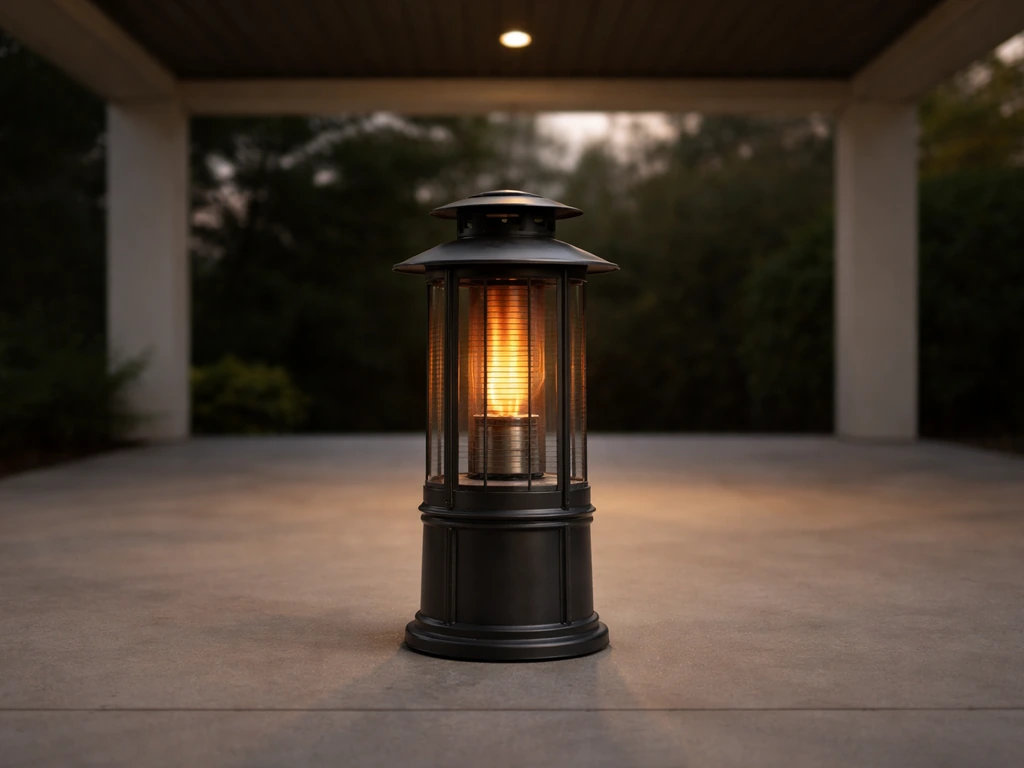
This heater sits under Kettler's "Kalos" product line and carries the model code KLEH123-0300. The 80cm is the largest of three sizes (50cm, 65cm, and 80cm) in the same family. Aesthetically it looks like a traditional garden lantern, which is clearly the whole point: it blends into a patio rather than looking like a piece of industrial equipment. The lantern housing holds a single frost halogen heating lamp that glows a warm amber colour when running.
It's aimed squarely at homeowners who want something that looks good on a small outdoor dining table or placed on a flat surface beside garden seating. If your priority is atmosphere as much as warmth, the lantern design delivers that. If you're trying to heat a large terrace or keep guests comfortable outside in October, it will struggle. Think of it as a supplement to a light jacket rather than a replacement for a more powerful stand-alone heater.
- Best for: small patios, bistro-style tables, sheltered seating corners, balconies
- Less suited to: large open decks, exposed garden areas, or spaces needing coverage beyond 2 metres
- Ideal user: someone who wants a heater that doubles as a design feature and doesn't want to deal with gas cylinders
Key specs broken down
Here's what the official spec sheet actually lists for the 80cm KLEH123-0300. I've added plain-English context next to each so you know what the numbers mean in practice.
| Spec | Value | What it means for you |
|---|---|---|
| Heat output | 1500W | Enough for personal warmth in a small, calm outdoor space |
| Heat type | Single frost halogen lamp | Radiant heat — warms objects and people directly, not the surrounding air |
| Power supply | 220–240V ~ 50Hz, Class I | Standard UK/EU plug, no special wiring needed |
| Cable length | 1.8m | Keep your power source close; may need an extension lead |
| Coverage radius | 2 metres (per heat distribution chart) | Best experienced within 1–1.5m; warmth noticeably drops off beyond 2m |
| Safety feature | Tilt cut-off mechanism | Shuts off if knocked over — important on a table or windy evening |
| Controls | Touch-screen switch | Simple, no remote; you'll need to reach the unit to adjust |
| IP rating | IP55 | Protected against dust and water jets — fine outdoors, not submersible |
| Warranty | 12 months | Standard for this category |
| Height | 80cm | Tallest in the Kalos lantern range; more presence on a table or floor surface |
The halogen element is worth understanding before you buy. Unlike infrared ceramic heaters, halogen produces visible light alongside its heat. The amber glow adds to the ambience but it also means the heater is emitting light the whole time it's on, which some people love and others find intrusive at night.
Unboxing, setup, and getting it running
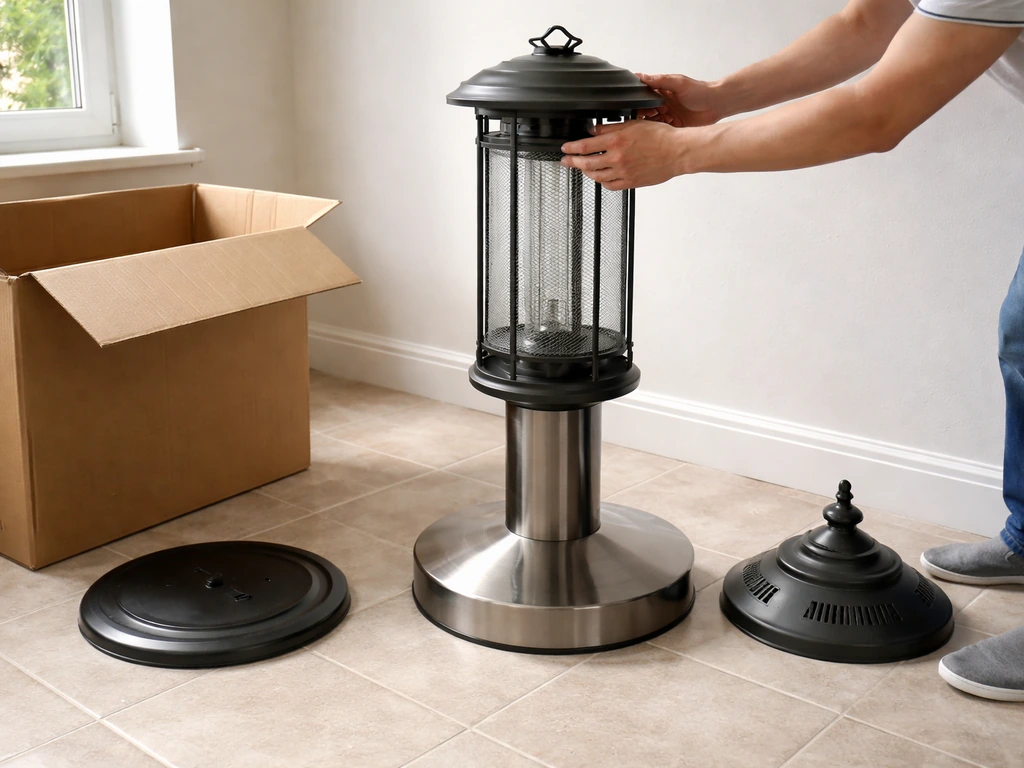
Assembly is genuinely straightforward. The 80cm unit arrives mostly pre-assembled in a few sections: the base, the lantern body, and the top cap. You slot them together and secure with a couple of hand-tightened fixings. No tools are required, and most people have it standing and ready to plug in within 15–20 minutes. The instruction booklet (which covers both the 65cm and 80cm variants under KLEH122/KLEH123-0300) is clear enough, though the diagrams are small.
Where to place it
Placement makes a big difference with this heater. Because the 1.8m cable is fairly short, you'll need an outdoor-rated extension lead if your socket isn't right next to your seating area. For a table-top setup, the 80cm height works best on a large dining table or low surface where the lamp sits roughly at or just above seated eye level, projecting heat outward and downward toward people. On the floor, it's a bit short to cast heat across the whole seating zone of a standard garden chair, so positioning it close to where people sit matters.
Covered patios (a pergola, awning, or lean-to) are where this heater earns its keep. The overhead cover stops wind from stripping away the radiant warmth and means the heat distribution chart's 2-metre radius is achievable. On a fully open patio, you'll notice the effective range shrinking to around 1 metre or less whenever a breeze picks up. The tilt cut-off is a genuine safety asset if you place it on a table where someone might bump it.
Operating it day to day
You touch the switch on the unit to turn it on and off. There's no thermostat and no remote control. The manual is explicit that it's not designed to regulate room temperature, so you're essentially running it at 1500W whenever it's on. That simplicity is fine for a heater you're switching on for a couple of hours in the evening, but it does mean you can't dial back the output if it gets too warm or too cold. It's full power or nothing.
Heating performance: what it's like to actually sit next to it
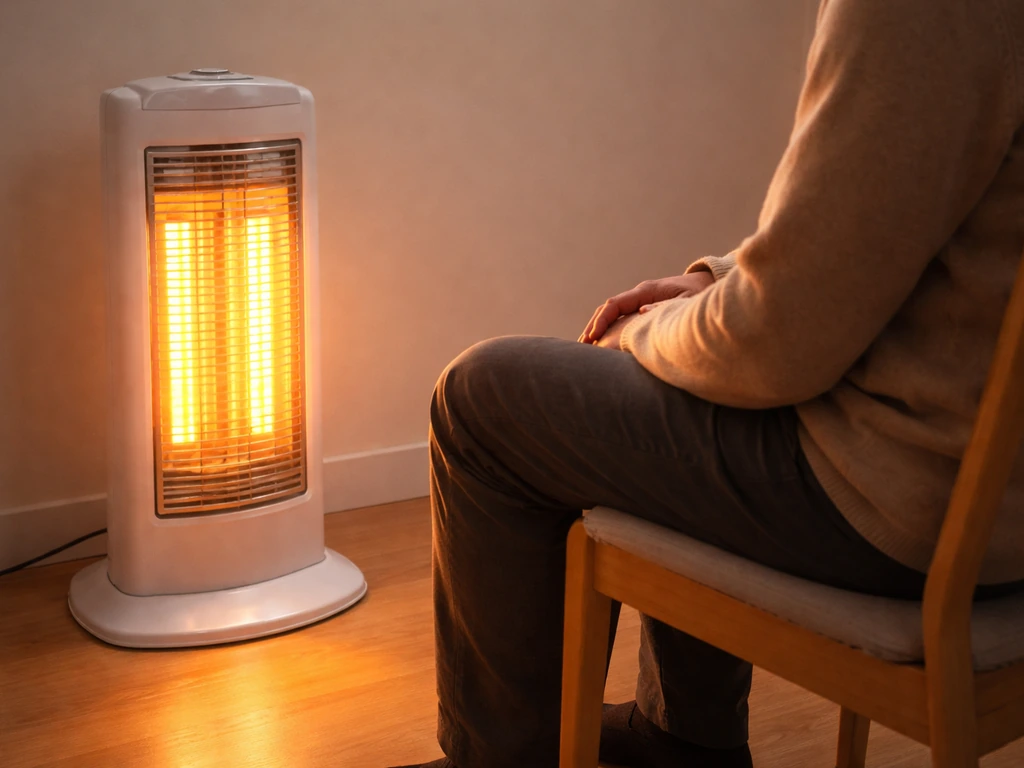
At 1 metre, the warmth from the halogen element is immediate and noticeable within seconds of switching on. That's one of the real advantages of radiant halogen over fan or convection heaters: there's no warm-up lag. Within a 1–1.5 metre bubble in calm conditions, two people sitting at a bistro table will feel genuinely comfortable on a cool autumn evening in the 10–15°C range. The heat distribution chart (tested at 20°C ambient) shows the temperature increase falls off progressively with distance, so sitting 2 metres away gives you a noticeably lighter warmth.
Wind is the enemy. Radiant heat warms surfaces and skin directly rather than warming the surrounding air, which is normally a strength because it's efficient and instant. But even a moderate breeze will cool your exposed skin faster than 1500W can compensate at distance. In a sheltered corner or under a canopy you'll be genuinely warm. In an exposed garden on a September evening with any wind at all, 1500W at 80cm height starts to feel insufficient for more than one person sitting right next to it.
Efficiency-wise, 1500W running continuously at UK electricity rates costs roughly 30–40p per hour at current 2026 prices. That's broadly comparable to a 4kW tabletop gas heater costing around 30–40p per hour in gas, so neither option is obviously cheaper to run. The electric advantage is the lack of refills or cylinder faff.
Design, safety, and keeping it in good shape
The lantern aesthetic is genuinely attractive. The Kalos series has a clean, traditional style that looks at home next to rattan or wooden garden furniture. The 80cm height gives it enough presence to be a feature piece on a table or as a floor accent beside a seat. The amber glow when running adds warmth visually as well as physically.
Safety features
- Tilt cut-off: the heater automatically shuts off if tilted or knocked over, which is reassuring on a table surface
- IP55 rating: fine in rain and outdoor conditions, but don't submerge it or leave it standing in pooled water
- Class I insulation: standard earthed plug safety
- No thermostat: it can't overheat a space or create fire risk from overheating air, but the manual warns against use in small enclosed spaces without supervision
Maintenance and weather durability
Maintenance is minimal. The halogen bulb is the main consumable: halogen elements have a finite lifespan, typically in the range of 2,000–5,000 hours of use. If the lamp goes dark before any other issue appears, that's the first thing to check and replace. Keep the glass panels clean, dust and grime on the glass reduce heat and light output. The IP55 rating means it can stay outside during rain, but covering or storing it over winter will extend the life of the lamp and the finish significantly. The metal lantern body is reasonably robust, but the finish can show wear if left out year-round.
How it compares to other patio heater options
The honest comparison depends on your priorities. The Kettler Universal Lantern is neither the most powerful nor the most economical heater in its class, but it might be exactly right if design matters as much as raw performance.
| Heater type | Typical output | Best for | Trade-offs |
|---|---|---|---|
| Kettler Universal Lantern 80cm (electric halogen) | 1500W | Small covered patios, design-conscious buyers | Limited range, no thermostat, wind-sensitive |
| 4kW tabletop gas (e.g. Firefly, Garden Glow) | 4000W | Larger tables, open spaces, more people | Gas cylinder refills, heavier, no visual charm |
| Electric infrared tabletop heater | 1200–2000W | Covered patios, targeted warmth | Less ambient glow, often more clinical looking |
| Propane freestanding heater | 10–13kW | Large open patios, garden parties | Bulky, cylinder cost, needs more space |
| Natural gas heater | 10–15kW | Permanent installs, very large spaces | Fixed install, not portable, higher upfront cost |
| Pellet heater | Variable | Long sessions, rustic settings | Complex fuel management, not instant-on |
If you're comparing this directly to other tabletop options, a 4kW gas heater like those in the Firefly or Garden Glow range will heat a larger area and handle wind much better. If you’re specifically looking for a Firefly table top electric patio heater, it’s worth comparing the wattage and heat coverage side by side with this Kettler. If you want a high-output 4kw table top patio heater for larger areas or windy patios, a 4kW gas model is typically a better match than 1500W electric lanterns a 4kW gas heater. For a larger, wind-resistant setup, a garden glow 4kw table top patio heater can be a better fit than a smaller electric lantern style. The trade-off is that gas tabletop heaters are heavier and less decorative. If the lantern look is what you want but you also need more heat, it's worth looking at the Kettler Kalos range, which shares the same design language but in a full freestanding format. If you want an alternative in the same tabletop category, a 2.1kw table top electric patio heater with rattan base is another option to consider alongside the lantern style. For something like a 2.1kW tabletop electric heater with a rattan base, you get a more substantial electric output in a similarly styled package, though it loses the classic lantern silhouette.
My honest recommendation: if you have a small, sheltered patio, a covered balcony, or just want a heater that also functions as a garden ornament, the Kettler Universal Lantern 80cm is a genuinely good choice. If you're heating more than 2–3 people in any kind of open space, look at a 4kW gas tabletop heater or step up to a freestanding electric or propane unit.
Common issues, complaints, and how to fix them
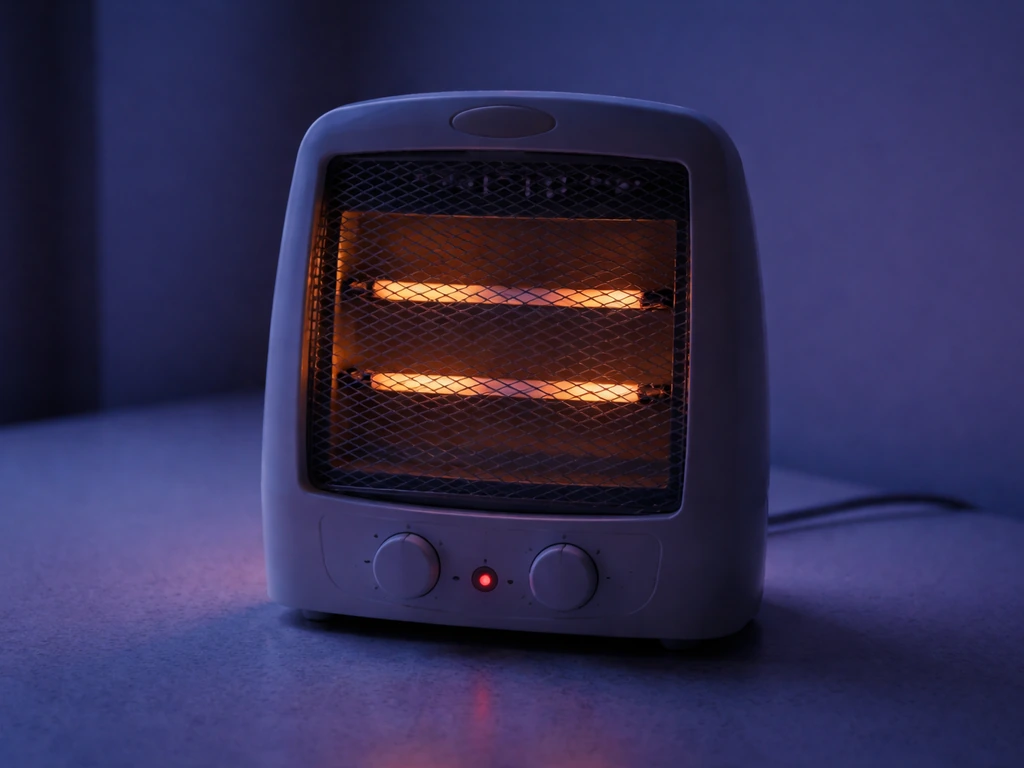
Most complaints that come up around this heater fall into a few predictable categories. Here's what to watch for and what to do.
Heater not producing heat or only glowing faintly
The single halogen lamp is a wear item. If you've had the unit for a season or two of regular use and the glow seems weaker, the lamp is approaching end of life. Check Kettler's replacement parts or a compatible halogen lamp at the correct wattage (1500W) and fitting. Don't try to run the unit with a mismatched bulb, it won't heat correctly and could be a safety issue.
Heater cuts out unexpectedly
The tilt cut-off is sensitive on uneven or soft surfaces. If the heater is on a garden table that flexes when someone leans on it, or on decking that isn't perfectly level, it may trigger the safety cut-off. Stand it on a firm, level surface. If it keeps cutting out even on a flat surface, the tilt sensor itself may need checking under warranty.
Doesn't seem warm enough
This is the most common frustration and it's usually an expectation issue rather than a fault. 1500W is genuinely modest. If you're sitting more than 1.5 metres away, or there's any wind, or the temperature is below about 8–10°C, you'll want more power. This isn't a heater failure, it's the product's physical limit. In those conditions, consider a 4kW gas tabletop unit instead.
Who should probably skip it
- Anyone heating a large terrace or multiple guests spread across a wide area
- People who want one heater to cover an open, exposed garden space in autumn or winter
- Buyers who need a thermostat or remote control for convenience
- Anyone who doesn't have an outdoor socket within roughly 3 metres (the 1.8m cable is short, and long extension leads should be rated for outdoor use)
Is it worth the money?
The Kettler Universal Lantern Patio Heater 80cm sits at a mid-range price point for electric tabletop/floor heaters. You're paying partly for the Kettler name, partly for the design, and partly for solid build quality with a reasonable IP55 rating. For what it is, a 1500W decorative electric lantern heater, it delivers. The heat is instant, the safety features are solid, and it looks genuinely good. If that matches your use case (small covered patio, short sessions, primary concern is ambience plus light warmth), it represents fair value. If you're expecting it to perform like a 4kW gas heater, you'll be disappointed. Buy it for what it is, not what you wish it were.
FAQ
Can I adjust the Kettler Universal Lantern patio heater output or set a temperature?
No, it is not designed to “dial” output, it runs at full power when switched on. If you need to extend comfort time without blasting 1500W continuously, use shorter sessions (for example, 30 to 60 minutes) and position it closer, rather than expecting temperature regulation.
Is the claimed 2-metre heating range realistic on windy evenings?
The warmth radius assumes calm conditions and good placement. In real use, treat the 2-metre figure as a best-case for sheltered patios, and plan for closer seating on open decks, during breezes, or when it is below roughly 10°C.
Will the halogen glow bother people when using it at night?
Because halogen emits visible light while heating, it can be noticeable at night. If you have light-sensitive guests, try placing it where the lamp is angled away from eyes, or use it only for earlier evenings and avoid leaving it on late.
What should I do if the heater keeps switching off during use?
It is safer and more effective to run it on a firm, level, non-flexing surface. If the table top moves (common with some outdoor tables or softer decking), the tilt cut-off may trigger, so use a stable table, a thicker tabletop, or move it to the floor on level ground.
Can I leave the lantern patio heater outside all year?
The IP55 rating helps with rain, but it does not make it “indestructible.” For longest lamp life, avoid storing it uncovered in winter, wipe off grime from the glass panels regularly, and keep it under a cover when not in use.
What extension lead should I use, and how careful do I need to be with cable placement?
Yes, but only if you use the correct outdoor-rated extension lead and keep the connection well away from pooling water. The 1.8 m cable means most issues come from people using the wrong extension type or stretching the cable across walkways where it can be stressed.
How do I troubleshoot a heater that seems less effective over time?
Halogen elements are a wear item, typically lasting a few thousand hours depending on usage patterns. If heat seems weaker and the lamp glow is also diminished, the bulb is the first thing to inspect before assuming the heater has failed.
Can I replace the lamp with any halogen bulb I find, or do I need the exact type?
If it has a single halogen lamp, replacing it with the wrong wattage or an incompatible fitting can reduce performance and may create safety issues. Stick to the correct 1500W replacement for this model or use a compatible part specified for the lamp and socket type.
Will it comfortably heat 3 or more people on an open patio?
This model is most suitable as a supplemental heater for small groups on sheltered patios. For 3 people or more, especially outdoors with airflow, the effective comfort may be limited, so you may need a higher-output heater or a freestanding option to cover a wider area.
If it’s not warm enough, what are my best next steps: repositioning or switching to a different wattage?
The most practical “upgrade” path is to either reposition it closer and lower so the radiant cone hits people directly, or choose a more powerful tabletop heater (often 4 kW) for open areas. If design is the priority, consider the larger Kettler Kalos line rather than expecting the 1500W lantern to perform like gas.