
A 4kW tabletop patio heater is a compact, freestanding heater that sits on a table or low surface and pushes out roughly 4,000 watts (about 13,650 BTU/h) of heat in a focused zone around your seating area. That output is enough to keep two to four people comfortably warm across roughly 80 square feet in a sheltered spot, and it comes in electric infrared, propane gas, and even natural gas versions. If you're trying to pick the right one today, the fuel type matters most, followed by where you're actually placing it and how exposed that spot is to wind.
4kW Tabletop Patio Heater Guide: Coverage, Safety, Costs

Willa Brennan
6 Jul 2026
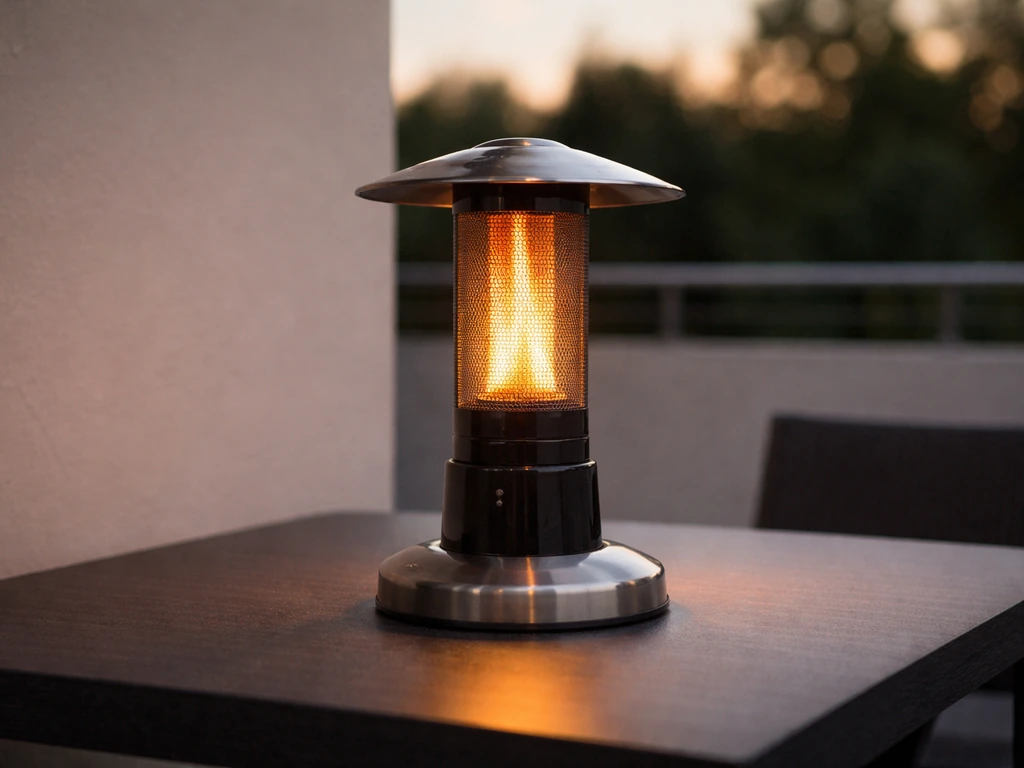
What a 4kW tabletop patio heater actually is (and when it makes sense)
The tabletop form factor is the whole point here. Unlike a tall freestanding patio heater or a wall-mounted unit, a tabletop heater sits right at the center of your gathering, at about the same level as your food and drinks. That means the radiant heat hits people at torso and face level rather than radiating down from six feet above. For small groups around a bistro table, a garden table on a balcony, or a covered patio corner with two to four chairs, that positioning is actually more efficient than a larger overhead unit.
Where a 4kW tabletop unit works well: a sheltered balcony, a small covered patio, an outdoor dining nook, or anywhere you want portable warmth without running a gas line or mounting hardware. Where it struggles: completely open, exposed patios with consistent wind, large open decks where you need to heat 200+ square feet, or situations where people are spread out more than eight to ten feet from the heater.
Fuel type fit: what '4kW' means for electric, propane, gas, and pellet
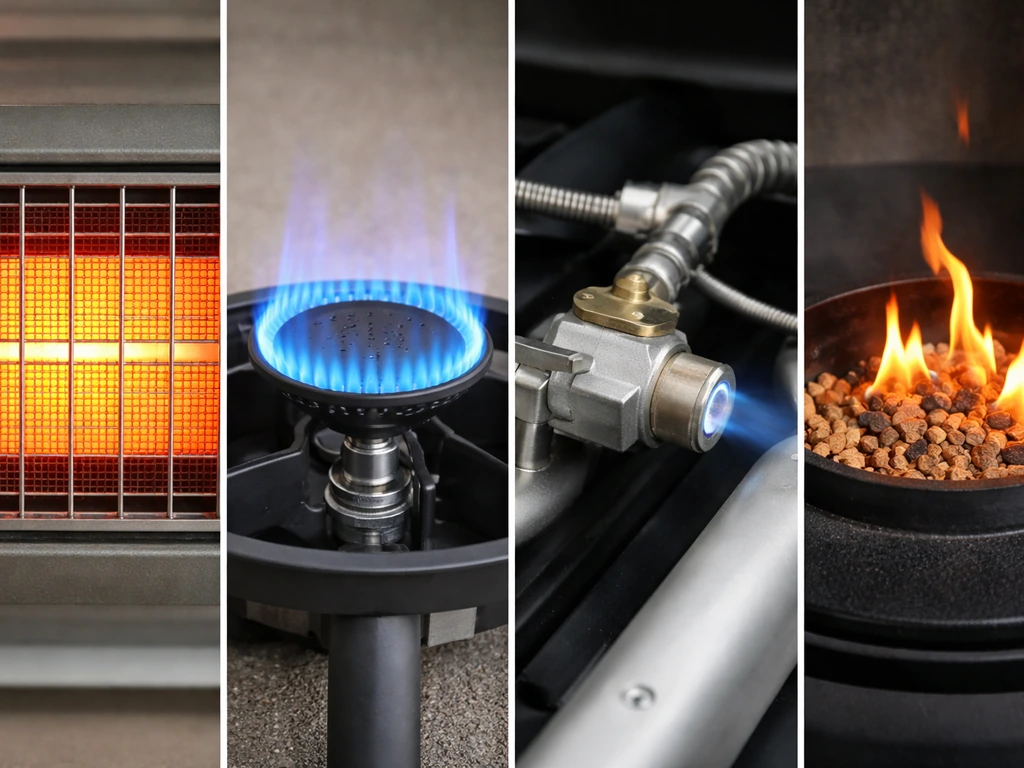
This is where most buyers get confused, and it's worth clearing up before you shop. The number '4kW' means something slightly different depending on the fuel type you're looking at.
Electric infrared (the most common '4kW tabletop')
For electric heaters, 4kW is an exact, verified electrical input figure. A 4000-watt electric infrared tabletop heater (like models in the Eurofase LP40 family) draws precisely 4,000 watts from your outlet, converts nearly all of it to medium-wave infrared radiation, and delivers a rated coverage area of roughly 8 feet by 10 feet (80 sq ft). If you specifically want an electric option, a firefly table top electric patio heater is a practical comparison point alongside other 4kW tabletop infrared models. Medium-wave infrared is the sweet spot for outdoor use: it heats people and objects directly rather than heating the air, so it still feels warm even when there's a light breeze. Running one for an hour costs about the same as running a 4kW appliance on your electricity tariff, which in most parts of the US works out to roughly $0.50 to $0.80 per hour depending on your rate.
Propane and bottled gas tabletop heaters
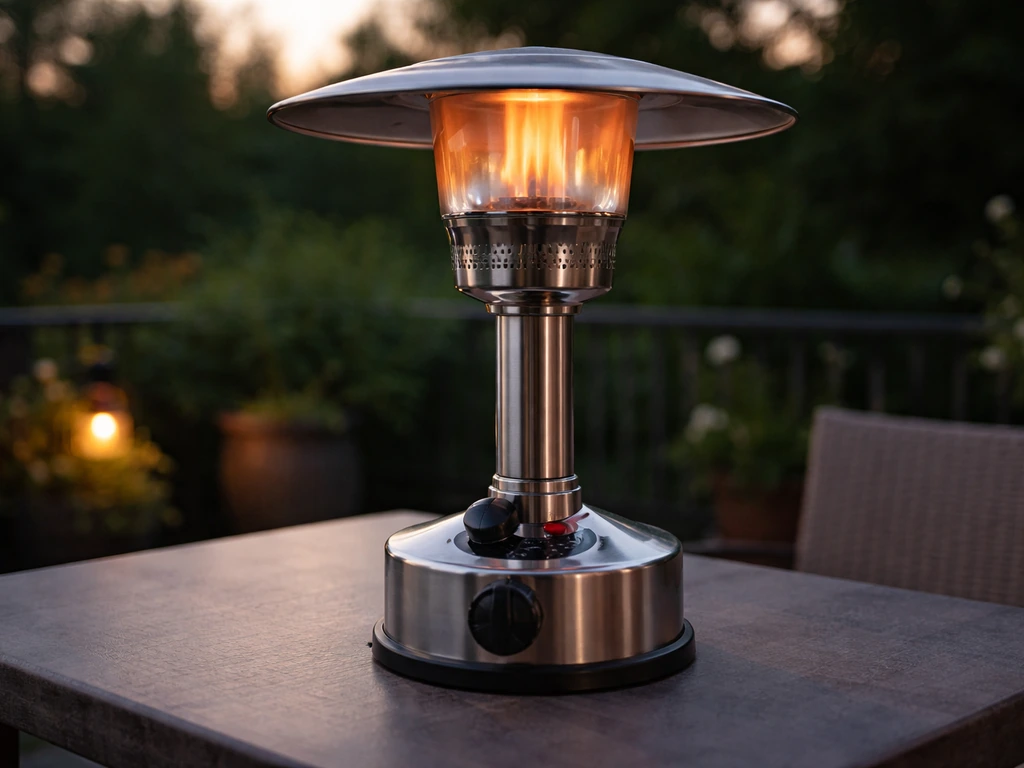
For gas models, 4kW refers to the total heat input rating, not the electrical equivalent. The Sirocco and similar lifestyle-brand gas tabletop heaters rate their output as 4kW total heat input (Hs), with a gas consumption range of roughly 150 to 290 grams per hour depending on the heat setting and the gas type. At full output that's around 290g/h of propane, which means a standard 1kg camping-style gas canister lasts about three to four hours. Because combustion isn't 100% efficient and some heat escapes upward, the usable radiant heat reaching nearby people is a bit lower than the rated 4kW suggests. That said, propane tabletop units are genuinely portable, require no power outlet, and produce a visible flame that many people find appealing. The Firefly 4kW tabletop gas patio heater is a well-known example in this category.
Natural gas tabletop heaters
True natural gas tabletop heaters are less common at this output level because they require a fixed gas line, which partially defeats the purpose of a portable tabletop unit. A Firefly 4kW tabletop gas patio heater is a good option if you want that compact, portable warmth without complicated electric setup 4kW tabletop gas patio heater Firefly. You'll find some in-table fire pit designs that connect to natural gas, but if portability matters to you, propane or electric is the more practical path.
Pellet and wood-burning tabletop options
Pellet and wood-burning tabletop fire bowls exist (Solo Stove markets a Tower pellet heater with a 10-foot radiant heat radius), but these don't produce a measurable, consistent 4kW output in the same way electric or gas heaters do. They're atmospheric and ambiance-focused, not precision heat tools. If you want controllable, consistent warmth you can dial up and down, a dedicated electric or propane 4kW unit beats a pellet burner every time.
| Fuel Type | 4kW Definition | Running Cost (approx.) | Portability | Best For |
|---|---|---|---|---|
| Electric infrared | Exact 4,000W electrical input | $0.50–$0.80/hr | Needs outlet, cord | Covered patios, balconies |
| Propane/bottled gas | Total heat input (Hs) 4kW; ~290g/hr gas use | $0.40–$0.70/hr (canister) | Fully portable, no cord | Open gardens, occasional use |
| Natural gas | Heat input 4kW via fixed line | Low per-hour cost | Not portable | Fixed outdoor dining areas |
| Pellet/wood | No consistent kW rating | Low fuel cost, labor intensive | Portable but messy | Ambiance; not precision heat |
The specs that actually matter when you're comparing models
Manufacturers love to use marketing language that sounds impressive but doesn't tell you much. Here's what to look for in the actual spec sheet or manual.
- Rated heat output: Confirm it's listed as 4kW (or 4,000W / ~13,650 BTU/h). Some models advertise '4kW' on packaging but step down to 3.5kW in the specs.
- Coverage area: Look for a sq ft or sq m figure under actual use conditions. For electric units, 80 sq ft (roughly 8x10 ft) is the realistic target at 4kW with medium-wave infrared.
- Power draw or fuel consumption: For electric, confirm the amperage draw (4kW at 240V draws about 16.7A; at 120V it would need a 33A circuit, which is uncommon, so most 4kW electric tabletop heaters are 240V units). For gas, note grams per hour at max output.
- Infrared technology type (electric): Medium-wave infrared is better for outdoor use than short-wave (quartz) for most tabletop applications. It produces less glare and tolerates slight wind better.
- Controls: Does it have multiple heat settings (e.g., 2kW / 4kW)? A timer or auto-shutoff? A thermostat? These matter for comfort and running costs.
- Tip-over protection: An automatic shutoff when the unit tips is non-negotiable, especially on a table around food and drinks.
- IP (ingress protection) rating: For outdoor use, look for at least IP44 (splash-proof from any direction) on electric units. IP55 or higher is better for uncovered patios.
- Safety certifications: CE marking (UK/EU), ETL or UL listing (North America), or equivalent certification means the unit has been independently tested.
- Ignition type (gas): Piezo push-button ignition is more reliable than match-light on a dark patio.
- Noise level: Electric infrared units are silent. Gas units produce a low hiss. Some electric fan-assisted models can be noticeable in quiet outdoor settings.
Placement and setup: getting the most warmth out of your 4kW unit
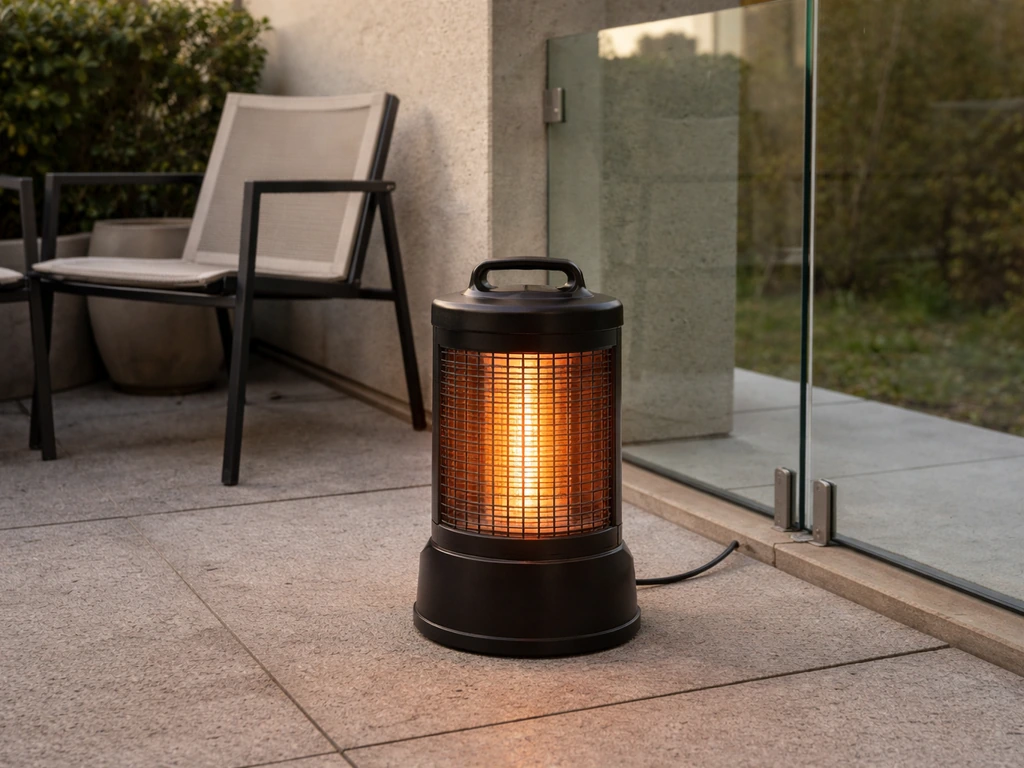
Where and how you place a tabletop heater has as much impact on perceived warmth as the wattage itself. A 4kW unit in a windy exposed yard can feel weaker than a 2kW unit in a sheltered corner, and that's not exaggeration.
Wind is the biggest variable
Most electric infrared heater performance guides note that effectiveness drops noticeably above about 5 MPH wind. Electric infrared heater application charts note that wind can reduce effectiveness, with performance diminishing above about 5 MPH, which means coverage depends on distance and conditions blank" rel="noopener noreferrer">effectiveness drops noticeably above about 5 MPH. Propane tabletop heater manuals (including Fire Sense models) typically state you should not operate the heater if wind velocity exceeds 10 MPH. Above those thresholds, the radiant heat is dispersed before it reaches people, and for gas units, the flame itself can become unstable. If your patio is regularly breezy, a covered or partially enclosed space makes a 4kW unit far more effective, and a windbreak (fence, wall, screen, or hedge) makes a measurable difference.
Distance from the heater to seating
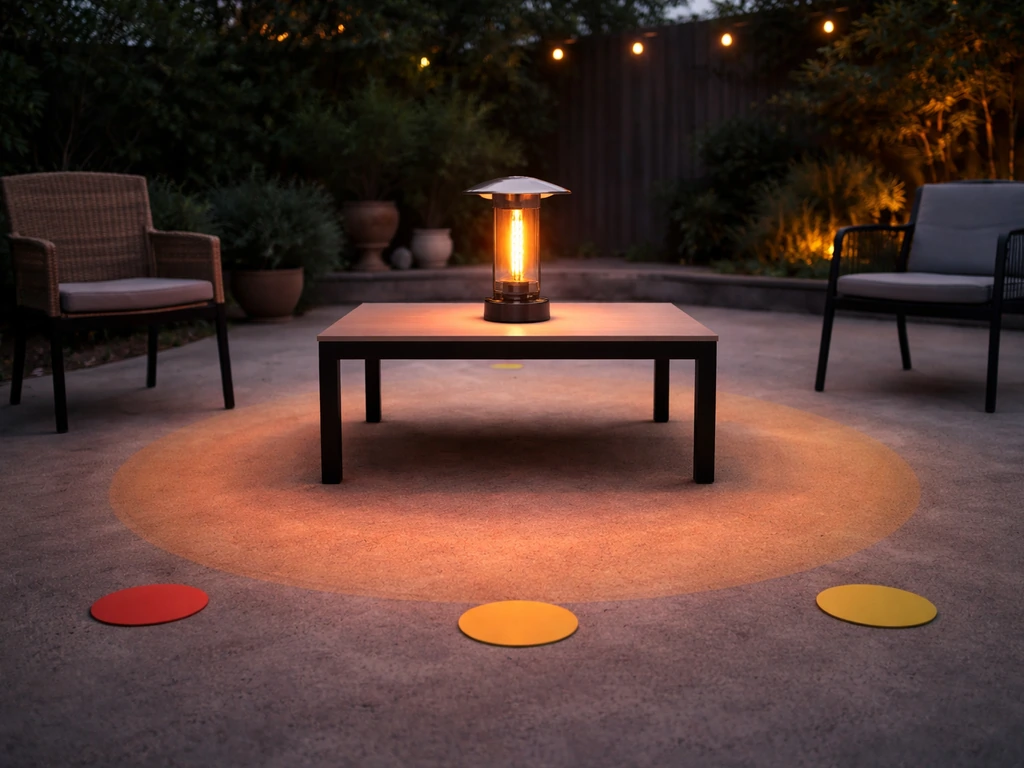
For a 4kW tabletop unit, the effective heating zone extends to roughly three to four feet in all directions for the most comfortable warmth, with usable radiant heat reaching up to five feet depending on conditions. Seat people within that zone for best results. For a round table, that means a central placement works well for a group of four. For a rectangular table, you may want to position the heater slightly off-center toward the exposed end.
Covered vs open patios
A covered patio (pergola, gazebo, roof overhang) dramatically improves the performance of any outdoor heater because it traps radiant heat near occupants and blocks wind. Sunstar's heater sizing layout guidelines illustrate that coverage and effective warmth vary significantly between breezy exposed areas and moderately protected areas coverage layout depends on breezy exposed versus moderately protected areas. For electric infrared specifically, a reflective ceiling surface can actually redirect heat back toward people rather than letting it escape upward. If you have an uncovered patio, a 4kW tabletop heater is still useful in calm conditions, but you may want to size up to a larger freestanding unit if you're regularly heating an exposed deck on cool evenings.
Table surface and stability
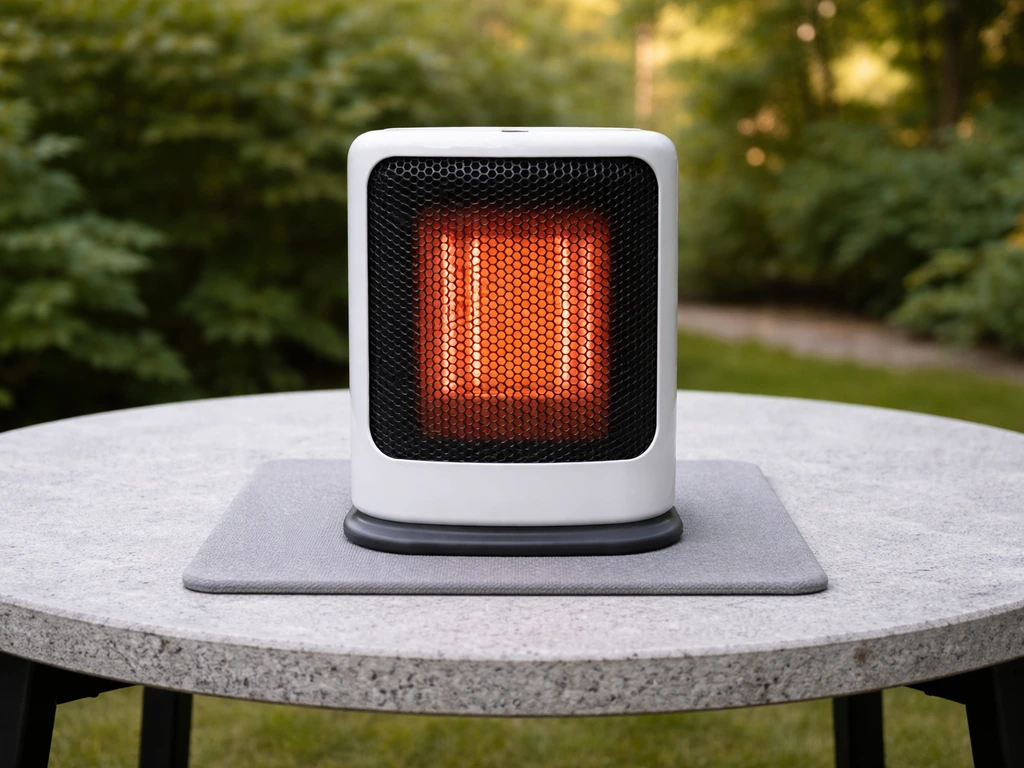
Place tabletop heaters on a stable, level surface. A wobbly garden table is a real safety risk with any heater. For gas units especially, tipping is a fire hazard, not just an inconvenience. If your table isn't perfectly level or sturdy, consider a floor-standing tabletop pedestal instead of placing the unit directly on the table surface.
Safety: the things you really can't skip
Tabletop heaters are generally safe when used correctly, but they do sit closer to people, food, tablecloths, and overhead canopies than a tall freestanding heater. Here's what you need to know by fuel type.
Electric infrared tabletop heaters
- Always confirm the unit has a tip-over auto-shutoff. Most quality models do, but check the manual.
- Keep the heating element clear of tablecloths, paper napkins, or decorations. Medium-wave elements get hot.
- Check the IP rating before leaving it out in rain. Not all outdoor heaters are fully weatherproof.
- Use the correct circuit. A 4kW (240V) unit needs a dedicated circuit. Plug it into an undersized extension cord and you risk overheating the cord.
- Look for CE, ETL, or UL certification. Uncertified cheap units are a genuine risk.
Propane and gas tabletop heaters
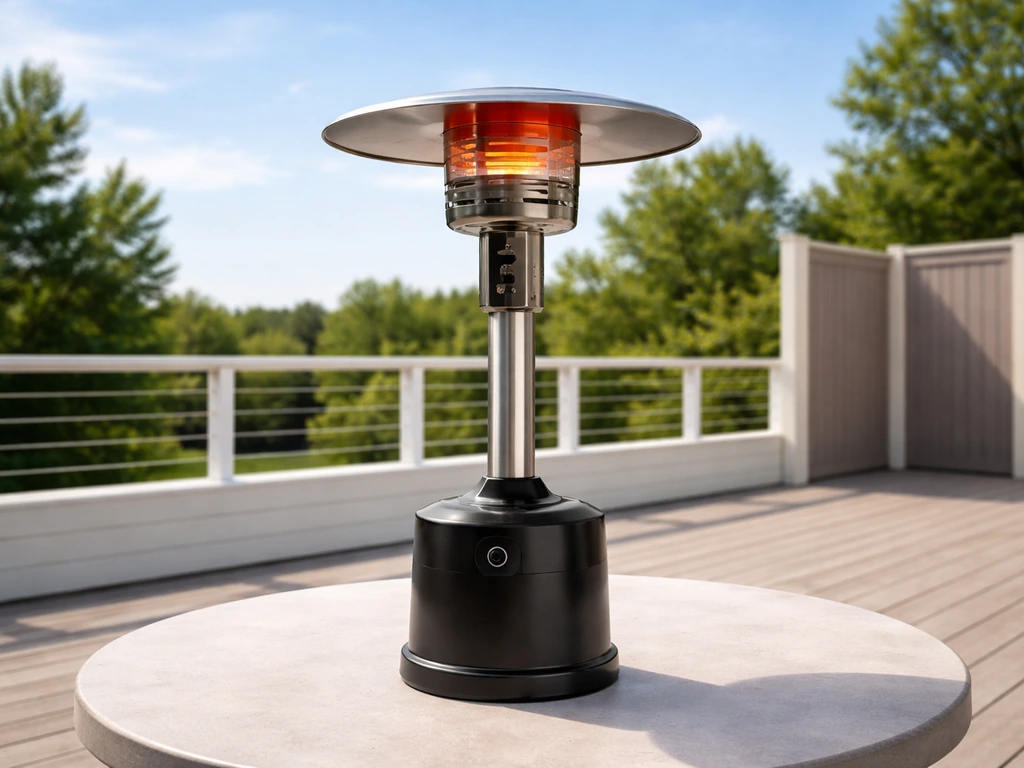
- Maintain clearances: at minimum 18 inches above the heater top and 24 inches from the sides to any combustible material (this is a standard recommendation in Fire Sense and similar manuals). Check your specific model's manual for exact figures.
- Never use a gas tabletop heater indoors, in a tent, or in an enclosed space. Carbon monoxide (CO) is odorless and builds up fast in unventilated areas. Semi-enclosed covered patios need good airflow.
- In the UK and EU, check local regulations for using gas appliances on balconies in apartment buildings. Some buildings and councils restrict this.
- Inspect the gas hose and connections before each season for cracks or leaks. Use soapy water to check for leaks at connections.
- Store gas canisters upright in a well-ventilated area away from heat sources. Never store indoors.
- Performance drops below about 40°F (5°C) with some propane blends because the gas pressure decreases. If you're heating in near-freezing conditions, check that your fuel mix is rated for cold weather.
- Tip-over protection is critical: confirm your model has an automatic gas shut-off valve that triggers if the heater is knocked over.
CO risk: the most important point for gas users
This cannot be overstated. Carbon monoxide poisoning from gas patio heaters used in enclosed or semi-enclosed spaces causes serious injuries and deaths every year. A covered patio with three solid walls and a roof is essentially an indoor space from a ventilation standpoint. If you're in doubt, use an electric heater instead and eliminate the CO risk entirely. If you do use a gas unit on a covered patio, ensure at least two open sides for cross-ventilation and consider installing a CO detector nearby.
Honest pros and cons, and who each type suits best
| Heater Type | Pros | Cons | Best Scenario |
|---|---|---|---|
| Electric infrared 4kW tabletop | Silent, instant heat, precise control, no CO risk, weatherproof options available | Needs 240V outlet nearby, cord can be inconvenient | Covered patios, balconies, frequent regular use |
| Propane gas 4kW tabletop (e.g., Firefly, Sirocco) | No cord needed, fully portable, visible flame, works in power outages | CO risk in enclosed spaces, fuel cost and logistics, wind-sensitive flame | Open garden tables, occasional use, power-cut backup |
| Rattan-base electric tabletop (e.g., 2.1kW units) | Attractive design, lower wattage suits smaller spaces | Lower output than 4kW, best for 1–2 people | Small balcony bistro tables, decorative priority |
| Pellet/wood tabletop (e.g., Solo Stove Tower) | Ambiance and atmosphere, no electricity needed | No precise output control, smoke, ash cleanup, slower heat | Casual evenings where ambiance matters more than heat precision |
For a small balcony: electric infrared wins because you're almost certainly in a semi-enclosed space where CO risk from gas is a concern, and a cord is easy to run. For a garden table on an open lawn used occasionally: a propane gas tabletop like the Firefly 4kW is ideal because portability matters and there's no ventilation issue outdoors. For a covered patio where you entertain regularly: a hard-wired or plug-in electric infrared tabletop or wall-mounted unit is safer, quieter, and more cost-effective over time. If you’re specifically comparing Kettler Kalos tabletop models, looking at dedicated kettler kalos patio heater reviews can help you spot real-world coverage, heat output feel, and any common issues For a covered patio where you entertain regularly.
How to choose the right model today
Once you know your fuel type, the decision narrows quickly. Here's a practical checklist to work through before you buy. If you’re specifically looking at the Kettler Universal Lantern patio heater in the 80cm size, the best way to judge it is by checking real-world reviews for heat output, build quality, and how well it performs outdoors Kettler Universal Lantern patio heater 80cm reviews.
- Confirm your power or fuel access. Do you have a 240V outdoor outlet within reach? Or do you prefer the freedom of no cord? That single answer often makes the choice for you.
- Check your patio setup. Covered and enclosed space means electric only (CO concern). Open patio or garden means either works.
- Measure your table and seating zone. If it's a small bistro table for two, a 2.1kW unit (like rattan-base electric models) may be enough and easier to integrate. For four or more people around a larger table, 4kW is the right call.
- Think about wind exposure. If your spot regularly sees breezes above 5–10 MPH, either add a windbreak or go electric infrared (which handles light wind better than an open flame).
- Set your budget. Budget models start around £40–£80 for basic gas tabletop heaters and £100–£150 for entry-level electric infrared. Quality units from brands like Garden Glow, Firefly, Fire Sense, or Kettler typically run £150–£300. Factor in ongoing running costs too.
- Check for safety certifications. CE (UK/EU) or ETL/UL (North America) are the minimums. Don't skip this for a heater that's sitting on your dining table.
- Look for tip-over protection and auto-shutoff on any model you shortlist. This is non-negotiable.
- Read the actual manual or spec sheet before buying online. The rated coverage area and any wind or temperature limitations are in there, not on the marketing page.
- Consider portability and storage. Tabletop heaters are generally compact, but some gas models with integrated canisters are heavier than they look. If you're moving it in and out seasonally, weight matters.
Quick model landscape to orient your search
In the 4kW tabletop gas category, the Firefly 4kW tabletop gas patio heater is one of the most searched and widely reviewed options, and it's a solid starting point for anyone who wants portability. For electric tabletop heaters with a more decorative approach, Garden Glow's 4kW tabletop model is popular in UK gardens and covered patio setups. If you want a heater that blends into outdoor furniture aesthetics, the Kettler tabletop range and 2.1kW rattan-base electric models are worth looking at, though the lower wattage means you're trading output for style. Fire Sense's tabletop stainless steel propane heater is a frequently recommended option in North America for open patio use. Each of these has trade-offs worth reading in detail before committing.
The bottom line: a 4kW tabletop patio heater is one of the most practical outdoor heating solutions available for small groups, and at this output level you have genuinely good options in both electric and gas. Many models also come with attractive bases, including rattan-style designs that complement patio furniture. Match the fuel type to your space, confirm the safety features, and don't let marketing coverage claims substitute for real-world testing in your actual conditions. Get the specs, check the certifications, and you'll have a heater that earns its spot on the table every cool evening.
FAQ
How far can people realistically sit from a 4kw table top patio heater and still feel warm?
A 4kW tabletop heater is usually sized for people seated close to the unit, not for heating a whole patio. As a practical rule, aim to seat everyone within about 8 to 10 feet total distance from the heater, and expect performance to drop quickly as wind increases or if guests are spread out beyond the heater’s central radiant zone.
Can I use an extension cord with a 4kw table top patio heater (electric models)?
For electric infrared models, use a dedicated outdoor-rated circuit and avoid extension cords. If a cord is unavoidable, keep it short and use the heaviest gauge allowed by the heater’s manual to prevent voltage drop and overheating.
Are there safe ways to place a 4kw table top patio heater on a patio table with a tabletop cover or tablecloth?
Yes, but only with the right setup. Gas tabletop heaters should be protected from tipping (stable, level surface) and should never be run on a surface that can trap heat or melt (like untreated plastic tables). Also check whether the manufacturer requires minimum clearances to nearby furniture, tablecloths, and overhead structures.
What’s the best placement strategy for a 4kw table top patio heater on round vs. rectangular tables?
If you feel warmer near the heater but uneven comfort across the table, adjust the position rather than upgrading wattage. Try center placement for round tables, then move slightly toward the side with the least shelter on rectangular tables so the radiant output lines up with where guests sit.
Why does my 4kw table top patio heater feel weaker than expected in wind?
Most “coverage” claims assume calm or light wind. In real use, windy conditions can make a 4kW unit feel weaker than a lower-watt unit in a sheltered nook. Add a windbreak (panel, fence section, or canopy wall) and consider choosing a more enclosed patio corner before buying.
What electrical checks should I make before installing a 4kw table top patio heater?
Do not rely on the heater’s rated wattage to pick a breaker or outlet without checking the electrical rating on the label. Electric models draw high current at 240V or 120V, and using the wrong outlet type or an under-rated circuit can trigger trips or create heat buildup at connections.
Is a 4kw table top patio heater available in natural gas, or are most tabletop units propane/electric?
Natural gas versions are uncommon for tabletop units because they require fixed piping, and many “tabletop” heaters are actually designed for propane cylinders or portable tanks. If you specifically need natural gas, confirm the model is certified for natural gas input and that local code allows the connection type and clearances.
Which safety features should I verify on the spec sheet for a 4kw table top patio heater?
For gas models, look for an automatic shutoff, stable base requirements, and clear operating wind limits in the manual. For electric models, prioritize safety certifications, tip-over resistance (if included), and overheat protection, and confirm outdoor electrical rating (weatherproof construction).
Can I use a propane 4kw table top patio heater under a covered patio roof?
Gas tabletop heaters can be risky in semi-enclosed areas because carbon monoxide can build up even under a roof. If you plan to use one on a covered patio, ensure cross-ventilation by keeping at least two sides open, follow the manual’s clearance and ventilation guidance, and install a CO detector nearby.
How do runtime and controllability compare between electric and propane 4kw table top patio heaters?
Yes, but expectations differ by fuel. Electric infrared usually responds quickly and can be easier to control with a switch or dial. Propane models often have discrete heat settings and fuel-use changes, so run-time and cost can vary depending on whether you frequently use high output.
What are my options if my guests are farther than the heater’s effective zone?
If your seating is more than about 8 to 10 feet from the heater, you may see discomfort even if the heater is operating correctly. Consider either moving the heater closer to the seating area, adding a second unit for larger gatherings, or upgrading to a larger freestanding heater for wider coverage.