
If you're shopping for the best fire hearth and patio heating setup in Albany, NY right now, here's the honest answer: for most homeowners, a propane or natural gas patio heater in the 40,000–48,000 BTU range is the most reliable all-around choice for open or semi-open patios, while a pellet or gas hearth/fire pit is the better pick if ambiance and longer hang-out sessions matter as much as raw warmth. Electric infrared is excellent for covered porches and small zones. The right call depends on your patio size, whether it's covered, your fuel access, and your budget, and Albany's cold, often windy shoulder seasons mean you should size up, not down.
Best Fire Hearth and Patio in Albany NY: Buyer Guide

Willa Brennan
13 May 2026
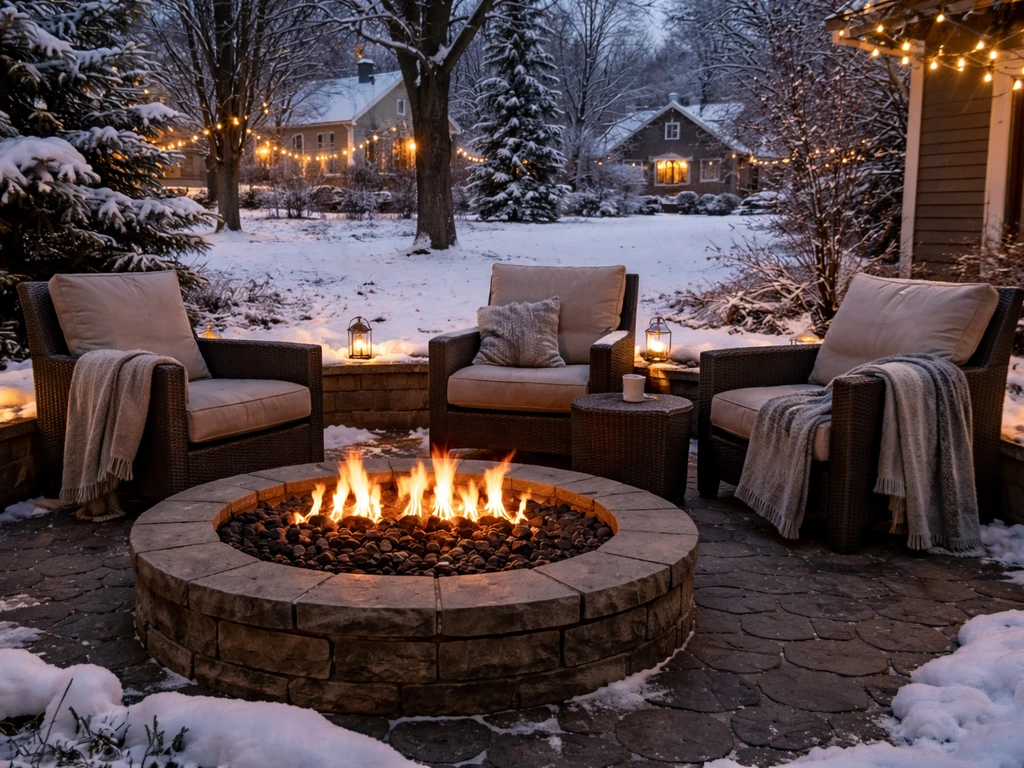
How to choose a patio heater for Albany NY weather
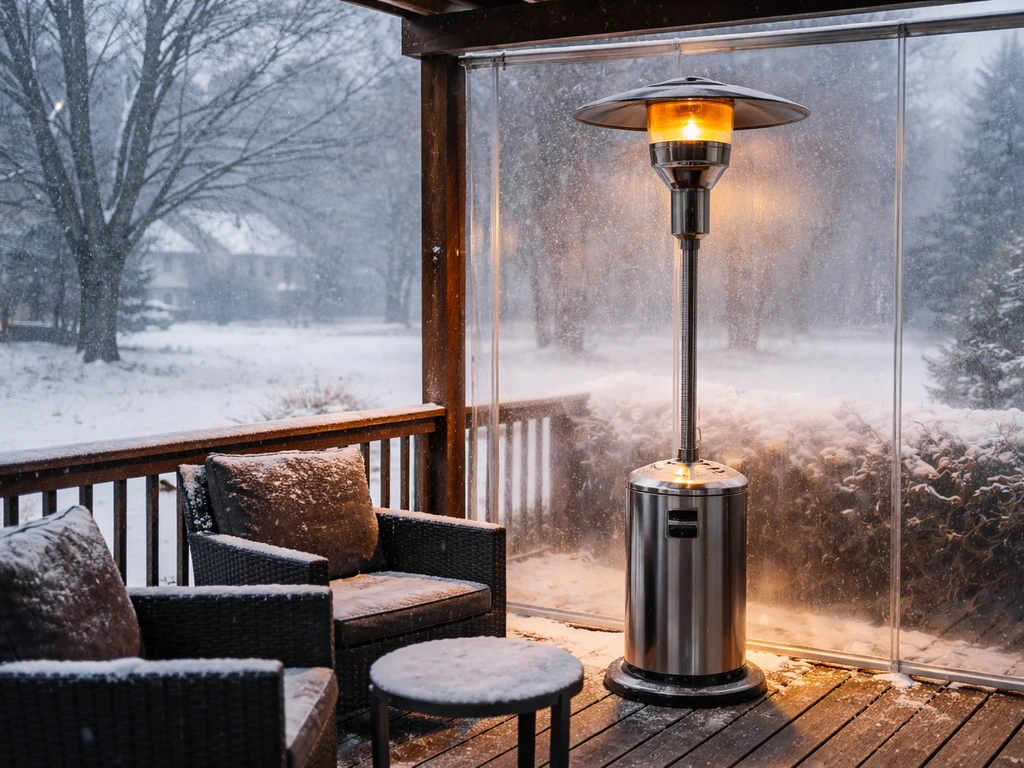
Albany winters are genuinely harsh. November temps typically run from about 32°F to 49°F, and February is the windiest month, averaging around 6.6 mph hourly wind speeds with frequent gusts well above that. Even August, the calmest month, only averages about 5.2 mph. That matters because wind is the enemy of convective heat, the kind that warms the air around you. When wind replaces that warm air faster than your heater can produce it, you feel cold regardless of BTU output.
This is why Albany shoppers need to think about heat delivery style, not just output numbers. Radiant and infrared heaters warm people and surfaces directly, so wind disrupts them far less than it disrupts traditional flame-style convection heaters. If your patio is exposed to open yard wind, radiant IR or a well-positioned gas/propane unit is your best bet. If you're on a covered porch or pergola, you have much more flexibility.
- Plan for use from late September through early May—Albany's usable outdoor season without heat is short
- Assume wind exposure unless your patio has solid windbreak walls on at least two sides
- Size BTUs for the ambient temp range you actually want to use the space in, not just mild fall evenings
- Check your fuel access before you fall in love with a specific unit type—running a natural gas line has real cost and permit implications
- Covered patios, pergolas, and three-season rooms open up electric infrared as a serious option
Fuel-type comparisons: propane, natural gas, electric, and pellet
Each fuel type has a genuine best-use case in the Albany context. Here's a direct comparison so you can match your situation to the right option.
| Fuel Type | Typical BTU/Output | Best For | Albany Pros | Albany Cons |
|---|---|---|---|---|
| Propane | 40,000–48,000 BTU (freestanding); ~10,000 BTU (tabletop) | Open patios, decks, yards with no gas line | Portable, no installation cost, high heat output | Tank refills in winter, wind reduces efficiency, tank cost adds up |
| Natural Gas | 40,000–50,000 BTU (freestanding/mounted) | Permanent patio setups with existing gas service | Always on, no tanks, consistent pressure | Requires licensed install + NY Fuel Gas Code compliance, not portable |
| Electric Infrared | 1,500W–4,000W (~5,100–13,600 BTU) | Covered porches, pergolas, small seating zones | Wind-resistant radiant heat, easy install, low maintenance | Needs outdoor-rated circuit, limited range (~39 sq ft per 1,500W unit) |
| Pellet | High heat output, ambiance-focused | Hearth-style setups, longer outdoor gatherings | Cozy aesthetic, good sustained heat, eco-friendly fuel option | More maintenance, requires pellet storage, less instant than gas |
Propane: the flexible workhorse
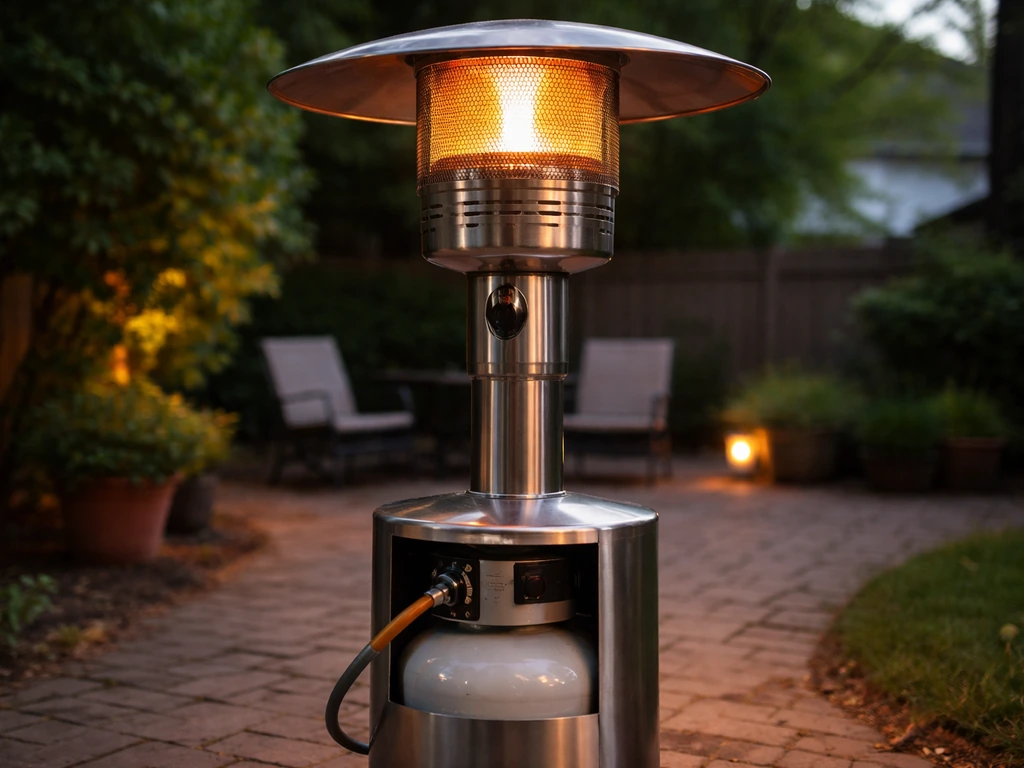
Propane freestanding heaters in the 46,000–48,000 BTU range are what most Albany homeowners end up with, and for good reason. They work anywhere, require zero installation, and put out serious heat. A Fire Sense-style tabletop propane unit at ~10,000 BTU is enough for a small bistro table seating area of 80–120 sq ft. Go freestanding for anything bigger. The downside is tank logistics in a cold winter, propane pressure can drop in very cold temperatures, so keep tanks reasonably full and store them properly.
Natural gas: best if you're building permanent
If you're doing a permanent patio build or already have natural gas service to your house, a hard-piped gas patio heater or gas fire feature is the most convenient long-term option. You never run out of fuel and output stays consistent. That said, New York State's 2025 Fuel Gas Code governs all gas piping and appliance installations, so you'll need a licensed plumber or gas fitter and a permit for the line work. Budget for that upfront, it adds several hundred to over a thousand dollars depending on how far the run is.
Electric infrared: underrated for covered spaces
Electric infrared heaters are the most wind-resistant option because they heat objects and people directly rather than warming air. A 1,500W unit (about 5,118 BTU) covers roughly 39 square feet effectively, that's enough for one or two people sitting close together. For a covered porch or pergola, mounting two or three units overhead solves a lot of problems cleanly. The coverage geometry changes with mounting height: higher mounting spreads heat over a wider but less intense zone, so check the manufacturer's spec table for your ceiling height. You need an outdoor-rated 120V circuit nearby, which is usually a simple electrician job.
Pellet: the hearth experience outdoors
Pellet-burning hearth stoves and inserts are more of an indoor-to-outdoor crossover product. Outdoor pellet fire features exist but are less common than gas or wood fire pits. If you want the crackling, cozy hearth experience on a covered patio or in a three-season room, pellet is worth exploring. Retailers like Best Fire Hearth & Patio in Albany, which has served the area since 1977, specialize in exactly this type of product, pellet stoves, inserts, and gas fireplaces, so if you're going the hearth route, visiting a local showroom is the right move.
Fire hearth and fire pit vs patio heater: what fits your space
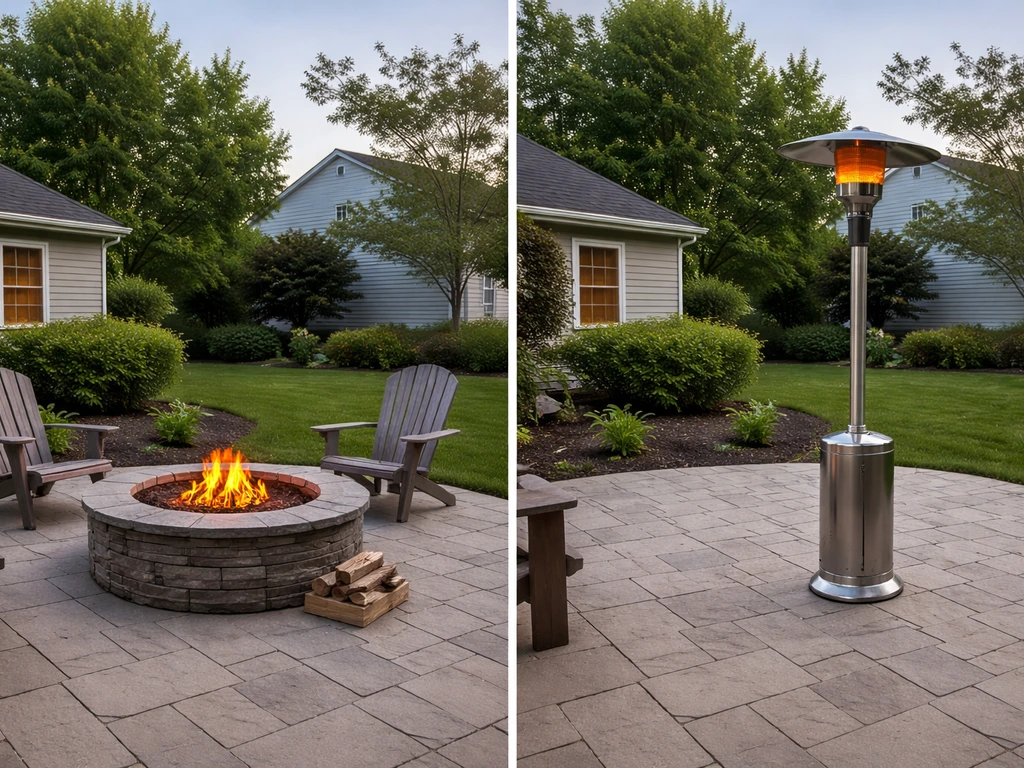
This is the core decision most Albany homeowners struggle with, and the answer really comes down to what you're trying to do outside. A patio heater is a tool for extending comfort. A fire pit or hearth-style fire feature is an experience, people gather around it, it anchors the space, and it creates ambiance that a mushroom-shaped propane heater never will. The trade-off is that fire pits heat primarily through direct radiant heat from the flame, which means you need to be within a few feet of it to feel warm. Same BTU output can feel very different depending on burner design, flame height, and seating distance.
Patio heaters, especially overhead or tall freestanding models, distribute warmth more predictably over a seating zone. They're better if your goal is keeping a dinner party comfortable rather than gathering around a focal point. If you have the space and budget, combining both, a gas or wood fire pit for ambiance plus a mounted infrared heater for functional warmth, is genuinely the best setup for an Albany patio that gets real use from October through April.
| Feature | Fire Pit / Hearth | Patio Heater (Gas/Propane/Electric) |
|---|---|---|
| Primary appeal | Ambiance, social focal point | Functional warmth over a defined zone |
| Heat distribution | Radiant from flame, close-range only | Overhead or directional, wider coverage |
| Wind sensitivity | High (flame flickers, heat disperses) | Moderate (IR least affected) |
| Installation complexity | Moderate to high (especially gas/built-in) | Low (portable propane) to moderate (gas/electric) |
| Albany shoulder season use | Best for calm evenings, social gatherings | Better for extending comfort on colder/windier nights |
| Best pairing | Add a patio heater for functional warmth | Add a fire feature for ambiance if budget allows |
Local providers like blank" rel="noopener noreferrer">Best Fire Hearth & Patio handle outdoor fireplace construction and fire pit installs, and landscaping contractors in the Albany area (including outfits like Pearl Landscaping and Sevenzocks) offer fire pit installation as a standalone service. Many homeowners also consider alternative energy hearth and patio shoppe llc when comparing outdoor heating and fire feature options in the Capital Region Best Fire Hearth & Patio. If you're ready to compare fireplace and patio heater options in Albany, Better Homes Hearth & Patio Inc is a local place to start Best Fire Hearth & Patio. So you're not limited to a box-store fire bowl, you can get a proper built-in propane or gas fire pit installed by someone who knows the Capital Region.
Sizing and coverage: from small balconies to large yards
One of the most common mistakes is sizing a heater to the full patio square footage instead of the zone where people actually sit. Outdoor heat doesn't stay put the way it does inside, it dissipates fast, especially in wind. The practical rule: size your heater to your seating area, not your patio footprint. A small dining set or loveseat area is typically 80–120 sq ft. That's your target zone.
| Space Type | Approximate Zone Size | Recommended Output | Best Heater Style |
|---|---|---|---|
| Balcony or bistro table (1–2 people) | 40–80 sq ft | 10,000 BTU / 1,500–2,000W | Tabletop propane or wall-mount electric IR |
| Small patio dining set (2–4 people) | 80–120 sq ft | 10,000–20,000 BTU / 2,000–4,000W | Tabletop propane, freestanding electric, or 2x IR wall mount |
| Medium patio (4–6 people) | 150–250 sq ft | 40,000–48,000 BTU or 2–3x IR units | Freestanding propane/gas or multiple overhead IR |
| Large patio or yard (6+ people) | 250–400+ sq ft | 48,000+ BTU or zoned multi-unit setup | Multiple freestanding gas/propane or zoned IR grid + fire feature |
For larger Albany yards where you want to heat a wide area, a single 48,000 BTU mushroom-style heater is honestly not enough on a windy night. You're better off with two heaters positioned to overlap their coverage zones, or a fire pit at the center with IR wall heaters at the perimeter. Some reviewers quote coverage areas of up to 1,000 sq ft for a single tabletop unit, treat those numbers with serious skepticism. That figure assumes ideal conditions (no wind, moderate ambient temp) that Albany simply won't give you most of the outdoor season.
Covered vs uncovered patio: setup considerations
Whether your patio is covered changes almost every aspect of your heater choice, fuel type, mounting style, clearances, and BTU requirements. This is probably the single most important variable to nail down before you shop.
Uncovered open patios and yards
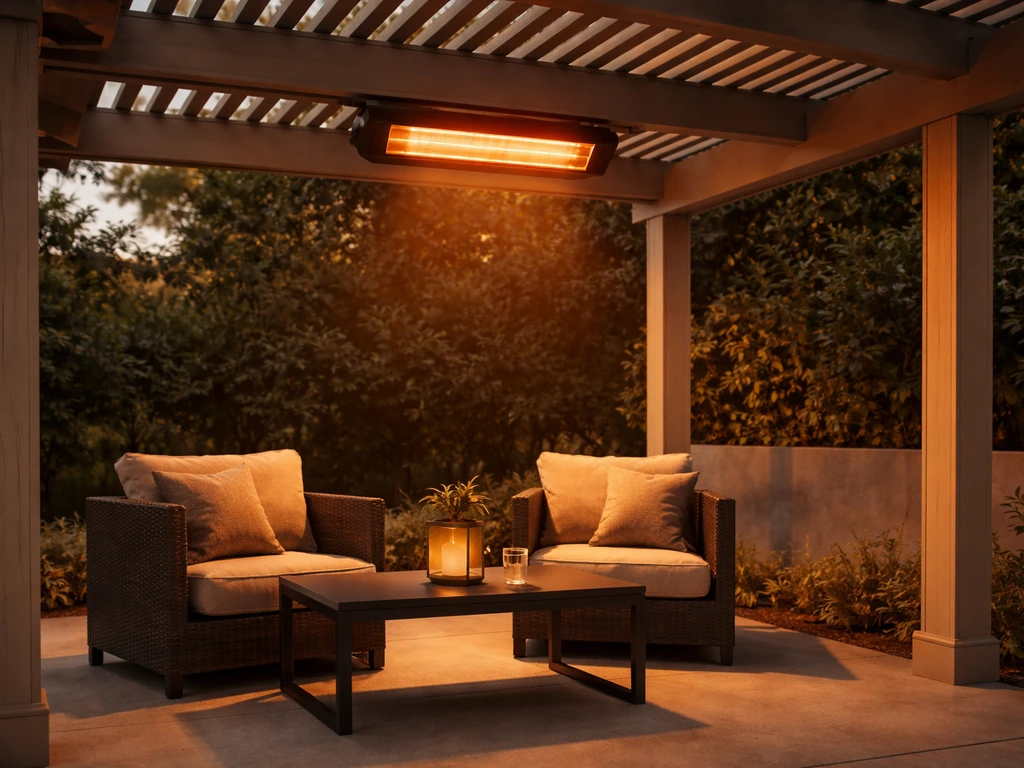
Open patios are the hardest environment to heat. Wind exposure is maximum, heat disperses quickly upward and outward, and electric IR units lose some of their advantage because the heated surfaces (you and your chair) still lose warmth to the moving air around them. For an uncovered space in Albany, high-BTU propane or natural gas is the most practical choice. Opt for freestanding heaters in the 46,000–48,000 BTU range, position them upwind of your seating area, and accept that you're heating people in a zone rather than the open air. A fire pit centered in the seating area adds meaningful radiant warmth even in moderate wind.
Covered porches, pergolas, and screened patios
Covered spaces are where electric infrared really shines, and also where you can use gas heaters more efficiently since the overhead structure reflects and traps some warmth. Ceiling or wall-mounted IR heaters work well here, mount them overhead, follow the manufacturer's coverage geometry table for your ceiling height, and make sure you have outdoor-rated wiring. For gas or propane units under a covered patio, clearances to combustibles are non-negotiable: most manufacturers require at least several feet of clearance from overhead surfaces and structural elements. Mr. Heater and similar brands specify exact clearances in their installation guides, read them before you mount anything. If you're under a pergola with an open lattice top, you get the best of both: some wind protection plus enough ventilation for safe gas heater operation.
One more safety note for any covered space: portable patio heaters should be kept at least 6 feet from other structures and at least 5 feet from seated guests. That's a practical planning constraint when you're laying out furniture, a 10-foot-by-12-foot covered porch with a gas mushroom heater in the corner gets tight fast. Overhead mounted units solve this problem entirely.
Budget tiers and best picks by use case
Here's how to think about budget for Albany patio heating, matched to realistic use cases. These aren't just price brackets, each tier represents a genuinely different experience and capability level.
Under $150: tabletop and small zone heating
A tabletop propane heater like those in the Fire Sense lineup (~10,000 BTU) is the right buy if you have a small bistro or café-style patio with 1–2 people and want a portable, no-install option. Electric tabletop IR units exist in this range too. Don't expect to heat more than a 4-foot diameter around the unit on a windy Albany October evening. Best for balconies, small decks, and occasional use. This is also where a simple fire bowl (wood-burning) fits, cheap, portable, great ambiance, minimal functional warmth.
$150–$400: freestanding propane and quality electric IR
This is the sweet spot for most Albany homeowners with a medium-sized patio. A quality freestanding propane heater at 40,000–48,000 BTU, or two electric IR wall-mount units (1,500W–2,000W each) for a covered porch, both fall here. This tier gives you a real solution for a 4–6 person seating area and handles Albany's shoulder season reliably. Look for units with a tip-over shutoff, wind guard, and piezo ignition for ease of use.
$400–$1,500: gas fire pits, premium IR systems, and propane fire features
Here you're getting into fire pit tables, higher-output propane/gas fire features, and multi-unit IR setups for larger covered patios. A gas fire pit table in this range is one of the best value investments for an Albany patio if ambiance matters, it functions as outdoor furniture, provides heat at sitting height, and runs on a standard 20-lb propane tank. For covered patios, a 4,000W–6,000W overhead IR system covers a meaningful zone and handles real cold. Albany's local hearth retailers like Best Fire Hearth & Patio and Northeastern Fireplace & Design are good places to see these products in person before buying.
$1,500 and up: permanent installations
If you're building a patio or doing a serious outdoor living upgrade, this tier covers hard-piped natural gas heaters, built-in outdoor fireplaces, and full hearth installations. Natural gas infrastructure work alone can run $500–$1,500+ depending on line distance, and that's before the appliance. A gas or wood outdoor fireplace built into a patio structure is a multi-thousand dollar project but adds lasting value and is the most comfortable long-term heating solution for regular Albany outdoor living. Pellet hearth installations also live here, especially if you want a product that works indoors and outdoors across a three-season room. Working with a local specialist who knows NY Fuel Gas Code compliance is essential at this level, don't DIY the gas work.
If you're comparing options across retailers or need to evaluate specific brands and models in depth, looking at dedicated reviews of individual fire hearth and patio product categories will help you narrow down the exact unit. If you want to compare real-world performance, hearth and patio reviews can help you choose a unit that matches your space and budget fire hearth and patio. The most important thing is making the fuel-type and coverage decisions first, once you know you want a 46,000 BTU portable propane heater for a medium uncovered patio, comparing specific models becomes much more straightforward. Albany has enough local expertise through showrooms and contractors that you don't have to figure this out alone.
FAQ
What BTU number should I use if my goal is to keep a dinner party comfortable on an uncovered Albany patio?
Use BTU to compare similar heater types, but size to your seating zone, typically 80–120 sq ft for a small group. On uncovered patios in Albany, wind removes a lot of effective heat, so two smaller units positioned to overlap coverage often works better than one single heater sized for the entire patio footprint.
How do I decide between a radiant infrared heater and a propane heater if my patio is exposed to wind?
Prioritize radiant or infrared for wind-exposed areas because it warms people and nearby surfaces directly, while propane convection-style warmth is more easily dispersed. If you want propane, position the heater upwind of your seating and expect that you are heating a zone around where people sit, not the open air.
Can I use an electric infrared patio heater on a covered porch, and what power setup do I need?
Yes, covered porches are where IR performs best. Make sure you buy outdoor-rated units and confirm you have an outdoor 120V circuit nearby, since most patio IR models require grounded exterior power, not standard indoor outlets.
Where should I place heaters on my patio to avoid cold spots?
Plan around airflow. For freestanding propane heaters, aim them so the blast of heat reaches the seating first, ideally with the heater upwind of where people sit. For IR, mount and angle units based on the manufacturer’s coverage geometry, because mounting height changes the intensity and footprint.
Do coverage claims like “up to 1,000 sq ft” apply in Albany winters?
Treat large coverage numbers as optimistic, they assume minimal wind and moderate temperatures. For Albany’s windy outdoor conditions, design to smaller, realistic seating zones and consider multiple heaters or a central fire feature to create overlap where people actually sit.
What’s the biggest mistake to avoid when planning clearance and placement on a covered porch?
Don’t crowd the heater near structures or guests. Many portable outdoor gas heaters need several feet of clearance from combustibles and should also be kept well away from seated guests, while overhead mounted units shift the safety problem to mounting height and clearances to the ceiling or pergola elements.
If I have natural gas service already, is hard-piped installation always worth it?
It’s usually worth it for frequent use and for long-term convenience, since you avoid tank logistics and maintain consistent output. Budget for licensed gas work and permitting, and only proceed once you confirm the appliance’s required clearances and venting or combustion-air needs for your specific patio structure.
Are pellet fire pits or pellet hearths a good choice for an outdoor patio in Albany?
Pellet is a good choice when you want hearth-style ambiance and you have an appropriate semi-protected space like a covered patio or three-season room. Outdoor pellet fire features exist but are less common, and you should check availability, venting requirements, and whether the unit is rated for your installation location.
How can I get both ambiance and practical heat without buying two full heating systems?
A common high-value combo is a gas or wood fire pit centered in the seating area for ambiance plus one or more IR heaters to extend comfort for longer stays. This lets the fire pit set the focal point while IR handles wind-resistant comfort at sitting height.
Should I mount infrared heaters overhead, wall-mounted, or freestanding?
For covered spaces, overhead mounting is often the most consistent approach because it reduces wind disruption and distributes heat across a defined zone. Wall-mount can work well too, but you must match the mounting height and distance to the manufacturer coverage table, otherwise you end up with a zone that feels hot at the wrong angle.
How do I reduce propane issues in cold weather?
Keep tanks reasonably full and store them properly when not in use, since very cold conditions can affect propane pressure. Also confirm your heater’s regulator compatibility and wind protection features so the flame stays stable during Albany gusts.