
For most outdoor patios, a 40,000 BTU propane pyramid patio heater is the best all-around choice. It covers roughly 200 square feet of comfortable warmth, works without any wiring or gas line, and the tall glass-tube flame looks great while actually putting out real heat. That said, the "best" one genuinely depends on your patio size, how exposed you are to wind, whether you have a gas hookup, and how much you want to spend on fuel over a season. This guide cuts through the noise so you can match the right heater to your real situation.
Best Outdoor Pyramid Patio Heater Guide for Your Space

Willa Brennan
27 May 2026
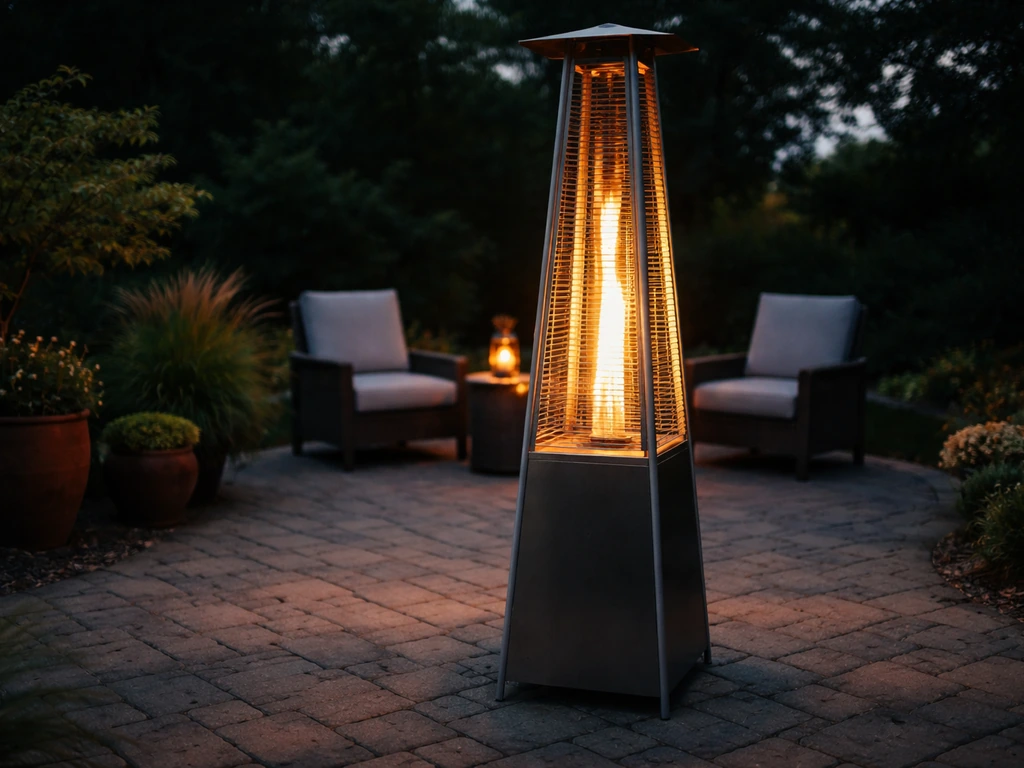
What to look for in an outdoor pyramid patio heater
Pyramid patio heaters get their name from the tall, four-sided glass tube that houses the flame, topped by a cone-shaped reflector that spreads heat downward and outward. That design is what sets them apart from mushroom-style heaters, which push heat out from a single dome up top. The pyramid style is more decorative, gives you a visible flame effect from all angles, and tends to radiate warmth across a wider horizontal zone rather than straight down. But the design also makes them taller and sometimes less wind-resistant than low-profile alternatives.
Here are the specs and features that actually matter when you're comparing models:
- BTU output: Most full-size outdoor pyramid heaters run at 40,000 BTU/hr. A few pellet models go much higher (up to 75,000 BTU). Smaller or directional units often sit in the 25,000–35,000 BTU range.
- Coverage area: Manufacturer claims of "500 sq ft" are optimistic. A realistic, comfortable coverage zone for a 40,000 BTU unit is 200–300 sq ft, or about a 20-foot radius from the base.
- Fuel type: Propane, electric, natural gas, or pellet. Each changes portability, running cost, and heat character significantly.
- Tip-over safety shutoff: Non-negotiable. Look for an automatic shutoff valve that cuts gas if the unit tips. The Fire Sense models list this as an "auto shutoff tilt valve," which is a good example of what to look for.
- Ignition type: Electronic ignition (push-button start) is far easier to use than manual piezo lighting, especially in cold or windy conditions.
- Build material and finish: Brushed stainless, powder-coated steel, and hammered bronze finishes all appear in pyramid heaters. Stainless holds up best in humid or coastal climates.
- Portability vs. fixed installation: Most propane pyramid heaters are freestanding and movable. Natural gas and some electric models are hardwired or hard-piped.
- Wheel/base stability: A wider base and locking wheels matter if you're on a deck with gaps or an uneven surface.
Fuel type comparison: propane, electric, natural gas, and pellet
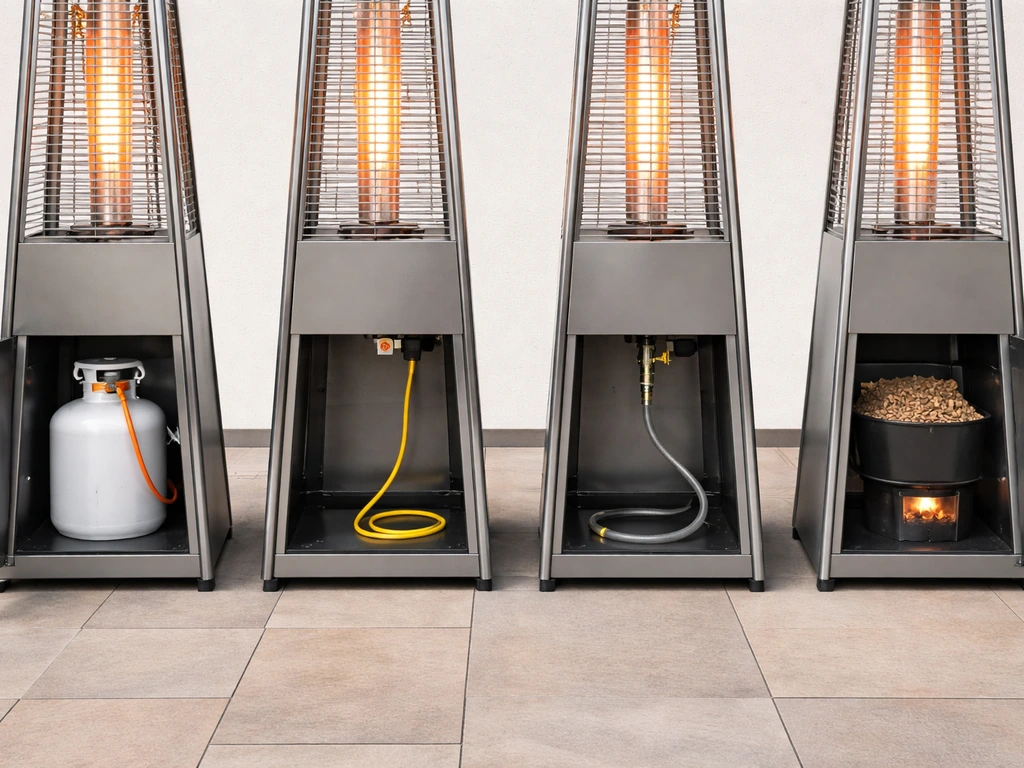
Each fuel type has a genuinely different personality, and no one option wins across every situation. Here's how they stack up for outdoor pyramid-style heaters specifically.
| Fuel Type | Typical BTU Output | Portability | Running Cost | Best For |
|---|---|---|---|---|
| Propane | 40,000 BTU/hr | High (tank-portable) | Moderate (~$0.40/hr at current prices) | Most patios, no hookup needed |
| Electric (infrared) | ~5,000 BTU equiv (1,500W) | Medium (needs outlet) | Low-moderate (~$0.18–$0.22/hr) | Covered patios, lower heat needs |
| Natural Gas | 40,000+ BTU/hr | None (hardwired/piped) | Low (~$0.15–$0.25/hr) | Permanent installs, frequent use |
| Pellet | Up to 75,000 BTU | Low (heavy, needs fuel storage) | Variable (pellet prices vary) | Large open areas, off-grid settings |
Propane
Propane is by far the most popular fuel for pyramid patio heaters, and for good reason. You don't need any electrical outlet or gas line. A standard 20 lb propane tank connects directly to the base of the heater, and at 40,000 BTU/hr most tanks last roughly 8–10 hours of full-blast use. A typical Pyramid Patio Heater listing from the manufacturer specifies a rated heat input of 40,000 BTU/hr and uses propane gas as the fuel type. The flame-in-glass-tube effect looks great, heat is instant, and you can move the heater wherever you need it on your patio. The trade-off is that you have to swap or refill tanks, which adds some hassle and ongoing cost.
Electric (infrared)
Electric pyramid-style heaters typically run on 1,500 watts, which converts to roughly 5,100 BTU equivalent of heat output. That's a big step down from propane in raw output, but infrared electric heat works differently: it warms objects and people directly rather than heating the air, so it can feel surprisingly effective in covered or semi-enclosed spaces. It's also silent, has no emissions, and turns on instantly. The main limits are that it needs a nearby outdoor outlet and doesn't have the same "reach" as a 40,000 BTU gas unit in a large or open space.
Natural gas
Natural gas pyramid heaters offer the lowest per-hour fuel cost and the most consistent heat, since you're pulling from a fixed supply line. They're ideal if you already have a gas line near your patio and you use the space frequently. Installation requires a licensed plumber or gas technician, and compliance with fuel gas codes (like NFPA 54 and CSA B149.1 standards referenced in most owner's manuals) is mandatory. The zero-portability aspect is the main downside. These are a permanent feature of your outdoor space.
Pellet
Pellet-fueled pyramid heaters are a niche option, but they can push serious heat output. The HeatMaxx Radiance Pellet Patio Heater, for example, claims 75,000 BTU and covers around 150 square feet with radiant warmth. They're a genuinely different experience: more like a contained pellet fire than an appliance. The downsides are weight, the need to store pellets, and more hands-on operation. If you want the atmosphere of a fire pit with more directed heat and less smoke, pellet heaters are worth considering, especially for larger or more open outdoor spaces.
Heat coverage and sizing for your patio or enclosure
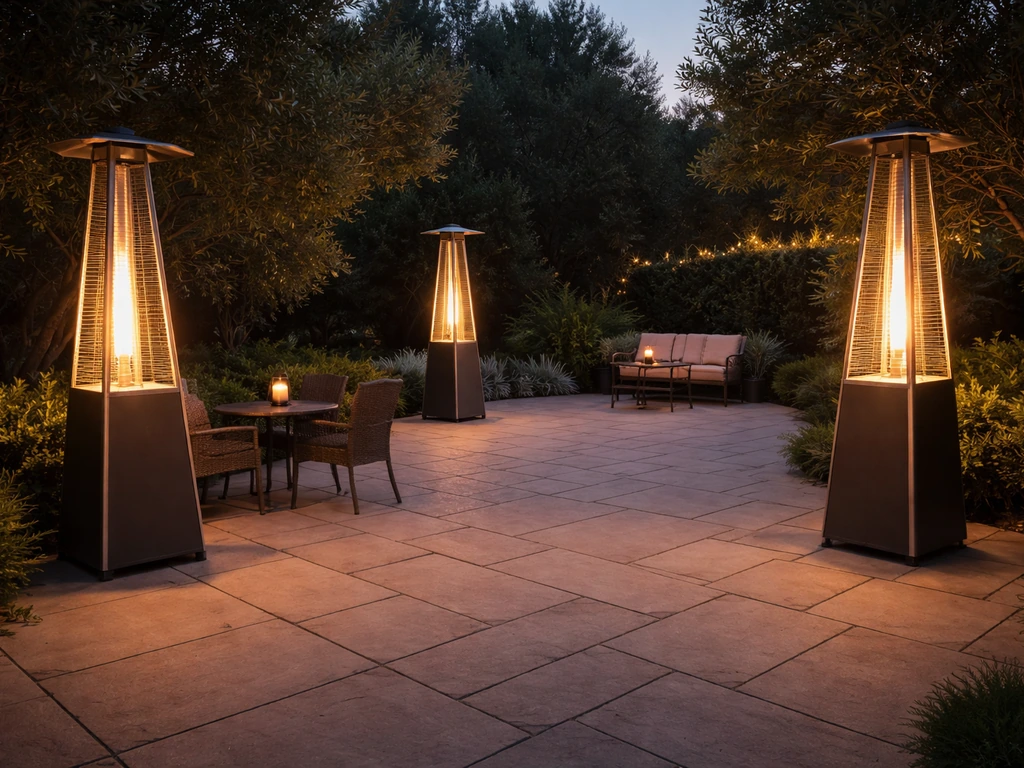
Manufacturer coverage claims are almost always inflated. A listing that says "500 sq ft" for a 40,000 BTU pyramid heater is using best-case conditions (no wind, mild ambient temps, and people sitting close). A realistic, comfortable heat zone is closer to 200 sq ft, or a usable radius of about 20 feet from the base. That's the number I'd plan around.
Here's a practical sizing guide based on patio type and conditions:
| Patio Size / Situation | Recommended BTU | Heaters Needed | Notes |
|---|---|---|---|
| Small patio (up to 150 sq ft) | 25,000–35,000 BTU | 1 | One heater is plenty; consider a smaller unit |
| Medium patio (150–300 sq ft) | 40,000 BTU | 1 | Standard pyramid heater fits well |
| Large patio (300–600 sq ft) | 40,000 BTU | 2–3 | Space heaters around seating zones |
| Covered gazebo or pergola | 40,000 BTU | 1 (often) | Enclosed space retains heat; watch clearances |
| Windy or open yard | 40,000 BTU + windbreak | 1–2 (boosted) | Add a windbreak or use 1.5x the normal BTU estimate |
For covered spaces like a gazebo, a single well-placed 40,000 BTU heater often outperforms two heaters in the open because the enclosure holds heat in. But covered spaces also mean you need to respect clearance rules carefully (more on that below). For windy spots, the general rule is to plan for 1.5 times your normal BTU estimate, since wind strips warmth from both the heater and your skin faster than any spec sheet accounts for.
Safety, installation, and weather considerations
Pyramid patio heaters are tall and top-heavy by nature, which makes stability and tip-over protection important. Any heater you buy should have an automatic gas shutoff that triggers if the unit tips, sometimes called a tilt valve or tip-over protection system. Models like the Fire Sense 62263 and 60523 include this as a standard feature. Don't buy a propane pyramid heater without it.
Clearances and placement
Most pyramid heater manuals require combustible materials to be kept at least 48 inches away from the top of the unit. That's your ceiling of a gazebo, any overhead string lights, fabric awnings, or low-hanging branches. Measure this before you buy, especially for covered installations. If your covered space can't clear 48 inches above the heater top, you either need a shorter model or a lower-output electric unit that doesn't have the same radiant fire risk.
Wind and weather performance
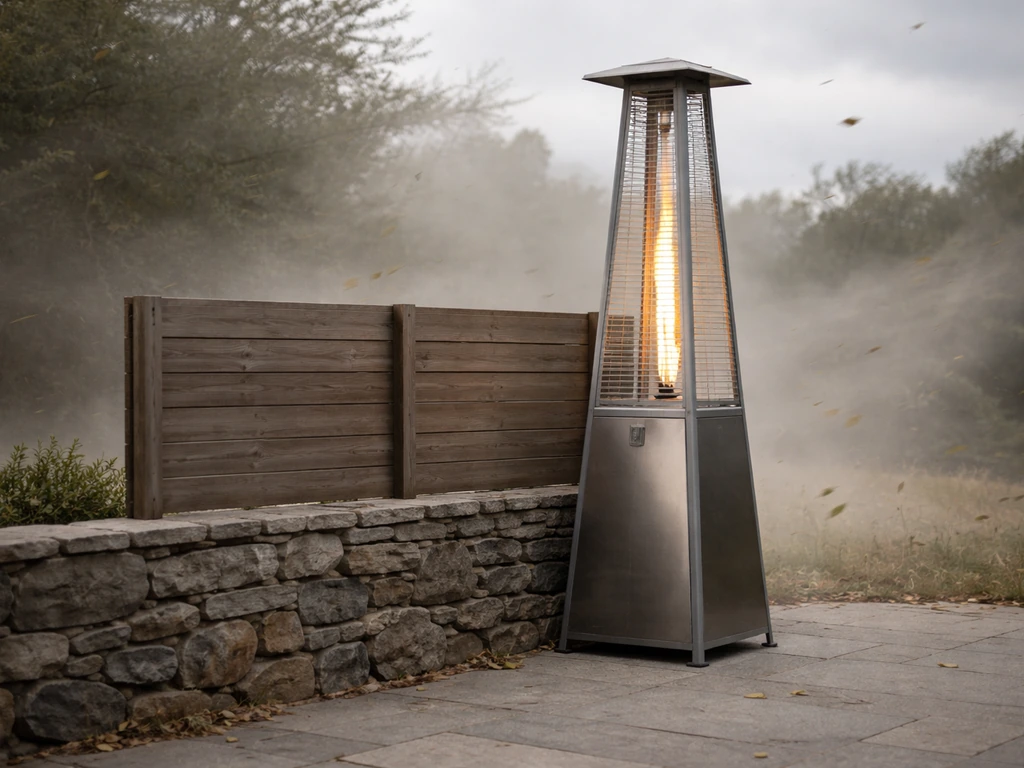
Pyramid heaters are more vulnerable to wind than low-profile mushroom or directional infrared models. The tall glass tube protects the flame reasonably well, but strong gusts can still affect performance and, on older units without tight seals, extinguish the flame. For consistently windy spots, commercial sizing guides recommend using a physical windbreak (a fence, screen, or hedge) rather than just throwing more BTUs at the problem. Positioning the heater so your seating area is on the leeward side also makes a big difference.
Natural gas installation requirements
If you're going the natural gas route, the installation must comply with local fuel gas codes. Outdoor LP/natural gas patio heater owner’s manuals may require installation to comply with applicable fuel gas codes such as NFPA 54, ANSI Z223.1, and CSA B149.1. Manuals for outdoor LP/natural gas patio heaters typically reference NFPA 54, ANSI Z223.1, and CSA B149.1 as the applicable standards. Have a licensed professional handle the gas connection. This is not a DIY job, and most local codes won't allow it to be.
Weather resistance and storage
Stainless steel holds up best outdoors over time. Powder-coated and hammered-finish models can rust if the coating chips, especially in humid climates or near saltwater. A fitted cover is worth buying at the same time as the heater. For winter storage, drain the hose and regulator of any residual gas, store the propane tank outside (never indoors), and keep the heater covered or moved under shelter if possible.
Best picks by scenario
Rather than picking a single "best overall" that doesn't fit most people's actual situations, here's what I'd recommend for each common scenario. If you’re specifically shopping for the best Pyramid Flame patio heater, review factors like BTU output, coverage range, and the wind-resistance features that match your patio Pyramid Flame patio heater reviews. These recommendations are based on the features and specs that matter most for each use case.
Best for a small patio (under 150 sq ft)
A smaller propane pyramid heater in the 25,000–35,000 BTU range is a better fit than a full 40,000 BTU unit here. You'll burn less fuel, avoid overheating a tight space, and get better proportional coverage. If you have an outdoor outlet, a 1,500-watt electric infrared model is a genuinely good choice for small patios. It's cheaper to run, simpler to operate, and the lower BTU ceiling doesn't matter when your space is small.
Best for a covered gazebo or pergola
A 40,000 BTU propane pyramid heater is ideal here, as long as you can meet the 48-inch clearance requirement above the heater top. The enclosed space dramatically improves efficiency, meaning one heater does the work of two in the open. Measure your overhead clearance first. If you're tight on space, an electric infrared model mounted to the wall or ceiling of the gazebo is a safer alternative that eliminates the clearance concern for the open flame.
Best for a large open space (300+ sq ft)
Plan on two or three 40,000 BTU propane pyramid heaters positioned around the seating zones, rather than trying to cover the whole area with one. Alternatively, a natural gas pyramid heater (if you have or can run a gas line) keeps the running costs lower when you're heating frequently or for long sessions. Pellet models with 75,000 BTU output are also worth considering for large open spaces, especially if you want ambiance alongside heat.
Best for windy areas
For regularly windy yards, the most practical answer isn't a specific heater model, it's a combination of the right heater and a windbreak. A 40,000 BTU propane pyramid heater positioned on the leeward side of a fence or screen wall will outperform a higher-output heater in the open. If wind is a constant issue and you're not willing to install a windbreak, consider a directional infrared electric heater instead, since those are less affected by wind because they heat people and objects rather than the surrounding air.
Best budget option
Powder-coated steel pyramid heaters in the 40,000 BTU class typically run $150–$250 and perform just as well as pricier stainless units in the short term. The Fire Sense and HeatMaxx SRPH98 lines are widely available at Lowe's, Tractor Supply, and Northern Tool. For the lowest ongoing cost, though, natural gas wins if you already have a gas line nearby. The higher upfront installation cost pays off quickly if you use the heater regularly.
Operating costs and efficiency
Understanding running costs before you buy saves real money over a season. Here's how each fuel type breaks down in practical terms.
Propane running costs
A 40,000 BTU propane pyramid heater burns roughly 0.4 gallons of propane per hour at full output (using the rule of thumb that a heater burns about 0.01 gallons per hour for every 1,000 BTU consumed). At current propane prices around $3–$4 per gallon, that works out to about $1.20–$1.60 per hour at full blast. In practice, most heaters have adjustable output and you'll run them at partial power in milder conditions, cutting that cost significantly. A standard 20 lb tank (about 4.7 gallons) lasts roughly 8–10 hours of use at moderate settings.
Electric running costs
A 1,500-watt electric infrared heater draws 1.5 kWh per hour. At a national average electricity rate of around $0.16–$0.17 per kWh (2026), that's roughly $0.24–$0.26 per hour to run. That's significantly cheaper per hour than propane, though you're also getting far less BTU output (about 5,100 BTU equivalent vs. 40,000). For a small covered patio where electric is enough, it's the most cost-efficient option.
Natural gas running costs
Natural gas is consistently the cheapest per-BTU fuel for outdoor heating. At typical residential gas rates, running a 40,000 BTU natural gas heater costs around $0.15–$0.25 per hour depending on your local utility pricing. If you use your patio heater 4+ hours a week through fall and winter, that savings over propane adds up fast. The installation cost (professional gas line run plus unit) is the barrier, but it makes sense for permanent setups.
BTU efficiency in context
Raw BTU numbers only tell part of the story. Wind, ambient temperature, and the gap between outdoor temp and your comfort target all affect how hard the heater has to work. A 40,000 BTU heater warming a 60°F night to comfortable feels easy. That same heater working against 35°F and a 15 mph breeze is working much harder and covering much less ground. Factor in your typical fall/winter temps and wind exposure when deciding between a 35,000 BTU and a 40,000 BTU model.
Setup, controls, and maintenance tips
Initial setup
Most propane pyramid heaters arrive partially assembled and take 20–40 minutes to put together. The key steps are securing the base, attaching the pole sections and glass tube, connecting the regulator hose to the propane tank, and testing for leaks before first use. Leak testing is simple: brush a soapy water solution on every gas connection, then open the tank valve slowly. Bubbles mean a leak; no bubbles means you're clear to light.
Controls and ignition
Look for electronic ignition, which lets you start the heater with a push-button click rather than fumbling with a lighter in the cold. Most quality pyramid heaters include this. The standard operating sequence is: turn the control knob to the pilot position, press the igniter button until the pilot lights, hold the knob for 10–15 seconds to heat the thermocouple (a safety sensor that keeps the gas flowing once the flame is confirmed), then rotate to your desired heat setting. If the flame goes out, the thermocouple cuts the gas automatically.
Routine maintenance
Pyramid heaters are low-maintenance, but a few quick checks each season keep them running reliably. Clear any debris (spider webs, leaves, dust) from around the burner and pilot before the first use of the season. Check the regulator hose for cracks or brittleness annually and replace it if it shows any signs of wear. If the pilot won't stay lit, a weak or failed thermocouple is usually the culprit and is an inexpensive fix. Clean the glass tube with a soft cloth and non-abrasive cleaner to keep the flame visible. For the base and frame, a wipe-down with a damp cloth and a light coat of car wax on stainless steel parts helps resist weathering.
What to measure before you buy
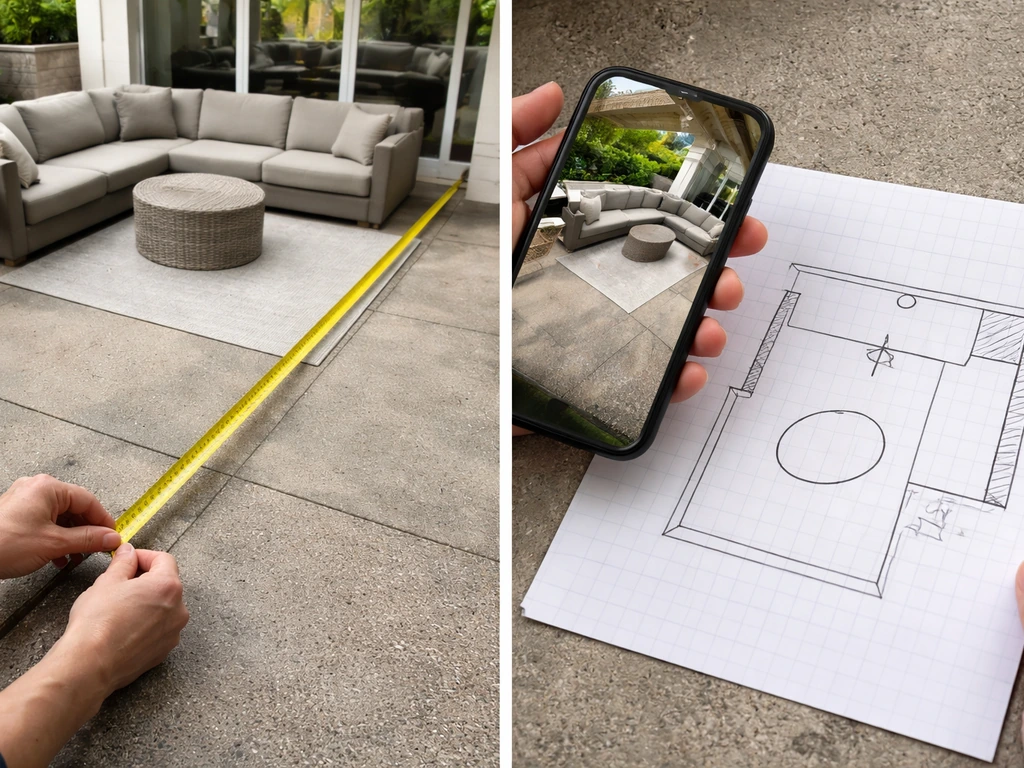
Before you pull the trigger, get these numbers from your actual patio: the usable floor area where people sit (in square feet), the overhead clearance if you have a covered area, the distance from your nearest outdoor outlet or gas connection, and a realistic wind assessment (calm, occasional gusts, or frequently windy). With those four numbers, you can match any spec sheet to your real situation instead of guessing. And if you're comparing pyramid heaters to other styles, the differences in heat distribution, aesthetics, and wind performance between pyramid and mushroom designs are worth a close look before committing. If you're unsure where pyramid models fit, a pyramid heater vs patio heater comparison can help you choose the right type for your layout and typical weather comparing pyramid heaters to other styles.
FAQ
Do I really need the 48-inch clearance above a pyramid patio heater if it’s under a gazebo?
Yes. Clearance rules are about fire risk to anything above the hottest part of the unit, not just direct contact. If your gazebo ceiling, string lights, or nearby branches sit below the required height, use a shorter model or switch to an electric infrared unit in that exact spot, instead of relying on “it seems far enough.”
What’s the best way to position a pyramid heater for wind so I don’t waste fuel?
Place the heater so your seating is on the leeward side of a solid barrier (fence, screen wall, or dense hedge). Avoid putting the heater directly in the open path of prevailing gusts, because wind can push heat away and can also affect whether the flame stays stable, especially on older units or if seals are worn.
How can I tell whether a 40,000 BTU pyramid heater is too big for my patio?
If the heater would be within about 6 to 10 feet of the main seating, you may feel “hot spots” and glare but still not get coverage where you need it. In tight patios, the practical move is a 25,000 to 35,000 BTU propane model or a lower-output electric unit, because you get better comfort with less overshoot and less fuel waste.
Is an electric pyramid patio heater safe in damp or fully covered areas?
It’s generally fine when used outdoors, but don’t treat it like a permanently protected appliance. Electric units still require an outdoor-rated power connection and weather-protected outlet (typically a covered GFCI setup). If your outlet sits low or exposed to pooling water, extend the safe setup before operating.
Can I use a propane pyramid heater in a screened-in porch or partially enclosed room?
Only with strict attention to ventilation and the heater’s listed use conditions. Radiant heat can feel strong in semi-enclosures, but propane combustion products still need airflow, and fire clearances remain critical. If the space feels even slightly “stuffy,” or you see soot forming on nearby surfaces, stop and improve ventilation or choose a different heating approach.
How long will my propane tank last if I’m not running on full blast?
Most heaters allow partial control, so runtime improves substantially. A good rule is that full output (about 40,000 BTU) burns around 0.4 gallons per hour, so running at about half power can roughly double runtime. Real results vary with wind, ambient temperature, and how often you cycle the control knob.
What’s the safest way to test for leaks when I set up my propane pyramid heater for the season?
Test every connection using soapy water after you connect the regulator hose, and open the tank valve slowly. Look for bubbles that persist at a specific joint, then tighten or reseat the fitting before using. If you smell gas at any point during testing, shut the tank off immediately and do not light the heater.
My pilot won’t stay lit, what should I check first?
Check for a weak thermocouple, which is a common cause when the flame goes out after the holding period. Also verify the pilot area is clean (spider webs, dust, and debris can interfere). If the glass tube or burner area is dirty, clean it before assuming the part is bad.
How do I choose between propane and natural gas if I’m heating the patio often?
If you use the heater frequently (for example, multiple hours weekly over fall and winter) and you have or can run a gas line, natural gas usually wins on operating cost. If you want flexibility to move the heater around or you don’t want installation work, propane remains the practical choice, just plan for ongoing tank refills or swaps and keep an eye on fuel cost season to season.
Do I need a cover even if the heater is stainless steel or powder-coated?
Yes. Covers prevent moisture and debris from accumulating in the burner and control areas, which helps prevent ignition problems and premature corrosion. Use a fitted cover, and for storage drain any regulator hose residual gas and keep the propane tank stored outside, never indoors.
Should I replace the regulator hose even if it “looks fine”?
Inspect it at least once each season. If it shows cracking, brittleness, or stiffness that wasn’t there before, replace it. Small hose degradation can cause inconsistent flow that shows up as weak ignition or a flame that won’t hold steady.
Can I use multiple lower-BTU pyramid heaters instead of one large unit?
Often yes, and it’s usually better comfort-wise. Instead of trying to heat the whole patio uniformly, place heaters around each seating zone so you create overlapping radiant “warm pockets.” This reduces the time you run any one unit at high output, which can cut fuel costs and improve overall feel.