
Pyramid flame patio heaters are a solid choice for mild-to-moderate outdoor heating, but they work best when you buy them for the right reasons. The Fire Sense models (60523 and 62263) put out 40,000 BTU on propane and cover roughly a 5-foot radius around the unit. That's comfortable for a small group gathered close, but if you're hoping to warm a wide-open 20x20 patio on a cold night, these heaters will disappoint. Buy one because you want that gorgeous dancing-flame column effect AND some warmth, not purely for raw heat output.
Pyramid Flame Patio Heater Reviews and Buying Guide

Willa Brennan
6 Jun 2026
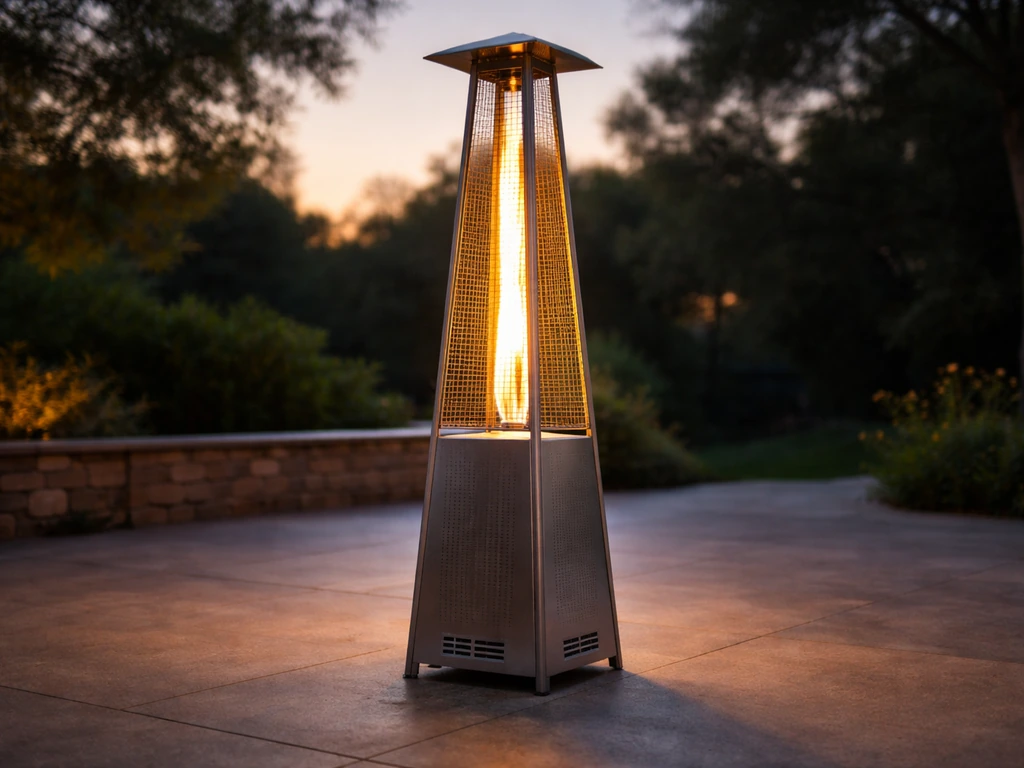
What pyramid flame patio heaters actually are (and why people love them)
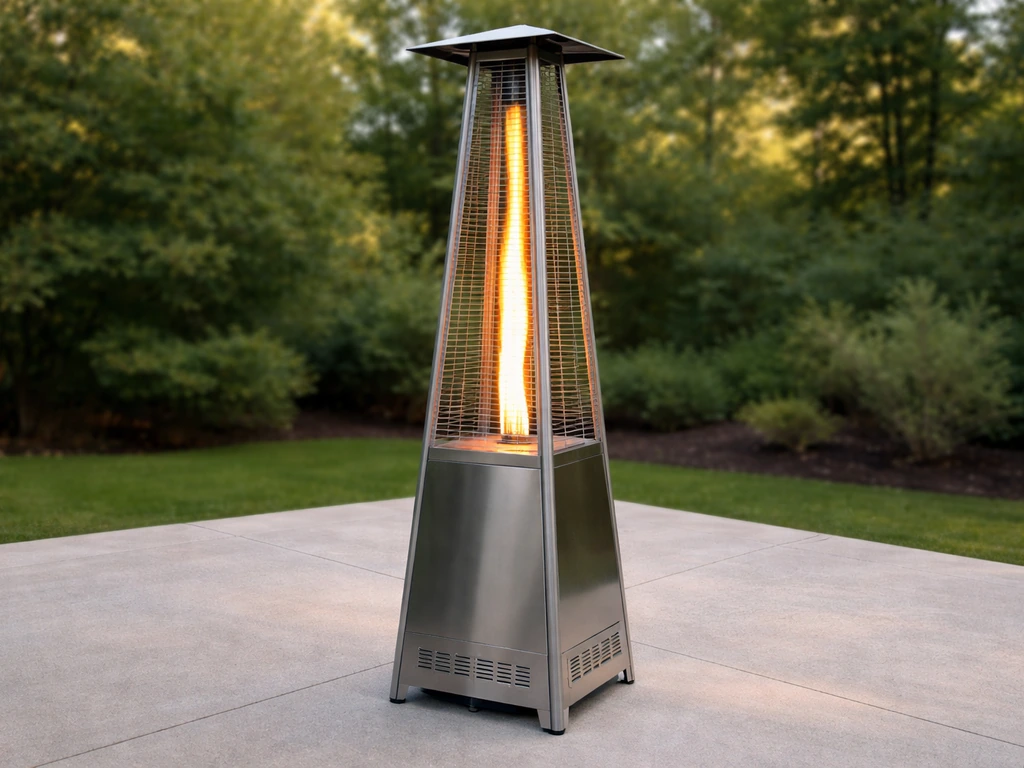
A pyramid flame patio heater is a tall, freestanding propane heater with a vertical glass tube running up the center. Propane burns inside that tube, creating a visible column of dancing flame that you can see from every angle around the heater. The heat radiates outward from the tube and a top burner grid, giving you warmth in a 360-degree pattern rather than one directional blast. They stand around 88 inches tall, have a relatively compact 21x21-inch footprint, and store the propane tank inside the base, keeping everything self-contained and reasonably tidy on a patio.
The honest reason most people buy them is the look. That flame column is genuinely stunning at night and doubles as ambient lighting for your outdoor space. It's the kind of heater that becomes a conversation piece and a focal point of the patio rather than an appliance you hide in the corner. Brands like Fire Sense, AZ Patio Heaters, and Hiland all make versions of this style, and they're consistently popular in the $200-$400 residential range. They're not bought by people prioritizing maximum BTU efficiency, they're bought by people who want ambiance and a reasonable amount of warmth together.
Fire Sense pyramid flame models vs. other pyramid heaters: sorting out the naming confusion
If you've been searching and landed on multiple listings that all seem to say "pyramid flame patio heater," here's what's actually going on. Fire Sense makes two primary pyramid flame models: the 60523 (stainless steel finish) and the 62263 (Coronado Brushed Bronze finish). Both share virtually identical specs: 40,000 BTU, 21x21x88-inch assembled dimensions, 65 lbs, electronic ignition, tip-over protection, and a standard 20-lb propane tank. The difference is cosmetic. The 60523 is the more common stainless unit you'll find at Home Depot and Best Buy. The 62263 in brushed bronze has a warmer aesthetic that suits certain patio styles better.
You may also see the SC62263 listed on sites like BBQGuys under a slightly different model prefix, but it's the same heater. Then there are the AZ Patio Heaters and Hiland versions, which use the same general design concept and similar glass-tube construction. The build quality and specs across the category are comparable in the residential price range. Fire Sense has strong brand recognition and wide retail availability, which makes warranty service and parts easier to access, but it isn't dramatically better than an equivalent AZ Patio or Hiland unit at the same price point. If you want to compare specific top performers across the full pyramid category, the best pyramid patio heaters guide on this site goes deeper on model rankings.
Real-world heat performance: what 40,000 BTU actually gets you
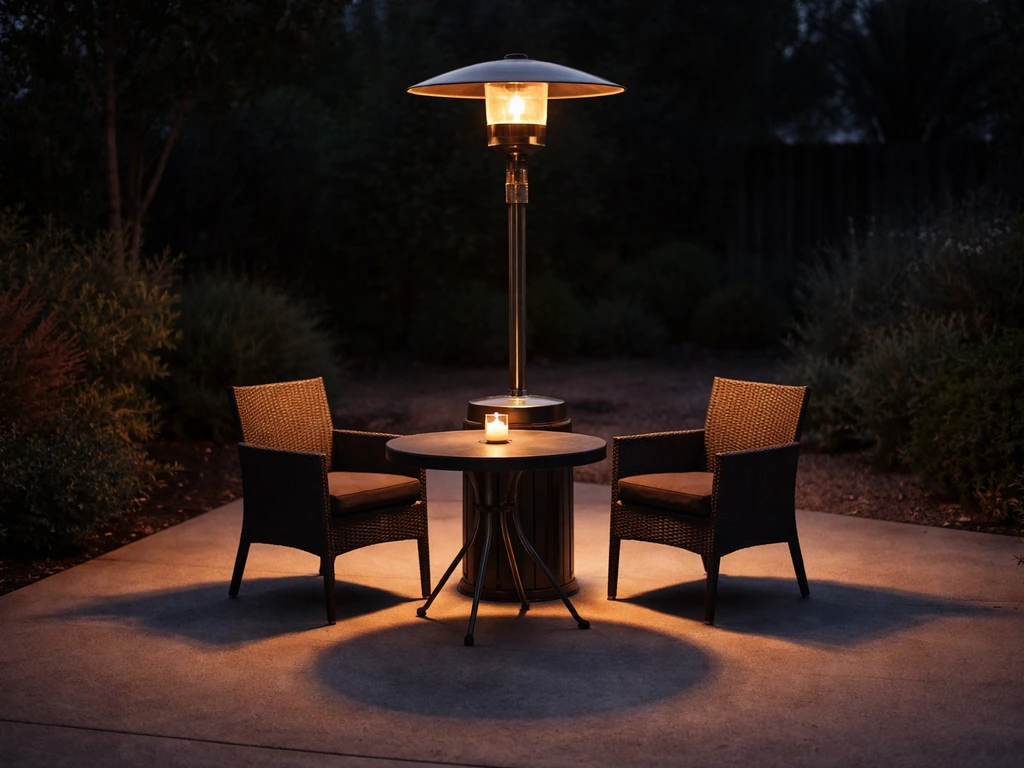
Forty thousand BTU sounds like a lot, and it is. A standard mushroom-top patio heater also runs at 40,000-46,000 BTU and can warm a decent 10-12 foot diameter zone because the heat is focused and radiated downward from the top cap. The pyramid design radiates heat differently: outward through the glass tube and from the top burner grid. Independent testing and user feedback consistently put the effective comfort radius of pyramid heaters at about 5 feet from the unit. Past that, you'll feel some warmth on a mild evening, but on genuinely cold nights (below 45°F), you'll want to be within arm's reach.
This is the most common complaint you'll see in reviews and user comments: people who expected full-patio coverage are let down. One Reddit user summarized it bluntly, calling the style "almost worthless at actually putting out heat." That's a little harsh, but the core criticism is valid if your expectation is a heater that replaces a jacket. What pyramid heaters do well is create a warm, comfortable zone around a small seating arrangement on a calm evening. Set up two or three chairs within 4-5 feet and you'll be genuinely comfortable in 55-60°F weather. Expect less from them in colder or windier conditions.
| Factor | Pyramid Flame Heater | Mushroom-Top Heater |
|---|---|---|
| BTU output | 40,000 BTU (typical) | 40,000–46,000 BTU (typical) |
| Effective heat radius | ~5 feet | ~8–12 feet |
| Heat direction | 360° outward from tube | Downward and outward from cap |
| Flame visibility | Full dancing flame column | Flame hidden inside unit |
| Ambiance/aesthetics | Very high | Moderate |
| Wind sensitivity | Higher (open tube) | Lower (shielded burner) |
| Best for | Small groups, mild evenings | Larger patios, colder nights |
If you're comparing pyramid vs. mushroom top models in more detail, the pyramid patio heater vs mushroom guide on this site breaks down exactly when each design wins. Short version: if pure heating is the priority, mushroom-top heaters have an edge. If you mainly want maximum warmth over a bigger area, a patio heater designed for broader heat distribution may make more sense than a pyramid heater mushroom-top heaters have an edge. If aesthetics matter as much as warmth, pyramid wins.
Fuel type, ignition, and what it costs to run
Every pyramid flame patio heater in this category runs on liquid propane (LP gas) only. The Fire Sense 60523 and 62263 manuals both specify propane vapor withdrawal, and there is no natural gas conversion option for these units. You use a standard 20-lb BBQ-style propane tank, the same cylinder you'd use on a gas grill. That tank slots neatly into the base of the heater and is hidden behind the door panel, which keeps the setup looking clean. The regulator and gas hose come included with Fire Sense models, so you're not buying extra parts to get started.
Ignition is electronic on the Fire Sense units: turn the knob, press the igniter button, and the flame lights without a match or lighter. One thing worth knowing from real users: the initial flame starts small when you first light it, similar to a pilot light on a hot water heater. Let it burn for about 10-15 seconds before you turn the gas up. PatioBrothers' review of an AZ Patio Heaters pyramid heater also advises letting the initial small flame burn for about 15 seconds before turning the gas up. If you advance the gas too quickly before the glass tube warms up, the flame can stutter or go out. It's not a defect, it's just how glass-tube pyramid heaters work.
Runtime and operating cost are easy to estimate. The Fire Sense 60523 spec sheet lists approximately 10 hours of burn time on a full 20-lb tank at the maximum 40,000 BTU setting. A 20-lb propane tank typically costs $20-$25 to fill at an exchange station, so you're looking at roughly $2.00-$2.50 per hour of maximum-output heat. In practice, most users run the heater at medium settings, which stretches the tank further. If you use it 3-4 evenings per week through a mild season, expect to refill the tank every 2-3 weeks.
Assembly, build quality, and how these hold up over time
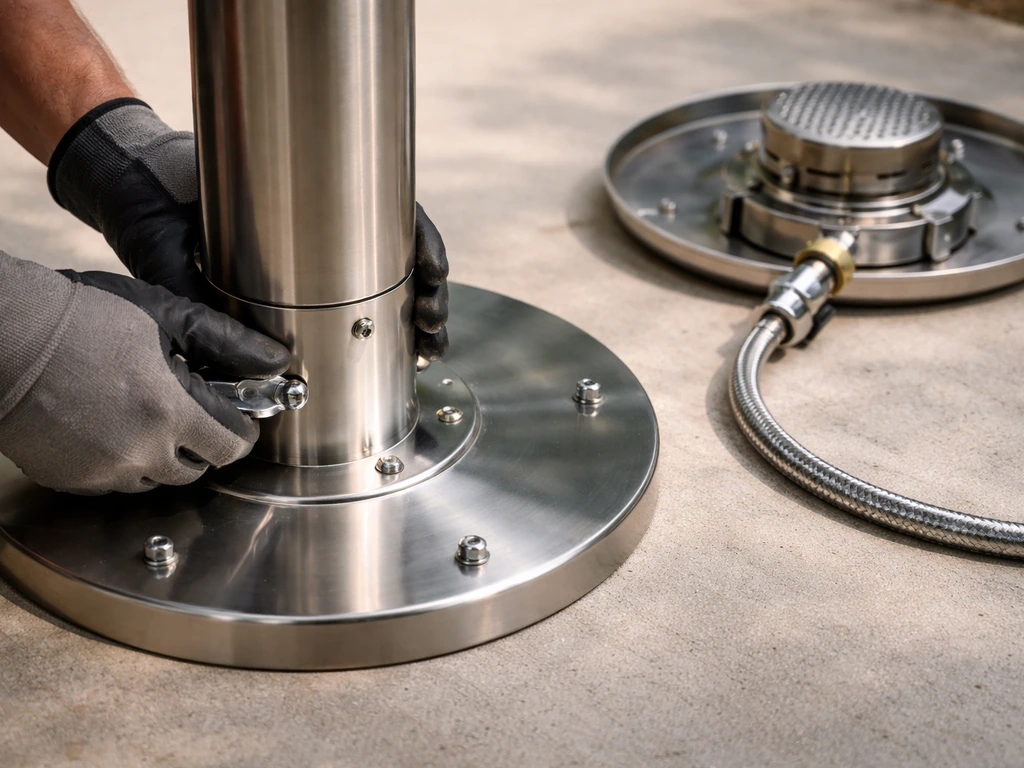
Assembly is moderate in complexity. You're bolting together the pole sections, attaching the base, installing the burner components, and connecting the regulator hose. Most users finish the job in 45-60 minutes with basic tools. The manual is included and reasonably clear. Fire Sense includes the regulator and hose, so you won't need to source those separately. After assembly, perform a gas leak test using soapy water on every connection before lighting, as the manual explicitly requires this step and it's non-negotiable for safety.
Build quality on the Fire Sense 60523 is stainless steel throughout, including the burner and heating grid. The 62263 in brushed bronze uses a similar construction with a different surface finish. In the $200-$400 residential range, the build quality is described consistently as honest and appropriate for the price. These aren't commercial-grade restaurant patio heaters, but they're solid enough for typical homeowner use. The glass tube is the most vulnerable component. Thermal stress from rapid temperature changes (like rain hitting a hot tube) can crack it over time. Using a cover when the heater is stored and avoiding sudden cold water contact extends tube life significantly.
Wind tolerance is a genuine weakness for pyramid flame heaters. The open glass tube creates an exposed flame that's more susceptible to wind gusts than the shielded burner in a mushroom-top design. In a mild breeze, the flame dances dramatically (which looks great). In a real gust above 10-15 mph, the flame can blow out and trigger the safety shutoff. If your patio is regularly exposed to wind, this style will frustrate you. A sheltered patio, a covered pergola, or a naturally protected yard makes a much better environment for these heaters.
Safety, clearances, and where to position your heater
Pyramid flame heaters come with two critical safety features built in: a tip-over protection system and a safety auto-shutoff tilt valve. If the heater gets knocked over, the gas cuts off automatically. This is especially important with a 65-lb heater that's 88 inches tall; the tall, narrow profile makes them more tippable than shorter heaters, particularly on uneven surfaces. Always position the heater on a flat, level, stable surface. Do not use on a raised deck with soft or flexing boards without confirming the surface can bear the load and stays level.
Clearance is the other major safety consideration. The CSA B149.1 code governs propane appliance installation in North America, and the standard minimum clearances for outdoor propane heaters apply here. As a practical rule: maintain at least 24-36 inches of clearance on all sides from any combustible material (furniture, fabric, wood structures, umbrellas, planters). The overhead clearance is equally important. These heaters are 88 inches tall with an active flame at the top, so keep them away from overhead structures, pergola crossbeams, and string lights. Many covered patio installations with standard 8-foot ceilings are not appropriate for pyramid heaters. Check your ceiling height and clearances before buying.
- Use only on flat, stable, level ground, not soft grass, gravel, or uneven decking
- Maintain 24-36 inches minimum clearance to all sides from combustibles
- Never use under a standard 8-foot ceiling or low pergola crossbeams
- Keep clear of overhead string lights, fabric shades, and umbrellas
- Perform a soapy-water gas leak test on all connections before first use
- Never use indoors, in a garage, or in any enclosed or semi-enclosed space
- Always turn off the gas at the tank valve when not in use, not just at the heater knob
- Store with the propane tank disconnected if storing for the season
The ventilation requirement is straightforward: these are outdoor-only appliances. Propane combustion produces carbon monoxide and other byproducts, and no amount of "open-air feeling" in a sunroom, screened porch, or enclosed gazebo makes that space acceptable for a propane pyramid heater. If your space is fully covered and enclosed on multiple sides, look at electric infrared heaters instead.
The honest pros and cons, and who should actually buy one
| Pros | Cons |
|---|---|
| Stunning visual flame column, great ambiance | Limited heat radius (~5 feet effective) |
| 40,000 BTU on propane, decent for small groups | Poor performance in wind or cold below 45°F |
| Self-contained: tank hidden in base | Tall profile makes it tippy on uneven surfaces |
| Electronic ignition, no matches needed | Glass tube vulnerable to thermal cracking |
| Tip-over shutoff and safety tilt valve included | Propane only, no natural gas option |
| Regulator and hose included (Fire Sense models) | Not suitable for covered/enclosed patios |
| Relatively compact 21x21" footprint | Tank (~$20-25 per fill) adds ongoing cost |
Buy a pyramid flame heater if:
- You want ambiance and warmth together, not just raw heat output
- You have a small, sheltered patio with a seating area within 5 feet of the heater
- Your evenings are mild (50-65°F range) rather than genuinely cold
- You have an open-air (uncovered or high-clearance covered) outdoor space
- You want a heater that doubles as a striking visual feature of the patio
Skip a pyramid flame heater if:
- You need to heat a large patio area (10+ feet from the heater)
- You live in a cold climate where temps regularly drop below 40°F in the evenings
- Your patio is exposed to regular wind
- You have a covered patio with standard 8-foot or lower ceilings
- Heat efficiency and low operating cost are your top priorities
Final verdict and buying checklist
For most homeowners in mild climates with a small, sheltered patio, a Fire Sense pyramid flame heater is a genuinely enjoyable purchase. The Fire Sense 60523 (stainless) is the most widely available and easiest to get warranty support on. The 62263 in brushed bronze is a great aesthetic choice if that finish suits your space better. Both deliver the same performance. If you want the best overall pyramid models compared side by side across more brands and configurations, the best outdoor pyramid patio heater guide on this site gives you a fuller ranked list. If you want a quick recommendation for the best outdoor pyramid patio heater for your patio size and conditions, use that guide to narrow down the top choices.
Before you click buy, work through this checklist to make sure this heater is the right fit for your specific situation:
- Measure your ceiling or overhead structure clearance: you need well over 88 inches plus safe buffer, so anything under 10 feet of clearance needs careful evaluation
- Confirm your patio surface is flat, stable, and level (concrete or pavers are ideal)
- Check your typical evening temperatures: if you regularly entertain below 45°F, factor in that this heater will underwhelm on those nights
- Assess wind exposure: if your patio gets regular gusts, either choose a sheltered position or reconsider the style entirely
- Budget for propane: at ~$2.00-2.50 per hour of full-output runtime, estimate your typical usage and monthly fuel cost
- Decide on finish: stainless (60523) for a modern or neutral patio, brushed bronze (62263) for a warmer or traditional aesthetic
- Plan your seating layout: position chairs within 4-5 feet of the heater to get real comfort benefit, not 10 feet away
- Have soapy water ready for a leak test before the first light-up, it takes 2 minutes and is required
Pyramid flame heaters occupy a specific niche: they're not the most efficient heaters on the market, and they're not going to heat a large cold patio like a restaurant-grade unit will. But for what they do, which is create a genuinely beautiful outdoor atmosphere with enough warmth for a small group on a pleasant evening, they're hard to beat. If you want a broader comparison of options beyond this pyramid flame style, see the best pyramid patio heaters for more picks. Go in with accurate expectations and you'll love yours.
FAQ
Can I convert a pyramid flame patio heater to natural gas?
No, these pyramid flame patio heaters are liquid propane (LP) only. If a listing mentions natural gas or a conversion kit, treat that as a mismatch for Fire Sense 60523/62263 specifically, and verify the exact model’s manual before buying.
Is it safe to use this heater on a deck or patio with uneven ground?
Place the heater on a truly level, stable surface. Avoid soft or flexing decking boards, and do not set it on uneven pavers where the base can tilt. Even with tip-over protection, wind and tilt can reduce flame stability and trigger shutoff.
How close do people need to sit to feel real warmth from a pyramid heater?
Most comfort complaints come from being too far from the unit, not from the BTU rating. For full benefit, plan for seating within about 4 to 5 feet, and expect noticeably less heat beyond that range, especially below 45°F.
What wind conditions will cause a pyramid flame heater to shut off?
Wind can blow out the flame and trigger safety shutoff in gusts, and the open glass tube makes this style more sensitive than mushroom-top designs. If you often have breezy conditions, use it only in sheltered areas (covered pergola, windbreak, or naturally protected patio).
Why does the flame start small at first, then sometimes go out if I turn it up too fast?
If ignition starts small and then needs time to stabilize, let the burner run for about 10 to 15 seconds before turning the gas up. Advancing too quickly can cause stuttering or an early shutoff, especially while the glass tube is still warming.
How do I prevent the glass tube from cracking over time?
Use a cover for storage and avoid rapid thermal shocks, like hitting a hot glass tube with cold rain or splashing. If the heater is wet, let it fully dry before relighting, since moisture can affect flame behavior.
What is the real propane cost per hour for running one of these at max heat?
You should expect roughly 10 hours on a full 20-lb tank at maximum output, which works out to around $2 to $2.50 per hour based on typical exchange tank pricing. Actual cost can be lower if you run medium settings more often.
Do I need to do a leak test every time I change the propane tank?
Yes, do a soapy-water leak test on every connection before the first lighting and after any tank/regulator changes. If you see bubbling, stop immediately and fix the connection, since you should not “test and see” with an open flame.
Can I use a propane pyramid heater under a covered patio that’s enclosed on the sides?
These units are outdoor-only due to combustion byproducts, so they are not appropriate for sunrooms, screened porches, or enclosed gazebos. If you want a semi-enclosed setup, switch to an electric infrared heater designed for that environment.
What clearance distances should I follow around the heater, including overhead?
Minimum clearances depend on the installation rules and nearby combustibles, but a practical starting point is keeping at least 24 to 36 inches from furniture, fabrics, wood, and umbrellas, and keeping it away from overhead structures. Because it’s tall (about 88 inches), verify overhead clearance before buying.
How do I know if a pyramid flame heater is the wrong type for my patio size?
For a purchase decision, match the heater to your goal: pyramid heaters are best for small, sheltered seating zones with an aesthetic flame centerpiece. If you want full-patio replacement heating for a large open area, a different design (often mushroom-top or broader-distribution heaters) will perform better.
What’s the safest way to position it if people might accidentally bump it?
Because the base holds a heavy 20-lb propane tank and the heater is tall and narrow, keep it away from pathways where it can get bumped. If pets or kids move around often, consider an extra barrier or locating it where there is no foot traffic near the base.