
The Cuisinart portable tabletop patio heater with cover is the COH-500 (or its close variant, the COH-514), a propane-fueled, 11,000 BTU compact heater that sits on any sturdy outdoor table and warms roughly 30 square feet around it. When listings mention a "cover," that cover is almost always the CHC-501, a separately sold weather-protection sleeve made from rip-resistant polyester. Some retailers bundle them together, but Cuisinart sells the two items individually on its own site. If you want both, confirm the bundle before you check out.
Cuisinart Portable Tabletop Patio Heater With Cover: Guide

Willa Brennan
30 Jun 2026
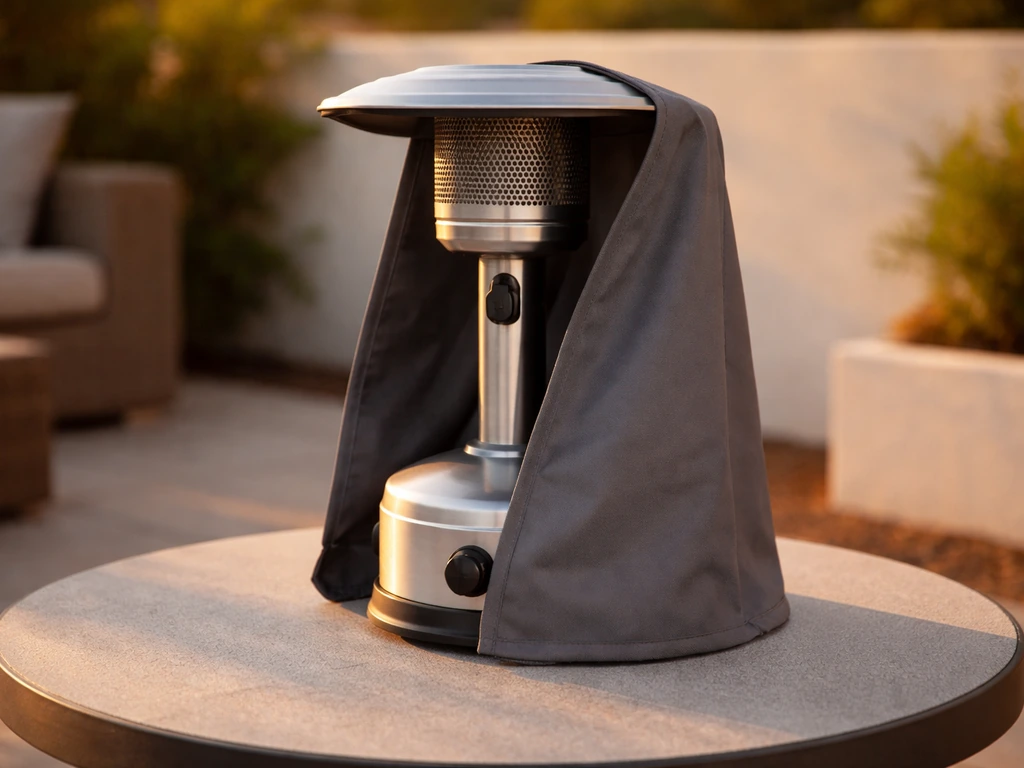
What "with cover" actually means here
The word "cover" in this context refers to a storage and weather cover, not a heat shield or safety guard used while the heater is running. The CHC-501 slips over the entire heater when it's off and cooled down, protecting it from rain, dust, pollen, and UV exposure between uses. It measures 18.9 inches long by 18.9 inches wide by 25 inches tall, weighs under a pound, and features a zipper closure, an adjustable drawstring at the bottom, and a side vent to reduce moisture buildup and condensation inside. You never put it on a hot or running heater. The manual is explicit: wait until the heater is fully cool before covering it, and Cuisinart recommends waiting at least 45 minutes after shutting it off before you even touch the unit.
If a retailer listing says "includes cover," double-check whether that means the CHC-501 is physically in the box or whether it just means the heater comes with a wire guard (the metal safety cage around the emitter head). The wire guard is always included with the heater. The fabric storage cover is a separate SKU. This is the most common source of confusion for buyers searching this keyword.
The exact model: specs, what's in the box, and what you provide
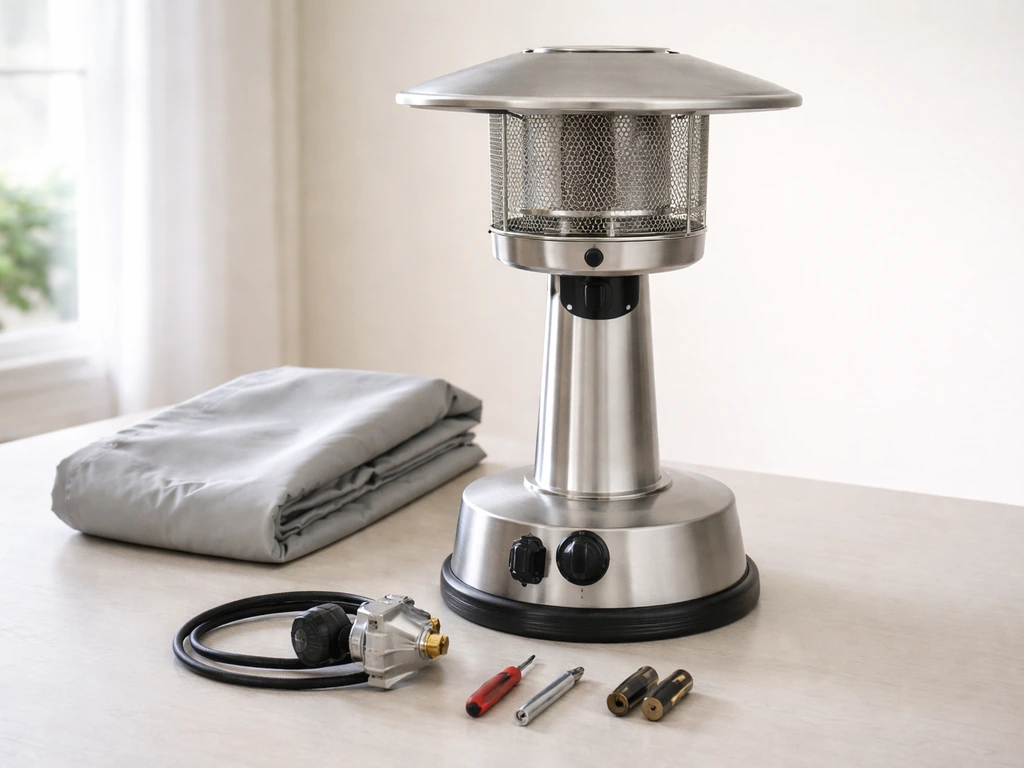
blank" rel="noopener noreferrer">The core heater is the COH-500 (also sold in a dark grey colorway as the COH-514). The COH-500 tabletop heater manual also describes the unit as a “PORTABLE PROPANE TABLETOP HEATER” and lists specifications such as an 11,000 BTU/HR rated heat input and use with a 1-lb propane gas cylinder COH-500 (also sold in a dark grey colorway as the COH-514). Both share the same core specs. Here's what the manual and product pages confirm:
| Spec | Detail |
|---|---|
| Model numbers | COH-500 / COH-514 / COH-500P |
| Fuel type | Propane only |
| Heat output | 11,000 BTU/hr |
| Coverage area | Up to 30 sq. ft. |
| Gas supply | Standard 1.02 lb. propane cylinder (user-provided) |
| Ignition | Built-in push-button igniter (on the control knob) |
| Safety features | Thermocouple and tilt-switch auto-shutoff |
| Minimum table height | 1,300 mm (about 51 inches) from floor level |
| Certification | CSA certified |
| Cover model (separate) | CHC-501 (18.9" x 18.9" x 25", rip-resistant polyester) |
What's in the box with the heater itself: a dome (reflector top), wire guard, emitter, burner assembly, tank hose, base, and the included pressure regulator. You must supply your own 1 lb. propane cylinder. The manual is clear that you cannot substitute a different size cylinder without the separately sold LP Adapter Hose (SKU QG-012B) if you want to run it off a 20 lb. tank. That hose is sold separately and is not included.
Choosing the right setup for your space
Covered patios vs. open outdoor spaces
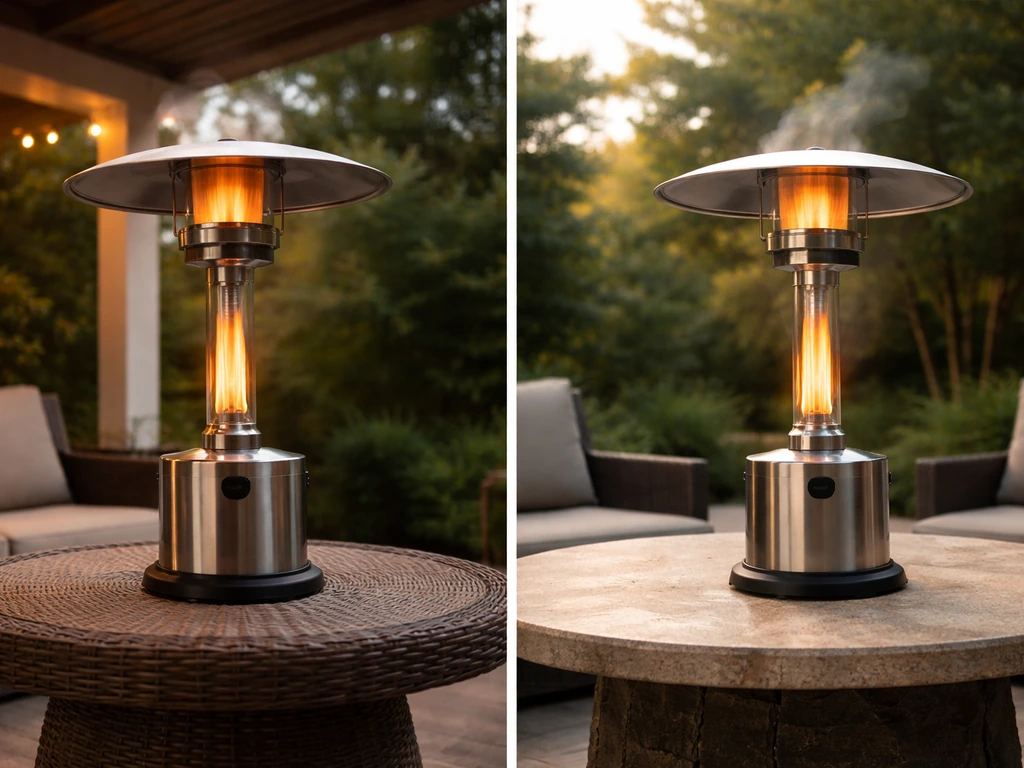
This heater works in both covered and uncovered outdoor spaces, but it performs noticeably better when you're not fighting the wind. At 11,000 BTUs it's a solid tabletop heater for intimate settings: two to four people gathered around a small patio table is right in its sweet spot. A table top pyramid patio heater is a great choice when you want concentrated warmth for small outdoor gatherings without needing a floor-standing unit. For a covered patio with some wind protection, it feels comfortable and focused. On a completely exposed deck on a breezy evening, you'll feel it working, but the effective warmth drops. The heater is outdoor-only, always. It consumes oxygen and the manual prohibits use in any enclosed or unventilated area.
Placement rules that matter
- Place it on a stable, level table at least 51 inches off the ground (1,300 mm per the manual).
- Keep the heater centered on the table so it doesn't overhang an edge.
- Maintain clearance from overhead structures, umbrellas, and any combustibles above and around the heater.
- Don't store anything underneath or directly beside the heater while it's running; radiant heat can damage items left too close.
- Avoid positioning the propane tank in direct sunlight or near any additional heat source.
How much heat do you actually need?
For a small table (4 feet or under) with 2 to 4 people sitting around it, one COH-500 is enough for mild to cool evenings in most climates. If your patio runs colder than 40°F regularly, or if you have an uncovered space exposed to wind, you may want to supplement with a larger propane unit or consider a second tabletop heater on an adjacent table. If you're comparing options, tabletop propane heaters in this class and tabletop electric heaters serve different situations: propane wins on portability and raw BTU output, while electric wins on precision and zero-flame operation in fully covered spaces. Table top patio heater electric models are a good fit when you want steady warmth in a covered space.
Setup and your first-use safety checklist
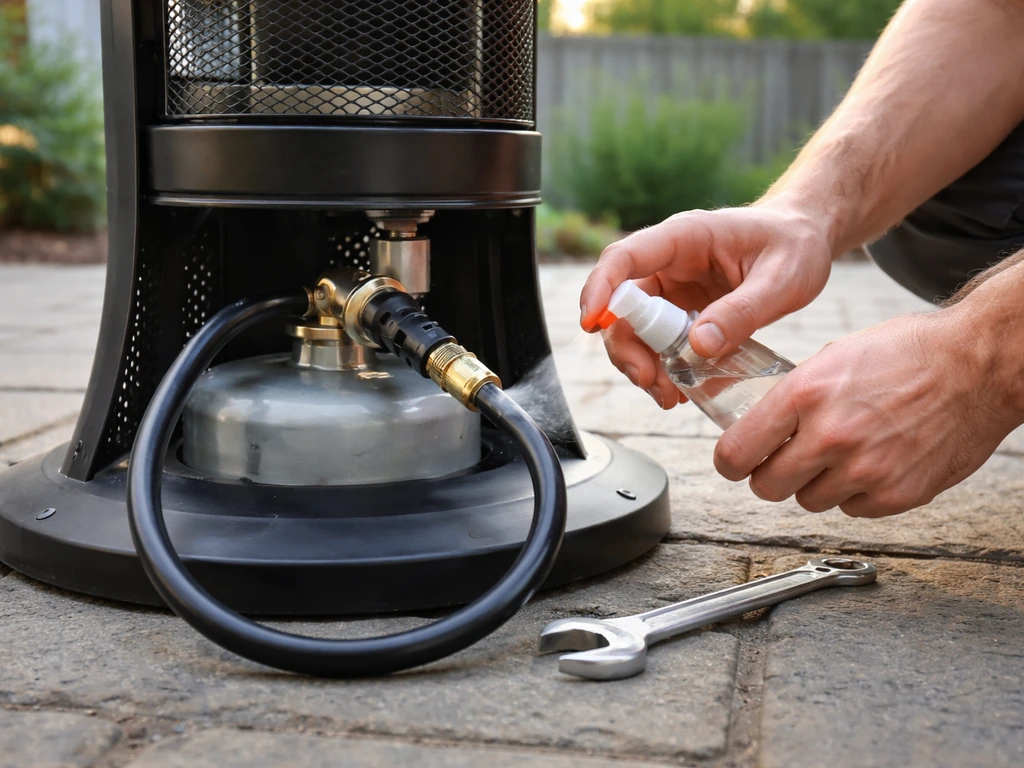
Before you ever light this heater, run through these steps in order. Skipping the leak test in particular is the one mistake that causes real safety problems.
- Assemble the heater outdoors in its intended location. Do not assemble or light it indoors.
- Attach the included pressure regulator to a fresh 1 lb. propane cylinder (hand-tighten only; do not use tools).
- Perform the leak test before the first use and every time you connect a new tank. Apply a soap-and-water solution to all connections: the regulator, the hose, and the cylinder valve. Turn the tank on briefly and watch for bubbles. If you see bubbles, turn the tank off immediately, tighten connections, and retest. Never light the heater until you've confirmed zero bubbles. No open flames or smoking during this test.
- Set the heater on a stable table at the required height, centered and level.
- Turn the control knob to OFF, then push in and slowly rotate to HIGH to activate the built-in igniter. Hold the knob in for 30 seconds once the flame ignites so the thermocouple heats up and holds the valve open.
- With a brand-new tank, allow at least one minute for the air to purge from the line before the flame catches.
- Once lit, turn the knob to LOW and let the heater warm up for about 5 minutes before moving to your desired heat setting.
Getting the most comfort out of every session
Wind and angle
Wind is the biggest performance killer for any tabletop propane heater. If you're comparing options like the table top patio heater model hps-c-pc, focus on wind resistance and reflector design for the best comfort on windy nights tabletop propane heater. The COH-500's reflector dome is designed to direct heat downward and outward over the table, but even a moderate breeze scatters that warmth quickly. If your patio gets regular wind, position the heater on the upwind side of the table so the heat blows toward your guests rather than away. A low windbreak, even a simple outdoor privacy screen, makes a genuine difference. On very windy nights the tilt-switch may trip if the table isn't perfectly stable, so make sure you're on a solid, even surface.
Runtime and the 25-minute tank reality
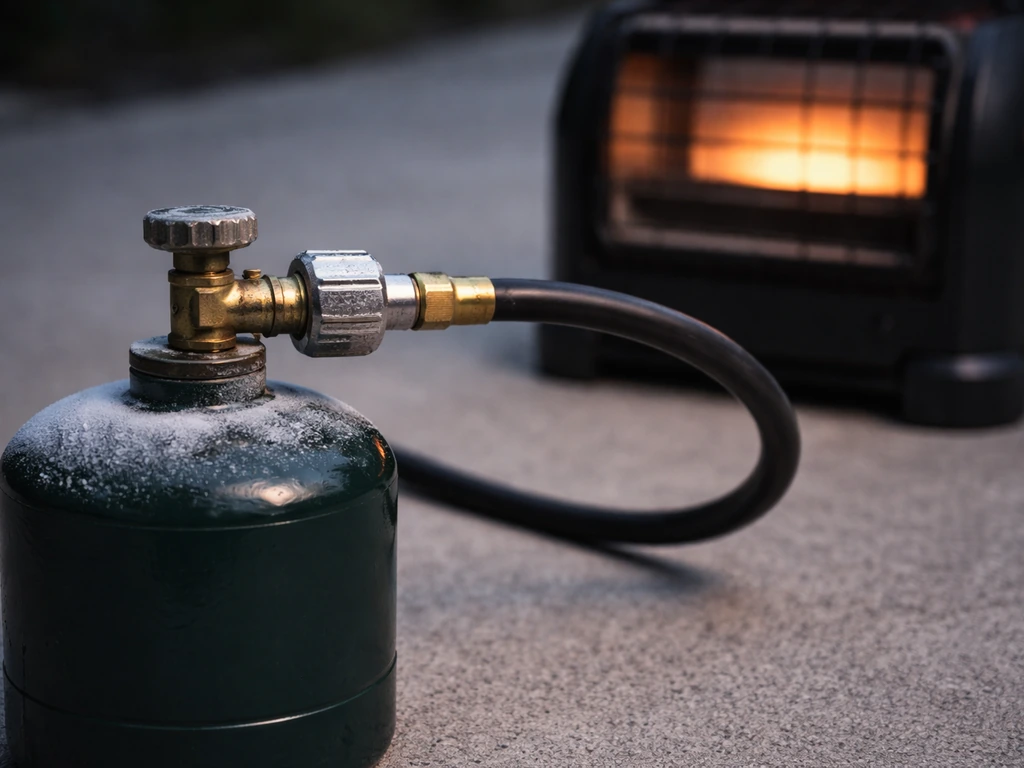
Here's something the product listing won't tell you upfront: the manual states a 1 lb. tank lasts about 25 minutes at full burn before it freezes. This happens because the combustion process draws heat out of the small tank faster than the liquid propane inside can absorb ambient heat to keep vaporizing. You'll notice the flame getting smaller and eventually going out. The fix is simple: swap in a fresh tank, or let the current tank warm up for a few minutes and restart. If you want longer sessions without constant swaps, use the separately sold LP adapter hose (QG-012B) to run the heater from a larger 20 lb. tank. That's the most practical upgrade for anyone hosting dinner parties.
Reading the flame
Before every session, check the burner flame. A healthy flame is blue with slight yellow tips. If the flame is mostly yellow or orange, or if it's unusually low, check for a blocked burner opening before assuming the tank is empty. The manual recommends this visual check as part of routine pre-use inspection.
Shutting down correctly
Always turn the control knob to LOW first, then push in and rotate to OFF. After that, turn the tank valve completely off and remove the 1 lb. cylinder from the unit. Don't just turn the knob off and walk away with the tank still attached. This prevents residual gas from sitting in the line between uses.
Maintenance, cleaning, and storing it with the CHC-501 cover
The COH-500 is low-maintenance, but a few habits will keep it running reliably for seasons. The most important rule for maintenance is patience: wait at least 45 minutes after the last use before touching the emitter, dome, or wire guard. They stay very hot.
- Wipe the dome and exterior surfaces with a damp cloth after they've fully cooled. Avoid abrasive cleaners that can scratch the finish.
- Check the burner openings before each use for spider webs, insect debris, or carbon buildup. A blocked burner opening causes ignition problems and low flame. Clear any obstructions with a soft brush; never use metal tools on the burner.
- Inspect the hose and regulator connection for cracks or wear at the start of each season. If the hose looks cracked or stiff, replace it before using the heater.
- Between uses, disconnect the propane cylinder, turn the knob to OFF, and store the heater upright in a sheltered location out of direct sunlight.
- Never store a propane cylinder indoors or in a garage with the heater. Store cylinders upright outdoors, away from heat sources and direct sun.
- Once the heater is completely cool, slip the CHC-501 cover over it from the top, zip it closed, and cinch the drawstring at the base. The side vent on the cover is there for a reason: it reduces condensation buildup inside. Don't seal it shut.
- To clean the CHC-501 cover itself, wipe it down with a damp cloth and mild soap. Let it air dry completely before putting it back on the heater to prevent mildew.
Common problems and how to fix them fast
Heater won't ignite
This is the most common complaint with tabletop propane heaters. Work through these causes in order: Is the tank less than a quarter full? Swap it. Is it a brand-new tank? Wait at least 60 seconds for air to purge from the line before trying again. Is the burner opening blocked by debris or insect nesting? Clear it. Are you holding the knob in long enough after the flame catches? You need a full 30 seconds to heat the thermocouple. If none of those fix it, the thermocouple itself may need cleaning or replacement.
Flame goes out on its own
Two likely causes. First, the tilt-switch tripped because the table surface is uneven or the heater got bumped. Recheck your surface and relight. Second, the 1 lb. tank froze from extended high-burn use (remember, about 25 minutes at full throttle is the ceiling). Let the tank warm back to ambient temperature and restart, or switch to a fresh tank.
Low flame or weak heat output
Check the tank level first. After that, look at the burner for carbon buildup or obstruction. If the flame is mostly yellow or producing thick black smoke, there's likely a combustion problem: blocked air passages are the usual culprit. This is also why Cuisinart recommends using the CHC-501 cover when the heater is not in use: keeping debris and moisture out of the air passages prevents exactly this problem.
Safety feature reference
The COH-500 has two built-in safety mechanisms. The thermocouple is a sensor that detects whether the flame is actually lit; if the flame goes out unexpectedly, it shuts the gas valve within seconds to prevent unburned gas from escaping. The tilt-switch cuts off gas flow if the heater tips more than a safe angle. Both are passive and automatic, but they don't replace common sense: always turn the tank off completely when you're done, never leave a lit heater unattended, and never use this heater indoors or in any enclosed space.
Quick buying checklist before you purchase
If you're shopping today and want to make sure you're getting the right product and the right bundle, run through this before checkout:
- Confirm the model number is COH-500, COH-500P, or COH-514. All three are the same core 11,000 BTU propane tabletop heater.
- Check whether the CHC-501 cover is physically included in the package or sold separately. If the listing just says "with cover," read the item description carefully.
- Verify the fuel type: this heater runs on propane only, using a standard 1.02 lb. cylinder you supply. It is not electric and cannot run on natural gas.
- Confirm the included pressure regulator and hose are in the box. These must be used; you cannot use a third-party regulator.
- If you want to run it on a 20 lb. tank, the LP Adapter Hose QG-012B is sold separately and not included.
- If you're comparing this against the tabletop pyramid-style propane heaters or other Cuisinart tabletop models, note that the COH-500 uses a reflector dome design (heat radiates downward and outward from the top), which is different from a pyramid flame aesthetic heater.
FAQ
What does the “cover” mean for the Cuisinart COH-500 listing, the fabric sleeve or the wire guard?
In this model line, the wire guard is always included with the heater (it is the metal safety cage around the emitter head). The fabric “cover” is typically the CHC-501 weather-protection sleeve, sold separately. Before you buy, confirm that CHC-501 is in the quantity details, not just a vague “includes cover” label.
Can I use the cover while the heater is still warm to speed things up?
No. The sleeve is for storage only, it should go on only after the heater is fully cool. Cuisinart specifically recommends waiting at least 45 minutes after shutoff before covering it, because trapping heat can increase wear on components and encourage moisture buildup inside the housing.
How long does a 1 lb propane tank actually last on the COH-500?
At full burn, the manual states about 25 minutes, after which the tank can freeze and the flame will shrink and may go out. For longer hosting periods, the more practical approach is swapping tanks frequently or running the unit on a 20 lb tank using the separately sold LP adapter hose (QG-012B).
What should I do if the flame won’t stay lit or keeps going out?
Start with the common pre-checks: ensure the knob is held long enough during ignition (about 30 seconds) so the thermocouple heats properly, then look for a blocked burner opening that can cause poor combustion. If the flame is correctly burning and still repeatedly drops out, the thermocouple may need cleaning or replacement rather than only changing the tank.
The tilt-switch keeps tripping. How can I prevent it?
Most often it happens because the table surface is uneven or the heater was bumped. Place it on a stable, level surface and make sure the base sits flat. If you use a tabletop umbrella stand or wobbly table, avoid direct contact with moving parts, and consider a sturdier table for windy or crowded setups.
Does wind reduce heat even under a covered patio?
Yes, wind still matters because it can scatter the dome reflector’s downward and outward heat. Position the heater on the upwind side so the airflow pushes warm air toward your guests. If possible, add a low windbreak like a privacy screen, since even modest gusts can noticeably reduce comfort.
Is the COH-500 safe under an enclosed gazebo or screened room?
No, it is outdoor-only. The unit consumes oxygen and must not be used in any enclosed or unventilated area. Screened rooms and gazebos can still trap combustion byproducts, so treat them as indoors unless you have open, truly outdoor conditions with free airflow.
Do I need to do a leak test every time I use it?
You should do it when connecting or reconnecting the regulator and after any gas-line disturbance, but not necessarily every single session if nothing was changed. The key is to never skip the leak test step during setup, especially when moving tanks, refitting the hose, or if you smell gas.
What propane tank mistakes cause the most problems?
The biggest mistake is trying to use a different tank size without the correct adapter hose. The heater is designed for a 1 lb cylinder, and for a 20 lb tank you need the separately sold LP adapter hose (QG-012B). Also, don’t assume a “freeze” issue is just empty fuel, it can be caused by extended high-burn use.
If I’m getting mostly yellow flame or black smoke, what’s the first thing to check?
Start by checking the burner opening and nearby air passages for debris or insect nesting, then verify the dome and burner are correctly seated. Yellow flame and heavy soot usually point to restricted airflow, and using the CHC-501 cover between uses helps prevent the kind of blockage that triggers combustion issues.
How can I get longer warmth for dinner parties without constantly swapping tanks?
If you host for more than about 25 minutes at full throttle, plan ahead for tank swaps or use the larger 20 lb tank option with the QG-012B adapter hose. This reduces interruption and also avoids repeated tank freeze-and-warm cycles on small cylinders.
Should I remove the 1 lb tank after every session?
Yes. After turning the control knob to LOW, shut it off fully (knob to OFF), then close the tank valve completely and remove the cylinder from the unit. Leaving the tank attached after shutdown can leave residual gas in the line, which you want to avoid between uses.