
The HPS-C-PC is an 11,000 BTU tabletop propane patio heater sold under the Hampton Bay brand at Home Depot, designed for small outdoor spaces like bistro tables, balconies, and intimate patio setups. It runs on a small propane cylinder, heats up to about 30 square feet, and is fully cordless. If you've been seeing 'HPS-C-GH' pop up alongside 'HPS-C-PC' in search results and aren't sure which one you're actually looking at, that confusion is worth clearing up before you buy.
Table Top Patio Heater Model HPS-C-PC: How to Choose

Willa Brennan
8 Jun 2026
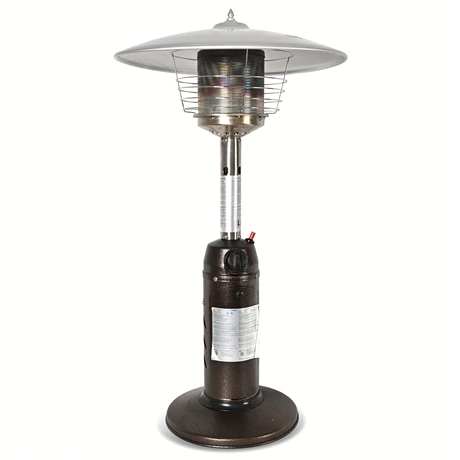
HPS-C-PC vs HPS-C-GH: which model are you actually looking at?
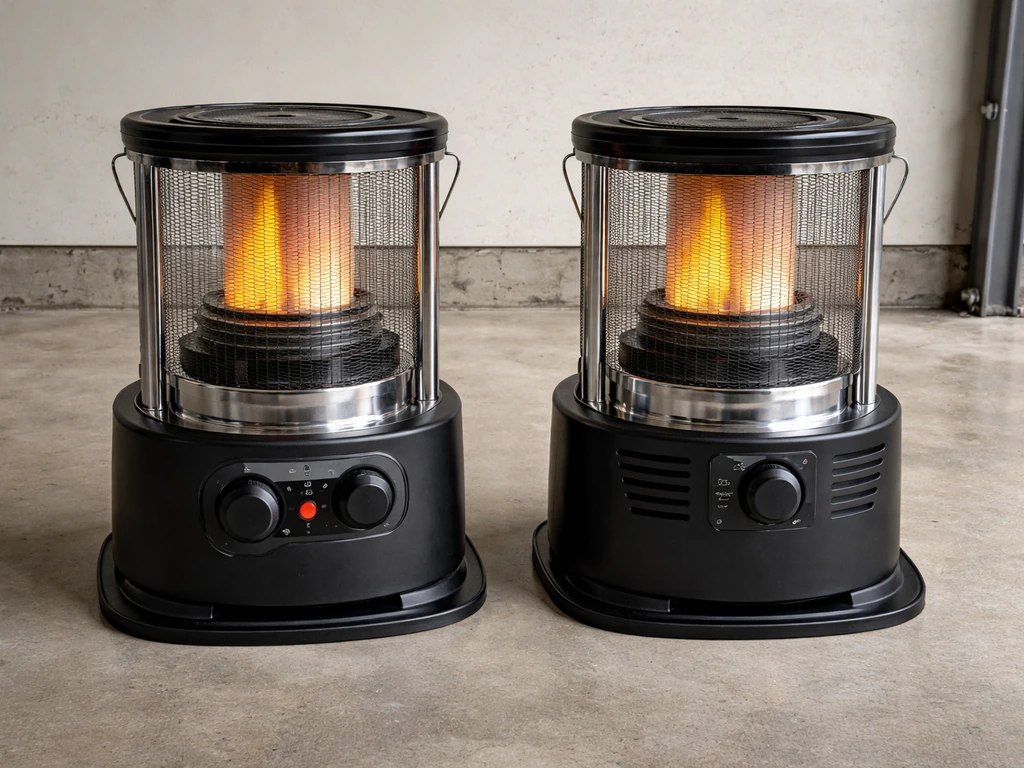
These two model numbers refer to closely related but distinct tabletop propane heaters from the same product family. The HPS-C-PC is the Hampton Bay version sold through Home Depot in the US, listed with the store SKU 1000012637 and explicitly labeled 'Model # HPS-C-PC' on both the product page and the owner's manual. The owner’s manual header for the Table Top Patio Heater (model HPS-C-PC) identifies the unit as “HPS-C-PC” and places it in the ANSI Z83.26-2007/CSA 2.37-2007 outdoor infrared patio heater standard context explicitly labeled 'Model # HPS-C-PC' on both the product page and the owner's manual.. Its manual was developed under ANSI Z83.26-2007/CSA 2.37-2007 outdoor infrared patio heater standards, and it ships with a CSA-certified regulator included.
The HPS-C-GH is a closely related variant documented under the Uberhaus brand (model number 70005027 HPS-C-GH on ManualsLib), which is a brand commonly associated with RONA and other Canadian retailers. Both are propane-fueled tabletop heaters from what is clearly the same product platform, but they carry different retail branding and may have minor specification differences. The HPS-C-GH manual, for instance, specifically calls for a standard 1.02 lb. propane cylinder, which is the small green Coleman-style canister.
The reason listings look inconsistent is straightforward: the same physical heater (or a near-identical one) gets rebranded and sold through different retailers under slightly different model identifiers. Spacing and punctuation variations you'll see in search results (HPS C PC, HPS-C PC, HPS c gh, etc.) are just inconsistent formatting by retailers and third-party sites, not different products.
To confirm which model you have or are buying, check three things: the label on the unit itself, the first page of the included manual, and the retailer's product page model number field. If it says HPS-C-PC, you're looking at the Hampton Bay Home Depot version. If it says HPS-C-GH or references model 70005027, you've got the Uberhaus/Canadian retailer variant. For parts, manuals, and troubleshooting, use the model number that appears on your actual unit.
Fuel type and what 11,000 BTUs actually means in practice
Both the HPS-C-PC and HPS-C-GH are propane-fueled. There's no electric version of this specific model, so if you were hoping for a plug-in option, you're looking at a different product. If you're specifically looking for a table top patio heater electric, you'll need to choose a different type of model than the HPS-C-PC and HPS-C-GH. The propane setup is actually one of the best things about these small tabletop units: they're completely cordless, which means you can place them anywhere on a patio, deck, or balcony without worrying about extension cords or outlet locations. That portability is a genuine convenience advantage over tabletop electric heaters.
At 11,000 BTUs, this is a modest but practical output for a table-level heater. To put that in plain terms: a standard full-size freestanding patio heater puts out 40,000 to 48,000 BTUs and heats a circle roughly 10 to 15 feet in diameter. The HPS-C-PC, at 11,000 BTUs, is designed to warm the people sitting immediately around it, not to heat a wide-open patio. Home Depot's own listing says it covers up to 30 square feet, which is about right for two to four people gathered closely around a bistro table.
One important note: this heater uses a thermocouple-based infrared burner, not a simple open flame. It produces radiant heat, meaning it warms objects and people it's aimed at rather than heating the air around it. That's actually more efficient in outdoor settings where wind would just carry warm air away.
How much space will it actually heat? Covered vs uncovered patios
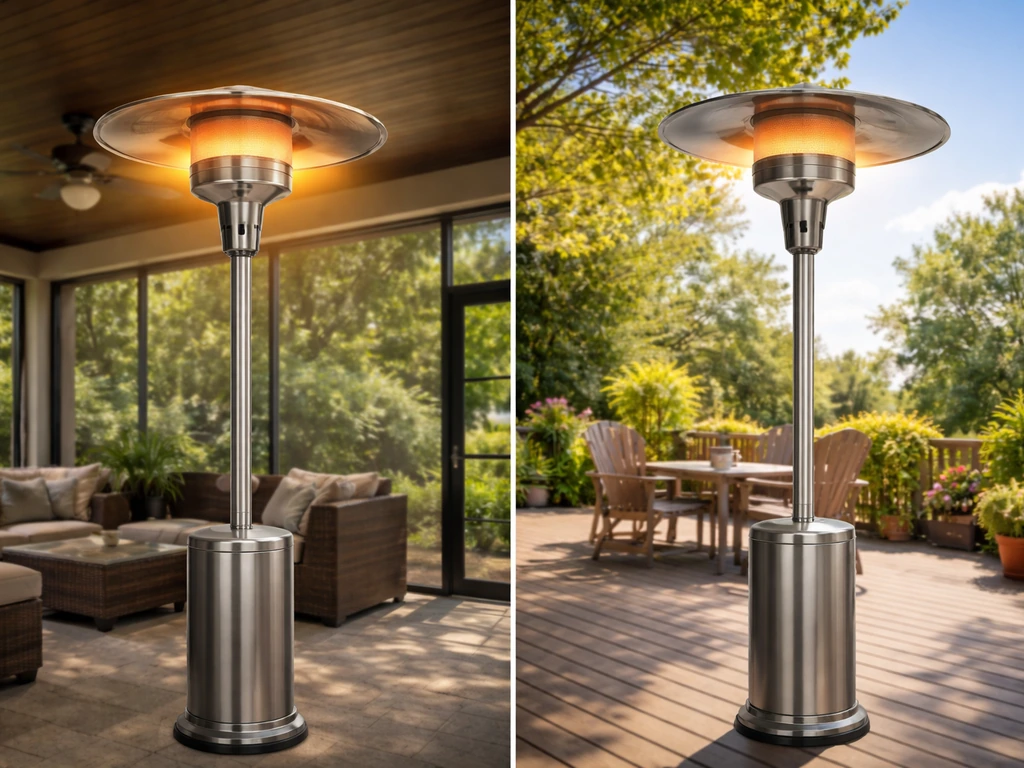
The HPS-C-PC is at its best on a covered patio, a screened porch, or a sheltered balcony. In those environments, the 30-square-foot heat zone feels comfortable because the radiant heat isn't fighting wind and the ambient temperature drops more slowly. For two people at a small outdoor dining table under a pergola or awning, this heater does exactly what it promises.
On a fully open, exposed patio or deck, the results are more variable. The manual is honest about this: the heater operates at reduced efficiency below 40°F, and wind above 10 mph will noticeably cut into performance. On a breezy evening on an uncovered patio, you'll feel the heat only when the wind cooperates. It's not that the heater fails, it's just that 11,000 BTUs from a tabletop unit isn't enough to overcome significant ambient heat loss in open, windy conditions.
If your patio is fully exposed, larger than about 100 square feet, or regularly experiences wind above 10 mph, this tabletop heater is best treated as a supplemental warmth source rather than a primary one. In those situations, a full-size freestanding propane heater or a mounted infrared unit would serve you much better.
Setup, ignition, and daily use
Assembly on the HPS-C-PC is minimal. The heater ships mostly assembled, and you're essentially attaching the propane cylinder to the base connection point and making sure the regulator is seated correctly. The CSA regulator is included, so you don't need to source a separate one.
Lighting it takes a bit of patience the first couple of times, but the process is straightforward once you've done it. Here's the actual sequence from the manual:
- Fully open the cylinder valve on your propane canister.
- Rotate the variable control knob about 90 degrees counterclockwise to the PILOT position.
- Press and hold the control knob while pressing the igniter button repeatedly until the pilot lights. This can take up to 90 seconds of holding while clicking the igniter.
- Once the pilot is lit, continue holding the knob for 15 seconds. This gives the thermocouple time to heat up and tells the safety valve to stay open.
- After 15 seconds, release the knob. The pilot should stay lit.
- Turn the knob to LO or HI depending on how much heat you want.
The control knob has four positions: OFF, PILOT, LO, and HI. Day to day, you'll mostly toggle between LO and HI based on temperature and how many people are gathered around. Turning it off is simple: rotate back to OFF and close the cylinder valve. The thermocouple acts as an automatic safety shutoff if the flame goes out unexpectedly, so you don't have to worry about gas leaking if the pilot blows out in a gust.
The most common frustration new users report is the pilot not staying lit after releasing the knob, which almost always means the thermocouple didn't get hot enough. The fix is to hold the knob down longer (the full 15 seconds after the flame appears, not before), or to re-attempt the lighting sequence. It's a design quirk common to thermocouple-based heaters across all brands, not a defect specific to this model.
Safety checklist before you fire it up
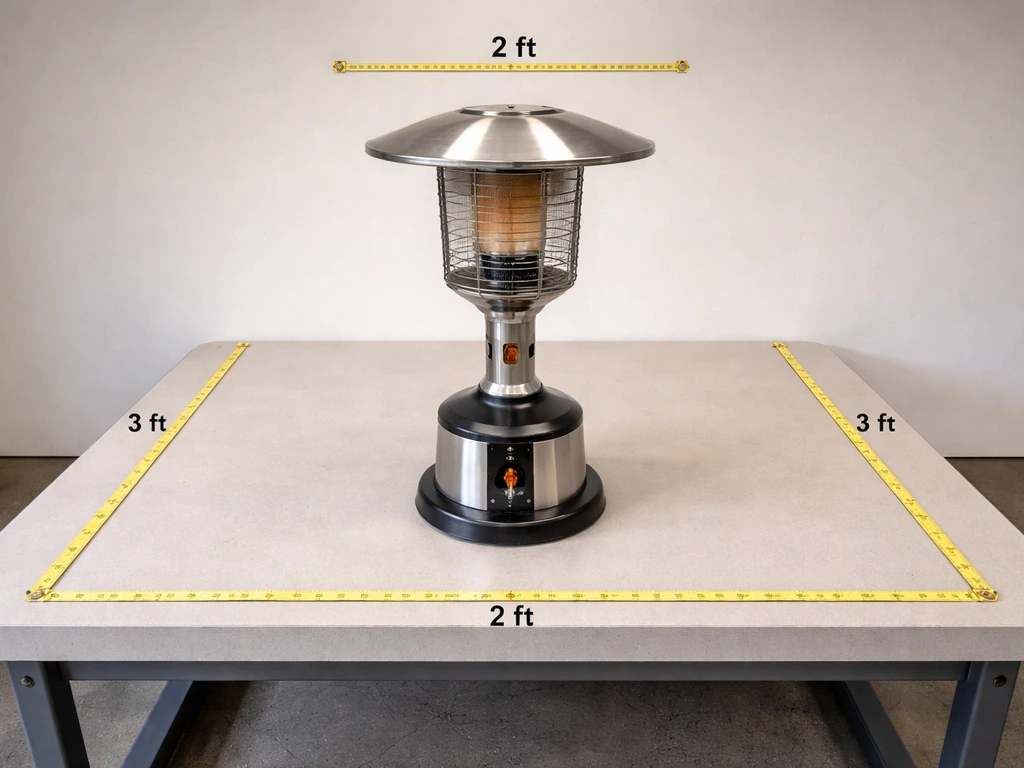
Tabletop propane heaters require more attention to placement than electric alternatives. Before using the HPS-C-PC, run through these checks every session:
- Clearance from combustibles: keep at least 3 feet of clear space on all sides and 2 feet of clearance above the heater head. Umbrellas, awning fabric, and overhead decorations are the most common hazard here.
- Surface stability: place the heater on a flat, level surface. The tilt tip-over shutoff will cut the gas if it falls, but preventing the fall in the first place is obviously better. Don't use it on a wobbly table or uneven decking.
- Outdoor use only: the manual is explicit about this. Propane combustion consumes oxygen and produces carbon monoxide. Never use it in a garage, shed, enclosed porch, or any space without substantial ventilation.
- Wind check: if wind is consistently above 10 mph, performance drops significantly and relighting becomes a frustration. Sheltered spots work much better.
- Temperature check: below 40°F, efficiency drops. The heater still works, but you'll notice reduced output.
- Cylinder condition: inspect the propane cylinder for dents or damage before connecting. Always connect and disconnect the cylinder outdoors.
- Burn hazard awareness: the heater head gets extremely hot during use. Keep children and pets away, and don't touch the reflector or burner area during or immediately after operation.
Maintenance, troubleshooting, and keeping it running season after season
Basic maintenance
These tabletop heaters are low maintenance by design, but a few habits will extend the life of the unit significantly. At the start and end of each season, inspect the burner screen for debris (spiders and insects love to nest in the burner port during storage), clean the reflector with a damp cloth, and check the regulator connection for wear. When storing for winter, remove the propane cylinder and store the heater somewhere dry. Leaving a cylinder attached long-term can cause the regulator connection to corrode.
Common troubleshooting scenarios
| Problem | Most likely cause | Fix |
|---|---|---|
| Pilot won't stay lit after releasing knob | Thermocouple not fully heated | Hold knob down for the full 15 seconds after flame appears, then release slowly |
| Igniter clicks but pilot won't light | Blocked burner port or low cylinder pressure | Check cylinder level, inspect burner port for debris, try manual lighter at pilot opening |
| Heater lights but output seems low | Cylinder nearly empty or regulator partially blocked | Replace cylinder, check regulator for ice or blockage in cold weather |
| Pilot lights but goes out when knob is turned to LO/HI | Weak thermocouple or bad thermocouple connection | Allow more warm-up time; if persistent, thermocouple may need replacement |
| Heater shuts off unexpectedly | Tilt tip-over safety triggered, or wind extinguished pilot | Ensure heater is on a level surface; relight following full procedure |
For replacement parts (thermocouple, regulator, igniter), search using the full model number from your unit's label. The HPS-C-PC and HPS-C-GH are common enough that parts are widely available through Home Depot, Amazon, and appliance parts suppliers. The thermocouple is the most commonly replaced component on any propane patio heater and is inexpensive, usually under $15.
When to step up to a different type of patio heater
The HPS-C-PC is genuinely good at what it's designed for: warming two to four people at a small table in a reasonably sheltered outdoor space. But it has real limits, and there's no shame in recognizing that a different heater category would serve you better.
| Your situation | Better heater type to consider |
|---|---|
| Patio larger than 100 sq ft | Full-size freestanding propane heater (40,000+ BTU) |
| Fully exposed, consistently windy location | Mounted or wall-mounted infrared heater aimed at seating area |
| Want zero propane hassle or have an outlet nearby | Tabletop electric patio heater |
| Covered patio with natural gas line access | Natural gas patio heater (permanent, lower operating cost) |
| Want a decorative centerpiece with heat | Tabletop pyramid patio heater (propane, visual flame effect) |
| Frequently move the heater between spaces | Stick with the HPS-C-PC or similar small propane tabletop unit |
If you're on the fence between the HPS-C-PC and a tabletop electric model, the main trade-off is portability versus convenience. The HPS-C-PC can go anywhere without a cord, but you'll manage propane cylinder swaps. A tabletop electric heater eliminates fuel logistics but ties you to an outlet. For covered patios near an outlet, electric is often the simpler long-term choice. For balconies or spots away from power, propane wins easily.
Similarly, if you're comparing the HPS-C-PC to a Cuisinart tabletop propane heater, both are in the same product category and perform similarly at this BTU level. If you're specifically shopping for a Cuisinart portable tabletop patio heater with a cover, look for the cover option and confirm the model number matches the exact cylinder type and regulator included Cuisinart portable tabletop patio heater with cover. The differences typically come down to aesthetics, included accessories (some Cuisinart models come with a cover), and retailer availability rather than meaningful performance gaps.
Bottom line: the HPS-C-PC is a solid, reliable little heater for exactly the use case it targets. Confirm the model number on your unit's label matches your manual, follow the 15-second thermocouple warm-up during lighting, respect the 3-foot clearance rules, and keep it on a stable surface. Do those things and it'll give you multiple seasons of warm evenings at your outdoor table.
FAQ
How do I tell whether my heater is HPS-C-PC or HPS-C-GH if the label is hard to read?
Use a three-step check: first, look for the model code printed on the metal data label on the base or body of the heater, then compare the exact model name shown on the first page of the manual you received, and finally confirm the model number field on the retailer listing tied to your original purchase. If your documentation references 70005027, treat it as the HPS-C-GH family even if search results show HPS-C-PC formatting.
What propane cylinder should I buy for the HPS-C-PC, and can I use a larger tank?
This tabletop unit is designed around the small portable cylinder type referenced in the manual ecosystem for these models (commonly a 1.02 lb green Coleman-style canister). Using a different cylinder size or an adapter that is not specifically approved for this heater can create regulator mismatch and safety risk, so stick to the cylinder type your manual specifies and replace the cylinder only when the regulator connection and hose fittings match your model.
How close can the HPS-C-PC sit to furniture, umbrellas, or glass doors?
Follow the unit’s clearance guidance and keep a buffer around the sides and top so radiant heat does not build up against materials. In practice, avoid placing it under an umbrella canopy or too near a low tabletop surface, since radiant heat can warm nearby objects even when the air feels cooler. If you use it near railings or walls, keep it centered and do not block the burner area or reflector.
Why does it sometimes light on the first try but not stay on after I release the knob?
Most cases come down to thermocouple warm-up timing. Hold the control knob at the pilot position long enough after the flame appears (the manual’s guidance is about 15 seconds after ignition, not before), and make sure the thermocouple tip is properly positioned in its mounting. Also check that the gas is flowing normally from the cylinder valve, since low pressure or an improperly seated cylinder can shorten the pilot’s steady heat.
Is the HPS-C-PC safe to use in light rain or right after washing the deck?
Do not assume it is rain-ready just because it’s an outdoor heater. Use it only in dry conditions and avoid wet surfaces around the base, since propane components and ignition systems can be affected by moisture. If your area is frequently damp, run a quick inspection for debris and ensure the unit sits on a dry, stable surface before lighting.
Can I run it on low (LO) all the time, or should I switch between LO and HI?
LO is fine for day-to-day use, but it may not maintain comfort in colder or windier conditions where HI provides enough radiant output to overcome losses. A practical approach is start on HI to warm the people and nearby objects, then drop to LO once the group is comfortable. Avoid frequent on-off cycling if you notice it repeatedly struggling to relight, since consistent pilot heating helps the thermocouple function properly.
What should I do if the heater seems to produce less heat than before?
First, clean the burner screen and check for insect nests or debris that can block the infrared burner port. Then inspect the reflector for dirt buildup that can reduce effective radiation, and verify the regulator connection is seated correctly. If performance drop persists after cleaning and confirming proper cylinder seating, the thermocouple or regulator may be aging and could require replacement using the model number from your unit label.
How long should I expect the thermocouple or regulator to last?
There is no fixed lifespan, but thermocouples are the most commonly replaced wear component on these propane heater types. Proper handling matters: store the heater with the cylinder removed, keep the regulator connection dry, and avoid leaving the cylinder attached long-term to prevent corrosion. If you regularly experience pilot-out issues that do not improve with correct knob-hold timing, plan on testing or replacing the thermocouple.
What is the safest placement for a tabletop heater on my balcony?
Place it on a stable, non-moveable surface with at least the model’s specified clearance, and do not set it where wind can tip or redirect it. Keep the cylinder and base connection area accessible for inspection, and keep it away from traffic paths where someone might bump it. For balconies, use it where railings or walls do not trap heat around the unit, and avoid placing it directly under overhanging materials that can collect heat or block airflow.
Is there an electric equivalent to the HPS-C-PC, or is it only propane?
This specific tabletop model family is propane-fueled, so there is no plug-in electric version that matches it 1:1. If you want a corded alternative, you must choose a different heater category designed for electricity, and you should confirm the coverage area and safety ratings for outdoor use before relying on it in windy conditions.