
The best electric patio grills right now are the Weber Q 2400 for full-size performance, the Cuisinart CEG-115 for a budget-friendly tabletop option, and the Char-Broil TRU-Infrared Patio Bistro if you want cleaner searing with fewer flare-ups. All three run on standard 120V household current, handle a covered patio or apartment balcony without the open-flame restrictions that block propane and charcoal, and are widely available at major retailers in mid-2026. Which one actually fits your setup depends on cooking surface, wattage, portability needs, and your deck's electrical access, all of which this guide breaks down model by model.
Electric Patio Grill Reviews: Best Picks for Balconies Guide

Willa Brennan
23 Jul 2026
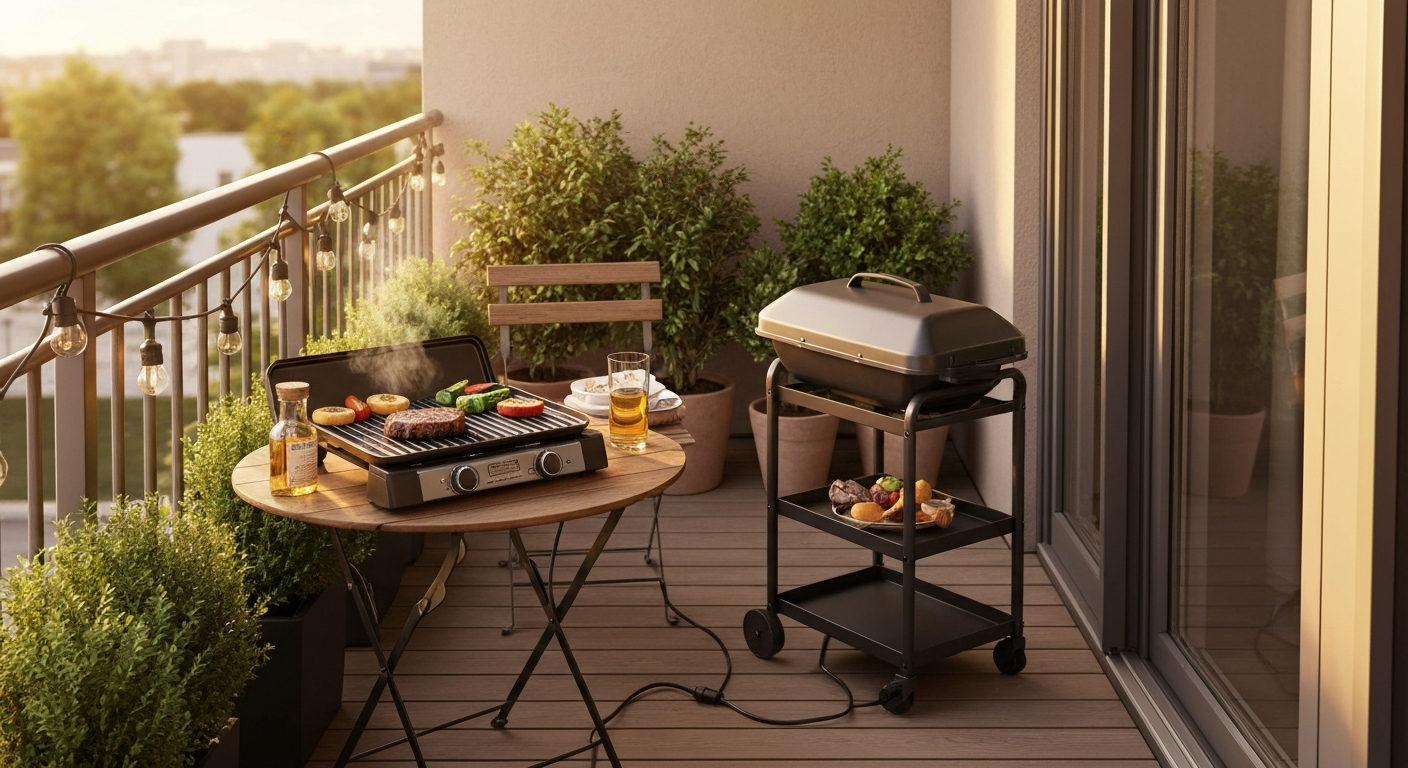
Quick Picks: Best Electric Patio Grills by Use Case and Budget
- Best overall full-size: Weber Q 2400 — 280 sq in cooking area, 1,560W, consistent heat across the grate, durable cast-iron grates, great for households cooking 2–4 servings regularly
- Best tabletop / budget pick: Cuisinart CEG-115 — 240 sq in, 1,500W, 3-year warranty, 6-ft cord, compact enough for a small balcony or table, retails under $100 at time of writing
- Best infrared performance: Char-Broil TRU-Infrared Patio Bistro Electric — TRU-Infrared element, 320 sq in, freestanding, notably even heat and reduced hot spots compared to coil models
- Best for covered/apartment balconies: Cuisinart CEG-115 or George Foreman GFO240S — low-profile, tabletop footprint, no open flame, typically allowed by building codes where gas is restricted
- Best premium/large surface: Weber Q 2400 with optional cart — upgrades a tabletop unit to patio-height freestanding use without a dedicated 240V line
- Best mid-range upgrade: Masterbuilt MB20040220 Electric Tabletop Grill — solid build, straightforward controls, part of Masterbuilt's growing outdoor electric line reviewed separately on this site
Ratings Explained: What We Looked For and How We Scored Models
Every model in this roundup was evaluated against the same criteria, drawing on hands-on testing, published testing protocols from the Good Housekeeping Institute (which uses bread tests for heat distribution, steak sear tests, and long-cook chicken assessments), and user-reported data aggregated from large retailer review pools on Amazon and Home Depot. I also factored in r/grilling and r/barbecue community threads, where apartment and condo grillers consistently surface real-world failure modes like element burnout and cord damage. AmazingRibs provides independently measured max-temp data I cross-referenced against manufacturer specs.
- Heat performance (25 pts): Max temperature reached, how quickly the unit preheats, and how evenly heat spreads across the cooking surface — tested with the bread-browning method and infrared thermometer spot checks
- Cooking surface value (20 pts): Usable square inches relative to footprint and price; how well the grate handles different foods
- Build quality and materials (20 pts): Lid and body material, grate type (porcelain-coated cast iron vs chrome wire), rust resistance, and overall fit-and-finish
- Ease of use and setup (15 pts): How fast you can get grilling, quality of the controls, drip tray access, and whether the manual is actually useful
- Portability and patio fit (10 pts): Weight, folded/assembled dimensions, cord length, and whether the unit works realistically on a balcony or small deck
- Safety certifications and recalls (10 pts): UL Listed or ETL Listed status per UL 1026 / UL 499 standards, CPSC recall history, and GFCI-outlet compatibility
Tabletop vs Full-Size Patio Electric Grills: Which Format Actually Makes Sense for You
Tabletop electric grills (typically under 200–280 sq in, under 20 lbs) are the go-to for apartment balconies, small covered patios, and anyone who wants to pack the grill away between uses. They sit on a patio table or a folding stand, plug into a standard outdoor outlet, and are light enough to carry inside during bad weather. The trade-off is cooking capacity: you can comfortably grill for two, but feeding four or more gets tight fast.
Full-size patio electric grills, the Weber Q 2400 and Char-Broil Patio Bistro are the clearest examples, offer 280–320+ sq in of cooking space, freestanding or cart-mounted designs, and enough surface to handle a full family meal. They're heavier (20–45 lbs), less portable, and need a permanent or semi-permanent spot on your patio. Because they still run on 120V standard current rather than 240V (unlike most indoor ranges), you don't need an electrician or a dedicated circuit for most models, though I'd recommend a GFCI-protected outdoor outlet and checking that no other high-draw appliances share the circuit.
| Format | Cooking Surface | Typical Weight | Best For | Main Trade-off |
|---|---|---|---|---|
| Tabletop electric | 150–280 sq in | 8–20 lbs | Balconies, small patios, portability | Limited capacity, needs a table or stand |
| Full-size patio electric | 280–400+ sq in | 20–50 lbs | Families, larger decks, frequent use | Less portable, larger footprint |
| Freestanding with cart | 280–400+ sq in | 35–60 lbs with cart | Replacing a gas grill setup | Cart adds cost and bulk, still 120V limit |
Head-to-Head: Specs and Key Numbers at a Glance
| Model | Cooking Surface | Wattage | Voltage | Temp Range | Element Type | Grate Material | Weight | Cord Length | Approx. Price (2026) |
|---|---|---|---|---|---|---|---|---|---|
| Weber Q 1400 | 189 sq in | 1,560W | 120V | Up to ~500°F | Resistive coil | Porcelain-enameled cast iron | 28.5 lbs | 6 ft | $200–$230 |
| Weber Q 2400 | 280 sq in | 2,200W | 240V | Up to ~550°F | Resistive coil | Porcelain-enameled cast iron | 42 lbs | 6 ft | $370–$420 |
| Cuisinart CEG-115 | 240 sq in | 1,500W | 120V | Up to ~400°F | Resistive coil | Nonstick-coated plates | 13 lbs | 6 ft | $70–$100 |
| Char-Broil TRU-Infrared Patio Bistro | 320 sq in | 1,750W | 120V | Up to ~550°F | TRU-Infrared radiant | Porcelain-coated cast iron | 39.5 lbs | 5 ft | $180–$220 |
| George Foreman GFO240S | 240 sq in | 1,500W | 120V | Up to ~450°F | Resistive coil | Porcelain-coated | 16 lbs | 6 ft | $90–$120 |
| Masterbuilt Electric Tabletop Grill | ~200 sq in | 1,650W | 120V | Up to ~450°F | Resistive coil | Porcelain-coated cast iron | ~18 lbs | 5 ft | $130–$160 |
A note on the Weber Q 2400: it's the only model in this lineup that requires a 240V outlet. That's a meaningful distinction, most apartments, covered patios, and deck setups only have standard 120V outdoor receptacles. If you don't already have a 240V outlet near your grill spot, factor in the cost of an electrician before you buy. The Q 1400 runs on 120V and is the more practical choice for most renters and condo owners.
Model-by-Model Reviews
Weber Q 1400: The Reliable 120V Standard
The Weber Q 1400 sits at 189 sq in of porcelain-enameled cast-iron cooking area, enough for four burgers or two decent-sized steaks. It runs at 1,560W on a standard 120V outlet with a 6-ft cord, preheats in about 10 minutes, and reaches roughly 500°F at the grate. The lid is cast aluminum, the body is glass-reinforced nylon, and the overall build quality feels noticeably better than budget competitors. Weber rates it for outdoor use, and the porcelain grates are genuinely rust-resistant with minimal maintenance. Assembled dimensions are approximately 26.5 x 18.3 x 11.6 inches (lid closed), and it weighs 28.5 lbs, movable but not something you'll carry around casually. Available cart accessory converts it to freestanding. Retails around $200–$230 at Lowe's and Home Depot.
Weber Q 2400: Full-Size Power, 240V Requirement
The Q 2400 steps up to 280 sq in, 2,200W, and requires a 240V outlet, which is its biggest practical limitation for most patio setups. When you have the right outlet, the results are notably better: AmazingRibs measured max temperatures in the 550°F range and praised its even heat distribution. The same heavy-gauge porcelain-enameled cast-iron grates carry over from the Q 1400. At 42 lbs assembled and around $370–$420, it's a legitimate gas-grill replacement for homeowners who have or can install a 240V outdoor circuit. If you're comparing this to a patio gas grill setup, the Q 2400 holds up well on sear quality but loses on raw BTU output in cold or windy conditions.
Cuisinart CEG-115: Best Value for Balcony Grillers
Cuisinart's CEG-115 is marketed as a 2-in-1 indoor/outdoor grill, and at under $100 it's the most accessible entry point in this roundup. You get 240 sq in of nonstick-coated cooking plates, 1,500W on 120V, a 6-ft cord, and a 3-year warranty that's better than most competitors at this price. The plates swap out for a flat griddle surface, which is a genuine bonus for things like pancakes or fish. Max temperature tops out around 400°F, workable for chicken and vegetables but not the best for a hard sear on a thick steak. At 13 lbs, it's the lightest full-cooking-surface option in the group. Cuisinart's warranty language covers manufacturing defects for 3 years, which puts it above the 1-year standard on most budget grills.
Char-Broil TRU-Infrared Patio Bistro Electric: Best Searing Without the Flame
The Char-Broil Patio Bistro is the infrared standout in this category. At 320 sq in and 1,750W on 120V, it's the largest 120V cooking surface in this lineup. The TRU-Infrared element sits below a perforated emitter plate, which radiates heat evenly across the grate rather than concentrating it at the coil contact points. Char-Broil's own TRU-Infrared technology documentation claims it reduces flare-ups and delivers more consistent heat distribution compared to exposed-coil designs, and in practice, bread-test browning patterns support more even coverage. It reaches around 550°F, making it the strongest 120V searing option here. The downside: at 39.5 lbs with a 5-ft cord, it's heavy for a tabletop and the short cord can be a placement issue on larger patios. Retails between $180–$220.
George Foreman GFO240S: Familiar Name, Honest Trade-offs
George Foreman's outdoor electric line leans on brand recognition. The GFO240S offers 240 sq in, 1,500W, a standard 120V plug, and porcelain-coated grates. It hits around 450°F, handles straightforward weeknight grilling, and at 16 lbs is portable enough to stow after use. The build quality is adequate rather than impressive, the stand attachment can feel wobbly, and long-term durability reviews from aggregate retailer data show more corrosion complaints compared to Weber. The 1-year limited warranty is standard for the price range ($90–$120). A fine option if the budget is tight, but the Cuisinart CEG-115 offers a better warranty and more cooking flexibility at a similar price.
Masterbuilt Electric Tabletop Grill: A Solid Mid-Range Option
Masterbuilt's tabletop electric grill gives you roughly 200 sq in of porcelain-coated cast-iron cooking area, 1,650W on 120V, and a straightforward temperature dial. It preheats reasonably quickly, the grate retains heat well for a 120V unit, and the build feels more robust than budget alternatives. At around $130–$160, it sits in the mid-range. Masterbuilt has a broader history with electric smokers, including CPSC-documented recalls on their electric smoker line in 2006 and 2013 related to fire hazards, but those involve different products. Their outdoor electric grill line has no current active recalls as of mid-2026. For a deeper look at Masterbuilt's full electric outdoor lineup, the Masterbuilt electric patio grill reviews section of this site covers their range in more detail.
Real-World Pros, Cons, and Usability Notes
| Model | Real-World Pros | Real-World Cons | Best Usability Note |
|---|---|---|---|
| Weber Q 1400 | Consistent heat, excellent grates, durable lid, cart option available | Smaller cooking area, relatively heavy for tabletop | Best all-around 120V performer; worth the price bump over budget models |
| Weber Q 2400 | Strongest heat output, largest Weber electric surface, premium build | Requires 240V — limits where you can use it | Only buy if you have or plan to install a 240V outdoor outlet |
| Cuisinart CEG-115 | Affordable, 3-year warranty, interchangeable plates, light and portable | Nonstick plates wear over time, lower max temp limits searing | Ideal first electric grill for balcony or occasional use |
| Char-Broil TRU-Infrared Patio Bistro | Largest 120V surface, even heat, strong sear performance | Heavy, short cord, infrared element can be harder to clean | Best pick if sear quality is the priority and you have a dedicated outlet spot |
| George Foreman GFO240S | Recognizable brand, portable, decent for simple weeknight grilling | Weaker build quality, corrosion risk, 1-year warranty only | Acceptable budget backup; outclassed by Cuisinart at similar price |
| Masterbuilt Electric Tabletop | Solid mid-range build, good heat retention, easy controls | Limited cooking area, Masterbuilt smoker recall history worth noting (different product) | Good step-up from budget brands without committing to full-size |
One pattern that surfaces consistently in large-sample retailer reviews (500+ reviews across Amazon and Home Depot): the most common failure modes on electric patio grills are element burnout (especially on units left uncovered outdoors), cord damage from kinking near the plug, and grate corrosion on non-porcelain models. Buying a fitted cover and storing the grill under cover or indoors between uses, especially in coastal or high-humidity environments, adds significant longevity to any electric grill.
Brand Breakdowns: What to Know Before You Buy by Manufacturer
Weber
Weber's Q series is the gold standard reference point for electric patio grills. Their build quality, warranty support (limited 5-year warranty on most Q-series components), and replacement parts availability are consistently better than the competition. The main gripe from community forums and retailer reviews is price, Weber charges a premium, and the 240V requirement on the Q 2400 catches buyers off guard. If you're buying a Weber electric grill, verify your outlet situation first.
Masterbuilt
Masterbuilt is better known for electric smokers than electric grills, and that reputation is a double-edged sword. Their smoker CPSC recall history (2006 and 2013 events involving fire hazard risks) understandably makes some buyers cautious, though those were specific smoker models, not their electric grill products. Their grill line has improved, and the mid-range tabletop models are a reasonable choice. BBB complaint patterns for Masterbuilt skew toward customer service response times rather than product defects. For a full picture of their outdoor electric offerings, the dedicated Masterbuilt electric patio grill reviews on this site go deeper into their full lineup.
Char-Broil
Char-Broil is the brand most committed to infrared technology in the electric outdoor segment, and the TRU-Infrared Patio Bistro Electric is their flagship showcase. Their TRU-Infrared system is genuinely differentiated, it's not just a marketing term. The technology uses a perforated emitter screen between the heating element and grate to distribute heat radially rather than through direct conduction. Char-Broil's products are widely available at big-box retailers and typically land 50–100 dollars below Weber at comparable sizes. Build quality is a step below Weber but solidly mid-tier. Note that Char-Broil also makes a charcoal patio grill line, the Char-Griller Patio Pro is reviewed separately on this site as a different product category. See our Char-Griller Patio Pro review for the full charcoal grill comparison and patio suitability details. For a dedicated look at their charcoal models, see our char griller patio pro charcoal grill reviews covering performance, build, and patio suitability.
Nexgrill
Nexgrill's electric options are limited compared to their gas grill lineup. Their patio heater offerings are stronger than their electric grill range, and BBB complaint data shows periodic issues with replacement parts availability. See our Master Forge patio heater reviews for a comparative look at outdoor heating options and performance metrics. If you're primarily interested in Nexgrill as a brand, their gas lineup is more developed; the Nexgrill patio heater reviews on this site cover their outdoor heating products in more detail. For more on their heaters, see our nexgrill patio heater reviews covering model performance, durability, and replacement-parts availability. For electric grills specifically, Nexgrill is not a top recommendation at this time.
Camp Chef
Camp Chef focuses heavily on flat-top griddles and pellet grills rather than traditional electric grill grates. Their City Grill electric line is targeted at urban patios and apartments, with a clean design and solid build. Camp Chef's customer service reputation is generally strong, and their accessories ecosystem (covers, stands, drip systems) is a genuine advantage for long-term ownership. The Camp Chef flat top grill patio cover options reviewed on this site are directly relevant if you're considering a Camp Chef setup and want weatherproofing guidance.
Cuisinart and George Foreman
Both brands occupy the budget-to-low-mid space. Cuisinart's 3-year warranty on the CEG-115 is a meaningful differentiator in this tier, most competitors offer 1 year. George Foreman's outdoor electric line is adequate for casual, light-use grilling but doesn't hold up as well in durability data over 2+ years of outdoor use. Neither brand has the replacement parts ecosystem of Weber or Camp Chef.
Flips Grills
Flips grills are a newer entrant in the compact outdoor grill space, targeting apartment and balcony users with a folding, portable design. Their electric models emphasize portability over raw cooking performance. They're worth considering if you need something you can genuinely pack up and move frequently. The Flips patio grill reviews section of this site covers their specific models and how they compare to more established brands.
Infrared vs Coil/Resistive Electric Elements: What Actually Matters at the Grate
Most electric patio grills use one of two heating approaches: an exposed resistive coil (or sheathed metal heating element) that heats by direct conduction through the grate, or an infrared emitter system that converts electrical energy into radiant heat directed at the food. Understanding the difference helps you set realistic expectations about searing, evenness, and maintenance.
Resistive Coil / Sheathed Element
Resistive coil elements are what you'll find in the Weber Q 1400, Cuisinart CEG-115, George Foreman GFO240S, and most standard electric grills. A metal coil or sheathed rod heats up when current passes through it and transfers heat to the grate via conduction and convection. These elements are relatively simple, proven, and easy to replace when they fail. The limitation is heat distribution: coil elements tend to create hot spots directly over the coil and cooler zones at the edges. A bread test on a coil grill will typically show uneven browning, with the center strips darker than the perimeter. Preheating thoroughly (allow 10–12 minutes minimum) helps even things out somewhat.
Infrared Radiant Elements (TRU-Infrared and Similar Systems)
Infrared grill elements work differently: an electrical element heats a ceramic or metallic emitter plate that then radiates heat directly toward the food surface. Char-Broil's TRU-Infrared design places a perforated emitter screen between the heating element and the grate. According to Char-Broil's technical documentation, this approach reduces flare-ups (since fat drips onto the emitter plate rather than directly onto an open element or flame) and aims for more even heat coverage across the grate. In practice, infrared electric grills do produce more consistent sear patterns and can reach the same surface temperatures with less wattage than a comparable coil model. The trade-off: the emitter plate requires more careful cleaning, grease carbonizes on the plate surface and needs to be removed to maintain heat efficiency. Using a grill brush on the emitter screen rather than just the grate is part of the maintenance routine.
| Feature | Resistive Coil/Sheathed Element | Infrared Radiant Element |
|---|---|---|
| Heat distribution | Can produce hot spots over coil, uneven at edges | More even across cooking surface |
| Max sear temp (typical 120V) | 450–500°F at grate | 500–550°F at grate |
| Flare-up risk | Low (no open flame), but drips can contact element | Lower — emitter plate intercepts drips |
| Preheat time | 8–12 minutes | 8–10 minutes |
| Maintenance | Grate cleaning; element self-cleans at high temp | Must clean emitter plate to maintain efficiency |
| Element replacement cost | Typically $20–$50 (widely available) | More specialized; Char-Broil parts vary |
| Best for | Budget buyers, general grilling, easy maintenance | Sear-focused cooks, even heat priority |
Patio Compatibility and Safety: What Your Building Code Actually Says
This is the section most electric grill buyers skip, and it's the one that matters most if you're in an apartment or condo. The NFPA 1 Fire Code and the International Fire Code (IFC), adopted by most U.S. municipalities, generally prohibit charcoal and gas/open-flame grills on combustible balconies and within 10 feet of structures. The key language is in the IFC's open-flame provisions, which the City of Glendale (California) and many other municipalities have adopted with explicit carve-outs for listed portable electric grills. The City of Madison's fire department grilling guidelines, for example, note that electric grills are typically permitted where gas and charcoal are restricted, subject to local ordinance specifics.
The practical summary: if you're on a combustible balcony (wood or composite decking, enclosed overhang), a UL-Listed or ETL-Listed electric grill is almost always the only type you're legally permitted to use. UL 1026 and UL 499 are the relevant UL standards for household electric cooking appliances, when a grill carries a UL Listed or ETL Listed mark (ETL is certified by Intertek to the same standards), it means the product has been tested for basic electrical and fire safety compliance. See the UL 1026 / UL standards summary for household electric cooking appliances in the PSMA safety database for specifics on testing criteria and what 'UL Listed' or 'ETL Listed' covers. Always check your specific building's rules and local fire code, since adoptions vary. But as a baseline: listed electric grills pass where gas and charcoal cannot.
On the electrical side, the National Electrical Code (NFPA 70) requires GFCI protection for outdoor receptacles. Any outdoor outlet you plug your electric grill into should be GFCI-protected, most outdoor outlets installed after 1978 already are, but older construction may not be. For a 1,500–1,750W grill on a 120V circuit, you're drawing 12.5–14.6 amps, which fits within a standard 15A or 20A circuit as long as no other high-draw appliances (space heaters, power tools) are sharing it. The Weber Q 2400 at 2,200W on 240V is a different story, that's a dedicated circuit install.
Maintenance, Covers, and Accessories Worth Buying
The single biggest thing you can do to extend the life of an electric patio grill is cover it when not in use. Element failure from moisture intrusion is the most common cause of premature death in electric grills left uncovered. Weber makes fitted covers for the Q 1400 and Q 2400 that run $25–$35 and are worth every cent. Char-Broil sells a Patio Bistro cover as an accessory. For the Cuisinart CEG-115, a generic small grill cover in the 14-inch range works fine.
- Grill cover: Buy the fitted manufacturer cover if available; generic covers work for tabletop units — prioritize waterproof outer shell with interior lining
- Drip tray liners: Most electric grills include a metal drip tray; aluminum foil liners or brand-specific disposable liners make cleanup much faster and reduce grease buildup that affects element performance
- Grill brush: Use a stainless bristle or nylon brush on porcelain-coated cast-iron grates — wire brushes on nonstick-coated plates will destroy the coating quickly
- Stand or cart: If your tabletop grill needs height, Weber's Q1000/Q2000 compatible cart is the most solid option; universal grill carts work for non-Weber brands but check weight ratings
- Extension cord: If 6 feet doesn't reach your outlet, use only a heavy-duty 12-gauge outdoor-rated extension cord — undersized cords are a fire risk on high-wattage appliances; keep it as short as possible
Warranties and Where to Buy
Weber offers the strongest warranty in this category: 5 years on the cook box, lid, and heating element on most Q-series models, with 2 years on electrical components. Cuisinart's 3-year warranty on the CEG-115 is the runner-up and well above the 1-year standard most budget brands offer. Masterbuilt, Char-Broil, and George Foreman generally offer 1-year limited warranties. Camp Chef offers 3 years on their City Grill components. Always register your product at the manufacturer's site, warranty claims without proof of purchase or registration are commonly denied, and registration also flags you for any safety recall notices.
For purchasing, Home Depot and Lowe's carry the widest in-store selection of Weber, Char-Broil, and George Foreman electric grills. Amazon has competitive pricing and faster shipping on Cuisinart and Masterbuilt models. BBQGuys carries a broader premium selection and includes professional product photography and spec documentation that's worth using for research even if you buy elsewhere. Buy from authorized retailers rather than third-party marketplace sellers, warranty coverage typically requires purchase from an authorized dealer.
When an Electric Grill Isn't the Right Answer: Alternatives Worth Knowing
Electric patio grills are the right choice for covered patios, balconies with code restrictions, and households that want low-maintenance outdoor cooking. But they have real limits: 120V models max out around 500–550°F, which is below the 600°F+ you can reach on a quality gas grill, and cooking in very cold or very windy conditions reduces effective grate temperature significantly. If you have an open deck, no HOA or code restrictions, and want genuine searing power, a patio gas grill is worth the comparison, the patio gas grill reviews on this site cover that category thoroughly. Similarly, if you enjoy the process and flavor profile of charcoal, the Char-Griller Patio Pro charcoal grill is a compact option reviewed separately on this site for patios where charcoal is permitted.
For anyone drawn to the idea of a built-in outdoor kitchen setup, neither electric nor portable charcoal grills are the right direction, that's a natural gas or propane built-in conversation. But for the specific use cases electric grills serve, safe, convenient, balcony-legal, low-odor, no-propane-tank outdoor grilling, the options in this roundup cover the full range from $70 to $420 and handle the majority of real-world patio cooking needs effectively.
FAQ
What exact product specifications must be collected for each electric patio grill model?
Capture cooking surface area (sq in/cm and dimensions), wattage and voltage, maximum and measurable temperature range, heating element type (infrared, exposed coil, enclosed), thermostat/control resolution, materials and finish (grate type, body material, weatherproof coatings), weight, assembled and packed dimensions, cord length and plug type, required circuit (amps), included accessories (drip tray, cover, stand), SKU/UPC, and published warranty language and period.
Which authoritative manufacturer and documentation sources should be used to verify model specs?
Manufacturer product pages, downloadable owner’s manuals/spec sheets, official tech notes (e.g., TRU‑Infrared), and brand warranty pages. Capture exact model pages for Weber, Cuisinart, Char‑Broil, Masterbuilt, Nexgrill, Camp Chef, and others to confirm raw spec fields and manufacturer claims.
What retail and market-data sources are required to report pricing and availability?
Major retailer product listings and historical snapshots from Home Depot, Lowe’s, Amazon, Walmart, BBQGuys, and brand store listings for MSRP, street price, stock/availability, common discounts, and typical accessory bundle pricing.
Which independent test protocols and performance metrics should be applied to assess grills objectively?
Adopt a repeatable test matrix: heat‑up time, max stable temp, heat‑distribution mapping (bread or grid bread test with thermal map), searing capability (steak char test with temperature probe), sustained low‑and‑slow performance (chicken/whole bird), flare‑up/residue behavior, temperature recovery after lid opening, drip/cleanup time, and wind/weather sensitivity. Record ambient conditions and use calibrated thermocouples and IR thermometers. Score on standardized categories (performance, ease of use, portability, durability, safety, value).
Which external expert reviews and lab references should be cited to justify testing methodology?
Good Housekeeping Institute test protocols, AmazingRibs’ measurement methods (Meathead), AV/BBQ reviewer labs (e.g., BBQGuys testing notes), and any third‑party lab methodology write‑ups that explain thermal testing and consumer appliance evaluation.
How should real‑world user sentiment and failure modes be sourced and used?
Aggregate large‑sample retailer reviews (Amazon, Home Depot), community forums and Reddit (r/grilling, r/barbecue) for common complaints (element failure, rust, cord issues), and BBB complaint records for brand‑level service patterns. Use these to corroborate lab findings and highlight frequent longevity or service issues, but filter anecdotal extremes and quantify prevalence where possible.