
The Fire Sense Performance Series LPG patio heater (model 01775, also sold under item numbers 63713–63720) is a 50,000 BTU propane-powered standing heater that covers up to a 20-foot diameter circle and runs roughly 10 hours on a standard 20 lb propane tank. The Manuals+ listing for the FireSense Performance Series LPG heater associates model 01775 with multiple item numbers including 63713 through 63720 model 01775 with item numbers 63713 through 63720. If you follow the hookup steps correctly, run a quick leak check before every session, and keep the burner and air passages clean, it delivers reliable, strong heat for most residential patios. Here's everything you need to know to buy it confidently, set it up safely, and actually get consistent heat out of it every time.
Fire Sense Performance Series LPG Patio Heater Guide

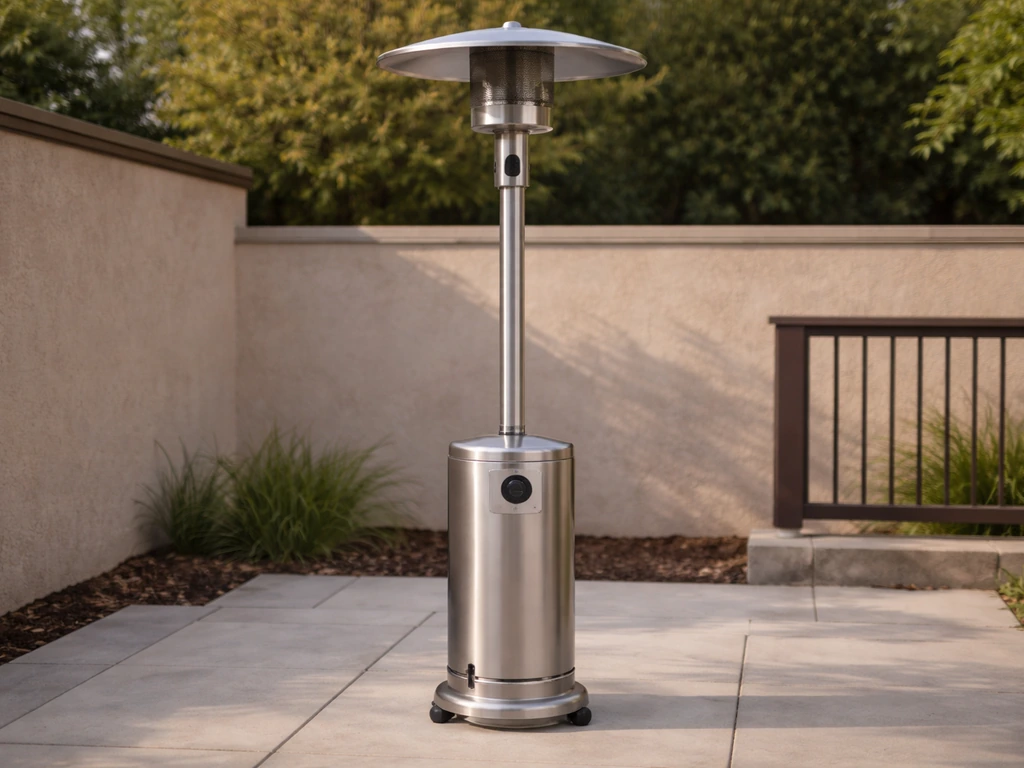
What the Fire Sense Performance Series LPG heater is (and who it's for)
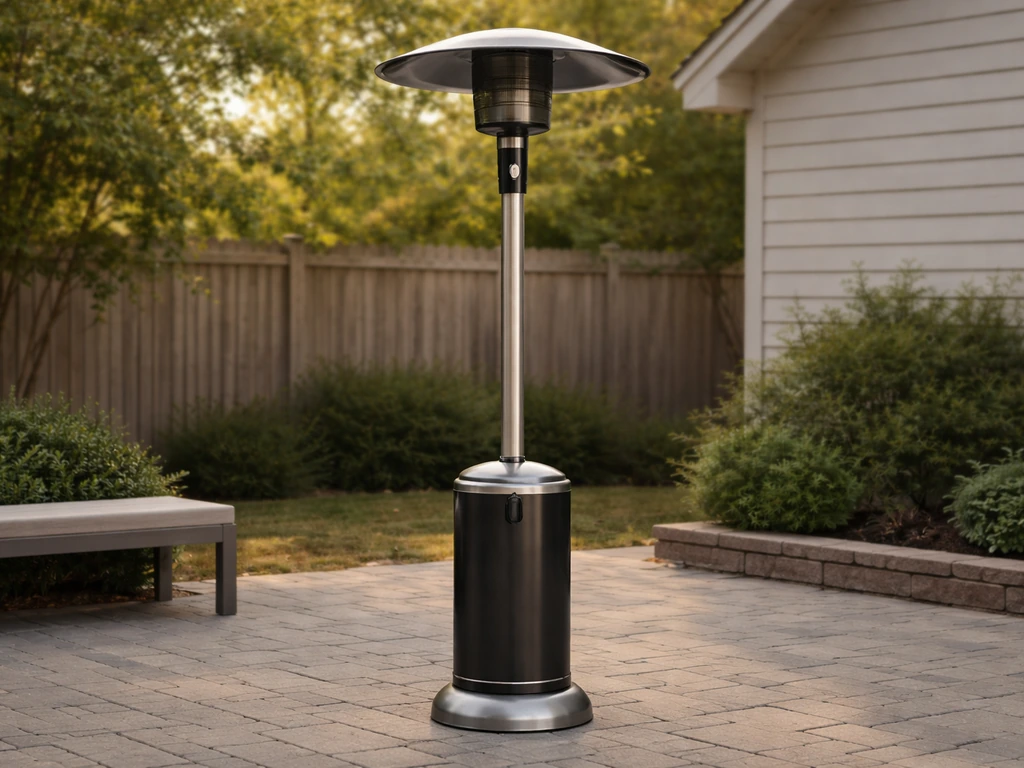
This is a full-size, mushroom-cap-style propane patio heater. It stands about 91 inches tall with a 32-inch base footprint, uses a standard 20 lb propane cylinder that sits inside the weighted base, and puts out heat through a 360-degree burner at the top. The electronic ignition runs on a single AAA battery, which keeps startup simple. The weighted base can be filled for extra stability, and there's a built-in tip-over safety shutoff that cuts gas if the unit gets knocked over.
It's designed for homeowners who want a strong, portable heating solution without running a gas line. If you have a mid-to-large open patio, a backyard deck, or a covered pergola (with enough clearance), this is the category of heater that makes sense. It's not a tabletop heater for a tiny bistro setup, and it's not a natural gas unit for a permanent installation. If you want something smaller for a tight, table-top setup, a flamepro table-top patio heater is a better fit than this full-size standing model. It's the kind of heater you wheel out for a dinner party, run for a few hours, and wheel back in. If that matches how you think about heating your outdoor space, read on.
Key specs that actually matter
Before you buy or before you try to troubleshoot, these are the numbers worth knowing. A lot of heater problems come down to people not verifying the basics upfront.
| Spec | Detail |
|---|---|
| Model / Item Number | 01775 (also 63713–63720); Model LIP-10A-TGG-LPG-SP |
| Heat Output | 50,000 BTU |
| Coverage Area | Up to 20 ft. diameter |
| Fuel Type | LPG (propane) — vapor withdrawal system |
| Propane Tank | Standard 20 lb (not included) |
| Run Time | Approx. 10 hours on one 20 lb tank |
| Dimensions | 32.1 x 32.1 x 91.3 inches |
| Ignition | Electronic ignition (1x AAA battery) |
| Min. Supply Pressure | 0.5 psi |
| Regulator | Supplied hose and regulator assembly — use only the included one |
| Clearance (top) | 3 feet (36 inches) from combustibles |
| Clearance (sides) | 2 feet (24 inches) from combustibles |
| Safety Features | Tip-over auto shutoff tilt valve, fillable weighted base |
| Wind Limit | Below 10 mph for safe operation |
The 50,000 BTU output is genuinely strong for a residential patio heater. To put it in perspective, that's toward the top end for a standalone propane mushroom heater. The 20-foot diameter coverage claim is a manufacturer maximum under ideal conditions, so expect around 15 feet of comfortable warmth in cooler weather. The minimum 0.5 psi supply pressure requirement means you need a functioning regulator delivering adequate gas pressure, one more reason to always use the supplied regulator and never connect a bare, unregulated propane cylinder directly.
Setup and first-use: how to hook it up safely
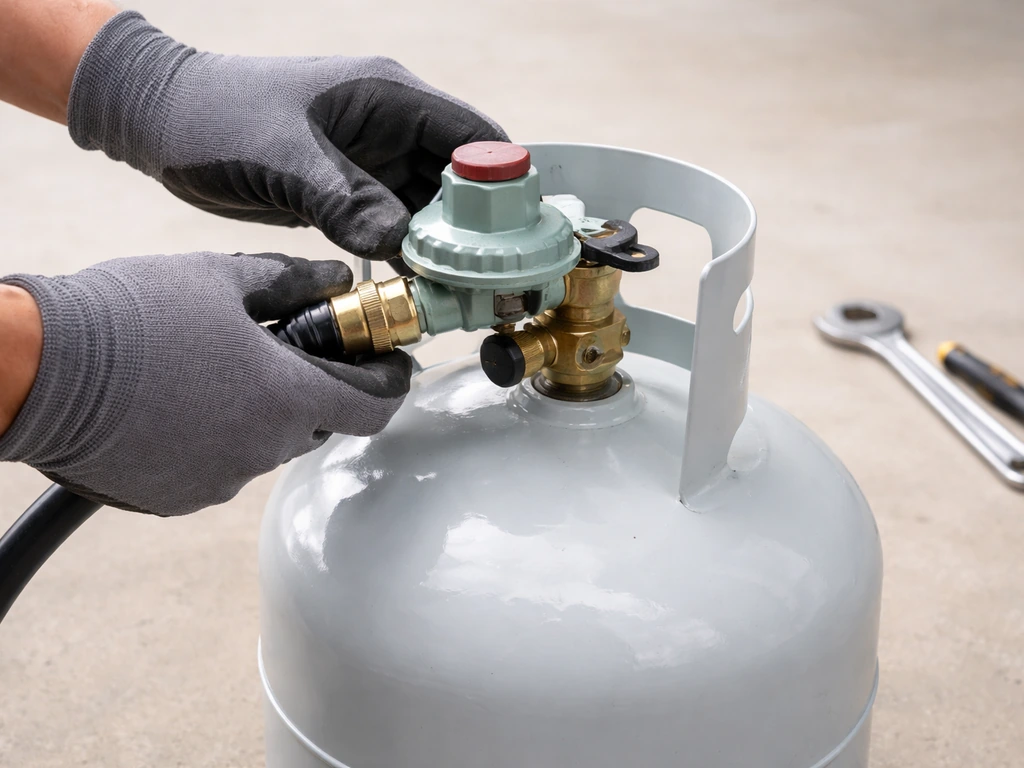
Take a few extra minutes on first setup. This is where most problems start. The manual is clear on sequence, and following it correctly means you avoid gas buildup, failed ignitions, and unnecessary worry.
Assembly and regulator connection
- Assemble the heater fully before connecting any gas. Make sure the base is stable and, if the base has a fill port, add sand or water for extra stability.
- Place a full 20 lb propane cylinder inside the base compartment.
- Attach only the hose and regulator assembly that came with the heater. Thread the regulator onto the cylinder valve hand-tight, then snug it gently. Do not use an unregulated cylinder connection.
- Before doing anything else, run a leak check (instructions below). Every single time you connect a new cylinder or reconnect after storage.
Leak check, do this every time
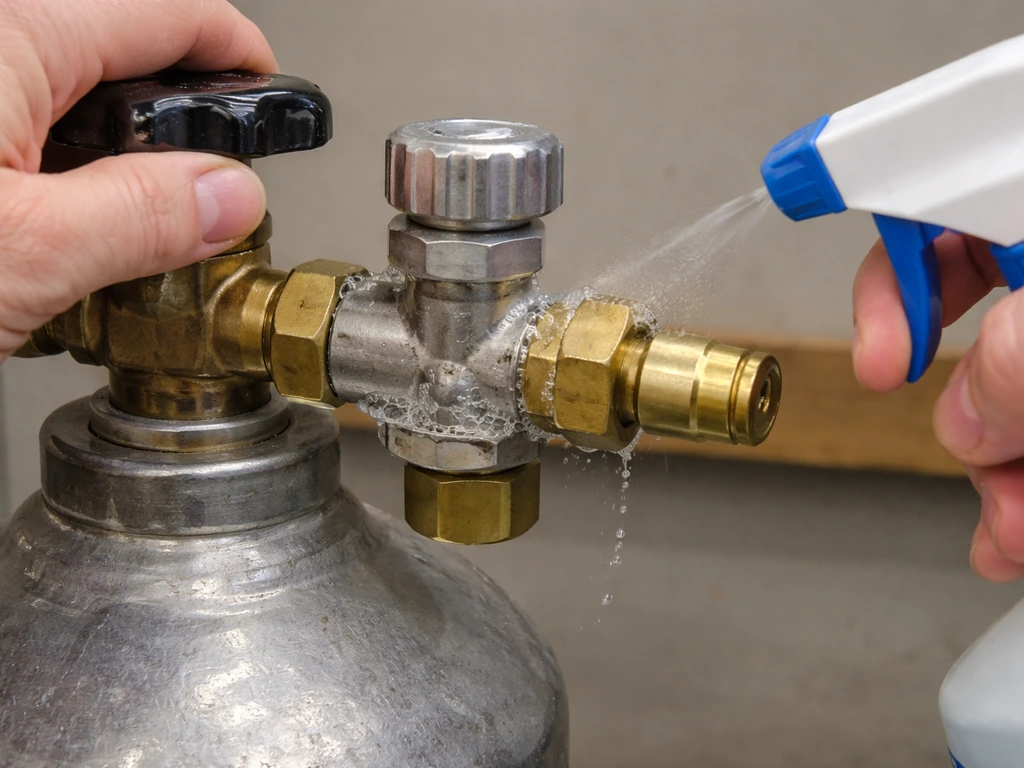
Mix 2 to 3 ounces of leak test solution using a few drops of dish soap and water. With all heater valves in the OFF position, open the cylinder valve slowly. Apply the soapy solution to the connection point where the hose meets the regulator, and where the regulator threads onto the cylinder. If you see bubbles forming at either spot, you have a leak. Turn the cylinder valve off immediately, tighten the connection, and re-test before proceeding. No bubbles means you're clear to light.
Lighting for the first time (or after a tank swap)
- Make sure the control knob is in the OFF position.
- Open the cylinder valve fully.
- Hold the control knob in (depressed) for 2 full minutes. This purges air from the gas lines — skipping this step is the number one reason new tanks fail to light.
- Turn the knob to halfway between the small flame and large flame positions.
- Push the knob in and press the RED igniter button. If the burner lights, keep the knob fully pressed in for an additional 30 seconds before releasing. This holds the thermocouple open.
- After 30 seconds, release the knob. The flame should stay on. If it doesn't, wait 5 minutes before trying again — never attempt an immediate relight.
- Adjust flame level up or down with the control knob after ignition.
Clearance check before every use
Position the heater at least 3 feet below any overhead combustible surface and at least 2 feet away from anything on the sides. Under a pergola or a covered patio, measure this every time, furniture rearranges, umbrellas shift, and a heater that was clear last time may not be clear today. Wind speed must also be below 10 mph per the manufacturer's operating guidelines.
Real-world performance: what to actually expect
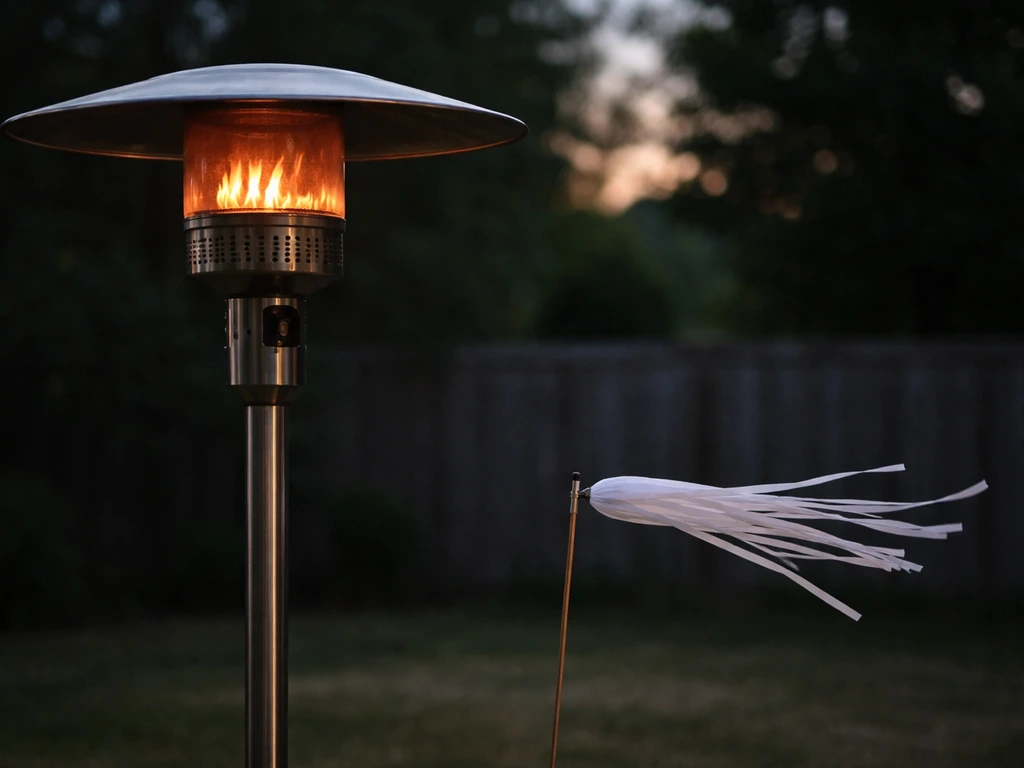
Fifty thousand BTUs is a legitimate number for this class of heater, but how that translates into felt warmth depends heavily on your conditions. On a calm night (under 10 mph wind), you'll feel comfortable heat in roughly a 12 to 15 foot radius, which matches a typical 6-person patio table setup well. At the edges of that 20-foot manufacturer coverage claim, it's warmth rather than real comfort.
Wind is the biggest variable
Wind kills propane heater performance faster than anything else. The manual sets a hard limit of 10 mph, and in practice that's a good rule. Even a moderate breeze will push the heat plume sideways, making it feel like the heater is half as effective as it should be. If your patio gets consistent wind, consider positioning the heater in a corner or against a windbreak wall. On fully exposed patios, this heater will struggle on breezy nights regardless of BTU rating.
Covered vs. open-air use
Covered patios and pergolas actually improve performance because they trap some of the rising heat. But this is also where people get into trouble. Running a heater under a louvered pergola or low patio cover requires strict attention to that 3-foot overhead clearance rule. If your cover is lower than that, this heater is not appropriate for that space, full stop. At the correct clearance, covered spaces perform noticeably better than open air because you're not losing all the heat to the sky.
Patio size fit
For a patio in the 150 to 300 square foot range, one unit is typically sufficient. For larger spaces, you'd want two units placed symmetrically. This heater is overkill for a small balcony or a 6x8 covered deck (and likely a clearance problem in those tight spaces). It's ideal for open backyard entertaining areas where you're seating 4 to 8 people within about a 12-foot radius.
Good flame vs. bad flame
When the heater is running well, the flame should be blue with straight yellow tips. If the flame is mostly yellow or orange, or if you see thick black smoke, that's a sign of restricted airflow through the burner, usually a blockage. The manual is specific on this: yellow flames overall or black smoke means shut it down and clean the burner before using it again.
Operation and maintenance that keeps it running well
This is the section most people skip, and it's also why most people end up frustrated with a heater that worked fine for a few months and then started acting up.
Routine cleaning
The control compartment, burner assembly, and air circulation passageways need to stay clean and clear of debris. Insects, particularly spiders, love building nests in burner orifices and passageways during off-season storage. At the start of each season (or after the heater sits unused for more than a few weeks), inspect the burner and orifices visually, and use a soft brush or compressed air to clear any blockage. A blocked orifice is the leading cause of low flame and ignition failure.
Hose inspection
Inspect the hose assembly before every single use. Look for cuts, abrasion wear, cracks, or kinks. A kinked hose directly causes low flame output. If you spot any damage, replace the hose with the manufacturer-specified replacement assembly before using the heater again. Do not patch, tape, or work around a damaged hose.
Off-season storage
When storing for the season, let the heater cool completely before covering it. Store it upright in a sheltered location, protected from rain and weather. In windy conditions, the manual also warns to store the heater in a protected area or otherwise secure it, because an unsecured heater can be blown over and damage from weather or acts of God is not covered under warranty. A breathable cover helps keep debris out of the air passages without trapping moisture. Keep the propane cylinder out of direct sunlight and away from heat sources even in storage. Never store the heater with a fully connected, open cylinder.
Part replacement basics
The igniter battery (one AAA) is the most common part to replace, swap it as the first step any time the igniter clicks weakly or not at all. Beyond that, the hose and regulator assembly is the next most likely part to need replacement, especially after a few seasons. Always use manufacturer-specified replacements for the hose and regulator. If the thermocouple (the sensor that keeps the flame on when you hold the knob in) is worn, the heater will light but immediately extinguish when you release the knob. A replacement thermocouple for this model class is a straightforward swap, but if you're not comfortable doing it yourself, a qualified appliance repair tech can handle it quickly.
Safety, compliance, and troubleshooting
Most issues with this heater fall into a short list of fixable problems. If you're also comparing alternative models, you may want to read a flame pro pellet patio heater review to see how pellet and propane performance stack up. Here's how to diagnose and handle the most common ones, plus clear guidance on when to stop and get professional help.
The most common problems and what to do
| Problem | Likely Cause | Fix |
|---|---|---|
| Burner won't light | Air in gas lines (first use or new tank) | Hold knob in for 2–3 minutes to purge, then try again |
| Burner won't light | Empty or near-empty tank | Replace or refill propane cylinder |
| Burner won't light | Gas valve still off | Open cylinder valve fully |
| Burner won't light | Blocked orifice | Clean the burner orifice and passageways |
| Igniter clicks but no flame | Dead AAA battery | Replace the battery |
| Igniter clicks but no flame | No gas pressure | Check cylinder is open and not empty; check regulator |
| Flame lights then goes out | Thermocouple not heated long enough | Hold knob in for a full 30 seconds after lighting |
| Flame lights then goes out | Worn thermocouple | Replace thermocouple |
| Low or weak flame | Tank nearly empty | Replace or refill cylinder |
| Low or weak flame | Kinked gas hose | Straighten hose and inspect for damage |
| Low or weak flame | Blocked passageway or orifice | Clean burner and air passages |
| Yellow flame or black smoke | Burner blockage restricting airflow | Shut down and clean the burner assembly |
| Gas smell | Leak at connection point | Shut off cylinder, perform leak test, tighten or replace connections |
If you smell gas: stop immediately
If you smell propane during operation or when the heater is off, close the cylinder valve immediately, move away from the heater, and do not attempt to relight it. Perform a soapy-water leak check at every connection before doing anything else. If you find a leak you can't stop by tightening the connection, or if you smell gas but can't identify the source, stop using the heater and contact a qualified gas appliance technician. Do not try to disassemble the regulator or modify the gas fittings yourself.
Compliance references
The heater is built to comply with ANSI Z223.1/NFPA 54 and CSA B149.1/B149.2 fuel gas installation and storage standards. This matters mainly if you're in a jurisdiction that inspects outdoor gas appliance installations or if you need documentation for an HOA or rental property. Keep the manual on file.
When to call a professional, not fix it yourself
- You smell gas and can't identify or stop the leak with a basic connection check
- The regulator shows signs of physical damage, corrosion, or has been dropped
- The tip-over shutoff activates repeatedly even when the heater is upright (may indicate a faulty valve)
- Any gas fitting is cross-threaded or cracked
- You've replaced the thermocouple and the flame still won't stay lit
How it compares: LPG vs. other heater types (and when to pick something else)
The Performance Series LPG heater is a strong choice for most people, but it's not the right answer for every situation. Here's an honest look at how it stacks up against the main alternatives.
| Heater Type | Best For | Drawbacks vs. LPG | Rough Cost to Run |
|---|---|---|---|
| LPG / Propane (this heater) | Medium-large open patios, portability, no gas line needed | Tank refills, wind sensitivity, 10-hour runtime per tank | ~$3–5 per tank fill session |
| Natural Gas | Permanent installations, frequent use, larger patios | Requires gas line install, not portable | Lower per-hour fuel cost over time |
| Electric (infrared) | Small covered patios, areas with no gas access, safety-conscious spaces | Lower BTU output, electricity cost, cord management | Moderate; varies by wattage |
| Pellet Patio Heater | Rustic/aesthetic preference, wood-fire feel | More maintenance, fuel storage, ash cleanup | Varies by pellet cost |
| Tabletop Propane | Small gatherings, tight spaces, portability | Much lower BTU, very small coverage area | Low per session (small tank) |
LPG vs. natural gas for this specific heater
If you use your patio heater more than two or three nights a week through a long season, a natural gas unit connected to your home's gas line is worth the installation cost because the per-hour fuel cost is substantially lower and you never run out mid-session. But if you're a weekend entertainer who wants to drag the heater out a few times a month, LPG is simpler, more flexible, and has no installation overhead. The Performance Series LPG unit fits that profile perfectly.
LPG vs. electric
Electric infrared heaters are easier to manage under a covered patio (no clearance concerns with gas combustion, no leak risk), but they top out at around 1,500 to 5,000 watts of heating power, which simply isn't comparable to 50,000 BTU on a cool night. If you have a small covered deck and don't need to heat more than a 6-foot radius, electric is cleaner and simpler. For anything larger, propane wins on raw output.
LPG vs. pellet heaters and other Fire Sense models
Fire Sense also makes pellet-burning patio heaters, which offer a very different ownership experience. Pellet heaters give you a more visual, campfire-style flame and don't require propane management, but they need regular fuel loading, ash cleanup, and more hands-on maintenance. If the aesthetic matters to you and you don't mind the upkeep, that's a legitimate trade-off. Within the propane heater category, the Performance Series sits at the full-size, high-output end of the lineup. If your patio is genuinely small, a tabletop propane option may be more appropriate than a 91-inch standing unit.
Who should buy this heater
Buy the Fire Sense Performance Series LPG heater if you have an open or semi-covered patio in the 150 to 300 square foot range, you want strong portable heat without a gas line, and you're willing to spend 5 minutes on a proper hookup and leak check before each session. Fire Sense Performance Series LPG patio heater vs. flamepro 81''h steel patio pellet heater review. It's a well-specified unit with a legitimate safety shutoff, electronic ignition, and real BTU output. Stay on top of burner cleaning and hose inspection, follow the lighting procedure exactly on new tanks, and this heater will give you reliable seasons of outdoor use.
FAQ
What size propane tank can I use with the Fire Sense Performance Series LPG patio heater, and will larger tanks extend runtime?
It is designed around a standard 20 lb propane cylinder with the tank stored in the weighted base. While larger cylinders can sometimes physically fit, runtime and safe operation depend on using the correct regulator and hose assembly for this model, and the heater is intended for the supplied pressure setup. Don’t substitute random hoses or regulators or connect a larger tank without matching the manufacturer-specified regulator and fittings.
Can I use a longer or different propane hose to get the heater farther from the cylinder?
No. A damaged or non-specified hose is a common cause of low flame and ignition issues, and this heater’s safety depends on the correct hose and regulator assembly. If you need more distance, the safer approach is relocating the heater or cylinder within the design limits, not extending the line with aftermarket parts.
How do I tell whether poor heating is from wind, placement, or the heater itself?
First check wind speed and comply with the below 10 mph guideline. If it’s within spec but you still get weak warmth, verify flame color (mostly blue with straight yellow tips), confirm the burner is clean, and check for airflow restrictions (yellow flame across the burner or black smoke usually points to a blockage). If flame and wind are both correct, inspect the hose for kinks and verify the regulator is installed and functioning properly.
Is it normal for the flame to vary in color after lighting, or should it be immediately blue with yellow tips?
You should expect a brief stabilization, but prolonged yellow/orange flame or thick black smoke is not normal for ongoing operation. If the flame stays off-color, shut it down and clean the burner rather than continuing to run it and hoping it improves.
What should I do if the igniter clicks but the burner does not light?
Start with the simplest maintenance and checks: install a fresh AAA battery for the igniter, confirm the gas valve is open, and perform a soapy leak check at the connection points before retrying. Then inspect the burner and orifices for insect debris or blockage, since restricted airflow can prevent ignition even with proper gas supply.
Can I light this heater while it is still very hot from a previous session?
Let the unit cool completely before any adjustments, including moving it, handling the burner area, or re-checking connections. Relighting immediately after shutdown can increase the odds of troubleshooting mistakes because you may not be able to safely inspect the burner and airflow passages.
How often should I clean the burner and air passages, and what’s the safest method?
Do an inspection at the start of each season and after any extended unused period. If you observe yellow flames overall or black smoke, clean immediately before using again. Use a soft brush and/or compressed air to clear debris from burner orifices and passageways, avoiding any modification of gas components.
What is the right way to store the heater during the off-season to prevent blockage and moisture problems?
Store the heater upright in a sheltered location protected from rain and weather. Use a breathable cover, keep the propane cylinder out of direct sunlight and away from heat sources, and do not store the heater with a fully connected, open cylinder. This reduces corrosion and helps prevent insects from nesting in airflow areas.
The heater extinguishes when I release the knob, what does that usually mean?
That behavior commonly indicates a worn thermocouple, the safety sensor that keeps gas flowing only while the knob is held. The heater may light, then shut off when released. If you’re not comfortable replacing parts, a qualified appliance repair technician can swap the thermocouple for you.
Is it safe to use the heater under a low pergola or close to a covered ceiling if I angle it upward?
No. Clearance rules are about combustion safety, not heat direction. The unit must be positioned at least 3 feet below any overhead combustible surface, and if your cover is lower than that clearance, the heater is not appropriate for that space regardless of angling or placement.
What should I do if I smell propane at any time?
Close the cylinder valve right away, move away from the heater, and do not attempt to relight. After shutoff, do a soapy-water leak check at every connection before making any further attempts, and if you cannot stop the leak by tightening or you cannot locate the source, stop using it and contact a qualified gas appliance technician. Do not disassemble or modify the regulator or fittings.