
The Flame Pro pellet patio heater is a solid buy if you want a visually striking, wood-burning outdoor heater with serious BTU output and you don't mind a manual startup routine and refilling a hopper every few hours. At around $199–$249 at Costco, it punches well above its price point on heat output, but it's not the set-it-and-forget-it convenience of a propane or electric heater. If you go in with realistic expectations, you'll likely be happy with it. If you want push-button simplicity, keep reading before you commit.
Flame Pro Pellet Patio Heater Review: Coverage, Cost, Safety

Willa Brennan
22 May 2026
Quick verdict
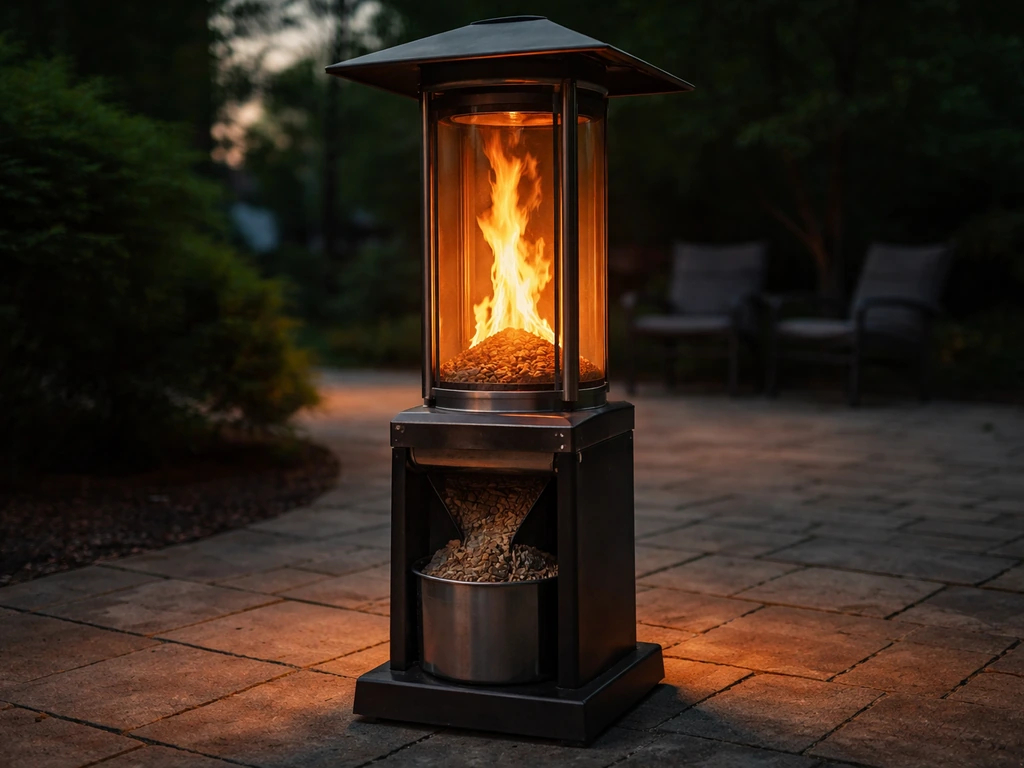
This is a 75,000 BTU pellet-burning patio heater that uses wood pellets as fuel, feeds them automatically via gravity (no electricity needed), and burns them in a fire pot with triple-pane windows so you get the visual warmth of a real flame. For a Costco-priced unit in the $200 range, the build feels substantial: black high-temperature powder-coated steel body, stainless steel chimney top, and an aluminum reflector that aims heat downward toward the people sitting around it.
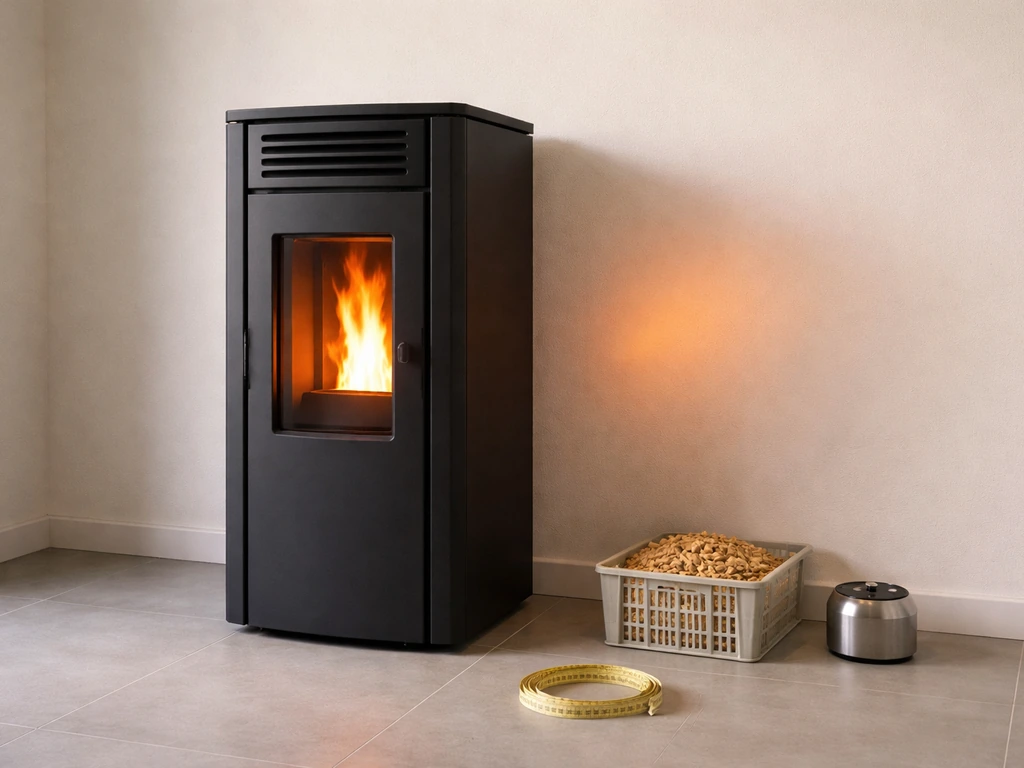
It covers roughly 120 square feet, which is a small-to-mid patio or a tight seating area. The biggest trade-offs are manual ignition (match plus a little lighter fluid), a 4-hour burn window per hopper fill, and the fact that you're dealing with combustion ash and smoke rather than clean propane or electric heat. For the right buyer, that's all completely fine. For others, it's a dealbreaker.
Key specs at a glance
| Spec | Flame Pro Pellet Heater |
|---|---|
| Heat output | 75,000 BTU |
| Coverage area | ~120 sq ft radius |
| Hopper capacity | Up to 20 lb of wood pellets |
| Burn time per fill | Up to 4 hours |
| Fuel feed system | Gravity-automatic (non-electric) |
| Ignition | Manual (match/lighter + lighter fluid) |
| Height | 81 inches |
| Body material | Powder-coated steel |
| Chimney | Stainless steel top |
| Heat direction | Downward aluminum reflector |
| Price (Costco) | ~$199–$249 |
That 75,000 BTU figure is genuinely impressive. For context, a propane patio heater like the Fire Sense models often tops out around 46,000 BTU. Fire Sense performance series LPG patio heaters are a different fuel-and-control category, so this pellet unit's manual ignition and ash cleanup won't directly translate. More BTUs means more heat reaching people in your seating area, assuming you've got the heater positioned correctly. The downside is that raw BTU output doesn't always translate linearly to coverage in open or windy outdoor spaces, so treat that 120 sq ft figure as a calm-night estimate rather than a guarantee.
The hopper holds up to 20 lb of wood pellets and the manufacturer rates burn time at 4 hours from an 18 lb fill. That works out to roughly 4.5 lb of pellets per hour at full burn, which is consistent with what you'd expect from a high-output pellet appliance. Forum users who've run similar math have noted that actual consumption varies with how wide-open the air intake is, outdoor temperature, and pellet quality, so your real-world burn time might land anywhere from 3.5 to 5 hours depending on conditions.
Build quality and how it handles real patio conditions
The powder-coated steel body and stainless chimney top are the right materials for a heater that's going to live outside and see weather. High-temp powder coat handles heat cycles well without peeling, and stainless resists rust where moisture matters most, at the top of the chimney where condensation tends to collect. The triple-pane windows are a nice touch: they let you watch the flame (which looks great on a cool evening) and provide a layer of protection if the fire chamber gets jostled.
In cold weather, pellet heaters tend to perform better than most people expect because they produce radiant heat from a real flame rather than just convective warmth. The downward-aimed aluminum reflector helps direct that heat to the people below rather than losing it straight upward. On a covered patio, this setup works really well because the overhang traps warmth. On a fully open, uncovered patio on a breezy night, you'll lose some efficiency, just like any outdoor heater. The pellet flame itself is more resistant to wind disruption than an open propane burner, but a strong gust can still interrupt combustion. Placing it in a corner or against a wall makes a noticeable difference.
One thing to keep in mind: this is an 81-inch-tall unit. It's a full-size freestanding tower, not a tabletop unit. If you're comparing it to the FlamePro tabletop models, the footprint and use case are quite different. If you specifically want a deeper comparison focused on the FlamePro 81''h steel patio pellet heater review, see that full breakdown before you buy FlamePro tabletop models. If you prefer a compact setup, a flame pro table top patio heater is the more space-friendly alternative to this 81-inch freestanding tower tabletop. The tower format gives you better heat distribution over a seating area but requires a stable, level surface and enough clearance from overhead structures.
Day-to-day usability: startup, controls, and cleanup
Getting it started
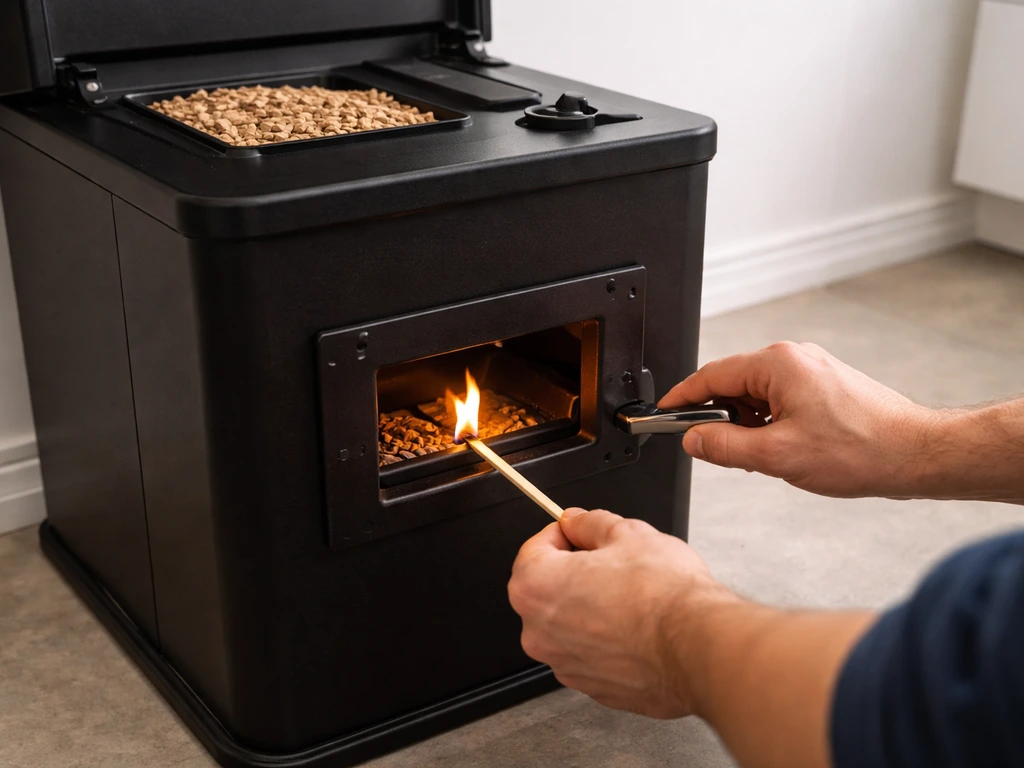
This is where the Flame Pro pellet heater requires more of you than a propane or electric unit. There's no electronic ignition, no push button, no thermostat dial. You fill the hopper with pellets, add a small amount of lighter fluid to the fire pot, and light it with a match or lighter. Once the fire catches and the pellets start dropping in via gravity feed, you're up and running. It takes a few minutes to reach full heat output. If you've used a wood-burning fireplace or chimney before, this will feel familiar. If you've only ever used gas or electric heaters, the startup ritual takes some getting used to.
Controls and heat management
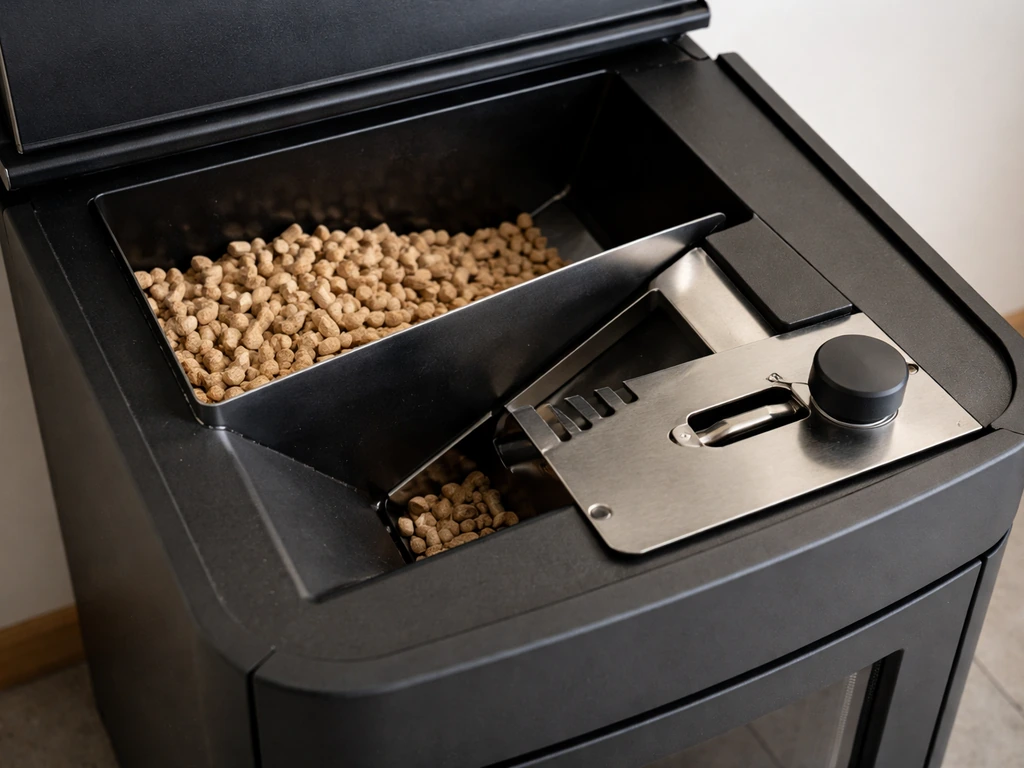
There are no digital controls, no remote, and no thermostat. Heat output is managed by the gravity feed rate and air intake, which means you have some manual adjustability but nothing precise. This is a step down from propane heaters with variable flame controls or electric heaters with programmable thermostats. For most patio use, you set it, enjoy it, and refill when it runs low. But if you want fine temperature control, this isn't your unit. The fire poker included in the kit is used to break up any pellet pileups in the fire pot, which is a practical touch that tells you something real about how the combustion process works.
Pellet loading and maintenance
Loading pellets is straightforward: pour them into the top hopper. At 4–5 lb per hour of burn, a 20 lb bag (the standard size for bagged wood pellets, typically sold at hardware stores and home centers) gets you close to a full evening. You'll want to keep a bag or two on hand. The removable ash tray is the main maintenance feature, pull it out, dump it, put it back. Ash buildup depends on pellet quality and burn duration. Budget for a quick ash dump every few sessions and a more thorough cleaning of the fire pot and chimney at the start and end of each season.
The manufacturer claims cleaner burn and less soot on the triple-pane windows compared to similar pellet heaters, plus reduced CO and CO2 emissions. In real-world use, pellet quality matters enormously here. Premium, low-ash hardwood pellets will produce noticeably less soot and smoke than cheap or damp pellets. If your glass is getting grimy fast, switching pellet brands is the first thing to try before assuming the heater is at fault.
Safety, ventilation, and local code considerations
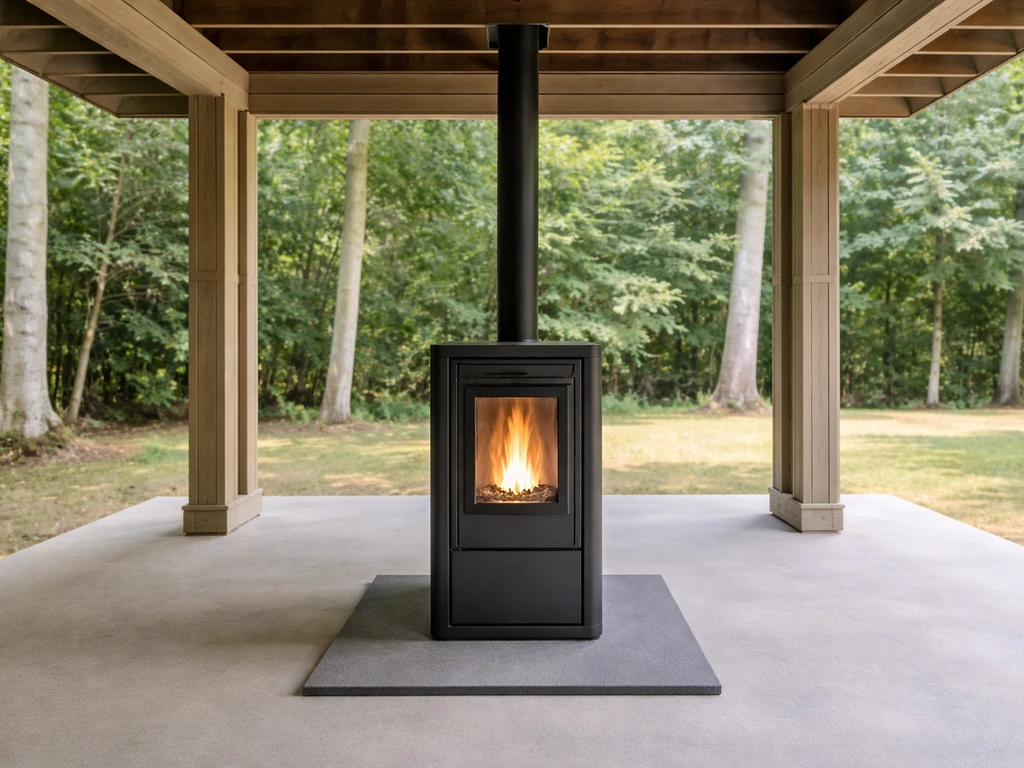
Pellet heaters burn solid wood fuel and produce combustion byproducts including CO, CO2, particulate matter, and ash. That makes ventilation the non-negotiable factor when deciding where to use this heater. This unit is designed for outdoor use only, and that's a hard line: never use it in an enclosed garage, screened-in room, or any space without substantial open-air ventilation. The chimney top helps direct exhaust upward and away from the seating area, but you still need airflow.
On covered patios, the critical question is how open the sides are. A pergola with open sides is generally fine. A fully enclosed three-season room or screened porch is not appropriate for this heater. Clearance from combustible materials (wood framing, overhead structures, fabric furniture) is essential. Follow the clearance distances in the installation manual closely, and if you're unsure whether your covered patio qualifies, err on the side of caution or choose a propane or electric alternative.
In the US, solid-fuel-burning appliances and their venting fall under NFPA 211 guidance, which covers chimney and vent clearances for solid fuel equipment. In Canada, CSA B365 governs installation of solid-fuel-burning appliances. Beyond these national standards, your local municipality may have additional rules about open burning or solid-fuel combustion in residential outdoor spaces. It's worth a quick check with your local fire marshal or building department before you set this up, particularly in areas with air quality regulations or burn bans.
- Use outdoors only, never in enclosed or semi-enclosed spaces without significant open-air ventilation
- Maintain clearances from combustibles per the installation manual
- Check NFPA 211 (US) or CSA B365 (Canada) guidelines for solid-fuel appliance venting
- Verify local burn ordinances and air quality regulations before regular use
- Keep a fire extinguisher accessible any time you're burning solid fuel outdoors
- Never leave the heater unattended while lit, and fully extinguish before leaving the area
What it actually costs to run
The unit itself runs $199–$249 at Costco, which is a competitive price for a 75,000 BTU outdoor heater of any fuel type. The ongoing cost is the fuel: bagged wood pellets. Premium hardwood pellets typically run $5–$9 per 20 lb bag depending on brand, region, and whether you're buying in bulk. At roughly 4–5 lb per hour of burn, a 20 lb bag gives you 4–5 hours of heat at a cost of about $1.25–$2.25 per hour. That's in the same ballpark as propane for a comparable BTU output, and often cheaper than running a high-wattage electric patio heater for equivalent warmth.
Because the gravity-feed system is non-electric, there's no electricity cost associated with running this unit. That's a genuine advantage over pellet heaters with auger motors and blower fans, which draw continuous power. The Flame Pro pellet heater runs entirely on the wood pellets themselves, keeping operating costs simple and predictable.
Maintenance costs are low: a wire brush for the chimney, replacement pellets, and occasional cleaning of the ash tray and fire pot. There are no gas lines, no propane tank swaps, and no electrical connections to service. If you buy quality pellets and clean it a couple of times per season, expect this heater to last several years without significant repair costs, assuming you store it under cover or with a protective cover when not in use.
| Cost factor | Flame Pro Pellet Heater |
|---|---|
| Purchase price | $199–$249 (Costco) |
| Fuel cost | $5–$9 per 20 lb bag of wood pellets |
| Fuel consumption | ~4–5 lb/hour at full output |
| Cost per hour (est.) | ~$1.25–$2.25/hour |
| Electricity required | None (gravity-feed system) |
| Maintenance | Ash removal each session; seasonal chimney cleaning |
How it compares to propane, electric, natural gas, and infrared heaters
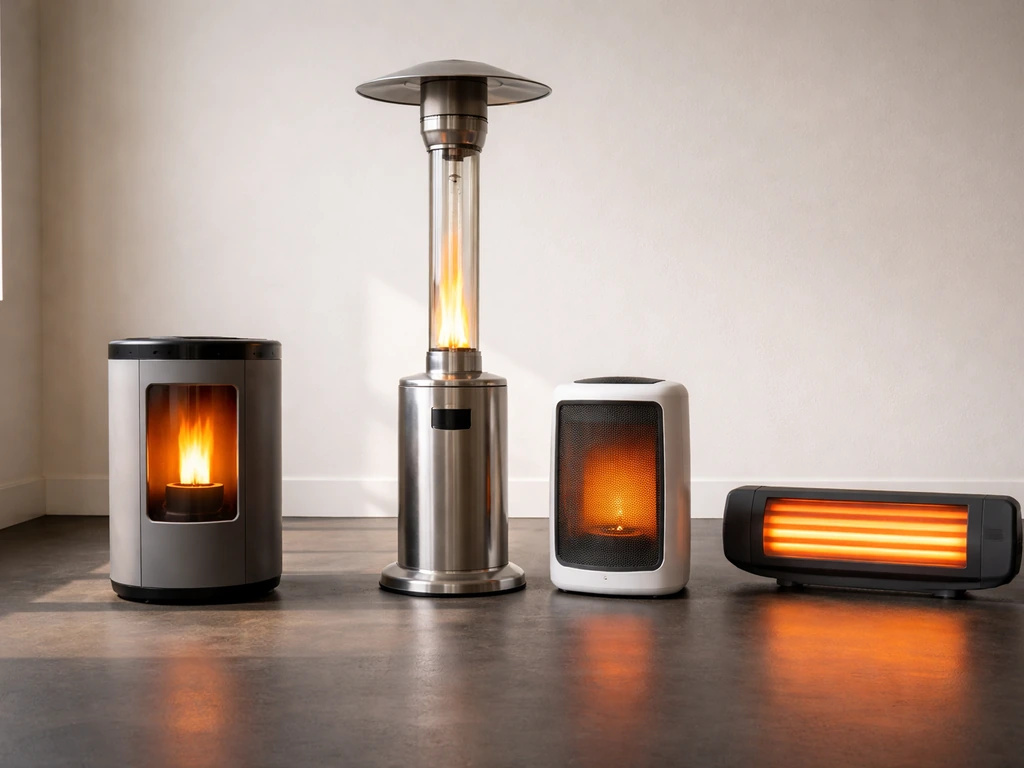
The Flame Pro pellet heater occupies a unique niche. It produces more BTUs than most propane tower heaters (75,000 vs a typical 46,000 BTU propane unit), it creates a real visible flame that looks fantastic at night, and it runs with no electricity and no gas line. But it demands more involvement from you: manual ignition, hopper refills every few hours, ash cleanup, and smoke that requires genuine outdoor ventilation. Here's how it stacks up against the main alternatives:
| Heater type | Typical BTU output | Ease of use | Coverage | Operating cost (est./hr) | Best for |
|---|---|---|---|---|---|
| Flame Pro pellet | 75,000 BTU | Moderate (manual ignition, refills) | ~120 sq ft | $1.25–$2.25 | Ambiance + high heat, no gas/electric |
| Propane tower | 40,000–46,000 BTU | Easy (turn-knob ignition) | ~120–150 sq ft | $1.50–$3.00 | Convenience, portability |
| Natural gas | 40,000–50,000 BTU | Very easy (permanent install) | ~150 sq ft | $0.50–$1.00 | Frequent use, fixed patio |
| Electric infrared | 1,500–5,000W equivalent | Easiest (plug-in, thermostat) | ~100 sq ft | $0.20–$0.60 | Covered patios, no combustion |
| Tabletop heater | 10,000–15,000 BTU | Easy | ~25–50 sq ft | Varies | Small tables, supplemental heat |
Propane heaters are the most direct competitors. They're easier to start, easier to control, and you don't deal with ash. But you also don't get the real-flame aesthetic or the BTU headroom the Flame Pro delivers. If you entertain on a large or cold patio and want visible fire without a permanent gas line, the pellet heater has a real argument. If you want to push a button and walk away, go propane.
Natural gas is the best value long-term if you have a gas hookup on your patio and use the heater frequently. The fuel cost is significantly lower per hour and you never run out mid-evening. But the installation cost and permanent placement are barriers for many homeowners.
Electric infrared heaters are the cleanest and most convenient option for covered patios where you have an outdoor outlet. No combustion means no ventilation concerns and no ash. The trade-off is lower BTU-equivalent output and the need for electricity. For very small patios or screened porches where you absolutely cannot use combustion appliances, electric infrared is the right call.
If you're drawn to the FlamePro brand but want something more compact, the tabletop FlamePro models are worth considering for smaller seating areas or as a supplement to a primary heat source. If you are looking specifically for a flamepro table-top patio heater, the same pellet-burning trade-offs apply but the footprint and heat distribution will be smaller than the 81-inch tower model tabletop FlamePro models. They share the pellet-burning concept but at a much smaller scale.
Who should buy the Flame Pro pellet heater (and who shouldn't)
Buy this heater if you want serious BTU output without a gas line, you enjoy the look and feel of a real wood flame, you have a genuinely open outdoor space with good ventilation, and you're comfortable with a bit of a startup ritual. If you want a full FlamePro pellet patio heater review, the sections on usability, burn time, and costs will help you decide quickly Flame Pro pellet heater review. At $200–$250, it's one of the better-value high-output outdoor heaters you'll find, and the non-electric gravity feed system keeps running costs honest and simple.
Skip it if your patio is enclosed or has limited airflow, if you want electronic controls and thermostat convenience, if you don't want to deal with ash cleanup, or if you're in an area with strict burn ordinances. In those cases, a propane tower heater with variable flame control or a quality electric infrared heater will serve you better day to day without the friction.
- Good fit: open patio or lightly covered pergola with good ventilation
- Good fit: want real-flame ambiance alongside serious heat output
- Good fit: no gas hookup available and want to avoid propane tank logistics
- Good fit: budget-conscious buyers who want high BTUs for the money
- Not a good fit: enclosed or screened porches with limited airflow
- Not a good fit: prefer push-button convenience and thermostat control
- Not a good fit: areas with active burn bans or strict particulate regulations
- Not a good fit: renters or those who want a highly portable, quick-setup heater
One last thing worth checking before you buy: confirm current availability at your local Costco or online (item 1713430), as Costco rotates seasonal inventory. If it's not available right now, it may return next fall, or you may find the 81-inch steel model under the FlamePro name at other retailers. The specs and pricing in this review reflect what's been available in the 2025–2026 season, but lead with the item number when searching to make sure you're comparing the same unit.
FAQ
Can I use the Flame Pro pellet patio heater on a screened-in porch or in a partially enclosed area?
Yes, but only in a genuinely outdoor, open-air setup. Never use it inside a garage, screened room, or any space where combustion exhaust can accumulate, even if the heater has a chimney top. If you see smoke lingering or drifting back toward seating, move it to a more open location and improve cross-breeze ventilation before running it again.
Does the heater need to be perfectly level, and what surface should I place it on?
Plan for a stable, level base because gravity feed depends on the fire pot staying properly aligned. If the unit is tilted, pellets can pile unevenly in the pot, which can cause poorer burns or more frequent ash dumping. Use a non-combustible pad (or per the manual’s clearance guidance) and re-check level after repositioning.
What pellets should I buy to minimize soot, and how do I tell if my pellet quality is the problem?
Expect faster cleaning needs if you use low-quality, high-ash pellets or pellets that absorbed moisture. A practical rule is to inspect the fire pot and chimney after the first full hopper burn, then adjust your cleaning schedule from there. If the viewing windows get sooty quickly, try a different pellet brand and verify pellets are dry before blaming the heater.
How well can I control heat output, can I set a target temperature, and will it be consistent?
Because the burn rate is adjustable only through air intake and feed behavior, you cannot dial it to a precise target temperature like a thermostat-equipped propane or electric heater. For evening comfort, the best approach is to start earlier and position the heater so radiant heat reaches your seating, then let it settle into a steady burn instead of trying to “fine tune” minute-to-minute.
Will wind blow out the flame or reduce burn performance, and where should I position it to reduce that?
In most conditions, yes, but wind can interrupt combustion if the heater is exposed and air patterns hit the intake or flame directly. Use it with proper clearances and consider placing it in a corner or beside a windbreak (not too close to combustibles) to reduce gusts. After a strong gust, watch for signs of reduced flame before refilling or adding more starter material.
Does the real fuel cost match the per-hour math, or are there common reasons pellet cost per hour goes up?
Cost-wise, pellets are usually predictable, but the “per hour” estimate assumes near full burn with good pellets. If you frequently start and stop, run shorter sessions, or open the fire pot more often, effective cost per hour can rise. To keep costs closer to estimates, pre-stage pellets dry and run consistent session lengths rather than repeatedly relighting mid-evening.
What should I expect during startup, and what indicates a bad ignition or combustion issue?
It is normal to have some smoke during ignition and warm-up, but you should not get persistent heavy smoke once the fire is established. If smoke continues longer than a few minutes, check for blocked pellet flow, verify you used an appropriate amount of starter (too much can smolder), and confirm pellets are dry and consistent in size.
Can I add more pellets during operation, and what’s the safest way to refill?
Do not add pellets while the heater is actively flaming if the manual advises otherwise, and avoid pouring pellets directly into a hot fire pot area. The safest approach is to fill only the hopper when the heater is off or in a stable operating state according to the instructions, then allow gravity feed to pull pellets in naturally. If you need more heat after it runs low, plan for a refill cycle rather than trying to “top off” the fire pot.
How should I clean out the ash and chimney, and when is it safe to do so?
For ash cleanup, remove the ash tray when the heater is fully cooled and dispose of ash in a metal container if the unit was just used. A best practice is to do a quick ash dump after each session and a deeper fire pot and chimney cleaning at the start and end of the season. Avoid using water on hot metal or chimney parts, because temperature shock can damage components.
How much clearance do I need from overhead structures and nearby furniture, and does the tower size change that?
Yes, consider the heater’s size and clearance relative to overhead structures and nearby furniture. The tower format needs more vertical clearance than tabletop units, and radiant heat can warm nearby surfaces even if the heater is “out in the open.” Measure your setup before purchase, then follow the manual clearance distances rather than guessing based on propane tower heater spacing.
What are the signs that my pellets are damp or inconsistent, and how should I store them?
You may see an initial drop in performance if pellets are damp, because they ignite less readily and can produce more smoke and residue. Store pellets under cover with the bag sealed, and if you suspect moisture, test a small amount first. Also, different pellet brands can have different ash content, so consistency matters as much as overall BTU rating.