
The Imus Eco is a compact, plug-in electric infrared heater designed to sit under a garden table and warm two people sitting opposite each other. At 550W it draws very little power, costs roughly 7p to 13p per hour to run, and heats up in about a minute. It is genuinely useful for what it was built to do: targeted, close-range warmth for a small seated area. But it has real limits, and one critical buying note right up front: the Imus Eco was officially discontinued in November 2025, so stock is finite and manufacturer support will wind down. If you are reading this in mid-2026, you need to factor that into your decision.
Imus Eco Patio Heater Review: Performance, Costs, and Fit

Willa Brennan
5 Jul 2026
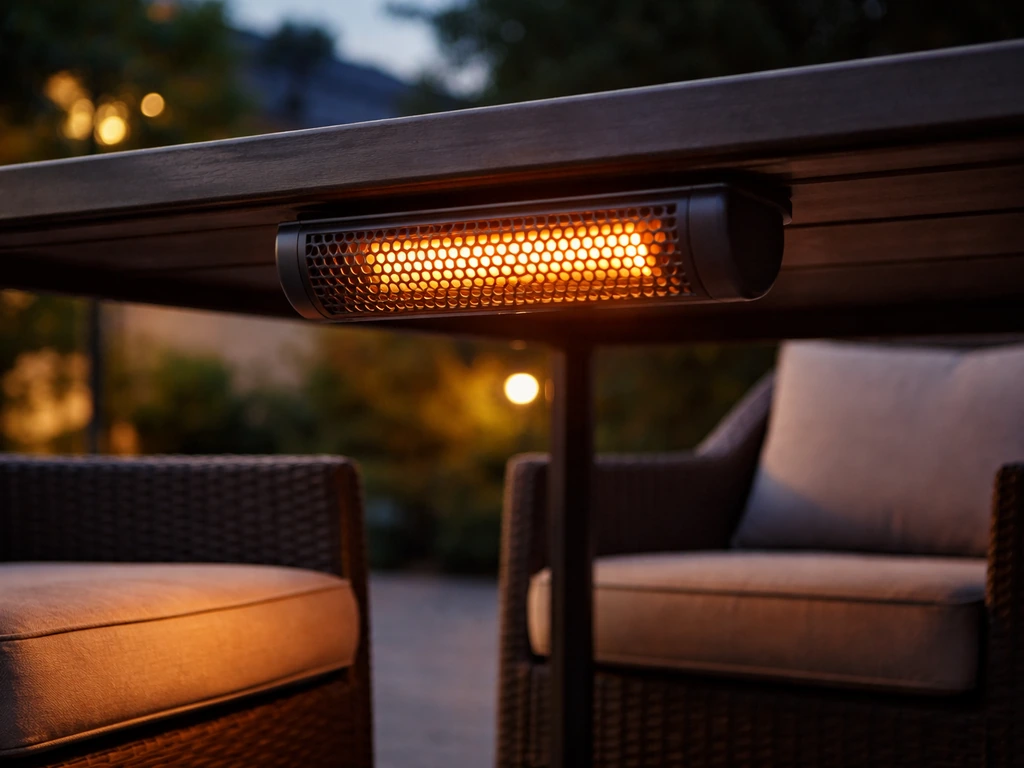
What the Imus Eco actually is and how it works
The Imus Eco (sold by Heat Outdoors, made by Mensa Heating) is blank" rel="noopener noreferrer">a freestanding portable electric infrared heater. It runs on a standard 230V / 13A UK plug, draws 550W of power, weighs 3.6kg, and measures roughly 200 x 672 x 200mm, so it is tall and narrow. The core technology is a low-glare ruby infrared lamp, the kind that glows a soft red rather than blasting bright orange light. Infrared heat works by warming objects and bodies directly rather than heating the air around them, which is why you feel it almost instantly even in a breeze. Wikipedia describes patio heaters as radiative outdoor heating appliances, and explains that electrically powered radiative or infrared heaters emit infrared energy that warms nearby surfaces and people.
The intended setup is straightforward: place it in the centre of the space beneath your garden table, plug it into a nearby outdoor socket, and switch it on. Mensa Heating markets a "1500W effect using only 550W" claim, which comes from their quoted 92% efficiency figure for quartz shortwave infrared technology. The idea is that because infrared heats people directly rather than the air, a lower wattage feels more effective than it would from a convection heater. That claim is marketing language rather than a physics measurement, but the underlying point, that infrared feels warmer per watt for seated people nearby, is real and worth taking seriously.
Heat performance: what to expect on a real patio
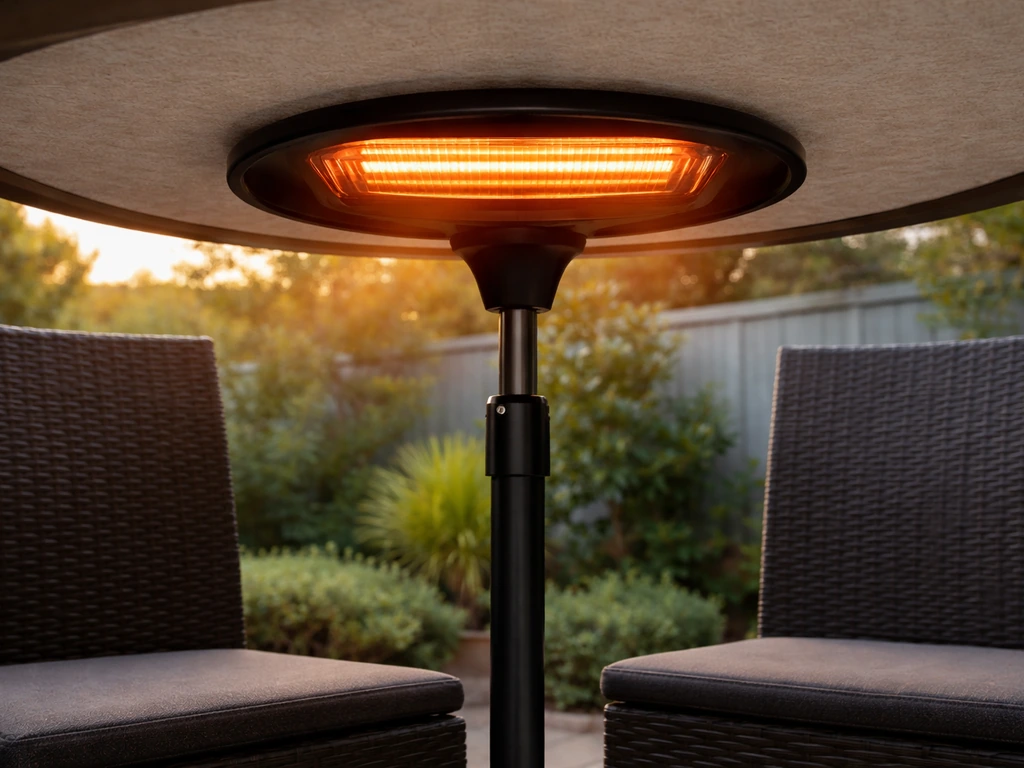
Coverage and footprint
BLT Direct lists the Imus Eco's coverage area at 1.5 square metres. That is not a typo, it genuinely is that small. The heater is optimised for two people seated either side of a table with the unit positioned between them at knee-to-thigh level. The manual is specific: position it so the heat hits the inside of both people's legs. Think of it as personal leg warmth rather than patio heating. For that very focused job, it does well. Step more than a metre or so away and you will not feel much.
Wind performance and covered vs uncovered patios
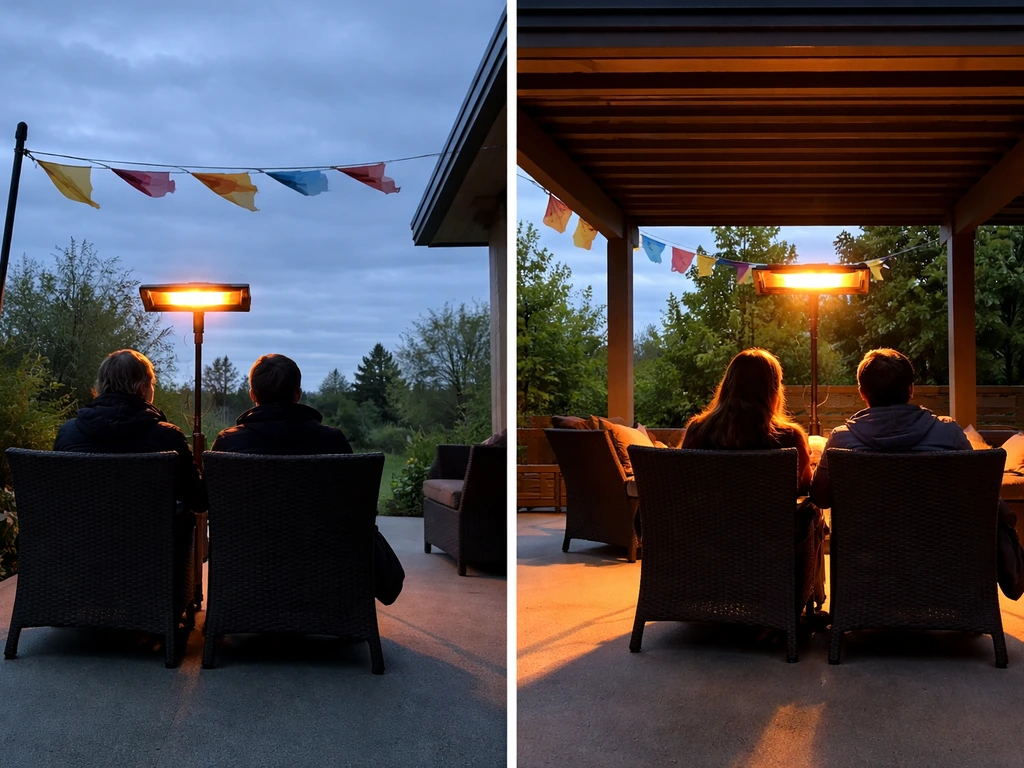
This is where infrared heaters have a structural advantage over gas mushroom heaters: because they heat bodies directly rather than warming air, a breeze does not carry the warmth away. The under-table position also provides a degree of natural shelter. That said, 550W is a modest output, and in genuinely cold or wet weather, the Imus Eco is not going to make you comfortable on an exposed patio. The manual explicitly warns against use in rain, storms, or snow, despite the IP44 rating. IP44 means splash-proof from any direction, not waterproof, so a light mist is fine but you should not leave it out in heavy rain.
Warm-up time and controls
Warm-up is genuinely fast: the manual states you feel heat within about one minute of switching on. There is no thermostat, no remote, and no app. You get a single on/off switch on the unit itself. For a heater this simple and this focused, that is fine in practice. Where it gets slightly frustrating is if you want to adjust heat level: there is no lower power mode, just on or off. The manual also specifically warns against using a timer or smart plug that auto-switches it on, citing fire risk if the heater is incorrectly positioned or covered when it powers up.
Build quality, safety, and weather-readiness
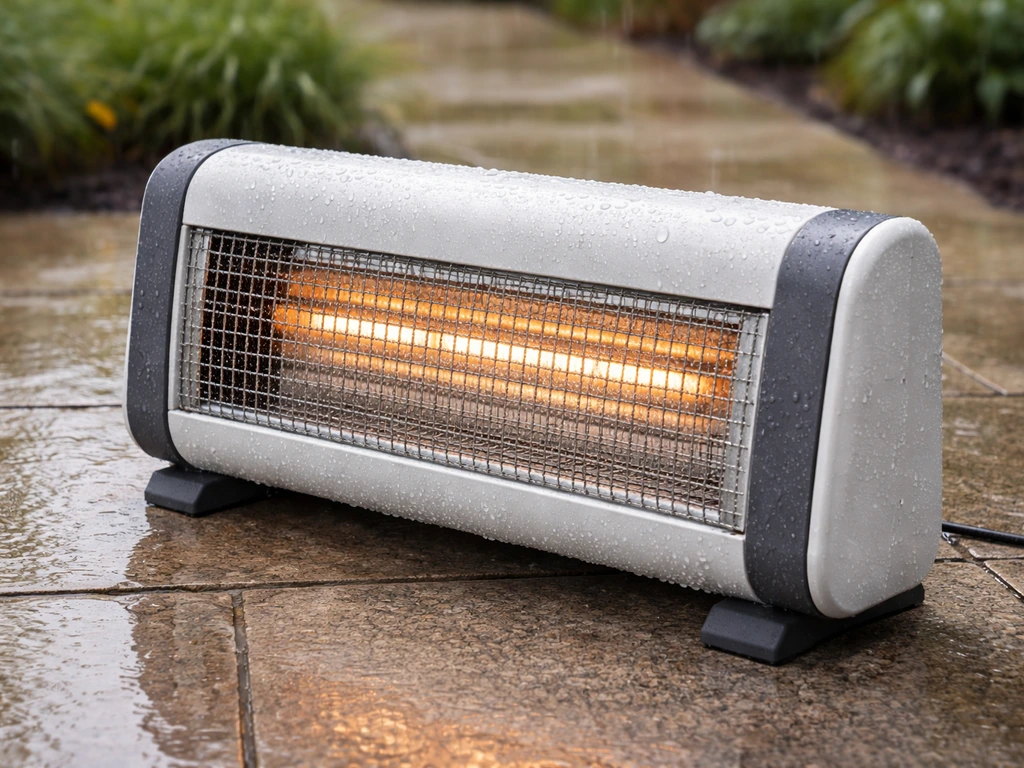
The Imus Eco is CE and RoHS compliant and meets EN 60335-1 and EN 60335-2-30 EU safety standards. It comes with a burn-proof front safety guard and a touch-safe outer casing described as "safe to touch" via patented Danish construction. The overheat protection sensor will cut the unit if it overheats due to improper use, such as being covered or blocked. If that happens, you disconnect it from the socket and let it cool for at least 30 minutes before inspecting.
The IP44 rating is adequate for outdoor use in typical garden conditions but it is not a weather-proof product. The manufacturer is clear: bring it indoors after every use and let it cool for at least 60 minutes before packing it away or cleaning it. Build quality feels solid for the price category, though the slim form factor means it can tip over on uneven surfaces, so placement on a flat surface under a stable table matters. The lamp is rated for 5,000 to 7,000 hours, which at typical seasonal use (say 3 hours per day across a UK summer) works out to years of lamp life before a replacement is needed.
Setup, everyday usability, and portability
Assembly is essentially zero. Unbox it, place it under your table, plug it in. The 2.8m cable is long enough to reach most outdoor sockets without an extension lead, though depending on your layout you may still need one. At 3.6kg it is easy to carry indoors after each session, which the manual asks you to do. The on/off switch is the only control, so day-to-day use is as simple as it gets.
Noise level is effectively zero. There is no fan, no gas burner hiss, no ignition click. The low-glare ruby lamp is a significant quality-of-life improvement over older bright-orange infrared lamps if you prefer a more ambient atmosphere. Cleaning is simple: wipe the outer casing with a dry cloth (no spraying water into the unit), and if the reflector plate needs cleaning, remove the grill carefully and avoid touching the lamp with fingers or cloth.
There are a few practical constraints that can catch people out. The table must have at least 5cm of clearance between the tabletop and the top of the heater. Tablecloths must not hang more than 4cm below the table edge, ruling out many traditional patio tablecloths. You cannot use it under a table with a blanket draped over your lap in a way that covers the heater. These are safety-driven rules, but they are real limits on how you set up your table.
What it costs to run
At 550W, the Imus Eco is one of the cheapest electric patio heaters to run. Heat Outdoors quotes 13.2p per hour at full load; BLT Direct quotes 7p per hour (presumably using a different assumed electricity tariff). Using the UK Ofgem price cap rate of around 24.5p per kWh in mid-2026, the actual cost is about 13-14p per hour, which lines up with the Heat Outdoors figure. Even at the higher end, running it for 3 hours an evening costs under 45p. Mensa Heating claims running costs are 94% lower than a traditional gas patio heater, which is plausible: a typical gas mushroom heater running at 12kW–14kW can cost £1.50–£2.00 per hour in LPG costs.
The trade-off is obvious: you are getting 550W of targeted heating versus 12,000–14,000W of broadcast heating. On Reddit, some users discuss switching from gas patio heaters to infrared for perceived comfort and safety trade-offs switch from gas patio heaters to infrared. These products solve different problems. If your goal is warming a whole patio, gas wins on raw heat output. If your goal is making two people comfortable at a dinner table for the cost of a cup of tea per evening, the Imus Eco makes sense financially. Mensa Heating also claims an 89% CO2 saving versus gas, which is directionally correct if your grid electricity comes from a reasonably low-carbon mix.
The honest pros, cons, and complaints
What buyers like
- Genuinely low running costs: under 15p per hour at current UK electricity rates
- Heats up in about one minute with no ignition process
- Silent operation with no fan or burner noise
- Safe to touch outer casing makes it practical for tables where children are present
- Very portable at 3.6kg, easy to bring indoors after use
- Low-glare ruby lamp is less intrusive than standard orange infrared lamps
- Simple plug-and-play: no installation, no gas connection, no professional setup required
Where it falls short
- Coverage is only 1.5m²: this is a heater for two people at a table, not a patio heater in the traditional sense
- No thermostat, no heat settings, no remote control: just on/off
- Cannot be used with smart plugs or timers due to fire risk if incorrectly positioned on power-up
- Tablecloth restrictions (max 4cm overhang) rule out many patio table setups
- Must be brought indoors after every use, adding a storage routine
- Officially discontinued as of November 2025: replacement parts and warranty support will become harder to find
- Warranty coverage differs by source: Heat Outdoors lists 1 year; BLT Direct listed 2 years on the unit (6 months on the lamp)
- Not suitable for genuinely cold or wet weather despite IP44 rating
Common buyer complaints
The most frequent frustration is expectations mismatch: buyers expecting a patio heater that warms a whole seating area are disappointed by the narrow 1.5m² footprint. The tablecloth restriction also catches people by surprise after purchase. A smaller number of buyers have encountered the overheat shutdown, usually caused by the heater being partially covered or positioned without adequate clearance. The discontinuation adds a longer-term concern: if the ruby lamp fails after the lamp warranty period, sourcing a direct replacement may become difficult.
How it compares to other patio heater types
The Imus Eco sits in a very specific category: low-wattage under-table infrared. To make a fair decision, you need to understand how it stacks up against the main alternatives. If you are also considering a mosaic-style patio heater, it helps to check a mosaic patio heater review to compare heat output, coverage, and build quality side by side.
| Heater Type | Typical Output | Coverage | Running Cost (approx) | Best For | Key Weakness |
|---|---|---|---|---|---|
| Imus Eco (under-table infrared) | 550W (0.55kW) | 1.5m², 2 people | 13-14p/hr | Two people at a table, low-cost, quiet | Very limited coverage, no controls |
| Standard electric infrared | 1,500–2,000W | 5–10m² | 35–50p/hr | Covered patios, wall/post mount | Higher running cost than Imus Eco |
| Propane / LPG freestanding | 12,000–14,000W | Up to 20m² | £1.50–£2.00/hr | Large open patios, whole-area warmth | Gas costs, refill logistics, wind-sensitive |
| Natural gas (plumbed) | 12,000–14,000W | Up to 20m² | ~40–60p/hr (gas tariff) | Permanent large patio installations | Professional installation needed |
| Pellet patio heater | Variable (wood heat) | Medium–large area | Variable, fuel-dependent | Ambiance + warmth, rural settings | Maintenance, ash, not plug-and-play |
| Tabletop electric / propane | 700–1,500W or ~10,000 BTU | Small seating area | Low–moderate | Bistro tables, small balconies | Limited output, may need fuel refill |
| Wall/overhead infrared panel | 1,500–3,000W | Up to 15m² | 35–70p/hr | Covered patios, fixed installation | Requires wiring, not portable |
For context, a typical freestanding propane heater like those reviewed on this site in the Costco or Paramount categories pushes 40,000 BTU or more and can heat a broad outdoor seating area. If you want something you can realistically compare across brands and formats, a Costco patio heater review is a useful next step. The Imus Eco at 550W is roughly equivalent to 1,876 BTU, about 1/20th the output of a gas mushroom heater. That is not a flaw: it is the product's design intent. It does one thing, heats two people at close range, very efficiently and very cheaply. If you need to heat a full patio party, you want a different tool entirely.
Compared to other under-table or tabletop electric options, the Imus Eco is competitive on running costs and safety features. It compares well to similarly positioned products from brands like Heatmax or Mosaic in the same under-table / compact electric segment, particularly on the safe-to-touch construction and lamp lifespan, though those alternatives may offer better ongoing parts availability now that the Imus Eco has been discontinued. You may also want to check a Heatmax patio heater review to compare alternatives in the same under-table electric category.
Who should actually buy this, and who should look elsewhere
The Imus Eco is a strong choice if:
- You have a garden table and want low-cost, targeted warmth for two people eating or drinking outdoors
- You want something completely silent that does not require a gas supply or installation
- Your patio has a power outlet within 2.8m of the table (or you are happy using an extension lead)
- You want minimal running costs and rarely need to heat more than a small seating area
- You are comfortable with the bring-indoors-after-use routine
- You can find remaining stock before it fully sells out
Look at alternatives if:
- You need to heat a full patio or multiple seating areas: look at propane freestanding heaters (40,000 BTU range) or wall-mounted electric infrared panels (1,500W+)
- You use a tablecloth with significant overhang: the 4cm restriction will be a constant frustration
- You want smart home integration or variable heat settings: any heater with a thermostat and remote will serve you better
- Long-term parts support matters to you: the discontinuation in November 2025 is a real concern for multi-year ownership
- You need outdoor heating in cold, wet UK winters: at 550W, this is a mild-weather comfort product, not a winter heating solution
- You want something you can leave outside permanently: you cannot, you need to bring it in after every use
Your buying checklist before you commit
- Measure the clearance under your table: you need at least 5cm between the tabletop and the top of the heater
- Check your tablecloth: it must not hang more than 4cm below the table edge
- Confirm there is a power outlet within reach (2.8m cable, so within about 2m of the table)
- Decide if 1.5m² / two-person coverage is enough for your use case
- Check current stock levels: this is a discontinued product and availability will only shrink
- Verify which warranty terms apply to the retailer you are buying from (1 year vs 2 year on the unit varies by source)
- If you need broader coverage, budget upward: a 1,500W–2,000W wall-mounted infrared or a propane freestanding heater will cover a proper patio
The bottom line is this: the Imus Eco is a well-engineered, genuinely low-cost product that solves a specific problem really well. If that problem matches yours, you will like it. If you are hoping it will heat your whole patio, you will be disappointed. Factor in the discontinuation, make sure you can still get stock and support, and if the coverage limitations fit your table, it is a practical and affordable buy. If your needs are bigger, spend the extra money on a proper 1,500W+ infrared panel or a propane heater that can handle a full seating area. If you want a broader comparison of patio heater options, it helps to read our paramount patio heater review next.
FAQ
Can I use the Imus Eco with a smart plug or timer to turn it on automatically?
Yes, but only if you position it exactly as intended and avoid any covering. The safest approach is using a non-smart, manual switch you control directly at the socket (or a timer designed to switch only a plug that you verify is safe). The manual warns against auto-switching via timers or smart plugs because if the heater powers on while blocked, it can trigger the overheat cut-out.
How sensitive is performance if people are not exactly positioned under the table?
You should assume it will not perform like a “room heater” and plan for noticeable drop-off quickly. With the stated 1.5 m² coverage, it is best for two seats facing each other under a table, and you need the infrared beam aimed at the inside of both legs. If you have people sitting at an angle, or one person is further back, you may only feel warmth on one side.
What should I do if the weather turns wet while the heater is on?
No, it is not meant for rain exposure. Even though it is splash-proof (IP44), the manufacturer guidance is to bring it indoors after each use and not leave it out in wet conditions. If a light mist happens while it is running, stop using it once conditions worsen, then let it cool before handling or storing.
What does it mean if the Imus Eco overheats and stops, and how do I fix it?
If it shuts off, unplug it and wait at least 30 minutes before inspecting, then check the most common causes: blocked air paths, insufficient clearance between tabletop and heater, or tablecloth/coverings hanging down too far. The overheat sensor is protective, but repeated trips usually indicate the setup is not compliant.
How can I control comfort levels since there is no thermostat or power knob?
No thermostat means you cannot “dial in” a medium setting, it is on or off. A practical workaround is using it in shorter on cycles (for example, switch on during arrivals, switch off during long conversation, then restart) rather than trying to partially reduce heat output.
Is a 2.8 m cable long enough, and can I use an extension lead?
You may still need a cable strategy, because the unit’s cable is 2.8 m. Measure from the outdoor socket to the exact table position first. If you must use an extension lead, keep it outdoors-rated and follow UK safety guidance for outdoor use, and do not run anything that could drape where it might get pulled or cover the heater.
Will it work with my patio tablecloth or umbrella-style cover?
The key is tablecloth clearance. The heater requires at least 5 cm between the tabletop and the top of the heater, and the tablecloth must not hang more than 4 cm below the table edge. Many traditional patio tablecloths (especially those with deeper hems or weighted drops) can violate this and cause overheat protection trips.
What is the safest way to clean the heater, and can I spray it?
To clean safely, wipe the outer casing with a dry cloth, and only address the reflector area if needed by carefully removing the grill. Avoid touching the ruby lamp with fingers or cloth. Also let the heater cool properly before any cleaning or inspection to reduce risk of damaging the lamp or reflector.
Can I leave the Imus Eco outdoors under the table between uses?
It is not designed to be left installed under a table when not in use. For storage, bring it indoors after every use and allow it to cool for at least 60 minutes before packing away. This also helps reduce dust and moisture buildup on the lamp and reflector.
How do I prevent the heater from tipping, and does the slim shape affect stability?
Watch for tipping risk due to the tall, narrow body, especially on uneven surfaces like patio paving that is slightly sloped or on soft mats. Use a stable, flat placement and ensure the heater base is fully supported. If your table is on adjustable legs or wobbly, correct that first.
If I buy now, how worried should I be about lamp replacement availability later?
Expect lamp replacement to be the main long-term parts risk, especially since the product was discontinued in late 2025. The lamp is rated for about 5,000 to 7,000 hours, so usage intensity matters. If you plan heavy daily use, treat ongoing parts availability as a key factor before buying existing or remaining stock.