
The Mosaic propane patio heater is a 48,000 BTU standing tower heater sold primarily through Academy Sports for around $129.99. It claims to warm up to 250 square feet, runs on a standard 20 lb propane tank, and comes with push-button ignition and an automatic tip-over shutoff. For most medium-sized uncovered patios, it delivers solid, practical heat at a price that's hard to argue with. But it's not the right fit for every situation, and there are a few things worth knowing before you pull the trigger.
Mosaic Patio Heater Review: Propane Performance, Cost, Fit

Willa Brennan
5 Jul 2026
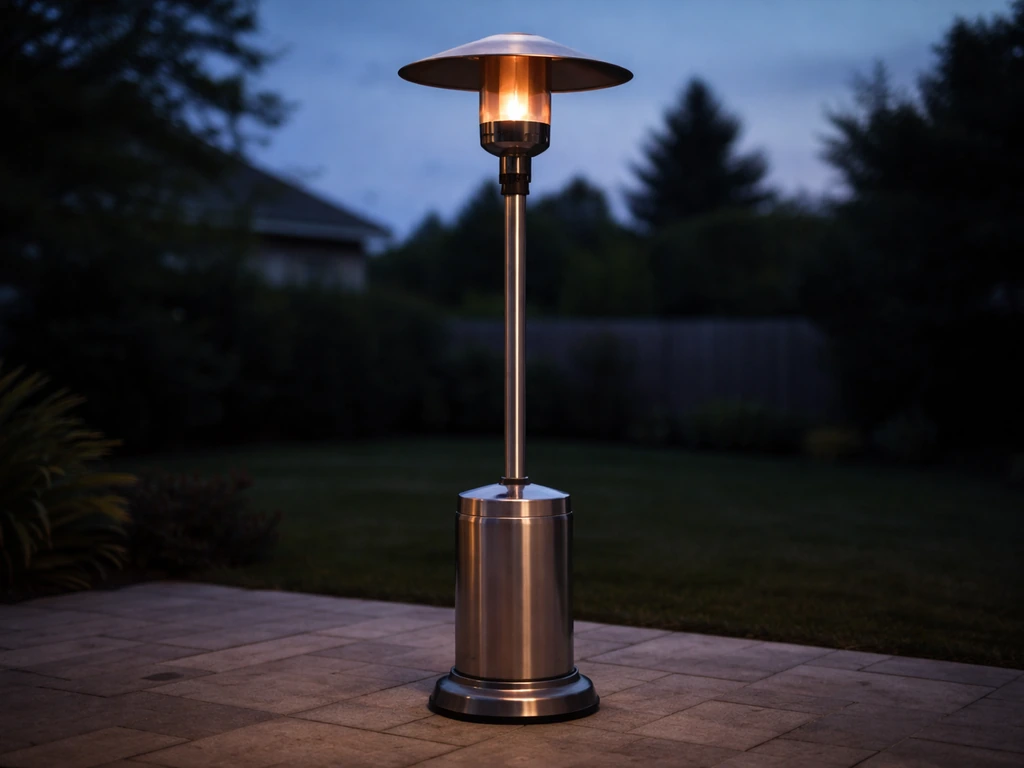
What the Mosaic patio heater is and which models to consider
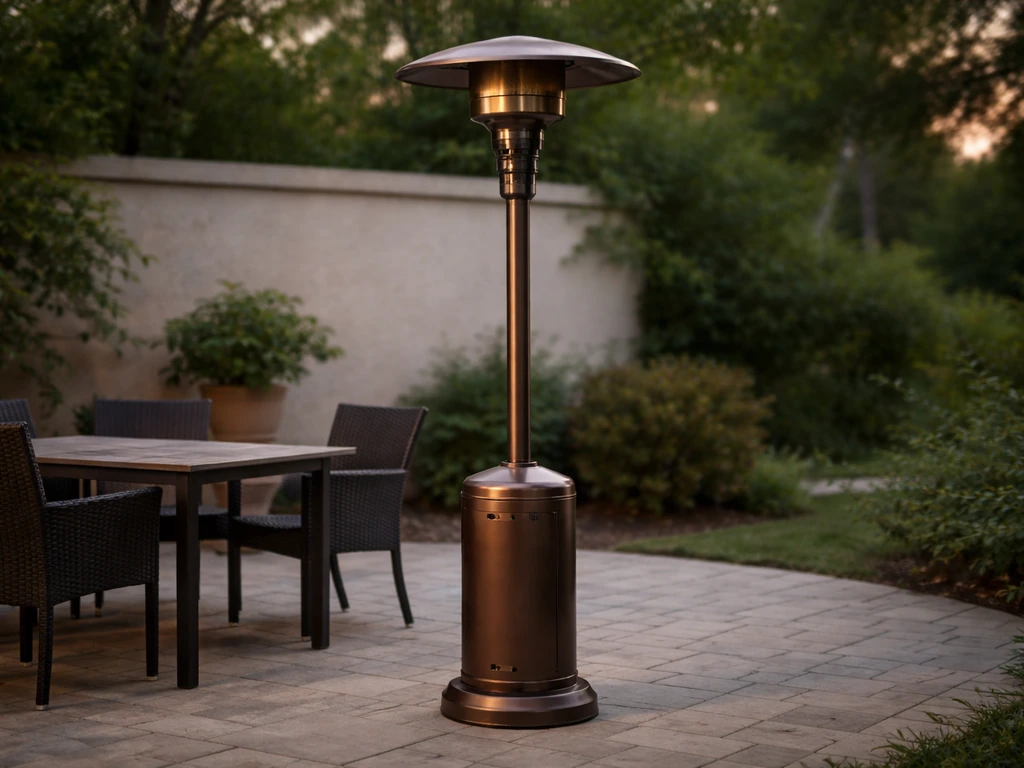
Mosaic's propane patio heater is a full-size, mushroom-style tower heater. The main model sold at Academy (item number 170153, model SRPH33A-XXXX family) stands about 90.5 inches tall with a reflector head roughly 32 inches in diameter. It has a powder-coated steel base and an aluminum emitter head. If that model number rings a bell, it's because the SRPH33A platform appears to be a shared manufacturing platform used by a few brands, including HeatMaxx. That means parts compatibility and manual guidance overlap meaningfully across those brands, which is actually helpful when you're sourcing replacement parts or looking up clearance specs.
As of mid-2026, the Mosaic lineup at major retailers is relatively focused: there's essentially one full-size standing propane model in the $129.99 range. Some listings describe it with a stainless steel finish, and others reference a more standard powder-coated version, but both share the same core specs. If you're comparing Mosaic against other store-brand propane heaters like those covered in related reviews for HeatMaxx, Costco-sold models, or the Paramount heater, you'll find they occupy the same general category of budget-to-mid-range tower propane heaters. If you’re also comparing brands, a paramount patio heater review can help you see whether you’d be better off choosing a different tower or fuel type.
Propane performance: heat output and real-world coverage
The 48,000 BTU rating is the headline number, and it's a real one. For context, 40,000 to 48,000 BTUs is exactly the range you want for heating a medium outdoor patio in cool weather, roughly 50 to 65 degrees Fahrenheit outside. The 250 sq. ft. coverage claim is the manufacturer's optimistic number, tested under calm, controlled conditions. In practice, on a 10x20 patio with light wind, you'll feel genuine warmth within about an 8-to-10-foot radius of the heater. Once the breeze picks up past about 10 mph, that effective radius shrinks noticeably, and you'll want to position the heater as a focal point rather than expecting it to blanket a wide open space.
The heat delivery from a mushroom-style propane tower is radiant, meaning you feel it directly on exposed skin rather than it warming the air around you. This is actually better than it sounds for outdoor use because warm air just escapes upward anyway. Radiant heat is what a campfire feels like: immediate and directional. At max output the Mosaic throws a noticeably warm, comfortable zone. At lower settings it's mild but still usable on a breezy spring evening.
Build quality, controls, and day-to-day usability
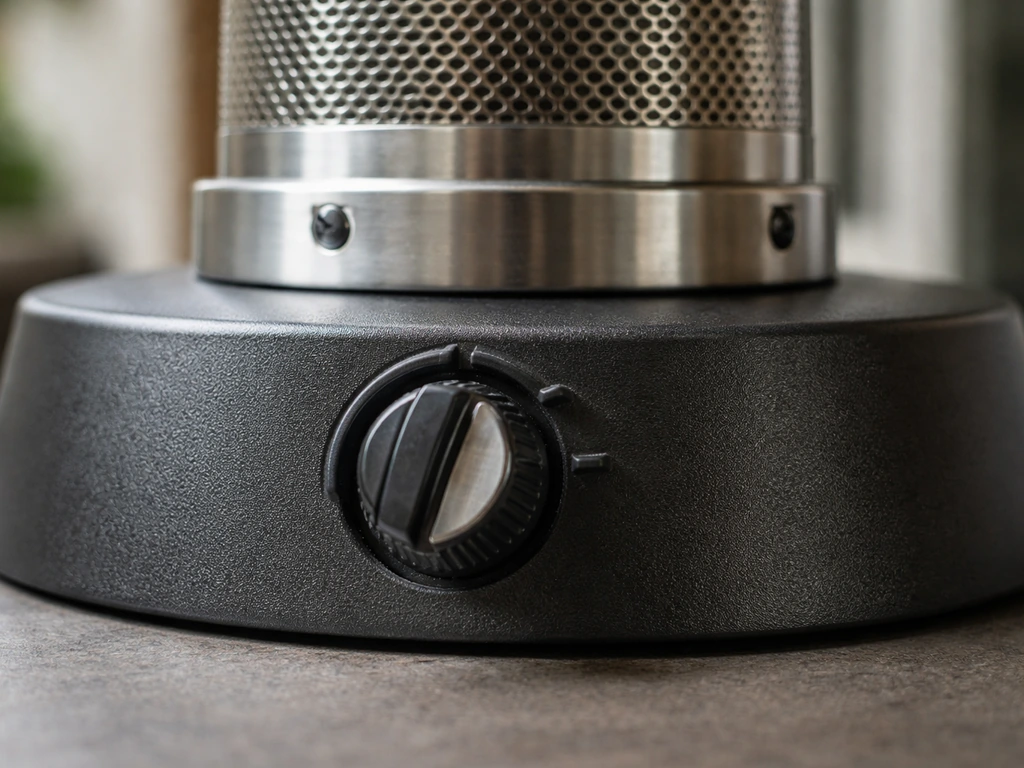
The powder-coated steel base is sturdy enough for everyday use. It's not premium build by any stretch, but it doesn't feel flimsy either. The aluminum emitter head keeps the top section lighter than fully steel units, which helps with tip resistance. The base has a housing compartment designed to fit a standard 20 lb propane tank, keeping the hose and connections tucked in and out of the way.
Controls are simple: a gas valve knob with low/medium/high heat settings and a push-button piezo igniter. There's no thermostat, no digital display, and no remote. You twist to your desired setting, press the igniter button, and hold the knob in for 30 to 60 seconds while the thermocouple heats up enough to keep the flame self-sustaining. That thermocouple warm-up step trips up a lot of first-time users. If you release the knob too early, the flame drops out. Once you learn the timing, it's a quick and consistent start.
Day-to-day, the heater rolls on its base wheels easily enough for repositioning. It's tall and a bit awkward to move alone, but manageable. Assembly from box is straightforward, typically 30 to 45 minutes with the included hardware and a basic wrench.
Safety features, weather resistance, and maintenance
Safety features built in
- Automatic tip-over shutoff (anti-tilt switch): if the heater is knocked over, gas flow cuts off immediately
- Flame failure device (thermocouple): if the flame goes out accidentally, gas shuts off within seconds
- Operates at standard 11 in. W.C. propane supply pressure, matching a standard Type 1 / QCC1 regulator
- No open ignition source below the burner head, which reduces ground-level ignition risk
Clearance requirements matter more than most buyers realize. The SRPH33A platform manual references ANSI Z223. The SRPH33A-645F instruction manual also specifies propane safety and burner safeguards such as a flame failure device and an anti-tilt switch, along with gas supply pressure details flame failure device and anti-tilt switch. 1 / NFPA 54 guidelines, and you should respect the minimum clearances to combustibles listed in your specific manual. The practical takeaway: do not use this heater directly under a low deck, fabric pergola cover, or any overhead surface less than the clearance specified (typically at least 24 to 36 inches above the emitter head, and more is better). There's ongoing debate online about whether aluminum pergola roofs count as a combustible, but erring on the side of caution is the right call. When in doubt, give it more space.
Weather resistance
The powder-coat finish handles rain reasonably well, but this is not a leave-it-out-year-round heater. If you're in a wet climate, getting a weather cover is worth the extra $20. Aluminum emitter heads resist corrosion, but the steel components at the base and pole can show surface rust within a season if left exposed. The hose and regulator connections should be checked annually for cracks or brittleness, especially if the heater lives outside in cold winters.
Maintenance basics
- Inspect hoses and regulator connections before each season, and replace if cracked or stiff
- Clean the burner screen and emitter annually to remove spider webs and debris, which are a leading cause of ignition failure
- Test the tip-over shutoff function once a season by gently tilting the unit to confirm the switch engages
- If the heater lights but won't stay lit, the thermocouple is usually the culprit and is a straightforward, inexpensive fix
- Check that the electrode gap matches the spec in your manual if the igniter sparks but won't catch
Propane logistics: tank size, run time, and operating costs
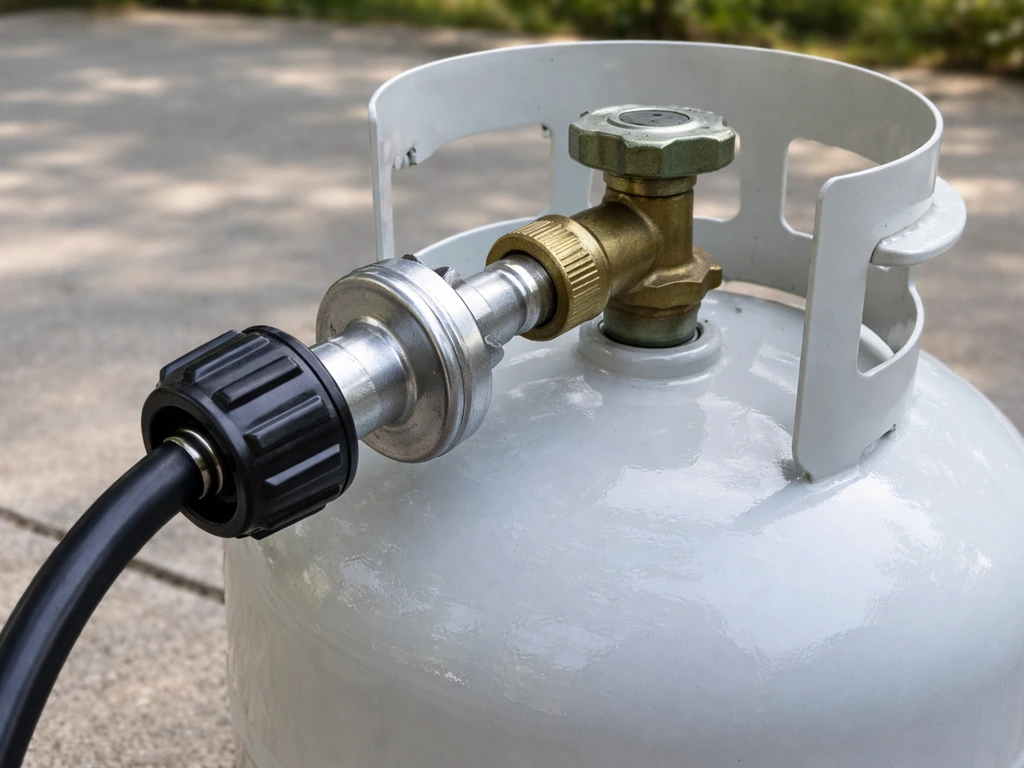
The Mosaic heater uses a standard 20 lb propane tank (the same size as a typical backyard grill tank), connected via a standard QCC1 / Type 1 fitting. This is the most widely available propane tank format in the US, so refills and exchanges are easy to find at hardware stores, gas stations, and retailers like Walmart or Home Depot.
At max output (48,000 BTU/hr), a full 20 lb tank holds roughly 430,000 BTUs of usable energy, which works out to about 9 hours of run time at full blast. Running on medium settings, which is where most people land for comfortable evening use, you can realistically expect 12 to 15 hours per tank. At a typical propane exchange cost of $20 to $25, that works out to roughly $1.50 to $2.50 per hour of heating. That's affordable for weekend patio evenings but adds up if you're heating every night.
One practical note: make sure the hose and regulator that came with your unit use the correct QCC1 fitting for a standard 20 lb cylinder. Mismatched fittings (like older POL-style adapters versus modern QCC1 connectors) are a common source of headaches and a real safety risk. If you're ever buying a replacement hose, confirm the fitting type before purchasing.
How the Mosaic compares to other patio heater types
Propane isn't the only game in town for patio heating, and depending on your setup, another fuel type might genuinely serve you better. Here's how the Mosaic propane heater stacks up against the main alternatives.
| Type | Heat Output | Approx. Cost | Best For | Key Trade-off |
|---|---|---|---|---|
| Mosaic Propane (this heater) | 48,000 BTU | $130 | Medium uncovered patios, portability needed | Ongoing fuel cost, wind sensitive |
| Electric patio heater | 1,500–5,000W (5,000–17,000 BTU equiv.) | $80–$300+ | Covered patios, near outlets, low maintenance | Lower heat output, needs power source |
| Natural gas (hardwired) | 40,000–50,000 BTU | $200–$600+ | Permanent installs, high-use households | Requires gas line, professional install |
| Infrared heater (electric) | 1,500–3,000W | $100–$400 | Covered/enclosed spaces, instant targeted heat | Limited range, needs outlet nearby |
| Pellet patio heater | Varies widely | $200–$500+ | Ambiance-focused users, wood-fire feel | More maintenance, slower startup |
| Tabletop propane heater | 10,000–15,000 BTU | $50–$130 | Small spaces, dining tables, portability | Limited coverage area |
If your patio is fully covered and within reach of an outdoor outlet, an electric or infrared heater is honestly a lower-hassle option. You skip the fuel logistics entirely. But if you have an open or semi-open patio, need real heating punch in cool weather, and want portability, propane at 48,000 BTUs wins on raw output and flexibility. The Mosaic's price point makes it one of the more approachable entry points into full-size propane tower heating. Other brands like HeatMaxx (which shares the same SRPH33A platform), Costco propane models, and higher-end options like Paramount offer incremental upgrades in finish quality or features if your budget stretches further.
Who should buy the Mosaic propane heater
The Mosaic propane patio heater is a solid choice if you want a real, full-size tower heater without spending $250 or more. If you’re deciding whether the IMUS Eco patio heater is a better match for your space, it helps to compare real-world coverage, heat output, and controls side by side. It's best suited for homeowners with a medium uncovered or partially covered patio (roughly 150 to 200 sq. ft. realistic effective area), casual evening use a few times a week, and no existing natural gas hookup to leverage. It's also a good fit if you want something you can wheel to different spots in your yard rather than commit to a fixed install.
It's not the right pick if your primary patio is a fully covered, enclosed space where an electric or infrared heater would be safer and cheaper to run. It's also not ideal for people who want a set-it-and-forget-it thermostat experience, since the manual control knob with three heat levels is about as basic as it gets.
Quick buying checklist: confirm before you buy
- Measure your patio: if it's under 200 sq. ft. and mostly open, the Mosaic will cover it well. Larger or more enclosed spaces need a different approach.
- Check your overhead clearance: you need clear space well above the emitter head. If you're under a low pergola or roof, check the manual clearance spec before using it.
- Confirm you have (or can get) a standard 20 lb propane tank with a QCC1 / Type 1 valve. That's the standard BBQ-grill style tank.
- Budget for propane: at roughly $1.50 to $2.50 per hour of use, estimate your actual seasonal cost based on how often you'll run it.
- Decide if portability matters: if you want to move the heater between areas, the Mosaic's wheeled base works. If it will stay in one spot permanently, a natural gas or hardwired unit saves money long-term.
- Plan for a cover: if it will live outdoors between uses, a weather cover extends the life of the finish and hose significantly.
- Read the first-use lighting instructions: hold the valve knob in for a full 30 to 60 seconds after igniting so the thermocouple heats up properly, or it will shut off and you'll assume something is broken.
At $129.99, the Mosaic propane patio heater is genuinely good value for what it delivers. It won't wow you with build quality compared to premium brands, and you'll want to stay on top of basic annual maintenance to keep it starting reliably. But for a homeowner who wants real, practical heat on an open patio for a reasonable upfront cost, it does exactly what it promises.
FAQ
How do I troubleshoot the Mosaic patio heater if it won’t stay lit after I press the igniter?
First, confirm you’re holding the heat knob fully in long enough (typically 30 to 60 seconds) so the thermocouple warms up, then release it gently. If it still drops out, check that the propane tank has adequate fuel, inspect the hose/regulator connection for looseness or leaks, and verify you’re using the correct QCC1/Type 1 fitting for a 20 lb cylinder.
Is the Mosaic patio heater safe to use under an aluminum pergola or covered deck?
Treat pergola roofs and any overhead structure as a clearance risk and follow your specific manual’s minimum distances to combustibles. Even if the online debate suggests aluminum is not combustible, the safer approach is to keep more vertical clearance than the minimum and avoid placing the emitter under low or fabric-covered overhangs.
What heat setting should I use for a typical evening without wasting propane?
For most users on an uncovered or semi-open patio, medium is the practical sweet spot since radiant heat is directional and you feel the warmth on exposed skin. Full power can be noticeably warmer, but it shortens run time meaningfully, so medium usually gives the best comfort per tank.
What propane tank size can I use with this heater?
The heater is designed around a standard 20 lb propane tank with the common QCC1/Type 1 fitting. Using a different tank size or an adapter that changes the connection type is a common mistake, so stick with the intended 20 lb format and matching fitting to avoid safety issues.
How far should I place the heater from my seating area for comfortable warmth?
In light wind conditions, many people feel a useful radiant zone roughly within an 8 to 10 foot radius. If there’s noticeable breeze, that effective zone shrinks, so position the heater so the “line of sight” to people is direct, rather than trying to heat the entire area like a space heater.
Can I leave the Mosaic patio heater outside in rain or winter weather?
It’s not a year-round outdoor unit. Use a weather cover if it will be exposed to moisture, and do a quick check each season because steel base and pole components can develop surface rust. Also inspect the hose and regulator connections annually for cracks or brittleness.
Does the heater need to be assembled or inspected before first use?
Yes. After assembly, check the hose routing and make sure the connections are snug and not rubbing on the base housing. Before lighting, verify the heater is on stable ground and that the wheels are locked or the unit is positioned securely so it can’t tip during windy conditions.
How long will one propane tank last in real use?
At maximum output, a full 20 lb tank is roughly about 9 hours, while medium settings often land around 12 to 15 hours. Your actual burn time depends on how long you keep it at each heat level and how windy the location is.
What’s the fastest way to reduce startup problems in damp or cold conditions?
Keep the valve knob and ignition area dry if you’ve been using a cover, and make sure the propane tank connection and hose aren’t wet or contaminated. If it struggles to ignite, don’t keep repeatedly pressing without addressing potential issues, instead inspect the connection, confirm tank fuel level, and allow a full thermocouple warm-up window.
Is this heater better than an electric patio heater for a covered patio?
If your space is fully covered and you can use an outdoor outlet, an electric or infrared heater is often lower hassle and cheaper to operate. The Mosaic is a better match when you have open or semi-open conditions, want portability, and need real heat output without relying on wiring to supply power.