
The right patio heater cover is the one that fits your exact heater dimensions, locks down in wind without acting like a sail, and breathes just enough to stop mold from forming underneath. Most people skip the measuring step, buy a "universal" cover, and end up with something too loose, too short, or missing vents that matter. This guide cuts through the noise from real-world reviews and helps you pick confidently today. If you are shopping with bond patio heater reviews in mind, use these fit and ventilation checks to separate marketing claims from real performance.
Patio Heater Cover Reviews: Best Covers by Heater Type

Willa Brennan
10 Jul 2026
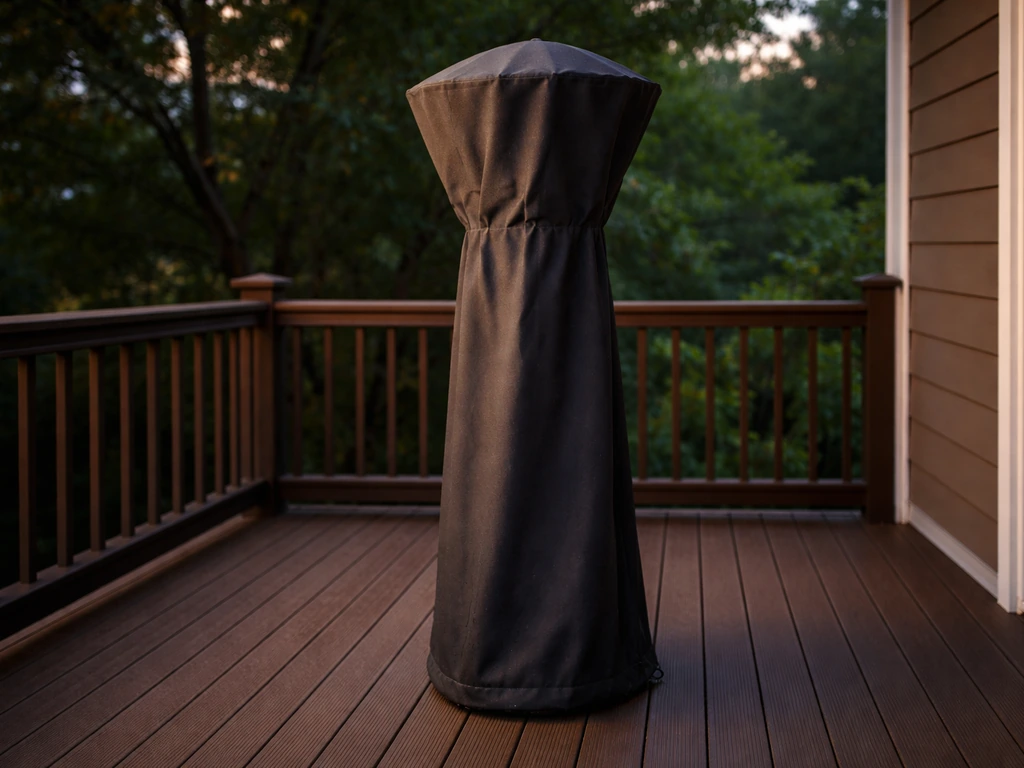
Why patio heater covers matter (and what reviews usually get wrong)
A quality cover extends the life of your heater dramatically. Sun bleaches finish and degrades burner components, rain works into gas connections and electrical parts, and coastal salt air accelerates corrosion faster than almost anything else. Covering your heater between uses is one of the simplest, cheapest maintenance habits you can build. Lowe's puts it plainly: keep your heater covered when it's not in use.
Here's what review summaries consistently get wrong, though. They focus on how a cover looks or how cheap it is, and completely skip two things that actually determine whether it works: fit accuracy and ventilation. A cover that pools around a too-small heater will flap in the wind, funnel water in at the base, and rip itself apart at the seams inside a season. And a cover that's fully sealed with zero airflow will trap humidity underneath, leading to mold, mildew, and condensation damage on the very heater you're trying to protect.
Real user reviews are full of these pain points. Reddit threads about covers like the LDPF 210D describe exactly this: a gust hits, the loose cover acts "like a sail" and tips the entire heater over. Others report the drawcord hem is impossible to cinch tight enough to matter. These aren't edge cases; they're the top recurring complaints across almost every cover category. Understanding what drives those failures helps you avoid them.
How to choose the right cover: sizing, materials, weatherproofing, and breathability
Getting the size right
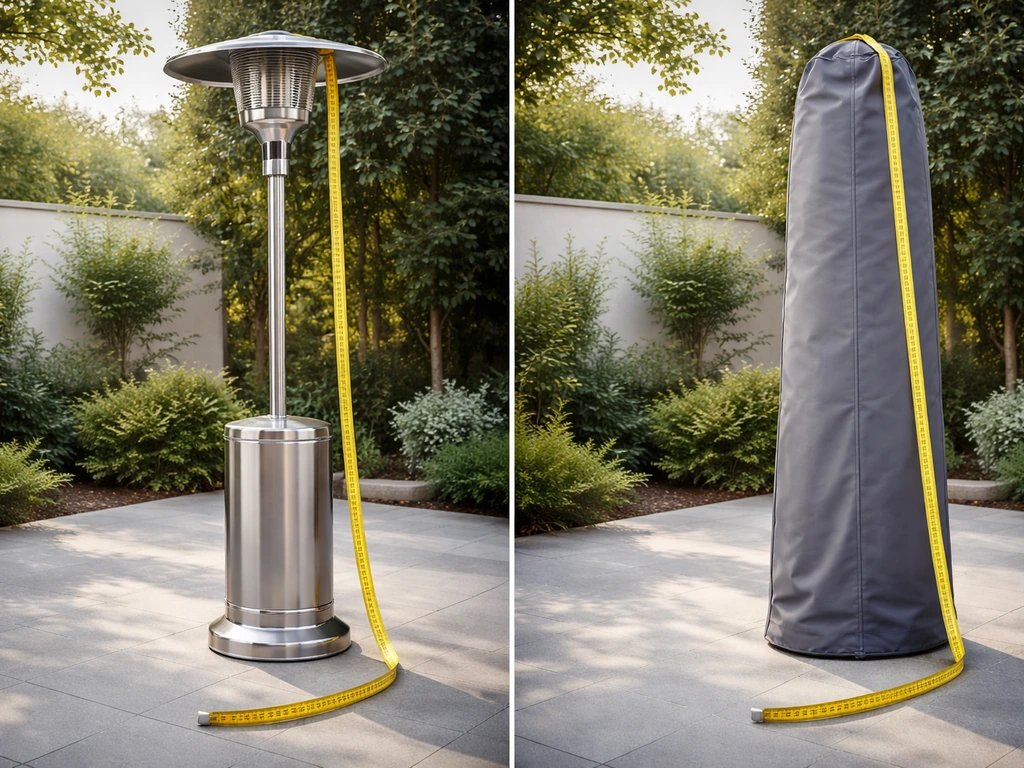
"Fits most" is a marketing phrase, not a measurement. A stand-up propane heater cover from Classic Accessories, for example, is specifically rated for heaters up to 95 inches tall with a dome up to 34 inches in diameter and a base up to 18.5 inches in diameter. If your heater sits outside those numbers, that cover will either gap at the dome or bunch at the base, and either situation leads to wind and water getting in. Always measure your heater's height, dome/head diameter, and base diameter before you search. Write those numbers down. Then match them against the cover's listed specs, not just its "universal" claim.
Materials: the waterproofing vs breathability tradeoff
This tradeoff trips up a lot of buyers. Solution-dyed acrylic fabric is fade-resistant and great for sun exposure, but it's more breathable and therefore less waterproof on its own. Adding a PVC backing to polyester dramatically increases water resistance but reduces breathability, which can work against you in humid climates by trapping moisture under the cover. Easy Way Products’ white paper compares solution-dyed polyester alone versus solution-dyed polyester with PVC backing, reporting higher water resistance with PVC backing but lower breathability blank" rel="noopener noreferrer">PVC backing dramatically increases water resistance. VASNER's AirCape, for example, uses a technical PES fabric rated at 1,500 mm water column and markets it as both waterproof and breathable, which is the right combination to look for. For most patios, a solution-dyed polyester with PVC backing hits the right waterproofing threshold, as long as the cover also has built-in vents.
Vents are not optional
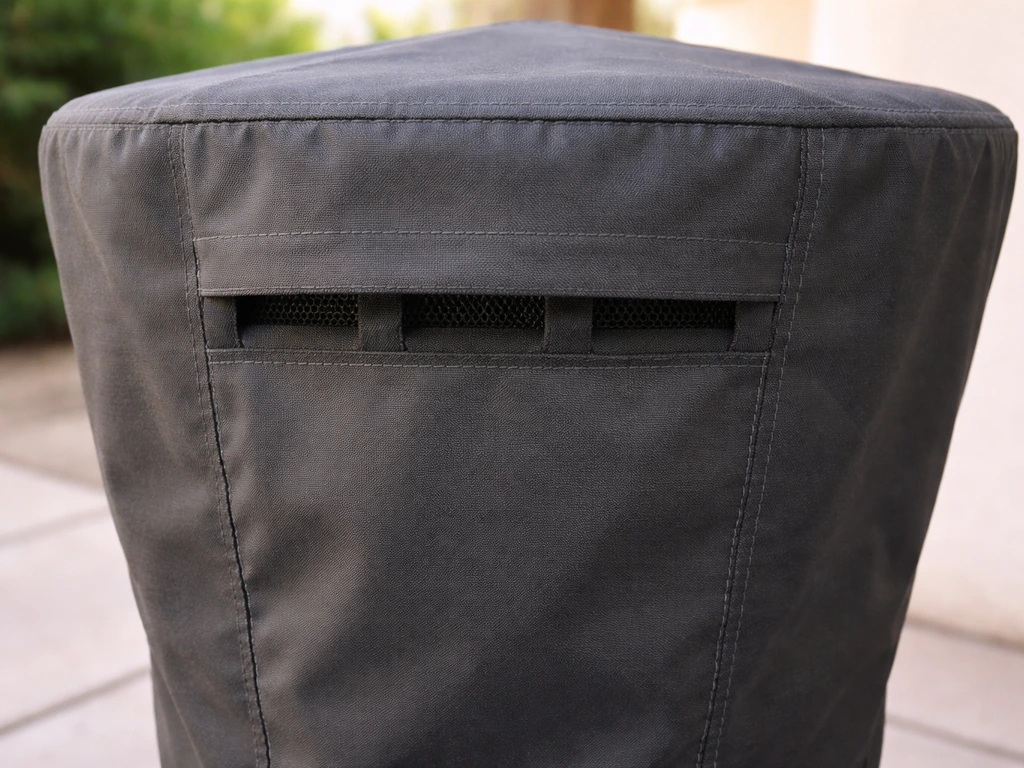
Every cover worth buying has integrated air vents. Classic Accessories specifically calls theirs out as reducing "inside condensation and wind lofting," and Coverstore's Elite cover uses four covered mesh vents to promote airflow and prevent trapped moisture that leads to mold. The vent design does double duty: it lets humid air escape so condensation doesn't form on your heater, and it reduces the balloon-like pressure that makes a cover act as a wind sail in gusts. If a cover you're looking at has no vents mentioned, skip it.
Closure and securement systems
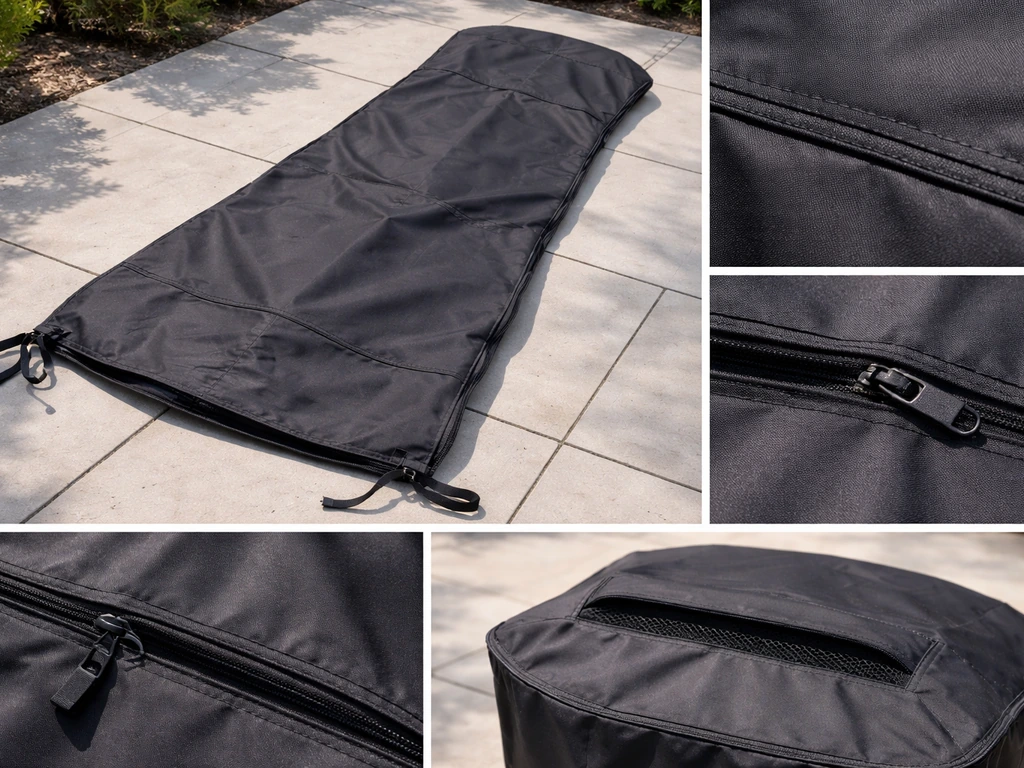
Drawcords are the most common base closure and they work fine in calm conditions, but they're the first thing users complain about when wind picks up. The hem cord is hard to tighten fully, and a loose base hem is essentially an open scoop for wind. Buckle straps or integrated tie-downs at the base are meaningfully more secure. For areas with regular gusts, look for covers that combine a drawcord hem with side buckle straps. Zippered closures along the side or full-length are useful for heaters with propane tanks at the base since you can partially unzip to swap tanks without removing the cover entirely. The Cuisinart CHC-301A, for instance, uses a full-length zipper specifically for that reason.
Best cover types by heater style
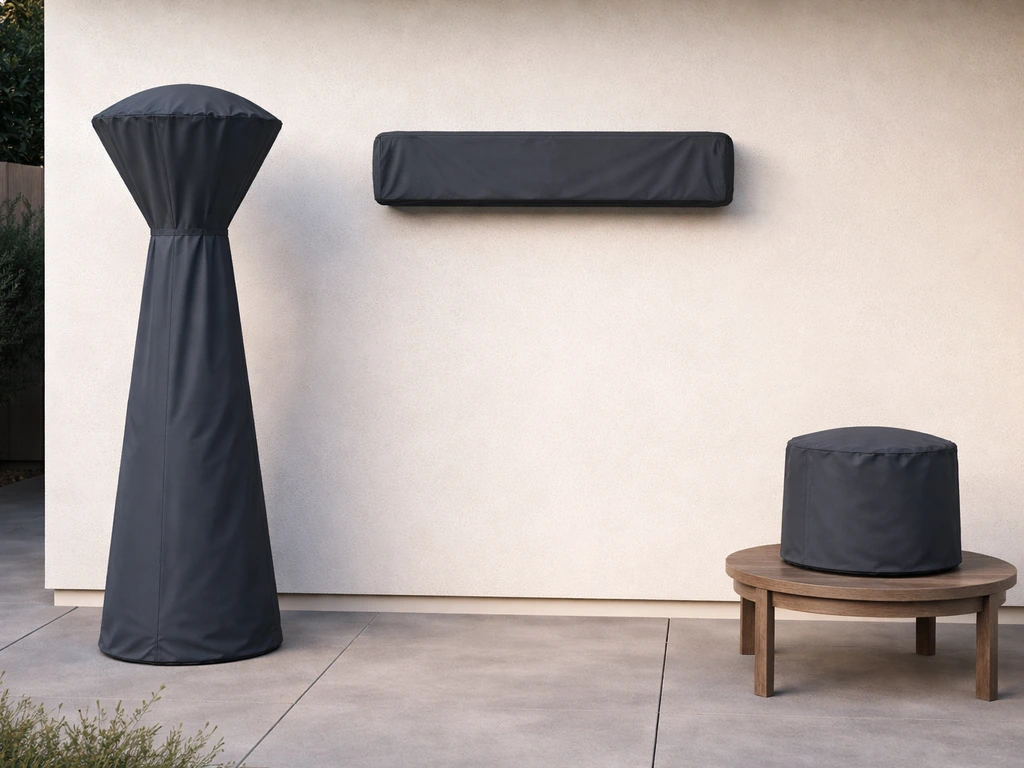
The silhouette of your heater determines the cover category you need. A mushroom-dome propane tower is completely different from a wall-mounted electric infrared panel, and no single cover fits both. Here's how to match cover type to heater style.
| Heater Type | Cover Style Needed | Key Features to Prioritize | Watch Out For |
|---|---|---|---|
| Freestanding propane (tank) | Tall cylindrical cover with dome top | Full-length zipper for tank access, base straps, side vents | Covers too short for the dome; base hem too wide and floppy |
| Electric (freestanding or mounted) | Form-fitting cover or flat panel sleeve | UV resistance, waterproof seams, secure attachment points | No attachment hardware on wall-mount covers; wind pull-off |
| Natural gas (built-in/fixed) | Slim cylindrical or custom-fit cover | Weatherproof seams, strap anchors to post/base | Generic covers never fit fixed-mount necks properly |
| Pellet heater | Wide-body cover with exhaust clearance | Heat-tolerant fabric near exhaust area, full base closure | Covers designed for narrower gas heaters will gap at the sides |
| Infrared (wall/ceiling mounted) | Flat rectangular sleeve or panel cover | UV-coated exterior, hook-and-loop or bungee attachment | Slip-off in wind without attachment loops; pooling water |
| Tabletop heater | Small compact cover or drawstring bag | Compact fit, handle cutout or zipper, UV + water resistance | Oversized covers just blow off; a close fit matters most here |
For propane tower heaters, the classic mushroom-dome silhouette is the most covered product in this space and you'll find the widest range of options. For electric models, coverage needs vary quite a bit depending on whether the heater is freestanding or mounted. If you want the most helpful context, reading patio heater electric reviews can also show you how different designs perform in real conditions electric models. If you're researching electric patio heaters specifically, the considerations around mounting style and protection are worth exploring in their own right. Pellet heaters have a bulkier body than propane towers and need a correspondingly wider cover with proper base clearance.
Climate and patio setup recommendations
Covered vs uncovered patios
If your patio has a pergola, roof, or overhead shelter, your cover's job is mostly UV protection, dust, and light rain splash rather than full waterproofing. You can get away with a lighter solution-dyed acrylic fabric that breathes well. If your heater sits on a fully exposed patio, waterproofing becomes critical. You want sealed seams, a PVC-backed or equivalent waterproof fabric rated to at least 1,000 mm water column, and those integrated vents to handle the humidity swing between rain events and dry days.
Rain and snow climates
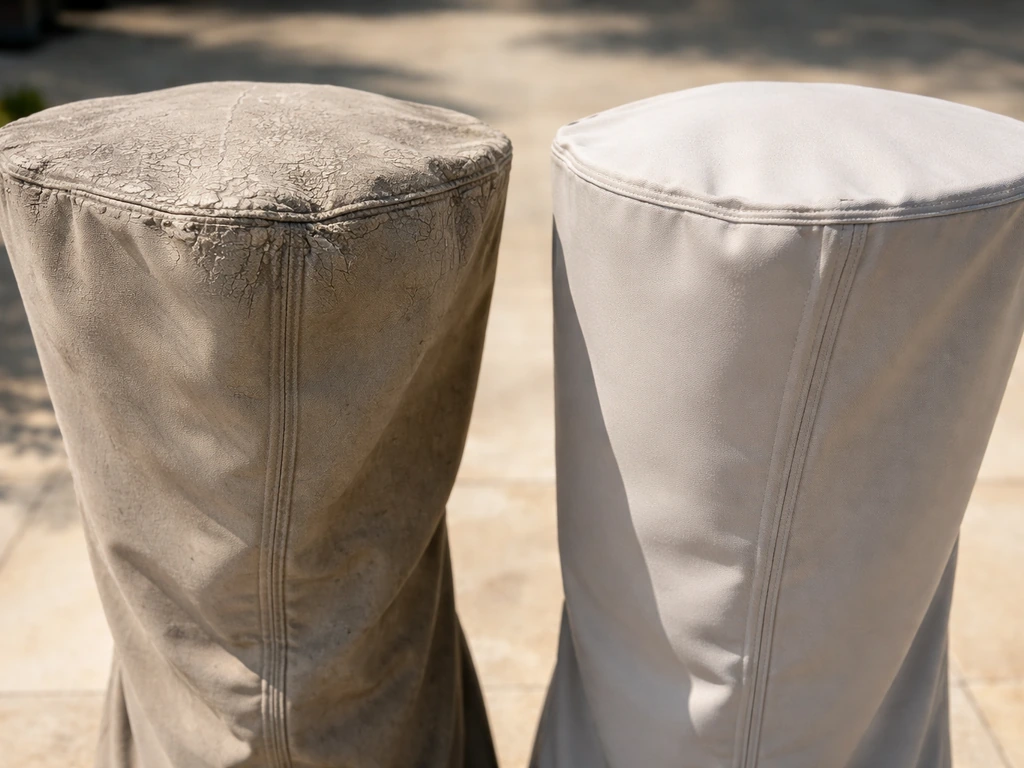
In wet climates, seam quality matters as much as fabric waterproofing. Water finds every unsealed seam, especially at the dome and the base hem. Look for taped or heat-welded seams rather than just stitched ones. In snow-heavy regions, the cover also needs to handle weight load without collapsing or trapping standing water against the heater body. A dome-shaped cover top sheds snow better than a flat-topped design. Heavier fabric (at least 210D polyester, ideally 600D) holds up better under snow load.
Dry and sunny climates
UV degradation is the main enemy here. Cheaper covers with PVC backing or low-grade polyester will crack, flake, and fall apart within one or two seasons in full sun. Solution-dyed fabrics, where the color goes all the way through the fiber rather than just coating the surface, resist UV-driven fading and cracking far better. If you're in a high-UV zone like the Southwest US, Australia, or similar, UV resistance should be your top filter when reading cover specs. If you want patio heater reviews Australia shoppers rely on, start by comparing cover fit, ventilation, and UV protection for your local conditions.
Coastal and high-wind environments
Coastal patios combine salt air corrosion, high humidity, and regular wind. That combination is brutal on both heaters and covers. Prioritize covers with rust-resistant hardware on buckles and zipper pulls, marine-grade or UV-stabilized fabric, and a multi-point securement system. Drawcord-only bases simply don't hold in sustained coastal wind. Buckle straps that wrap under the heater base or anchor to the pole are essential. Also check that zipper pulls are coated or protected, because exposed metal zippers corrode fast in salt air.
Review-driven feature checklist: wind security, seams, zippers, and condensation prevention
This is what separates a cover that lasts three years from one that disintegrates in eight months. Pull this checklist out before you buy. If you are comparing options, these patio comfort heater reviews help you spot which covers are worth the money checklist out before you buy.
- Exact dimensional fit: height, dome diameter, and base diameter all within the cover's specified range (not just "universal")
- Minimum 210D fabric weight; 600D for exposed or snow-load conditions
- Waterproof fabric with PVC or equivalent backing, rated at 1,000 mm water column or higher for uncovered patios
- Sealed or taped seams at the dome and any stress points
- At least two integrated air vents (covered mesh vents preferred) to prevent condensation and reduce wind lofting
- Full-length or partial zipper for propane tank access without removing the cover
- Base closure: drawcord combined with buckle straps or wrap-around straps for anything more than light breezes
- Rust-resistant hardware on all buckles, zipper pulls, and D-rings
- Solution-dyed or UV-stabilized fabric if the heater sits in direct sun for long periods
- No PVC flaking noted in reviews (a common failure mode on cheaper covers after UV exposure)
- Generous hem overlap at the base so rain can't wick up underneath
- Cover bag or storage pouch included (keeps the cover clean and dry when not in season)
On the zipper front specifically: cheap zipper failures are one of the top review complaints across all cover brands. On top of zipper reliability, patio heater ratings reviews also help you spot whether a cover can handle wind, seams, and trapped moisture. The fix is to look for YKK or equivalent quality zippers, and to apply a zipper lubricant (like beeswax or a dedicated zipper wax) once a season to prevent corrosion and sticking. This small step dramatically extends zipper life.
How to measure, install, and maintain your cover for long-lasting protection
Measuring your heater correctly
You need three measurements for a freestanding tower heater: total height from the ground to the top of the dome, dome diameter at its widest point, and base diameter. For wall-mounted or infrared heaters, measure length, width, and the projection (how far it sticks out from the wall). Tabletop heaters need height plus diameter or footprint dimensions. Measure twice, write them down, and compare against the cover's stated maximum dimensions, not its "typical fit" marketing language. A cover rated for heaters up to 95 inches tall with a 34-inch dome will not fit a heater that's 96 inches tall or has a 35-inch dome.
Safe installation
Never put a cover on a hot heater. This sounds obvious, but it's worth stating clearly: Bromic explicitly instructs buyers to ensure the heater has cooled completely and is cool to the touch before fitting the cover. Lowe's echoes this. A warm heater can degrade cover fabric from the inside, create a fire risk if any flammable gas lingers near a warm burner, and trap heat that drives condensation as things cool down. After you turn off the heater, give it at least 20 to 30 minutes before covering. For gas heaters, confirm the valve is fully closed first.
When putting the cover on, fit it from the top down. Seat the dome correctly first, then work the cover down the pole and over the base, and cinch the hem cord snugly. If you have buckle straps, fasten them after the drawcord is set. In windy locations, thread the straps under the heater base or around the pole before buckling.
Securing in wind
If you're dealing with regular wind, add a secondary anchor point. Some users run a bungee cord through the base strap loops and around the heater pole. Others use a ground stake with a cord loop on exposed patios. The key insight from user reviews is that wind doesn't just push the cover off, it gets underneath the cover and inflates it, which then acts as a lever that can tip the entire heater. The integrated vents help reduce that pressure, but proper hem security at the base is what actually prevents it.
Seasonal maintenance and storage
Before you store the cover at the end of the season, or before any extended period of non-use, clean it and blank" rel="noopener noreferrer">let it dry completely. If you want faster recommendations, seasonal trends patio heater reviews can highlight which cover materials and vent styles perform best as weather changes. Classic Accessories and Covercraft both specifically call this out as the primary way to prevent mold and mildew from forming in storage. A damp cover folded up in a garage over winter will come out with mildew, and that mildew can transfer to your heater. Clean the cover with mild soap and water, rinse thoroughly, and air dry fully in the shade before folding. When you fold it, avoid sharp creases that stress the waterproof coating along fold lines. Store it in the included bag or a breathable storage bin, not a sealed plastic bag that traps any residual humidity.
Check your cover at the start of each season too. Look for seam separation, fabric flaking (especially on the inner PVC layer), zipper corrosion, and cracked or broken buckle hardware. Catching a deteriorating cover before the wet season starts is far better than discovering the problem after three days of rain have soaked your heater components.
FAQ
Do I really need a breathable patio heater cover if it has waterproof fabric and vents?
Yes, but the balance matters. In humid or coastal areas, you want vents that release trapped humidity, otherwise even a waterproof exterior can leave condensation inside. If your heater runs in steady damp weather, choose a cover that explicitly combines waterproof rating with integrated mesh or covered vents, and avoid fully airtight covers that some users mistake for “better protection.”
What’s the best way to measure my patio heater when it has a propane tank or base protrusions?
Measure the highest and widest points including any regulator, control knobs, or tank housings, then add clearance so the cover does not stretch at seams. Zippered covers can help because you can unzip to swap or access the tank without fully removing the cover, but you still need to verify the cover’s stated maximum height and dome/head diameter for the top section.
Can I use a universal drawstring cover for a freestanding propane tower if the dimensions are close?
If it is only close, you can still get failure from wind lofting and water pooling. Even small gaps at the dome or base hem allow gusts underneath, which can inflate the cover and tip the heater. Universal covers often lack the exact dome fit and hem security, so it is safer to match the cover’s listed maximum dimensions to your recorded measurements.
How tight should I cinch the drawcord hem, and what if it will not tighten enough?
Cinching should remove slack around the base without stretching the fabric or distorting vents. If the hem cord cannot be snugged, treat it as a rejection, because loose base hems act like open scoops for wind. If your cover has only a drawcord and you experience gusts, consider a version that adds side buckle straps or a multi-point tie-down system.
Should vents be uncovered mesh, or are covered vents better?
Covered vents are often better in rain-splash conditions because they reduce direct water entry while still allowing humidity to escape. Look for designs that mention reduced inside condensation or wind lofting and use mesh vent panels under a protective cover layer, since fully exposed openings can still wet out during heavy storms.
What seam type should I prioritize for wet climates or snow?
Prefer taped or heat-welded seams over basic stitch-only construction, especially around the dome and base hem where water is most likely to find leaks. In snow-heavy regions, also confirm the cover can handle weight load without collapsing, dome-topped styles shed snow more effectively than flat tops.
Is PVC backing always the best choice for a patio heater cover?
Not always. PVC-backed fabrics improve water resistance, but in very humid climates they can trap moisture unless the cover has effective venting. If you live where it stays damp between storms, prioritize a fabric system described as both waterproof and breathable with proper vents, rather than relying on a single waterproof layer.
How often should I lubricate the zipper, and what product is safe?
Apply zipper lubricant about once per season, or sooner if you notice sticking or gritty resistance. Use a zipper wax or beeswax-type product and wipe off excess so it does not attract dirt. If you have salt air exposure, check the zipper pulls more frequently since corrosion can start even with good fabric.
Can I leave the cover on during a light rain while the heater is off?
Usually yes, as long as the heater is fully cooled before covering. The bigger risk is trapped humidity under a poor-fitting or sealed cover, so make sure your selected cover includes vents and matches your heater dimensions closely. Avoid covering a warm heater in any situation, even light rain.
How do I clean the cover without damaging the waterproof coating?
Use mild soap and water, then rinse thoroughly, and air dry in the shade. Avoid harsh degreasers or aggressive scrubbing that can degrade coatings, and do not store the cover while damp. When folding, try to minimize sharp creases that align with seam lines or waterproof coating fold areas.
What should I inspect before the next season besides the obvious wear?
Check for seam separation at the dome and base hem, inner layer flaking (often from the waterproof coating area), zipper corrosion and pull stiffness, and any broken buckle hardware. Also look at vent areas for blockage, since clogged vents reduce the moisture-release function that prevents mold.
Why does my cover still billow like a sail even when the base cord is there?
It usually means the base hem is not secure enough, the cover is too loose at the dome, or wind is getting under the cover and inflating it. Fix by using buckle straps or adding a secondary anchor point like a cord and ground stake on exposed patios. Integrated vents help with pressure, but they do not replace solid base closure.
Can I store the cover in a plastic bag if it is dry when I pack it away?
It is safer to avoid sealed plastic bags. Even if the cover feels dry, trapped residual moisture can reappear as humidity changes, leading to mildew during storage. Use the included bag or a breathable bin, air dry fully in shade first, and store without sharp stress creases.
When should I replace the cover instead of patching it?
Replace when seams begin separating, inner waterproof layers show significant flaking, the zipper fails under light pull, or buckle straps become brittle. Small surface scuffs are normal, but seam leaks at the dome or base hem and zipper corrosion that makes opening difficult are strong indicators the cover will not reliably keep wind and water out.