
Lowe's carries a solid selection of tabletop patio heaters, mostly propane-fueled models in the 10,000 BTU range from brands like Fire Sense, plus a handful of electric options. If you want my honest shortlist: the Fire Sense 10,000-BTU Bronze Tabletop Propane Heater (Item #61322) is the best all-around pick for most people, a 1,500-watt electric infrared model works best under a covered patio or on a screened porch, and if budget is the priority, Lowe's regularly stocks sub-$60 tabletop propane heaters that do the job for occasional use. The guide below walks through everything you need to make the right call for your specific space, budget, and fuel preference.
Table Top Patio Heater Lowe's: Best Compact Heaters 2026

Willa Brennan
20 Jul 2026
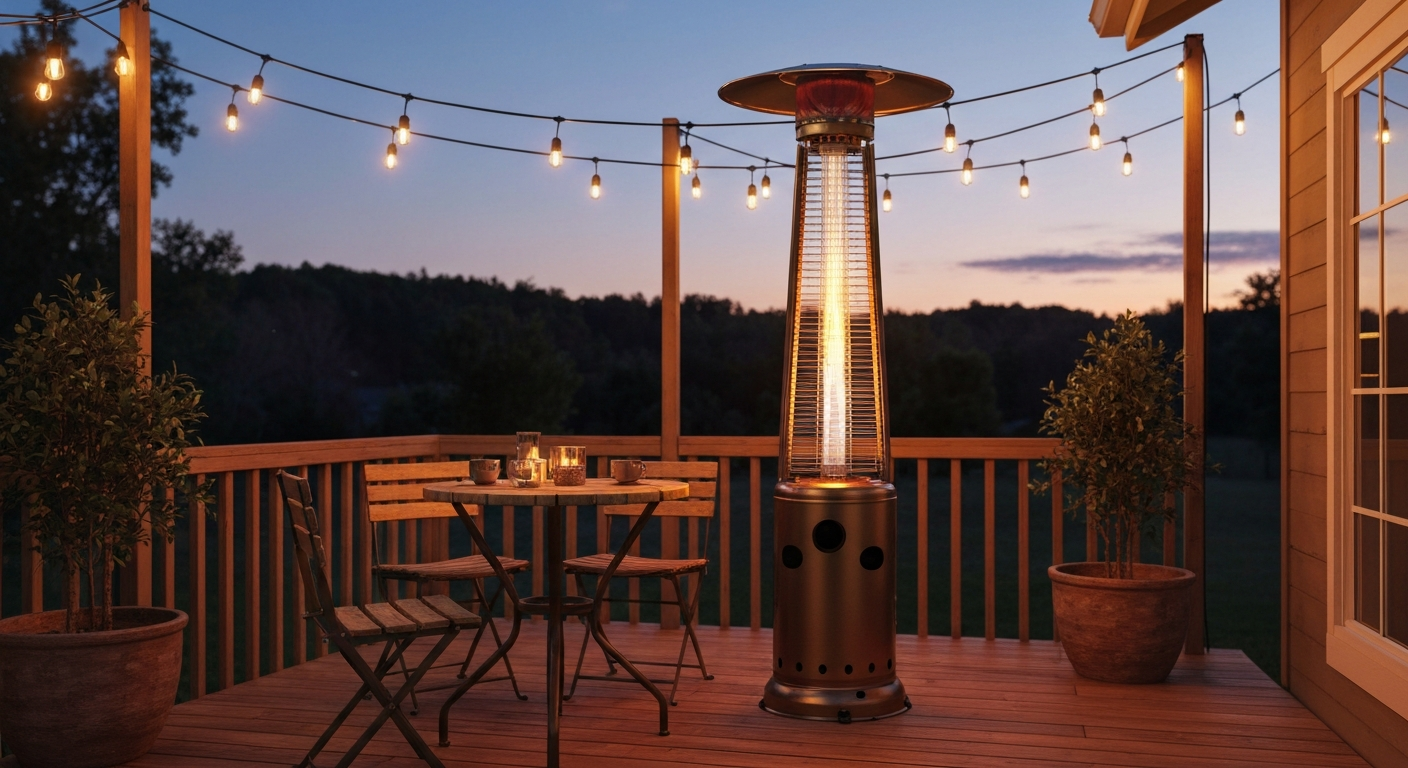
TL;DR: Quick Picks and Who This Guide Is For
This guide is for homeowners, renters, and outdoor dining enthusiasts who want to add warmth to a small patio, balcony, deck, or bistro table without committing to a full-size standing heater. If you're shopping at Lowe's specifically, want to compare Lowe's pricing against Home Depot, Costco, Amazon, or Ace Hardware, or just want to know which tabletop heater is worth the money right now, you're in the right place.
- Best overall at Lowe's: Fire Sense 10,000-BTU Bronze Steel Tabletop Propane Heater (Item #61322) — reliable ignition, good build quality, under $80 most of the year
- Budget pick: Any sub-$60 single-burner tabletop propane heater at Lowe's — fine for occasional use, expect lighter construction
- Best electric: A 1,500W tabletop infrared electric heater — safest choice for covered patios and screened porches, no open flame
- Best for covered spaces: Electric infrared tabletop models rated for covered/enclosed outdoor use — always verify the label says 'outdoor use' and check clearance requirements
- Best gas/propane tabletop: Fire Sense 61322 or equivalent 10,000-BTU model — practical for open decks and patios up to roughly 6–8 feet around the heater
How Tabletop Patio Heaters Actually Work
Most tabletop patio heaters are scaled-down versions of the mushroom-style freestanding heaters you see on restaurant patios, just compact enough to sit on a dining table or side table. They heat the air and objects around them in one of two ways: convective heating (warming the surrounding air, typical of propane flame-style burners) or radiant/infrared heating (emitting electromagnetic waves that warm people and surfaces directly, typical of electric and some gas infrared models). The distinction matters more than people realize, especially if your space is covered or windy.
Propane tabletop heaters use a small regulator hose connected to a 1-lb disposable cylinder (the small green Coleman-style bottle) or occasionally a larger 20-lb tank via an adapter hose. A piezo igniter or push-button electronic ignition sparks the burner, and a reflector dome or emitter head spreads the heat outward. Electric tabletop heaters plug into a standard 120V outlet and use a quartz or carbon infrared element to produce radiant heat. There's no flame, no fuel storage, and no venting concern, which is why they're the go-to for covered patios and screened spaces.
Buying Guide: What to Think Through Before You Shop
The biggest mistake I see people make is buying the wrong fuel type for their space. A propane tabletop heater is great on an open deck but is not the right call under a low pergola or inside a screened porch, where ventilation is limited and a flame represents a real hazard. Before you look at a single product, answer these three questions: Is my space covered or open? How large is the area I want to heat (roughly in square feet)? Do I have access to a 120V outlet, or do I need a cordless/fuel-based option?
Once you've answered those, specs become much easier to interpret. For an open patio or deck where you're sitting around a bistro table, a 10,000-BTU propane tabletop heater is plenty. For a covered patio or screened porch, an electric infrared model rated at 1,000–1,500 watts is the practical and safe choice. If portability is the priority and you don't have a nearby outlet, propane wins by default, but you'll be managing fuel cylinders.
Key Specs to Compare When Browsing Lowe's
- Heat output: BTU/hr for propane, watts for electric (and remember, 1,500 watts equals roughly 5,118 BTU/hr by the standard EIA conversion of 3,412 BTU per kWh)
- Fuel type: propane (1-lb cylinder or 20-lb with adapter), electric (120V), or natural gas (rare at tabletop scale)
- Safety certifications: look for CSA, UL, or ETL listing marks on the product label and Lowe's product page — these mean a third-party lab has verified the design meets safety standards
- Tip-over and ODS protection: oxygen depletion sensor (ODS) shuts the burner off if oxygen drops; tip-over shutoff cuts fuel if the unit falls
- Weight and dimensions: most tabletop propane heaters run 4–8 lbs without the cylinder; electric models vary more widely
- Weather resistance: powder-coated steel holds up longer than bare steel; stainless steel or cast aluminum resists rust best
- Warranty: most brands offer 1-year limited; some offer 2-year on parts
Fuel Types Compared: Propane, Electric, Hard-Pipe Gas, and Infrared
Each fuel type has real trade-offs and no single option is best for everyone. Here's how they stack up for tabletop use specifically.
| Fuel Type | Heat Output Range | Portability | Best For | Main Drawbacks |
|---|---|---|---|---|
| Propane (1-lb cylinder) | 5,000–10,000 BTU/hr | Fully portable — no cord, no hookup | Open decks, patios, camping, outdoor dining | Ongoing cylinder cost, flame hazard, limited run time (~2 hrs on 1-lb) |
| Propane (20-lb tank + adapter) | 10,000–15,000 BTU/hr | Portable but bulky | Larger open patios, extended use | Bulky setup, adapter hose required, still needs ventilation |
| Electric infrared (120V) | 750W–1,500W (2,560–5,118 BTU equiv.) | Cord-limited — needs outlet within reach | Covered patios, screened porches, balconies | Lower raw output than propane, needs outlet, less effective in strong wind |
| Natural gas (hard-pipe) | 10,000–15,000 BTU/hr | Fixed — requires permanent gas line | Built-in outdoor kitchens, permanent setups | Requires professional installation, limited availability at tabletop scale |
| Infrared gas (radiant burner) | 8,000–12,000 BTU/hr | Portable with cylinder | Open patios where radiant warmth is preferred over convective heat | Same ventilation/flame concerns as standard propane |
For most Lowe's shoppers, the practical choice comes down to propane vs. electric. Propane is better if you need portability or don't have a nearby outlet. Electric infrared is better if your space is covered, you want zero fuel management, and you have an outlet within 6 feet of the table. Hard-pipe natural gas tabletop heaters are rare and typically not what Lowe's stocks as a standard shelf item, so if that's your requirement, you're more likely shopping for a larger unit or a custom install.
Heat Output and Coverage: Making Sense of BTUs and Watts
BTU stands for British Thermal Unit, and it's simply the amount of heat energy required to raise one pound of water by one degree Fahrenheit. For patio heaters, the BTU/hr rating tells you how much heat the unit produces per hour. The watt-to-BTU conversion is straightforward: 1 watt equals approximately 3.412 BTU/hr, based on the EIA's standard conversion of 3,412 BTU per kilowatt-hour. That means a 1,500-watt electric tabletop heater produces roughly 5,118 BTU/hr, which is meaningfully lower than a 10,000-BTU propane model.
For indoor heating loads, the common HVAC rule of thumb is 20–60 BTU per square foot depending on climate and insulation. See 'What Does BTU Stand For?, HVAC.com (includes BTU‑per‑sq‑ft guidance)' for HVAC guidance noting indoor heating loads commonly use 20–60 BTU per square foot and the standard conversion 1 kWh = 3,412 BTU What Does BTU Stand For? — HVAC.com (includes BTU‑per‑sq‑ft guidance). Outdoor patio heating is a different situation entirely because heat dissipates into open air. A better way to think about tabletop heater coverage is radial reach: a 10,000-BTU propane tabletop heater will keep people comfortable within roughly 5–7 feet of the unit on a calm evening. Wind cuts that radius significantly. A 1,500W electric infrared heater covers a smaller zone, maybe 4–6 feet, but delivers the heat directly to people rather than warming the ambient air, so it can feel surprisingly effective even at lower BTU equivalents.
| Output Level | Fuel Type | Approx. BTU/hr | Practical Outdoor Coverage (Calm Conditions) | Best Seating Scenario |
|---|---|---|---|---|
| Low | Electric (750W) | ~2,559 BTU/hr | 2–4 ft radius | 1–2 people, very small balcony table |
| Medium | Electric (1,500W) | ~5,118 BTU/hr | 4–6 ft radius | 2–4 people, bistro or café table |
| Medium-High | Propane tabletop (5,000 BTU) | 5,000 BTU/hr | 4–6 ft radius | 2–4 people, open patio table |
| High | Propane tabletop (10,000 BTU) | 10,000 BTU/hr | 5–7 ft radius | 4–6 people, standard outdoor dining table |
| High | Propane tabletop (15,000 BTU) | 15,000 BTU/hr | 6–8 ft radius | 6+ people, larger open deck |
One thing that spec sheets don't capture is wind sensitivity. Propane convective heaters lose effective range quickly when there's even a light breeze because warm air disperses. Radiant infrared heaters, whether electric or gas, are noticeably more wind-resistant because they warm surfaces and people directly rather than the surrounding air. If your patio is exposed to frequent wind, that's a strong argument for an infrared-style tabletop heater over a standard convective propane dome model.
Portability, Materials, and Build Quality
Tabletop patio heaters are generally compact, but there's meaningful variation in weight and materials that affects both portability and longevity. Most propane tabletop models weigh 4–9 lbs without the fuel cylinder. A standard 1-lb propane cylinder adds about 1.2 lbs when full, so the complete setup is manageable to carry to a deck or back inside for storage. Electric tabletop heaters vary more, from lightweight quartz strip heaters under 3 lbs to heavier cast-aluminum radiant units at 6–10 lbs.
Housing material is the main predictor of how the heater holds up over time. Here's what I've seen from real-world use and reader feedback: powder-coated steel is the most common material at the price points Lowe's carries, and it holds up reasonably well if you store the heater when it's not in use. Bare or lightly coated steel rusts within one or two seasons in humid climates if left outside. Stainless steel and cast aluminum cost more but resist corrosion significantly better. If you're leaving the heater on a covered porch year-round, spend a little more for stainless or aluminum housing.
- Powder-coated steel: most common at Lowe's price points ($50–$100), decent durability if stored when not in use, susceptible to rust at chips and seams
- Stainless steel: better corrosion resistance, heavier, typically $100+, worth it for year-round outdoor exposure
- Cast aluminum: lightweight and rust-resistant, often used on higher-end electric models, handles humidity well
- Chrome/nickel-plated: decorative finish, can peel or tarnish over time if exposed to rain regularly
- Tempered glass panels: used on some decorative models, adds weight but improves wind protection of the flame
For base stability, look for a heater with a weighted base or suction-cup feet, especially if you're using it on a glass or smooth tabletop. Several Fire Sense models include rubberized feet to prevent sliding. Some models include a tabletop mounting bracket or stake-style base for different placements, which adds versatility if you want to move the heater from a table to the ground occasionally.
Safety Basics: Covered Spaces, Ventilation, and Clearances
This is the section people skip, and it's the one that matters most. I'll keep it practical. The core rule: any heater with an open flame or combustion (propane, natural gas) requires adequate outdoor ventilation. That means open-air patios and decks are fine; enclosed garages, tents, and screened porches with limited air exchange are not. The NFPA explicitly advises against using flame-based heaters in tents or enclosed structures due to carbon monoxide risk and fire hazard. Carbon monoxide is colorless and odorless, and a poorly ventilated space with a propane heater can become dangerous faster than people expect.
For covered patios (pergolas, canopies, and shade sails with open sides), propane tabletop heaters may be usable if there is substantial open-air flow on at least two sides, but you should check the manufacturer's manual for your specific model. The Fire Sense 61322 manual, for example, explicitly states the unit is for outdoor use only and lists required clearances. As a general guideline from NFPA guidance: maintain at least 3 feet of clearance from overhead combustible materials and at least 2 feet from the sides. Never place a propane heater directly under a wood pergola beam or canvas canopy.
Electric infrared tabletop heaters are the safe choice for covered patios and screened porches because there's no combustion, no CO risk, and no open flame. Still check the manufacturer's IP rating (weather resistance) and whether the unit is listed for damp or wet outdoor locations. A model with an ETL, UL, or CSA listing mark has been independently verified to meet safety standards, always prioritize certified models over uncertified imports, especially for anything with a cord and an outdoor environment.
Propane Cylinder Safety: What Lowe's Also Sells
Most tabletop propane heaters at Lowe's run on standard 1-lb disposable (DOT-39) propane cylinders. One important safety note: federal PHMSA/DOT regulations prohibit refilling these disposable cylinders. It's a real safety risk because the cylinders aren't rated for repeated pressurization cycles. If you want a refillable 1-lb option, Lowe's does sell DOT-certified refillable 1-lb cylinders (such as the Flame King refillable cylinder) as a legal alternative. These are rated for refilling and are a more economical and environmentally sensible choice if you use the heater frequently.
- Never refill standard green 1-lb disposable (DOT-39) propane cylinders — this is illegal and a documented safety hazard per PHMSA guidance
- Flame King and similar brands sell DOT-certified refillable 1-lb cylinders available at Lowe's — a legal, cost-effective option for regular users
- Store propane cylinders upright, outside, and away from heat sources — not in a vehicle, garage, or enclosed storage unit
- Check the cylinder valve and hose connection for leaks before each use (apply soapy water; bubbles indicate a leak)
- Turn off the burner and close the cylinder valve after every use — don't leave a propane heater running unattended
Best Tabletop Patio Heaters at Lowe's Right Now
I've pulled together the most practical shortlist I can offer based on what Lowe's consistently stocks, verified specs from manufacturer documentation, and aggregated customer feedback from Lowe's reviews and independent editorial testing. Prices can shift seasonally, expect the best deals in late fall around Black Friday and in early spring clearance. For focused deals, see our table top patio heater Black Friday guide for timing and typical discounts. If Lowe's pricing looks high when you're reading this, it's worth checking how these models compare at Home Depot or Amazon before buying.
Best Overall: Fire Sense 10,000-BTU Bronze Steel Tabletop Propane Heater (Item #61322)
This is the model I'd recommend to most people shopping at Lowe's for a tabletop propane heater. See the Fire Sense 10000-BTU Bronze Steel Tabletop Liquid Propane Patio Heater, Lowes.com product page for current specs, price, and customer reviews Fire Sense 10000-BTU Bronze Steel Tabletop Liquid Propane Patio Heater — Lowes.com. It puts out a solid 10,000 BTU/hr, which is enough to keep 4–6 people comfortable at a standard outdoor dining table on a cool evening (think 45–55°F ambient, calm conditions). The bronze powder-coat finish holds up reasonably well, the push-button piezo ignition works consistently in most users' experience, and it includes tip-over and ODS safety protection. Verified buyer reviews on Lowe's consistently flag reliable ignition and good heat spread as the standout positives. The most common complaint is that the powder coat shows wear after a full season outdoors, so storing it when not in use extends its life significantly.
Budget Pick: Sub-$60 Tabletop Propane Heater
Lowe's periodically stocks lighter-duty tabletop propane heaters in the $45–$60 range, often under the AmazonBasics-equivalent house brand or smaller outdoor brands. Output is typically 5,000–8,000 BTU/hr, and construction leans on thinner gauge steel with a basic painted finish. For occasional use, a dinner party here and there, a few evenings per season, these do the job. Don't expect them to last more than two to three seasons if left outside, and the igniter tends to be less reliable after the first year. If you're on a tight budget and won't use the heater heavily, this is a reasonable entry point.
Best Electric: 1,500-Watt Tabletop Infrared Electric Heater
For covered patios, screened porches, and anywhere you can't safely run a propane flame, a 1,500-watt tabletop infrared electric heater is the right tool. Lowe's carries electric tabletop options from brands including Duraflame and others, look for a model with a UL or ETL listing for outdoor/damp locations and a quartz or carbon infrared element rather than a bare coil, which handles outdoor conditions better. At 1,500W you're getting roughly 5,118 BTU/hr equivalent, which is enough for 2–4 people at a small table. No fuel, no flame, plug-and-go operation. The trade-off is the cord: you need an outdoor-rated outlet within reach, and running an extension cord across a wet deck creates its own hazard if it's not a heavy-duty outdoor-rated cord.
Best Gas/Propane Tabletop: Fire Sense or Equivalent 10,000-BTU Model
If propane is your fuel and you want the best combination of output, build quality, and safety features available at Lowe's, the Fire Sense line is the consistent top performer in this category. The 10,000-BTU models include ODS protection and tip-over shutoff, which budget models often omit. If you're going to be using the heater regularly on an open deck or patio, the Fire Sense's CSA or ETL certification (verify on the current model's product page or the Intertek ETL listed mark directory) gives you peace of mind that the design has been independently tested.
Best for Covered Spaces: Electric Infrared Tabletop Model
I'm repeating this because it's important: for any covered patio, pergola with a solid roof, or screened porch, an electric infrared tabletop heater is the only fuel type I'd recommend without caveats. No combustion means no CO risk, no ventilation requirement, and no open flame near overhead materials. The best models at Lowe's in this category will have an IP44 or higher weather rating (meaning splash-resistant), a stable weighted base, and an outdoor-certified listing mark. Expect to pay $60–$120 for a quality unit in this category.
| Category | Fuel Type | Heat Output | Approx. Price at Lowe's | Key Feature | Main Trade-off |
|---|---|---|---|---|---|
| Best Overall | Propane (1-lb cylinder) | 10,000 BTU/hr | $70–$90 | ODS + tip-over protection, reliable ignition | Needs cylinder management, outdoor use only |
| Budget Pick | Propane (1-lb cylinder) | 5,000–8,000 BTU/hr | $45–$60 | Low upfront cost | Lighter build, less reliable igniter over time |
| Best Electric | Electric (120V) | 1,500W (~5,118 BTU equiv.) | $60–$120 | No flame, safe for covered patios | Needs outdoor outlet, cord management required |
| Best Gas/Propane | Propane (1-lb or 20-lb) | 10,000–15,000 BTU/hr | $75–$110 | Certified safety features, strong output | Open-air use only, ongoing fuel cost |
| Best for Covered Spaces | Electric infrared (120V) | 750W–1,500W | $60–$120 | No combustion, no CO risk, plug-and-use | Lower raw BTU output, outlet required |
How Lowe's Pricing Compares to Other Retailers
Lowe's is competitive but rarely the cheapest option for tabletop patio heaters. In my cross-retailer research, Home Depot tends to carry a very similar range of Fire Sense and comparable propane tabletop models at nearly identical prices, with slightly more variation in electric options. For a broader selection of tabletop patio heaters, check Home Depot's tabletop patio heater section for comparable models and prices. Amazon often has the widest selection and the most competitive pricing, particularly on electric infrared tabletop models, though you lose the ability to see the product in person before buying. You can also check Amazon for a wide selection, search for a table top gas patio heater on Amazon (see related listings: 6ebc9afd-541b-4ad3-bc6b-7167474561af). Costco occasionally carries tabletop heater sets (often bundled with a propane tank cover or carry bag) at strong value, but availability is seasonal and inconsistent, worth checking if you're buying in late summer or early fall when outdoor living inventory is still moving. You can also look for table-top patio heater Costco deals during seasonal sales when they sometimes bundle heaters with accessories. Ace Hardware's tabletop heater selection is typically smaller and skews toward premium or specialty models, sometimes at a slight premium over big-box pricing. If you want to check Ace Hardware's current selection and pricing, see their tabletop patio heaters at Ace Hardware for a quick retailer comparison.
For Black Friday and seasonal deals: tabletop patio heaters hit their lowest prices in November (Black Friday week) and again in February-March when retailers clear winter/outdoor inventory. If you can plan ahead, waiting for a Black Friday sale can save 20–35% off regular pricing on models like the Fire Sense 61322. Spring clearance is the other window to watch. Buying in peak summer (June-August) typically means paying close to full retail. The same Fire Sense propane tabletop model that sells for $79.99 at Lowe's in July will often drop to $54.99–$64.99 in a November sale event.
Setup, Placement, and Maintenance Tips
Assembly on most tabletop propane heaters is minimal: attach the emitter head to the base pole, connect the regulator hose to the burner assembly, and thread on the 1-lb cylinder. The whole process takes 10–15 minutes with the included hardware. Always do a leak check before the first use by applying soapy water to every connection point while the cylinder valve is open. Bubbles mean a bad seal, and you need to tighten or replace before igniting.
For placement, center the heater on the table if your table is large enough, or place it at one end of a rectangular dining table if you're primarily heating one seating area. Keep the heater away from table umbrellas, candles, napkins, and anything flammable within the 2-3 foot lateral clearance zone. Don't place the heater on a wobbly surface, even with tip-over protection, an unstable table is a risk.
Maintenance is straightforward but easy to skip. At the start of each season: wipe down the emitter head and reflector with a dry cloth, check the burner ports for spider webs or debris (a common ignition failure cause), inspect the hose and regulator for cracks or brittleness, and test the igniter. At the end of the season, remove the propane cylinder, clean the unit, and store it in a dry location. A cover designed for your model extends its life significantly, and Lowe's often sells compatible covers alongside the heaters.
Recommendations by Patio Size, Use Case, and Budget
Still not sure which direction to go? Here's the most direct guidance I can offer based on common reader scenarios.
| Your Situation | Best Fuel Type | Output Target | Lowe's Budget Range | Notes |
|---|---|---|---|---|
| Small balcony (under 50 sq ft), no outlet | Propane (1-lb cylinder) | 5,000–8,000 BTU/hr | $45–$70 | Compact propane model; check building/condo rules on open flames on balconies |
| Small covered patio or screened porch | Electric infrared | 1,000–1,500W | $60–$120 | Only safe choice for enclosed/covered spaces; needs outlet nearby |
| Open deck, 2–4 people, bistro table | Propane (1-lb cylinder) | 10,000 BTU/hr | $70–$90 | Fire Sense 61322 or equivalent; best value for this use case |
| Open patio, 4–6 people, dining table | Propane (10,000–15,000 BTU) | 10,000–15,000 BTU/hr | $80–$110 | Consider 20-lb tank adapter for longer run time per session |
| Budget-constrained, occasional use | Propane (1-lb cylinder) | 5,000–8,000 BTU/hr | $45–$60 | Budget tier is fine for a few evenings per season; store indoors |
| Permanent outdoor kitchen setup | Natural gas or large propane | 15,000+ BTU/hr | $100+ | Tabletop scale rarely suits this; consider a larger freestanding or wall-mount unit |
One final note: if you're comparison shopping across retailers, the same or similar models are available at Home Depot, Amazon, Costco, and Ace Hardware, often at competitive or lower prices depending on timing. Lowe's strength is in-store availability and the ability to see the product, compare finishes, and ask staff questions, that has real value when you're buying a heater for a specific patio setup and want to avoid a return trip. But if price is the only variable and you're comfortable buying online, don't limit your search to Lowe's alone.
FAQ
What primary retailer data must be collected from Lowe’s to build an accurate shortlist of tabletop patio heaters?
Scrape Lowe’s tabletop‑heater category and each product detail page for model name, SKU/Item #, product URL, current online price, in‑store availability, variant/finish options, and official images. Capture customer review summaries and ratings from each Lowe’s product page for user‑experience signals.
Which manufacturer documents are required to verify technical specs and safety claims?
Download OEM user manuals and datasheets for each model to confirm BTU/watt ratings, fuel type, dimensions, weight, clearances, ignition/electrical requirements, maintenance steps, and warranty text. Use these to extract official specs and per‑model safety/usage warnings.
How do I confirm safety certifications and NRTL listings for heater models?
Query authoritative certification registries: UL Product iQ for UL marks, Intertek’s ETL Listed Mark directory for ETL/cETL listings, and CSA Group databases for CSA marks. Match model/control numbers or file numbers from manufacturer docs to entries in those databases to verify listing status.
What regulatory and safety sources should be used for fuel and use‑location guidance?
Reference federal/regulatory guidance such as PHMSA/DOT warnings (e.g., 'Never refill 1‑lb propane bottles') and industry safety codes/fact sheets (NFPA, NFPA 58, NFPA 1) to determine clearances, cylinder placement, and rules for use in tents/covered spaces. Include relevant code citations for permits or restrictions.
Which independent editorial and test sources are needed to corroborate retailer specs?
Use hands‑on test and buyer‑guide outlets (Popular Mechanics, Good Housekeeping, BobVila, This Old House, Tom’s Guide) to corroborate heat spread, ignition reliability, wind sensitivity, and durability. Adopt or reference their test protocols and measurable endpoints when available.
How should cross‑retailer price and availability context be gathered?
Scrape and record listings, prices, and stock from Home Depot, Costco, Amazon, Ace Hardware, and Lowe’s historical/seasonal sale pages (Black Friday). Capture MSRP vs sale prices and note seller‑fulfilled vs marketplace listings on Amazon for accurate deal comparison.