
Both the Thermacell Patio Shield and the MR300 use the exact same repellent technology and cover the same 15-foot zone, so the real difference comes down to form factor and how you plan to use them. The Patio Shield is designed to sit on a table or surface as a lantern-style unit, while the MR300 is a handheld, clip-to-your-belt portable repeller. If you're protecting a fixed patio seating area, the Patio Shield fits naturally. If you're moving around your yard, hiking, or want one device that travels with you, the MR300 wins. That's the core of it.
Thermacell Patio Shield vs MR300: Which to Buy for Your Patio

Willa Brennan
9 Jun 2026
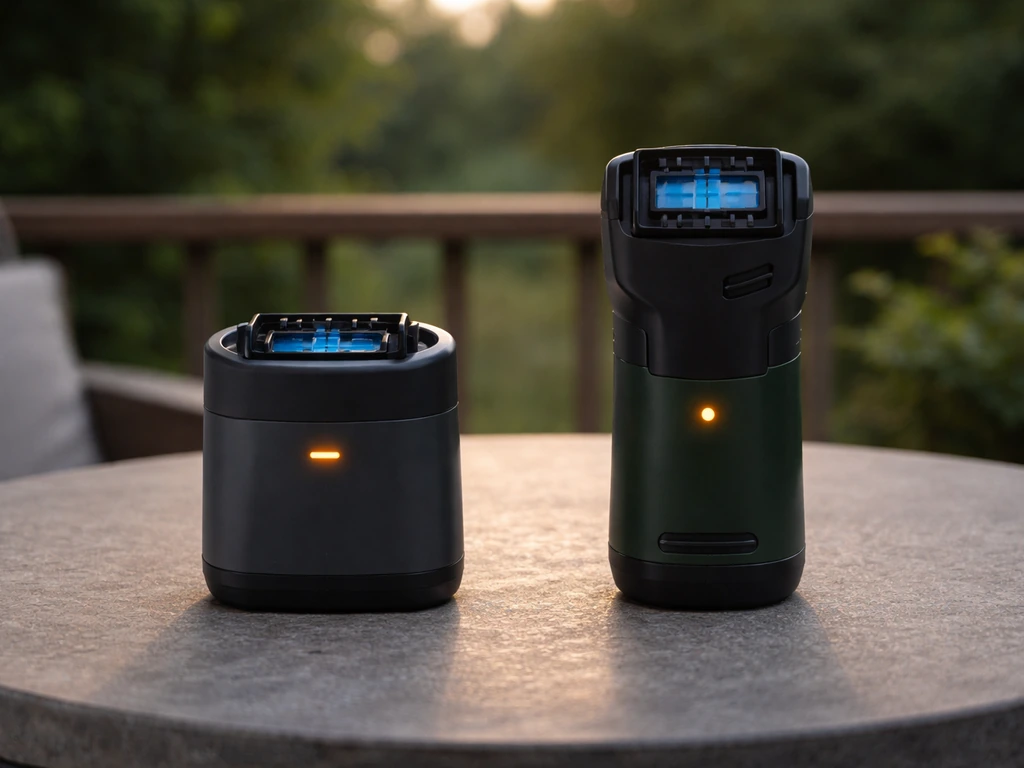
What each device is actually built for
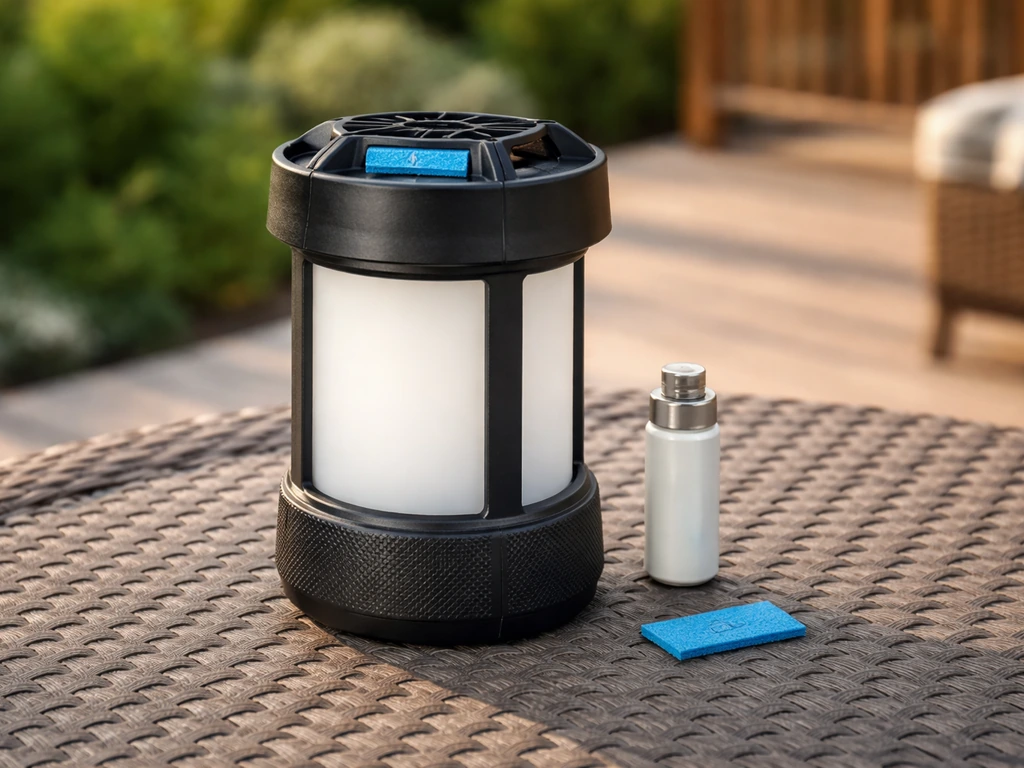
The Thermacell Patio Shield is a tabletop lantern-style mosquito repeller. It's meant to live on your patio table, deck railing, or any flat outdoor surface where people are sitting. Its design is decorative enough that it doesn't look out of place next to drinks and plates. The MR300, by contrast, is a rugged handheld repeller built for people who are on the move. It clips to a belt loop, bag strap, or just sits in a cup holder. Both are fuel-powered, both heat a repellent mat to release allethrin into the air around you, and both create what Thermacell calls a protective "zone" rather than coating your skin with anything.
Neither device is a patio heater in the warmth-producing sense. They're purely mosquito repellers. The reason they show up in patio product searches is that they're a popular add-on for outdoor living spaces, especially in summer months when mosquitoes are the main reason people retreat indoors. If you're also looking for warmth alongside mosquito control, you'd want to pair either of these with a separate patio heater.
Coverage area, effectiveness, and how the zone actually works
Here's what the specs look like side by side:
| Feature | Patio Shield | MR300 |
|---|---|---|
| Coverage zone | Up to 15 ft (225 sq ft) | Up to 15 ft (225 sq ft) |
| Repellent method | Heat-activated allethrin mat | Heat-activated allethrin mat |
| Fuel system | Butane cartridge + repellent mats | Butane cartridge + repellent mats |
| Included in box | 1 repeller, 1 12-hr fuel cartridge, 3 mats | 1 repeller, 1 12-hr fuel cartridge, 3 mats |
| Form factor | Tabletop lantern | Handheld/portable |
| Time to full protection | ~15 minutes | ~15 minutes |
| Outdoor use only | Yes | Yes |
The coverage is identical. Both devices create a roughly 15-foot zone of protection around the unit, which works out to about 225 square feet. That's enough to cover a small dining set or a cluster of chairs, but it won't blanket a large deck end to end with a single unit. If your patio is 400 square feet or more, you're looking at two devices minimum. The zone isn't a hard wall either. It's a cloud of repellent that builds up over about 15 minutes, and it drifts with any air movement around it.
Fuel system, refills, and what you'll spend over time
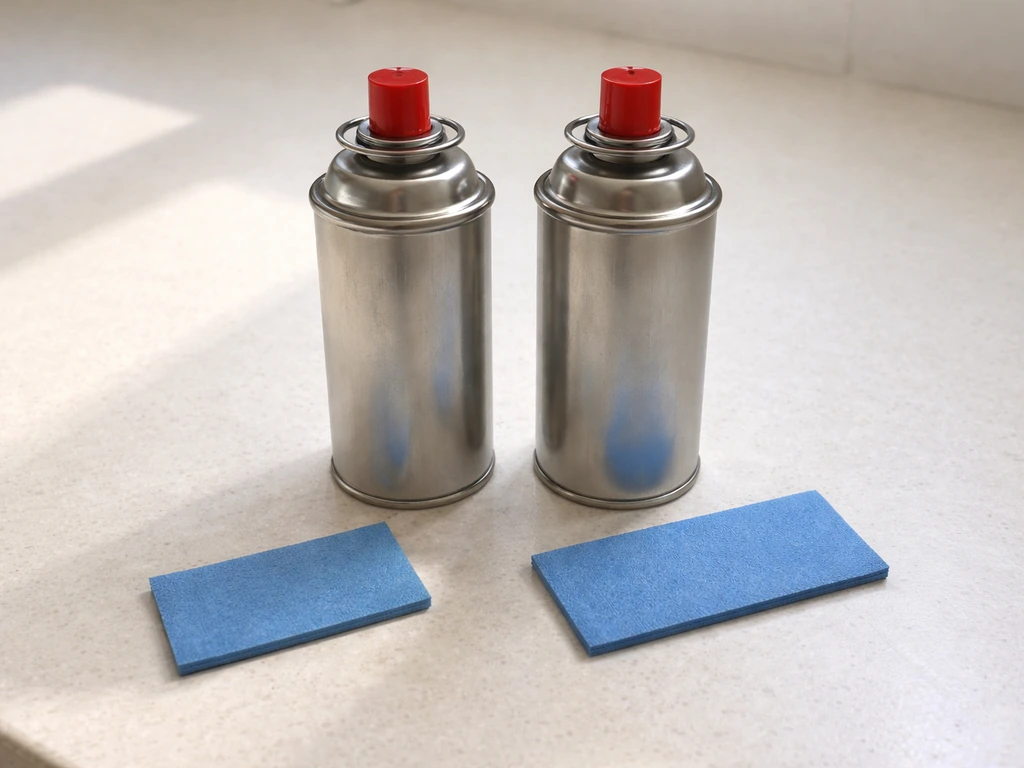
Both devices run on the same refill system: butane fuel cartridges that heat the repellent mats. Each fuel cartridge lasts about 12 hours. Each repellent mat lasts about 4 hours, and the standard refill pack includes three mats, so a full kit (one cartridge, three mats) gives you 12 hours of protection. Thermacell’s official fuel-powered refill packs explain that mat duration and fuel cartridge duration are calculated as the total hours of protection, which you can use to convert pack pricing into a $ per hour figure Fuel Powered Refills. That's the same for both models, which means your ongoing operating cost is identical no matter which one you choose.
For cost reference, a 48-hour refill pack (which includes 12 repellent mats and 4 fuel cartridges) runs around $23.88 at major retailers. That works out to roughly $0.50 per hour of protection before tax or shipping. For a typical summer evening that runs 3 to 4 hours, you're spending about $1.50 to $2.00 per session. Over a full summer of regular use, that adds up, but it's competitive compared to DEET sprays or citronella candles when you factor in convenience and effectiveness.
Thermacell also sells Max Life refill packs rated for 48 hours total, which bring the per-hour cost down when you buy in bulk. Both the Patio Shield and MR300 are compatible with the same refill formats, so you can stock up once and use the same supplies for either device.
Portability, setup, and where each one fits
Setup for both devices is genuinely simple: insert the fuel cartridge, slide in a repellent mat, and light it. There are no batteries involved in the repellent function. The fuel cartridge does all the work. The difference is that the Patio Shield is designed to stay in one place. Its lantern body is stable on a flat surface, it looks intentional on a table, and you're not meant to carry it around while it's running. The MR300 is specifically built for mobility. Its compact handheld body clips to gear, fits in a cup holder, and goes wherever you go.
Neither device should be used indoors or in enclosed spaces. Thermacell is clear about this for both models. A covered porch is fine as long as there's open airflow on the sides, but a screened-in room or enclosed patio would trap combustion byproducts. Treat both devices as outdoor-only equipment.
If you're comparing these against other Thermacell models, the Patio Shield vs. Radius comparison is worth a look for anyone interested in a rechargeable, flame-free option. And if budget is a factor, the Thermacell E55 vs. Patio comparison covers the electric side of the lineup. If you're also considering the Thermacell E55 for your outdoor space, check how it stacks up against the Patio Shield so you can pick the best fit.
Wind, covered spaces, and how your patio conditions affect performance
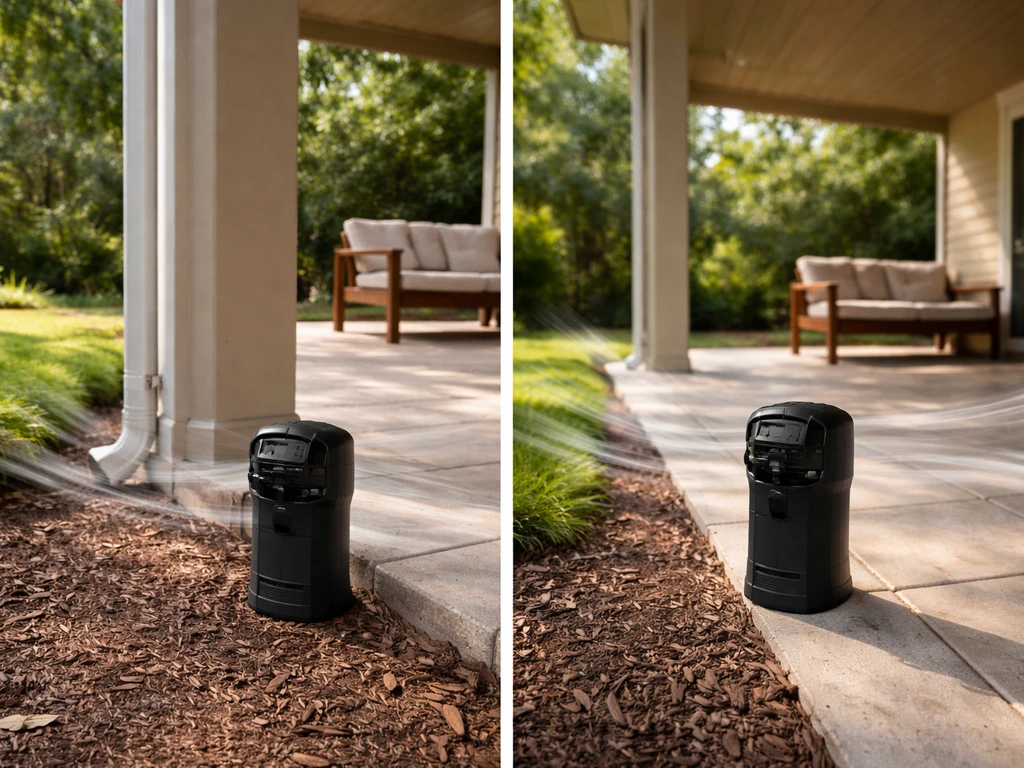
Wind is the biggest enemy of both devices. Thermacell is upfront about this: constant air movement reduces effectiveness for any fuel-powered repeller because it disperses the allethrin cloud before it can build up around you. Thermacell also notes that wind and other air movement can reduce effectiveness by dispersing the repellent zone before it fully builds around you wind/air movement can reduce effectiveness. The 15-foot zone assumes relatively calm conditions. In a consistently breezy yard, that zone shrinks dramatically.
The fix Thermacell recommends is placement. Put the device upwind of where you're sitting so the repellent drifts toward you rather than away from you. On a mostly calm evening with occasional light breeze, this works well. If your patio gets steady afternoon wind off an open field or water, you'll get inconsistent results from either device regardless of placement.
Covered patios (pergolas, roof overhangs, solid covers with open sides) are actually better environments for Thermacell devices than fully open spaces. The cover reduces direct wind exposure, which lets the repellent zone build up and hold around your seating area. A covered 10x15-foot seating area with a pergola overhead is close to ideal. A wide-open 20x30-foot deck on a windy evening is going to frustrate you.
- Calm conditions: both devices perform at their best, full 15-foot zone builds in about 15 minutes
- Light breeze: place the device upwind, expect a slightly smaller effective zone
- Consistent wind: both devices struggle; consider a covered or sheltered setup
- Covered porch with open sides: excellent conditions, zone stays stable
- Fully enclosed space: do not use either device indoors or in enclosed rooms
Which one wins for your patio size and mosquito situation
The honest answer is that the technology is identical, so you're really choosing based on your lifestyle and how you use your outdoor space.
Choose the Patio Shield if your primary use case is a fixed outdoor seating area, a dining table on a deck, or a covered patio where you're staying put. Its tabletop lantern design is purpose-built for that scenario. It blends in, sits stable, and you set it up once at the start of the evening and forget about it.
Choose the MR300 if you move around your yard, go camping, tailgate, fish, or want one device that works in multiple settings. It's also a solid choice if you want to use it at a fixed location but like the option to pack it up and take it somewhere else. The MR300 vs. MR450 comparison is worth reading if you're considering a higher-output portable option for larger or more exposed areas. The Thermacell Patio Shield vs MR450 comparison can help you decide which higher-output portable option makes the most sense for bigger or windier spaces.
For patio size specifically: one unit of either model covers roughly 225 square feet in calm conditions. A small bistro table setup or a 12x12-foot deck is well within that range. A medium deck of 200 to 400 square feet needs one well-placed unit for the seating zone. A large patio over 400 square feet needs two units, and you'll want to space them to overlap their zones over the areas where people are sitting.
| Scenario | Best Choice | Why |
|---|---|---|
| Small covered patio, fixed seating | Patio Shield | Tabletop design fits naturally, stable zone in low-wind covered space |
| Open backyard, moving around | MR300 | Portable, clips to belt, follows you |
| Camping, hiking, travel | MR300 | Compact and built for mobility |
| Large deck needing multiple units | Either (buy two) | Same coverage, choose form factor by preference |
| Windy open patio | Neither performs great, but MR300 gives flexibility to reposition | Portability helps with upwind placement adjustments |
| Covered porch with open sides | Patio Shield | Set it on the table, let it build the zone under the cover |
Before you buy: checklist and mistakes to avoid
A lot of the negative reviews you'll find for both products come down to avoidable setup mistakes rather than product failure. Here's what to check before you buy and what to do once you have it:
- Measure your seating area. If it's larger than 15x15 feet, budget for two units from the start.
- Check your typical wind conditions. Calm or lightly breezy evenings are ideal. If your yard is consistently windy, manage your expectations or look for a more sheltered placement spot.
- Plan your placement before you light it. The device needs to be upwind of your seating area, not behind you or off to the side. Airflow direction matters more than most people realize.
- Give it 15 minutes before judging. The zone takes about 15 minutes to build up to full effectiveness. Don't write it off after five minutes.
- Stock up on refills before your first weekend. Each mat lasts 4 hours. A full evening (3 to 4 hours) uses one mat and a fraction of a cartridge. Buy a 48-hour pack upfront so you're not running out mid-summer.
- Don't use it in enclosed or near-enclosed spaces. Both devices require open outdoor airflow.
- Don't expect it to cover your entire patio uniformly. It creates a zone around the device itself. Position it at the center of your seating area, not on the perimeter.
Common mistakes to skip: placing the device downwind of your seating area (the repellent blows away from you), expecting it to work in a constantly breezy backyard without any adjustment, and buying just one unit for a large open deck and then being disappointed when coverage feels thin. Both devices are genuinely effective tools when used correctly. The people who love them place them well and understand that they're creating a zone, not a force field.
If you're still undecided between the Patio Shield and other Thermacell models, the full Patio Shield reviews section covers real-world user experiences across different patio setups, which can help you confirm the right choice for your specific situation. If you want to get the most out of your purchase, read the thermacell patio shield reviews for real user experiences before deciding Patio Shield reviews section.
FAQ
Can I use Thermacell Patio Shield and MR300 at the same time to cover a bigger area?
Yes, but spacing matters. Use multiple units so their roughly 15-foot zones overlap around where people are seated, not behind or out on empty space. In breezy yards, overlap should increase because the cloud builds more slowly.
How do I position the device if I do not know where the wind will be?
Pick the most likely wind direction for your seating time and place the unit upwind. If conditions change during the evening, relocate the MR300 more easily, while the Patio Shield may require moving the whole tabletop setup or temporarily shifting where guests sit.
Do I need to turn the device on before guests arrive?
Start it about 15 minutes before you sit down. Both devices take time to build the protective cloud, and using it right when people arrive can feel like “it is not working” even though it is still ramping up.
Is it safe to use around kids and pets, especially on patios?
They are designed as outdoor repellent devices that heat mats using fuel cartridges, not skin-applied products. Still, keep the unit on a stable surface, avoid letting children play near the flame area, and follow the outdoor-only guidance, especially in tight spaces like screened porches.
What happens if the device goes out or the mat burns differently than expected?
If a mat stops producing heat or seems inconsistent, replace the mat and confirm the fuel cartridge is fully seated. A bad fit or partially used cartridge can shorten effective run time compared with the typical 12-hour cartridge life.
Can I use the Patio Shield indoors if it is under an open roof?
Do not use it indoors or in enclosed spaces. A partially covered porch is only acceptable if there is open airflow on the sides, so combustion byproducts can disperse. If air does not circulate freely, treat it as enclosed and do not use.
Are the refill cartridges and mats interchangeable between the Patio Shield and MR300?
They use the same refill system described for both models, so you can stock one supply set and use it across either device. The mat count per 48-hour pack and the cartridge runtime remain the same across the line, so costs should match if you buy the same format.
Will these work effectively over water, like a dock or near a lake?
Often less consistently than calm patio areas because breezes and convection from water increase air movement. If you are near a lake or open water, plan for more units or tighter seating zones, and position upwind more aggressively.
How many devices should I buy if my patio is around 300 to 450 square feet?
For 300 to 400 square feet, one well-placed unit may work for a smaller seating cluster, but you may want a second if wind is common or the furniture spans more than one zone. For over 400 square feet, plan on two units and overlap their coverage over the seating area.
If the Patio Shield is on a table, will tall drinks or objects block coverage?
Objects can disrupt airflow around the device, especially in gusty conditions. Place it so the lantern is not shaded or surrounded by tall items, and keep the area in front of the zone as open as possible so the repellent cloud can drift toward people.
What is the practical difference in refilling between the two devices?
The fuel and mat steps are the same, but the MR300 is easier to bring to a convenient refilling spot since it is portable. With the Patio Shield, you may need to move it away from your seating area before handling cartridges and mats to avoid spills or surface damage.