
If you're choosing between the Thermacell Patio Shield and the Thermacell Radius, here's the fast answer: the Patio Shield (fuel-powered, butane cartridge) creates a 15-foot zone of mosquito protection and is better for open patios, decks, and any situation where you want a set-it-and-forget-it device without charging. The Radius (rechargeable, battery-powered) covers a 10-foot radius, which works out to a 20-foot zone diameter and roughly 314 square feet, and is the cleaner, cord-free choice for smaller seating areas and more enclosed or covered spaces. For most standard backyard patios, the Patio Shield's larger stated zone gives you more practical coverage, but the Radius wins on convenience and portability for tighter setups.
Thermacell Patio Shield vs Radius: Which Works Better?

Willa Brennan
13 Jun 2026
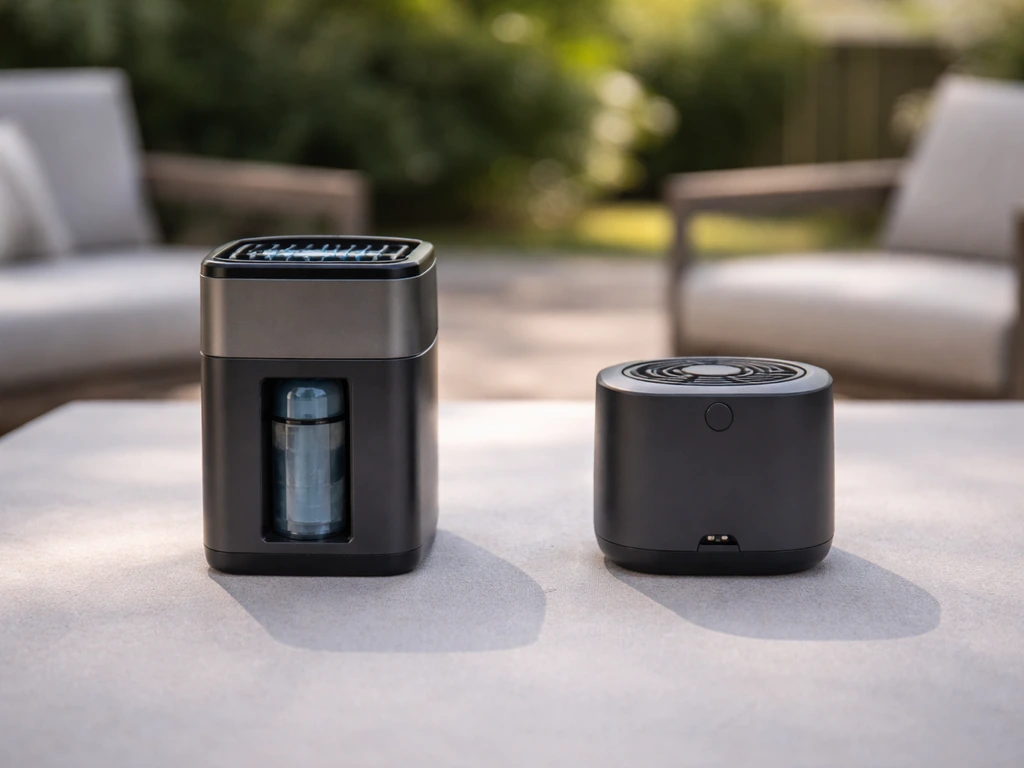
Thermacell Patio Shield vs Radius: the quick bottom-line
Both devices do the same thing: they heat a repellent pad or cartridge to release allethrin, an odorless synthetic repellent that creates an invisible barrier mosquitoes want to avoid. The difference comes down to how they generate heat, how much zone they cover, and what kind of maintenance you're signing up for. The Patio Shield runs on a small butane fuel cartridge (no charging, no cords) and [claims a 15-foot protection zone](https://www. thermacell.
ca/ca-fr/products/patio-shield-r%C3%A9pulsif-contre-les-moustiques). The Radius uses a rechargeable lithium battery and covers a 10-foot radius (20-foot diameter), which Thermacell officially labels as "up to 314 square feet. " If you do the geometry, a 15-foot zone from the Patio Shield is actually a 15-foot diameter (roughly 175 square feet centered around the device), so the Radius technically covers more square footage when you account for EPA label math, even though that surprises most people.
The Patio Shield's "15-foot zone" in everyday use means mosquitoes are repelled within about 7. 5 feet of the device in all directions. Keep that in mind as you read through the coverage section below.
| Feature | Patio Shield (Fuel-Powered) | Radius (Rechargeable) |
|---|---|---|
| Power source | Butane fuel cartridge | Rechargeable lithium battery |
| Zone coverage (manufacturer) | 15-foot zone | 10-ft radius / 20-ft zone / ~314 sq ft |
| Runtime per refill/charge | ~12 hours per fuel cartridge | ~6.5 hours per charge (standard mode) |
| Ongoing cost | Fuel cartridges + repellent mats | Repellent refill cartridges only |
| Best for | Open decks, larger patios, windy areas | Covered patios, small seating areas, travel |
| Portability | Good (lightweight, no charging needed) | Excellent (no fuel, USB rechargeable) |
| Setup | Screw in fuel cartridge, insert mat, ignite | Charge battery, insert refill, press button |
| Wind handling | Needs upwind placement | Needs upwind placement |
Coverage explained: patio shield vs radius zone (what you'll actually feel)
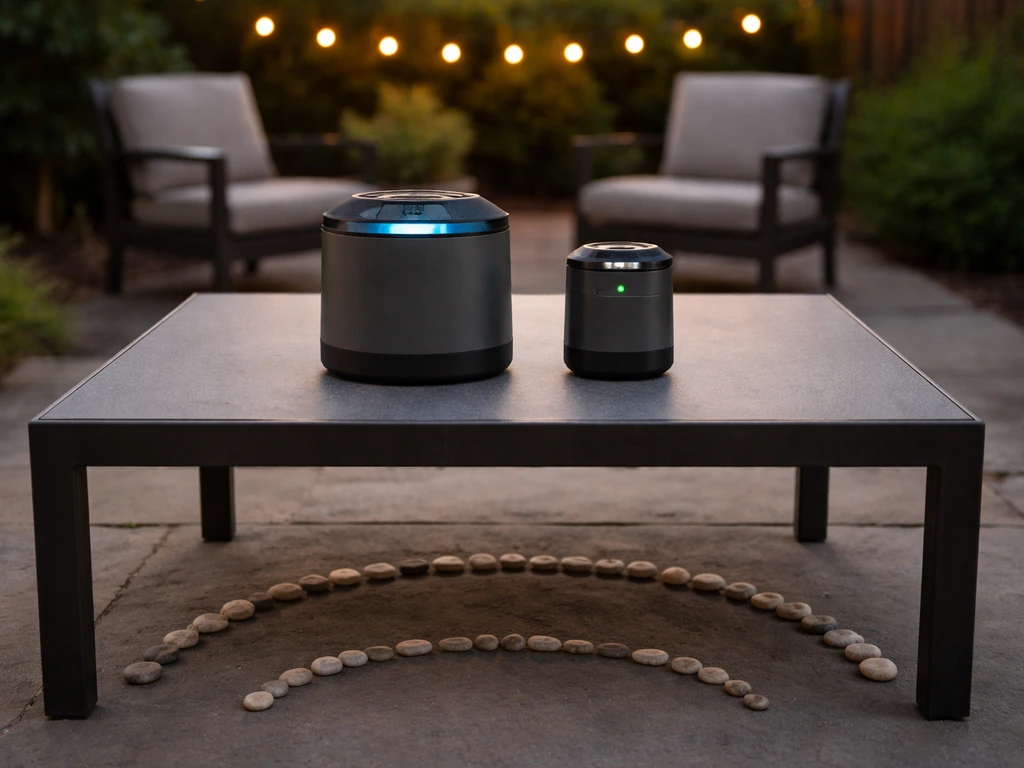
Thermacell's coverage numbers can confuse people because the two products use different language. The Patio Shield advertises a "15-foot zone," which most people read as a 15-foot bubble in every direction. Thermacell's MR450 product page describes its fuel-powered repellency in terms of a 15-foot effective zone for deck and patio-sized protection [Patio Shield advertises a 15-foot zone](https://www. thermacell.
com/products/mr450-armored-portable-mosquito-repeller). In practice, that 15-foot language refers to the diameter of the protection zone, not the radius, meaning you're sitting about 7 to 8 feet away from the unit and feeling the benefit. The Radius product is clearer: its EPA-registered label explicitly states "up to 10 ft radius / 20 ft zone" and 314 square feet of coverage. That's a genuinely larger circle on paper.
Here's why the Patio Shield still feels effective despite the smaller footprint: its zone is driven by heat from the butane flame, which generates more consistent repellent dispersion in open-air conditions. The Radius uses a fan and battery-heated element that disperses allethrin in a more controlled, directional way. In completely calm conditions, both work well within their zones. When there's even a light breeze, the actual "effective zone" for either device shifts heavily in one direction, which means real-world coverage is smaller than the spec sheet suggests for both. Neither unit is magic in a stiff wind.
The practical takeaway: if you're sitting 6 to 8 feet from the device, both will work. If your seating area is spread out over 300-plus square feet and people are scattered around a larger patio, the Patio Shield's placement flexibility (you can run multiple units) gives it the edge. For a tight bistro-table setup for two or three people, the Radius is more than enough.
Placement & patio layout: covered vs open, wind, and distancing
Placement is where most people go wrong with both devices. Thermacell's own guidance says that in breezy conditions, you should place the unit upwind of your seating area so the repellent drifts toward you and the people you're protecting. That's true for both the Patio Shield and Radius. If you put it downwind of where you're sitting, the repellent blows away from you and you're essentially protecting your neighbor's yard.
Open patios and decks
For open, uncovered patios and decks, the Patio Shield is the more practical pick. Its butane heat source isn't affected by lack of ambient warmth, and because it doesn't need charging, you can run it for a full evening (12 hours on a single cartridge) without thinking about it. Place it centrally on the table or 2 to 3 feet upwind of your seating cluster. On a larger deck with guests spread out, consider running two Patio Shield units at opposite ends rather than trying to stretch one Radius to cover the whole area.
Covered patios and screened-in areas
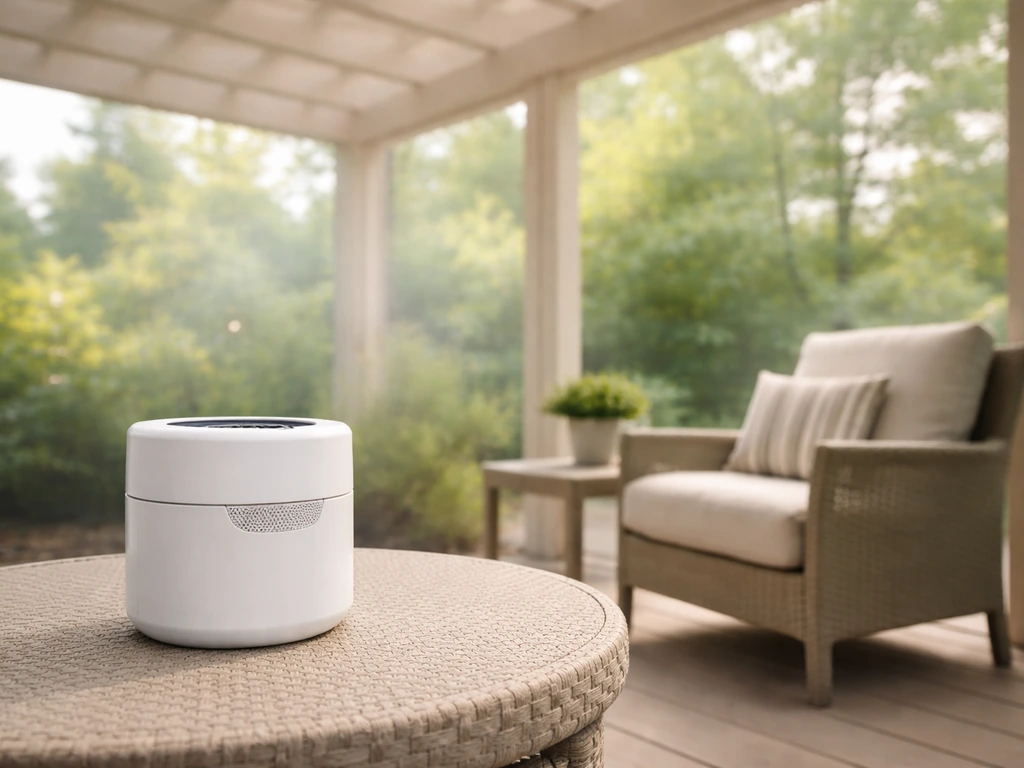
Under a pergola, gazebo, or covered porch, the Radius shines. The allethrin cloud is less likely to drift away because walls or a roof contain it somewhat, and the rechargeable battery means no open flame under a covered structure, which some people (reasonably) prefer. The Radius also runs quieter than the butane ignition click and steady flame hiss of the Patio Shield. If you're using it in a semi-enclosed screened porch, the Radius's contained dispersal pattern is actually an advantage rather than a limitation.
Wind rules for both
Both units struggle in sustained winds above about 10 mph. Thermacell's guidance is consistent: upwind placement is the most important variable you can control. If your patio faces the prevailing wind, set the device on the windward side of your seating. In gusty, variable-wind conditions, neither device will give you the full coverage advertised, and that's an honest limitation worth knowing before you buy.
Power & refills: rechargeable vs non-rechargeable differences
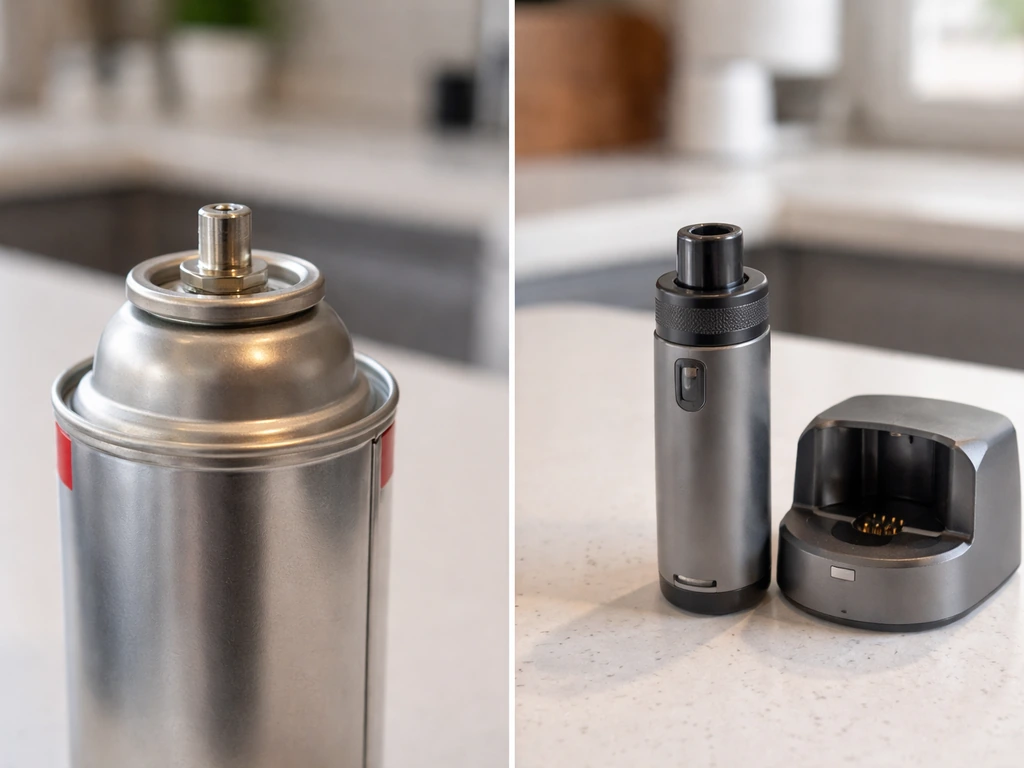
This is the question hiding inside "Patio Shield vs Radius rechargeable" searches, and it matters more than most people expect. If you're specifically hunting for thermacell patio shield reviews, this power and refill setup is one of the main factors people compare. The Patio Shield is non-rechargeable in the sense that it uses a consumable butane fuel cartridge, each of which lasts about 12 hours. When the cartridge runs out, you swap it for a new one.
You also swap out the repellent mat, which typically needs replacing every 4 hours of use. So a full evening of use burns through one repellent mat (potentially two if you're out long) and a fraction of a fuel cartridge. Budget roughly 50 to 75 cents per hour of use when you factor in both consumables.
The Radius eliminates the fuel cartridge entirely. You charge it via USB, and the battery lasts around 6.5 hours per charge in standard mode. The only ongoing purchase is the repellent refill cartridge, which replaces the old mat-based system and tends to last longer per unit. The per-hour cost of repellent is slightly lower on the Radius because the refill system is more efficient. Over a full summer of regular use (say 3 nights a week), the Radius saves you a meaningful amount on fuel cartridges, and you never have to run to the store because you forgot to buy butane.
The tradeoff is runtime. The Patio Shield wins a long evening hands down because one fuel cartridge covers 12 hours without interruption. If you're hosting a dinner that starts at 5 pm and runs past midnight, the Patio Shield doesn't need a mid-party recharge. The Radius, at 6.5 hours, might need a top-up for a long event. If you mostly use it for 2 to 3 hour sessions, that's a non-issue.
Best use cases: who should buy Patio Shield vs Radius
Neither device is universally better. Here's who each one actually suits.
Buy the Patio Shield if...
- Your patio is open, uncovered, or exposed to light breezes
- You want 12-hour runtime without charging or managing a battery
- You're covering a larger outdoor area and may need to run two units
- You don't want to think about charging before every use
- You're comparing it to something like the MR450, which targets similar open-air conditions with slightly more heat output, or weighing it against the MR300 for a more budget-conscious fuel option
- You host long evenings and don't want runtime anxiety
Buy the Radius if...
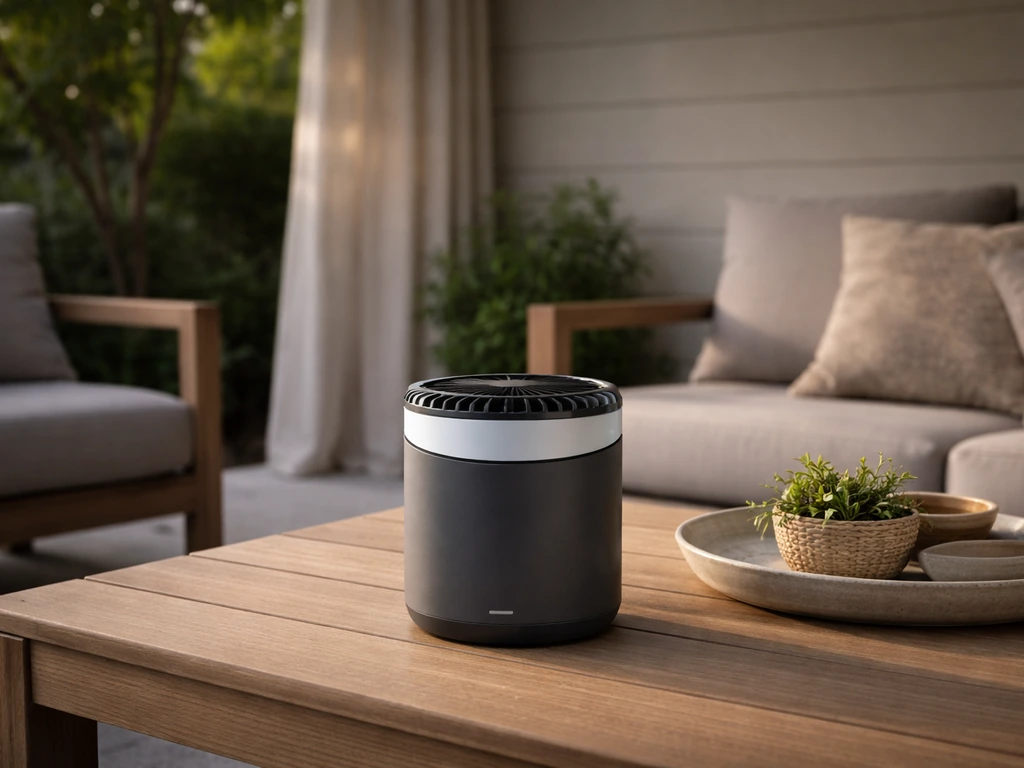
- Your patio is covered, semi-enclosed, or a pergola/gazebo setup
- You want a cleaner, flame-free solution with no butane cartridges to manage
- Your seating area is compact, typically for 2 to 4 people within a tight cluster
- You travel with it or use it for camping, tailgating, or moving it between spaces
- You prefer USB charging over buying consumable fuel
- You use it for 2 to 4 hour sessions where battery life is never a concern
It's also worth knowing where the Patio Shield sits relative to Thermacell's other fuel-powered lineup. For a direct comparison of coverage and runtime between the Thermacell Patio Shield and the MR300, see our full thermacell patio shield vs mr300 guide. The MR450 is a step up from the Patio Shield in terms of durability and weather resistance, and if you're in an area with heavy mosquito pressure, that comparison is worth a look.
Similarly, if you're weighing the Radius against other electric Thermacell options, the E55 Patio uses a similar rechargeable concept but is designed specifically for tabletop patio use. The Thermacell E55 is worth comparing when you want a similar rechargeable tabletop setup for your patio. If you're specifically comparing thermacell e55 vs patio options, that design choice and tabletop setup are the key details to look at E55 Patio.
How to measure your space and pick the right size/setup
Before you buy, take five minutes to measure or estimate your actual patio footprint and think about where people sit. Here's a simple way to do it.
- Measure the length and width of your seating area (not the whole patio, just where people actually sit). Multiply those numbers to get square footage.
- If your seating area is 200 square feet or less (think a 12x16 foot area), either device will cover it, and the Radius's 314 square feet of rated coverage is more than enough.
- If your seating area is larger than 250 to 300 square feet, one Radius may not cover it fully. One Patio Shield won't either, but you can run two Patio Shields at different spots on the table or at opposite ends of the deck.
- Identify the typical wind direction in your yard. Stand in your seating area on a calm afternoon, wet a finger, and note which side feels cooler. That's your upwind side. Your Thermacell device goes there.
- If your patio is covered, note how enclosed it is. A solid roof with three walls = very enclosed (Radius is ideal). A pergola with open sides = semi-open (either works, Patio Shield is safer bet in breezier conditions).
- If you measure and find your seating area is over 400 square feet, plan for two devices. One of any Thermacell model will leave the outer edges unprotected.
Once you have those measurements and your wind situation figured out, the choice gets much easier. The Patio Shield is the default recommendation for most open-air homeowners who want a reliable, all-evening solution without managing charging schedules. The Radius earns its place for people who value a cleaner setup, prefer rechargeable tech, and use their device in more contained spaces. Either way, placement relative to wind is the single biggest factor in how well it actually works, and no spec sheet will tell you that as directly as your own backyard experience will.
FAQ
If I run these for an all-evening hangout, what actually runs out first, fuel or repellent?
Plan for the product heating element to run longer than the repellent cartridge or mat window. For the Patio Shield, you typically replace the repellent mat every few hours, even if the butane cartridge still has time left, so you can run out of repellent before you run out of fuel. For the Radius, the limiting factor is usually the refill cartridge’s lifespan plus how frequently you recharge, so heavy use may require more than one charge over the same evening.
If my patio has variable wind, is it better to use one unit or multiple units?
Yes, but the effect changes how many units you need. In both cases, you should put the device upwind of where people sit so the repellent cloud drifts toward them. If your patio has a consistent breeze from one direction, using a single unit placed correctly can outperform two units placed incorrectly, and two units are best reserved for larger footprints or multiple seating zones.
How do hot, humid conditions change real-world coverage for Patio Shield vs Radius?
Because both rely on airborne dispersal, high heat and humidity can shorten the practical “sweet spot” near the unit if mosquitoes are very active and the air mixing is intense. Start by placing the device where you will be within about 7 to 8 feet, then adjust one step at a time upwind until you feel sustained relief. If the breeze is strong, reduce expectations versus the label and consider adding a second unit rather than moving the unit downwind.
Why do my results not match the claimed coverage area on the box?
Don’t assume the “square footage” label means you can place the unit anywhere and cover the whole area evenly. The coverage is strongest near the center and fades with distance, plus wind can push the effective area away. A useful decision aid is to map where people will actually be, then choose the device that keeps most seats within the expected near-zone distance rather than relying on total area math.
What should I do the day before to make sure the Radius lasts through dinner and late social time?
Battery management matters for the Radius. If you’re hosting longer events, consider charging the unit fully beforehand, and know that runtime depends on mode (standard versus higher-output settings if available in your model). For multi-day use, keep a charging routine, and avoid waiting until the battery is low because recharge time can disrupt evening plans.
Can I use Patio Shield or Radius in a screened porch or semi-enclosed area safely and effectively?
If you use them indoors or in a garage-like space, ventilation becomes the deciding factor. The devices are designed to disperse repellent into air, and coverage assumptions assume an outdoor, open-air or semi-contained environment where drift can reach you. For indoor use, keep the area well ventilated, keep the device on stable flat surfaces, and avoid placing it near drafts that blow the repellent away from people.
Which one is easier to place correctly on a small bistro table versus a larger deck?
Yes, cord-free convenience can affect placement. The Radius can sit closer to where people eat because you are not managing a cord, but you still need upwind positioning. If your table is small, the Radius can be easier to center and keep within the near-zone. If your seating is spread out, the Patio Shield’s ability to add units without a charging plan can make “series coverage” more practical.
What daily routine should I expect with each device, and which is truly more “set-and-forget”?
For the Patio Shield, it’s usually straightforward but you should plan for periodic mat swaps during long sessions, since that can interrupt the “set and forget” feel. For the Radius, charging becomes the main operational step. A good rule is to pick based on your schedule: if you can charge once per day or more, Radius fits well, if not, Patio Shield tends to feel more hands-off for evening-only use.
What’s the best next step when mosquitoes keep biting even after upwind placement?
In gusty or reversing wind, both devices will underperform versus their idealized range. The best mitigation is windward placement and minimizing drafts around the seating area (for example, by choosing a calmer corner or using outdoor barriers). If mosquitoes still persist, the next step is to increase upwind unit coverage rather than repeatedly re-positioning, because consistent placement for 15 to 30 minutes helps you judge whether the change is working.