
SEO Title: Bronze Table Top Patio Heater: Complete Buyer's Guide for 2026 | Meta Description: Find the best bronze table top patio heater for your space. Compare sizes, BTU output, fuel types, finishes, and safety features in one practical guide.
Bronze Table Top Patio Heater: Compact Outdoor Heating Guide

Willa Brennan
24 Jul 2026
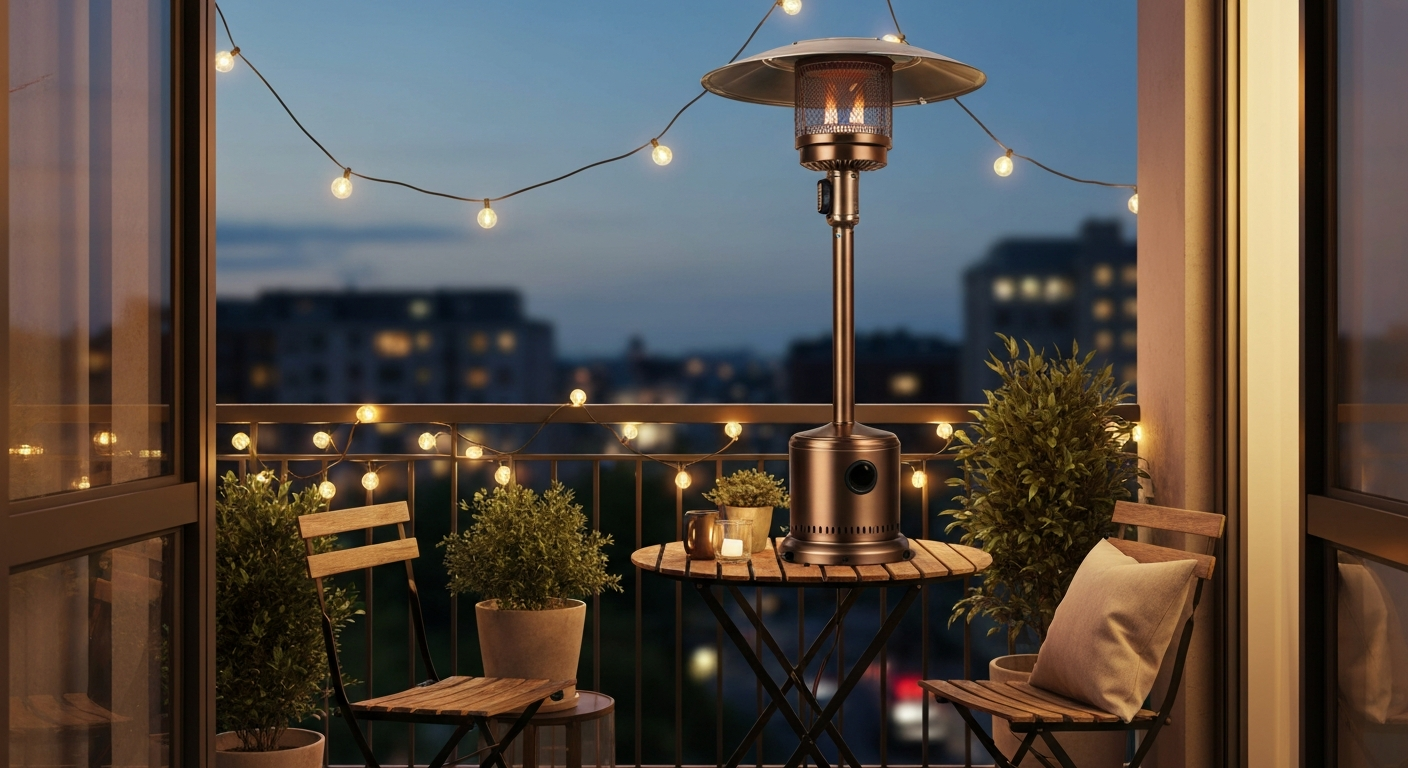
A bronze table top patio heater is one of the most practical ways to add warmth and style to a small outdoor space without committing to a full-sized floor heater. Whether you're heating a bistro-style balcony, an outdoor dining table for four, or a compact covered patio, the right tabletop unit will typically run between 1,500 watts (electric) and 11,000–13,000 BTU (propane), sit 24 to 42 inches tall, and cover roughly 80 to 200 square feet depending on conditions. If that range matches your setup, this guide will walk you through everything you need to pick the right one.
Who This Guide Is For
This guide is written for homeowners, renters, and outdoor dining enthusiasts who want a compact patio heater that looks good on a table and actually works. If you have a small patio, a covered balcony, or an outdoor dining area where a standing 88-inch mushroom heater would feel absurd, a tabletop model is probably your answer. The bronze finish angle matters here too: if your outdoor furniture already leans toward warm metallics, weathered wood, or earthy tones, a bronze heater fits naturally rather than clashing. The main recommendation: go propane if you need portability and stronger heat output, go electric if you have an outdoor outlet and want simplicity, and go infrared if you want fast, directional warmth with no flame.
What Exactly Is a Bronze Table Top Patio Heater?
Tabletop patio heaters are compact, freestanding heaters designed to sit on a table surface or a small dedicated platform rather than on the ground. Industry and retailer product pages consistently classify them as 'Tabletop Patio Heaters' and list assembled heights in the 24–42 inch range. Electricmodels tend to be shorter and lighter (the Westinghouse electric tabletop, for example, comes in at 26 inches and about 9.9 lb), while propane tabletop models like the Napoleon run closer to 40–41 inches and weigh more because of the burner housing and base.
The main parts of a tabletop heater are the base (which houses fuel or electronics and provides stability), the pole or body, and the burner head or heating element with its reflector. Some models include a decorative top or protective screen. The base diameter and overall weight are the two specs that matter most for stability on a table surface, which I'll come back to in the safety section.
Now, about that 'bronze' label. This is worth reading carefully before you buy. In retail listings, 'bronze' can mean at least four different things: solid bronze alloy (copper plus tin and sometimes other elements), bronze plating over a base metal, PVD bronze coating, or simply a powder-coat paint in a bronze color (sometimes called 'hammered bronze'). Solid bronze alloy construction is rare on mass-market patio heaters. Most of what you'll see labeled 'bronze' is either a bronze-colored powder coat or a PVD/plated finish. Neither is bad, but they behave differently over time and require different care. Always check the product spec sheet or materials section to confirm whether 'bronze' describes the alloy or just the color.
Common tabletop heater size ranges at a glance
| Spec | Electric Tabletop | Propane Tabletop |
|---|---|---|
| Assembled height | 24–30 in | 36–42 in |
| Typical weight | 8–12 lb | 15–25 lb |
| Base diameter | 8–12 in | 10–16 in |
| Heat output | 900–1,500 W (3,100–5,100 BTU) | 9,500–13,000 BTU |
| Typical coverage | 80–150 sq ft | 100–200 sq ft |
Who Actually Benefits from a Bronze Tabletop Heater
The honest answer is: anyone with a small-to-medium outdoor space who doesn't want a heater dominating their sightline. Here are the use cases I see most often.
- Balcony dwellers: Apartments and condo balconies rarely have room for a floor heater. A tabletop unit sits on a side table or dedicated stand, stays out of foot traffic, and still throws enough heat to make a 6x10 ft balcony comfortable on a cool evening.
- Outdoor dining setups: A tabletop heater placed at the center or end of a dining table keeps guests warm during shoulder-season dinners without the awkwardness of a towering floor unit.
- Small covered patios: If your patio is under a pergola or solid roof, a compact propane or electric tabletop unit works efficiently because the cover traps radiant heat. Coverage requirements drop significantly in enclosed or semi-enclosed spaces.
- Hospitality and food-service use: Cafes and small restaurant patios frequently use tabletop heaters for individual table zones rather than one large heater for a whole section.
- Renters and movers: No installation, no gas lines, easy to pack up and take with you. A tabletop propane unit runs off a standard 1 lb cylinder (or a hose adapter for a larger tank), and electric models just plug in.
When Bronze Makes More Sense Than Other Finishes
Bronze is a warm, earthy metallic tone that pairs well with teak, acacia, and eucalyptus furniture, terracotta and stone paving, black wrought iron, and wicker or rattan. If your outdoor space skews modern or industrial, a stainless steel or matte black finish will likely look more cohesive. If it skews rustic, Mediterranean, or traditional, bronze tends to feel like it belongs rather than sticking out.
Functionally, a bronze powder-coat finish is roughly as durable as other powder-coat colors, so the choice is mostly aesthetic. The one practical consideration is that darker or bronze-toned powder coat can show heat discoloration near the burner head more readily than lighter stainless finishes, though this is typically cosmetic. A PVD bronze coating is more scratch-resistant than standard powder coat and holds its color better over years of UV exposure, but it's also found on pricier models. If you're comparing a bronze finish unit against something like a powder-coated heater in another color, the durability story is similar. Granite-top heaters are a different category entirely, trading finish durability for a natural stone surface that doesn't show wear the same way metal finishes do.
BTU, Wattage, and What Coverage to Actually Expect
Heat output for tabletop heaters falls into two measurement systems depending on fuel type. Electric models are rated in watts (W), while propane models use BTU (British Thermal Units). To compare them: 1,500 W is roughly equivalent to 5,100 BTU. Most electric tabletop heaters top out at 1,500 W, while propane tabletop units typically offer 9,500–13,000 BTU. That gap is real, and it means propane genuinely outperforms electric for raw heat output at tabletop scale.
A commonly used starting estimate for outdoor heating is about 20 BTU per square foot for small seating areas. What Size Patio Heater Do You Actually Need? | PatioHeatSource (sizing rule-of-thumb and adjustment notes) echoes the roughly 20 BTU/ft² starting estimate and advises increasing output by about 10–20% for open or windy spaces and decreasing it for well-sheltered patios, while noting the environmental assumptions behind these conversions. At that rate, an 11,000 BTU propane tabletop heater theoretically covers around 550 square feet, but that number assumes ideal, calm conditions. In practice, outdoor variables cut effective coverage significantly. For open, exposed spaces, sizing guides like those from Heatscope suggest using 300–400 W per square meter (roughly 28–37 W per square foot) for exposed areas, versus 100–150 W/m² for well-covered patios. Wind, ceiling height, and ambient temperature all matter. My practical rule: plan for a 1,500 W electric unit to comfortably heat 1–2 people within 3–4 feet, and an 11,000–13,000 BTU propane unit to keep 4–6 people comfortable around a table in calm to light-wind conditions. Bump those estimates down 20–30% if you're in a windy, uncovered space.
Fuel and Technology Options: Propane, Electric, and Infrared
Bronze tabletop heaters come in all three fuel types, and the right choice depends on your outlet access, portability needs, and how you plan to use the space. Here's an honest breakdown.
Propane tabletop heaters
Propane tabletop heaters are the most powerful option at this size, ranging from 9,500 to 13,000 BTU. They typically run off a standard 1 lb disposable cylinder (you'll get roughly 1–2 hours of burn time at full output) or connect to a larger 20 lb tank via a hose adapter. They need no outlet, so placement is completely flexible. The trade-off is that they require more clearance around the flame, produce combustion byproducts, and should never be used in enclosed spaces. Look for a thermocouple (flame failure device) that shuts off gas if the flame goes out, and an anti-tilt switch that kills the gas if the unit tips. These are non-negotiable safety features, not optional extras.
Electric tabletop heaters
Electric models are quieter, simpler, and safer for covered or partially enclosed spaces because they produce no combustion gases. Most run at 1,500 W, which draws about 12.5 amps on a standard 120 V circuit. They're lighter (often under 12 lb), easier to store, and the operating cost per hour is predictable based on your local electricity rate. The limitation is that you need an outdoor-rated outlet nearby. Look for an ETL or UL listing on electric models, which confirms the unit has passed third-party electrical safety testing.
Infrared tabletop heaters
Infrared is a heat delivery technology rather than a fuel type. Infrared heaters (electric or gas) warm objects and people directly rather than heating the air around them, which makes them noticeably more efficient in breezy or partially open conditions. An infrared tabletop heater feels like stepping into a patch of sunlight: the warmth is immediate and directional. They work in both electric and propane configurations, and several bronze-finish tabletop models use infrared burner technology specifically. If your patio is semi-exposed or you've been disappointed by convective heaters in the wind, infrared is worth considering seriously. For a deeper look at how infrared technology compares across tabletop models, the infrared tabletop patio heater category covers this in detail.
Side-by-side comparison
| Feature | Propane Tabletop | Electric Tabletop | Infrared Tabletop |
|---|---|---|---|
| Typical heat output | 9,500–13,000 BTU | 900–1,500 W (3,100–5,100 BTU) | 900–1,500 W or 9,500–13,000 BTU |
| Needs outlet? | No | Yes | Depends (electric: yes; gas: no) |
| Safe for covered spaces? | Not enclosed spaces | Yes | Yes (electric); not enclosed (gas) |
| Portability | High (with small cylinder) | Limited by cord | Moderate |
| Heat-up time | 30–60 seconds | Immediate (infrared); 1–2 min (coil) | Near-immediate |
| Safety certifications | ANSI Z83.26 / CSA 2.37 | ETL / UL listing | ETL / UL or ANSI depending on fuel |
| Estimated operating cost/hr | ~$0.50–$1.50 (1 lb cylinder) | ~$0.15–$0.25 at 1,500 W | Similar to base fuel type |
How Fuel Type Interacts with a Bronze Top (and Other Top Materials)
The material of the heater's top, body, and base affects more than looks. It affects heat transfer, finish longevity, and safety clearances. Here's how bronze compares to alternatives you'll commonly encounter.
A bronze powder-coat finish on a metal body conducts and radiates heat similarly to other painted steel finishes. The powder coat itself provides a thin insulating layer over the steel, but the metal body will still get hot near the burner head and reflector. This is normal, but it means you need to be careful about contact burns, especially on propane models where the head housing gets significantly hotter than on electric units. With propane, the bronze finish near the burner can experience more thermal stress over time, and repeated heat cycling can cause paint micro-cracking in low-quality coatings. A PVD bronze coating holds up better under heat cycling than standard powder coat.
Compared to a granite-top heater, a bronze-finish metal top handles heat differently. Granite is much heavier and more thermally stable, which is part of why it's used on certain patio heater and table hybrids. It won't discolor from heat, but it's also much heavier and less portable. East oak-style or wood-finish tops are typically decorative elements on the base or housing rather than on the heat-emitting parts, but natural wood surfaces near a heat source require greater clearance and more careful placement. For options that mimic natural wood, see our east oak table top patio heater recommendations for model comparisons and care tips. Bronze-finish metal sits in the middle: attractive, reasonably durable, and manageable in weight, but requiring routine care to maintain its appearance. If low maintenance is your priority, powder-coated options in other colors (including bronze) are fairly similar to each other, but a stainless steel finish is genuinely easier to wipe down and more resistant to corrosion in coastal or high-humidity environments.
| Finish/Material | Durability | Heat Tolerance | Maintenance | Best Setting |
|---|---|---|---|---|
| Bronze powder coat | Good | Moderate (can micro-crack near burner over time) | Wipe clean; touch-up chips promptly | Covered patios, moderate climates |
| PVD bronze coating | Very good | Good (harder surface, better UV resistance) | Low | Year-round outdoor use |
| Stainless steel | Excellent | Excellent | Very low (wipe with damp cloth) | Coastal, high-humidity, heavy rain |
| Granite top | Excellent | Excellent (thermally stable) | Low (seal annually) | Permanent or semi-permanent setups |
| Bronze-colored powder coat (other metals) | Good | Moderate | Same as bronze powder coat | General outdoor dining, balconies |
Safety, Placement, and Clearance: What You Need to Know for Tabletop Use
Tabletop placement introduces specific risks that floor placement doesn't. The heater is elevated, closer to faces and hands, closer to overhead structures, and on a surface that may not be perfectly stable. Take this section seriously.
Stability
Weight and base diameter are your two stability indicators. A unit like the Westinghouse electric tabletop at 9.9 lb with a tilt-resistant base is more stable on a flat table than a lightweight 6 lb unit with a narrow base. Always place the heater on a flat, level surface. If your table has a glass top, verify the heater's weight against the table's rated capacity. On uneven surfaces like brick or stone pavers, use a shim or a dedicated stand rather than balancing the heater directly.
Required clearances
Every manufacturer specifies clearance requirements in their owner's manual, and these vary by model. A common example from tabletop propane heater manuals is approximately 36 inches of side clearance and 24 inches of overhead clearance, but always check your specific model's manual because these numbers differ. Do not assume one model's clearances apply to another. Ignoring clearance requirements is a fire hazard, particularly under pergolas, canvas umbrellas, and low deck overhangs.
Safety features to require
- Anti-tilt / tip-over switch: cuts power or fuel if the unit tilts beyond a safe angle. This is essential on a table where someone could bump it.
- Thermocouple / flame failure device (propane): shuts off gas flow if the flame goes out unexpectedly, preventing gas buildup.
- Automatic shut-off timer (electric): lets you set a run time so the heater doesn't operate unattended overnight.
- Protective screen or guard: covers the heating element or burner head to reduce contact burn risk.
- Certifications: ANSI Z83.26 / CSA 2.37 for gas-fired models; ETL or UL listing for electric models. These confirm third-party safety testing.
Covered vs. uncovered spaces
Electric and infrared-electric tabletop heaters are generally safe under covered patios as long as clearances are observed and the unit has an appropriate IP weather-resistance rating. Gas-fired tabletop heaters, including propane models, must only be used outdoors in well-ventilated areas. Manufacturer manuals universally state 'for outdoor use only' on gas models, and this warning exists because propane combustion produces carbon monoxide. Using a gas heater under a solid roof with poor ventilation is a CO poisoning risk. For covered patios with limited airflow, an electric or infrared-electric model is the safer choice. Many municipalities also reference NFPA 58 (Liquefied Petroleum Gas Code) for portable LP gas appliance use, and some restrict propane use in certain covered or semi-enclosed commercial spaces, so check local codes if you're using one in a restaurant or shared-building setting.
Finish and Material Comparisons: Bronze vs. the Alternatives
If you're deciding between a bronze tabletop heater and another finish type, here's the practical summary. Bronze (powder coat or PVD) works well in most residential outdoor settings and ages gracefully if maintained. Powder-coated finishes in any color, including bronze, should have chips touched up promptly to prevent rust on the underlying steel. PVD coatings are tougher and require almost no maintenance beyond wiping clean. Stainless steel is the easiest to care for and most resistant to corrosion, making it the best choice for coastal environments or places with heavy rainfall. Granite tops bring durability and a natural stone aesthetic but significantly increase weight, which can be a problem for table stability.
If you've seen bronze paired with a powder-coated heater in a different color or a natural-look finish like east oak, the decision usually comes down to your existing outdoor decor. A bronze finish brings warmth and a slightly traditional or rustic feel; a powder-coated heater in charcoal or matte black reads as modern; stainless is versatile but cool-toned. None of these is functionally superior for heat output. The finish is about longevity and aesthetics.
Maintenance and Care for Bronze Tabletop Heaters
Bronze powder-coat finishes are straightforward to maintain. Wipe the unit down with a damp cloth and mild soap after use or at the end of the season. Avoid abrasive cleaners or steel wool, which will scratch through the coating. If you spot a chip or scratch in the powder coat, touch it up with a compatible spray paint as soon as possible to prevent the bare steel underneath from rusting. Store the heater indoors or under a fitted cover during winter or extended periods of non-use.
For propane models, check the burner head and venturi tube at the start of each season for spider webs, debris, or corrosion, as blockages here are a common cause of uneven flame or ignition problems. Inspect the gas hose and regulator for cracks or wear annually. For electric models, check the power cord for any insulation damage before each season. Keep the reflector clean because dust and grease buildup reduces heating efficiency and can create a fire hazard near the element.
How to Evaluate Retailers and Brand Listings
Whether you're browsing at a large home improvement retailer, a specialty outdoor living store, or a general retailer like The Range, the quality of product information varies enormously. For example, check a retailer listing for the range table top patio heater to see how product specs, finishes, and clearance information are typically presented. Here's what to look for and what to be skeptical of.
- Full spec sheets: A trustworthy listing includes assembled height, weight, BTU or wattage, base diameter, certifications (ETL/UL/CSA/ANSI), and clearance requirements. If these are missing, ask the retailer or check the manufacturer's site directly.
- Certification marks: Look for ETL, UL, or CSA on electric models and ANSI Z83.26 / CSA 2.37 compliance on gas models. These aren't just marketing terms; they confirm the product has been independently tested.
- Finish description: If a listing says 'bronze' without clarifying powder coat, PVD, plating, or alloy, email the retailer or manufacturer before buying. This determines how the finish will hold up.
- Return policy and warranty: Tabletop heaters at the entry level (under $50) often carry no meaningful warranty. Mid-range models typically offer 1-year limited warranties. Premium models may offer 2–3 years with parts support.
- Customer reviews with photos: Reviews that include photos of the unit after a season of use are far more useful than star ratings alone. Look for comments on finish durability, igniter reliability (propane), and wind performance.
Buying by Budget: Feature Bundles at Every Price Point
Rather than recommending specific brands (which change models seasonally), I find it more useful to describe what feature bundle you should expect at each price tier. These are realistic expectations based on what's consistently available in the market.
| Tier | Price Range | What to Expect | Best For |
|---|---|---|---|
| Entry | $30–$70 | Electric, 900–1,200 W, basic powder-coat finish, standard on/off, minimal warranty, ETL listed | Occasional use, mild climates, renters |
| Mid | $70–$150 | Propane 9,500–11,000 BTU or 1,500 W electric, bronze or stainless finish, thermocouple + anti-tilt (propane), 1-yr warranty, ANSI/ETL certified | Regular seasonal use, outdoor dining, small patios |
| Premium | $150–$300+ | Propane 11,000–13,000 BTU or 1,500 W infrared electric, PVD or heavy powder-coat bronze finish, variable heat settings, auto shut-off timer, 2–3 yr warranty, IP44+ rating (electric) | Year-round use, covered patios, hospitality settings |
Your Buying Checklist Before You Click 'Add to Cart'
Run through these questions before you commit to any tabletop heater, bronze or otherwise.
- What is my primary use space: covered patio, open balcony, semi-enclosed pergola, or outdoor dining table? (Covered: electric is fine. Open/windy: consider propane or infrared propane. Enclosed: electric only.)
- Do I have an outdoor outlet within reach, or do I need a cordless/propane option?
- How many people am I heating? One or two: 900–1,500 W electric is sufficient. Four to six: 11,000+ BTU propane.
- Does the listing include the full spec sheet with height, weight, base diameter, and certifications?
- Is the 'bronze' finish powder coat, PVD, or plating, and does the warranty cover finish defects?
- Does the unit have an anti-tilt switch (propane) or tip-over shutoff (electric)?
- What are the manufacturer's required clearances, and does my specific placement meet them?
- What is the return/warranty policy if the igniter fails in the first season?
The Bottom Line on Bronze Tabletop Heaters
A bronze table top patio heater hits a sweet spot between functionality and aesthetics that floor-standing models simply can't match at smaller patio scales. The bronze finish is almost always a powder coat or PVD coating rather than solid alloy, which is fine as long as you maintain it. For heat output, propane wins outright at this size category, but electric and infrared-electric models are cleaner, safer for covered spaces, and easier to operate. Whatever you buy, make sure it carries the right safety certifications for its fuel type, includes an anti-tilt or tip-over mechanism, and comes with a clear spec sheet that includes clearance requirements. If you want to dig deeper into specific model categories, the infrared tabletop, powder-coated tabletop, and east oak tabletop sections of this site cover individual model types with more detail. For more on finish durability, see our powder-coated tabletop patio heater guide powder-coated tabletop patio heaters. Start with your space, then match the fuel type to your setup, and let the bronze finish be the finishing touch it's meant to be.
FAQ
What is the single-sentence research objective for this buyer’s guide?
Collect authoritative, verifiable technical specs, safety and certification data, manufacturer installation/manual details, independent sizing guidance, finish/material definitions, retailer listing practices, and user‑experience evidence to produce a publication‑ready, non‑promotional buyer’s guide and comparison for 'bronze table top patio heater'.
Which product specification fields must be collected from every model considered?
Model name/sku, fuel/technology (propane, electric, infrared/hybrid), assembled height, head/reflector diameter, base footprint/diameter, product weight, BTU or watt rating, manufacturer-claimed coverage area, safety features (anti‑tilt, thermocouple/flame failure, auto shutoff), listed clearances, listed certifications/marks (ETL/UL/CSA/ANSI/CSA/CE), weather/IP rating if any, material/finish descriptions (solid bronze, bronze plated, PVD, powder coat), warranty, and manufacturer/manual URLs.
What authoritative technical and standards sources should be checked for safety and certification guidance?
Manufacturer owner/installation manuals; ANSI Z83.26 / CSA 2.37 (gas-fired outdoor infrared patio heaters) references in manuals; ETL/UL/CSA listing databases and mark definitions; NFPA 58 (LP‑gas code), IFGC code excerpts, and local AHJ/municipal code references for portable gas appliance use; and listing of required clearances in manuals.
Which engineering and heating‑sizing sources are needed to explain BTU/W and coverage expectations for tabletop units?
Manufacturer coverage claims from spec sheets; independent radiant‑heater sizing guidelines such as Heatscope (W/m² guidance), PatioHeatSource or similar buyer guides citing BTU/ft² heuristics (~20 BTU/ft²), and technical articles or standards discussing outdoor vs. covered environment adjustments. Use these to show conversion tables and environmental adjustment factors.
What research is required to explain what 'bronze' means in retail listings and how to verify it?
Collect metal/finish reference guides (e.g., LuxeDecor metal finishes), metallurgy references on bronze composition (encyclopedic sources like Wikipedia for alloy basics), and manufacturer finish statements for specific models. Verify whether 'bronze' on a listing means solid bronze alloy, bronze plating, PVD finish, or powder‑coat paint by cross‑checking spec sheets, exploded part lists, and finish/warranty sections in manuals.
Which data points and comparisons are needed for finish/material guidance (bronze vs powder‑coat, granite top, wood/east oak-style)?
Durability metrics (corrosion resistance, scratch resistance), maintenance requirements (cleaning products, frequency), sensitivity to outdoor elements (salt air, UV), weight and stability differences, heat tolerance (thermal expansion/discoloration near burners), finish warranty language, aesthetic descriptors, and cost/price‑band signals from retail listings.