
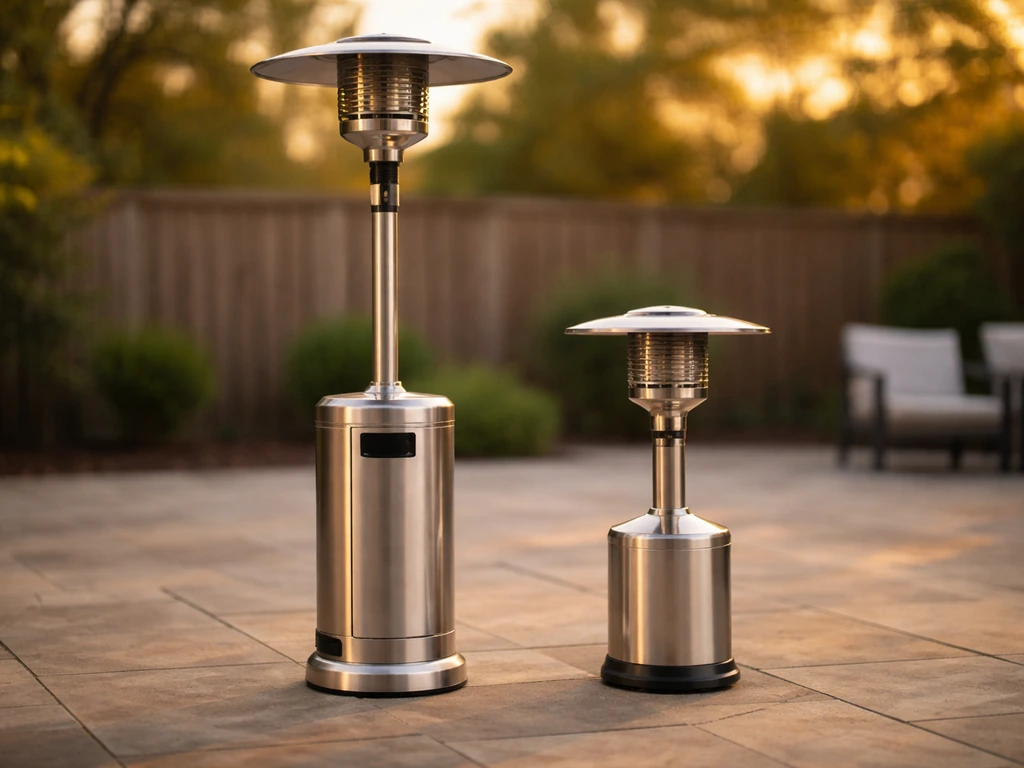
Cuisinart makes three patio heaters worth knowing about: the COH-300 (a 47,000 BTU floor-standing propane tower), the COH-400 (a 38,200 BTU overhead "perfect position" propane heater), and the COH-500/COH-514 (11,000 BTU portable tabletop propane units). If you have a full-sized patio of 150 to 200 sq. ft. and want serious heat output, the COH-300 is the one to get. If you want directional overhead warmth with a slick built-in table, the COH-400 is worth considering. And if you just need something compact for a balcony, small deck, or camping trip, the tabletop COH-500 or COH-514 does exactly that job without any fuss.
Cuisinart Patio Heater Reviews: Propane vs Tabletop Guide

Willa Brennan
23 May 2026
Quick verdict on the best Cuisinart patio heaters
Cuisinart's lineup is focused and well-targeted. There's no bloated catalog to sort through, which actually makes choosing easier. Here's where each model lands:
- COH-300 (47,000 BTU, floor-standing tower): Best for medium to large patios up to 200 sq. ft. Great all-rounder with push-button ignition, weighted base, and wheels for repositioning.
- COH-400 (38,200 BTU, overhead swivel arm): Best for seating areas where you want heat directed downward from above. The adjustable arm and built-in stainless table are genuinely useful features.
- COH-500 / COH-514 (11,000 BTU, tabletop): Best for small spaces up to 30 sq. ft., balconies, patios with limited floor space, or anyone who needs a heater they can carry to different spots. Runs on a 1-lb propane cylinder or a 20-lb tank with an optional regulator.
None of these are budget mystery-brand heaters. Cuisinart has a real reputation for outdoor cooking equipment, and that quality control carries over into their heater lineup. That said, they're not the cheapest option on the market, so knowing which model fits your situation matters before you spend the money.
Propane Cuisinart heater reviews (COH-300 and COH-400)
COH-300: The stainless steel propane tower
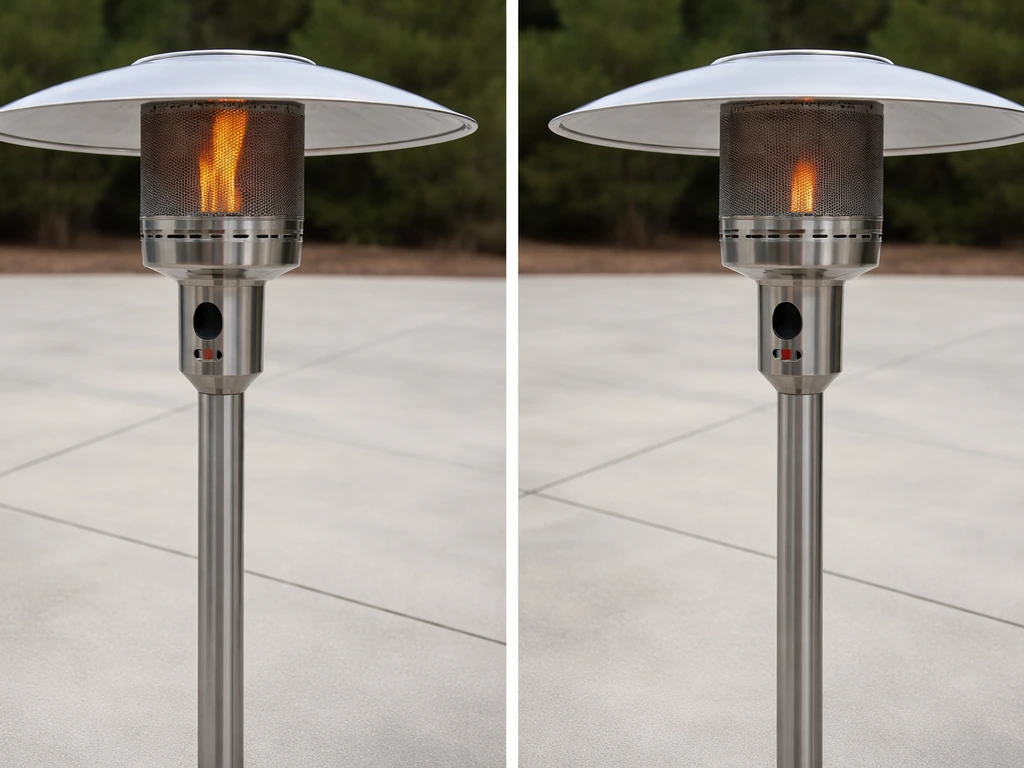
The COH-300 is a classic mushroom-style propane tower heater rated at 47,000 BTU. That's a strong output for a residential heater, and in real-world use it shows. On a 150 to 200 sq. ft. patio on a cool evening in the low 50s, you'll feel the warmth radiating out to roughly 8 to 10 feet from the unit. The manufacturer's claim of 200 sq. ft. is achievable in calm conditions, though wind will shrink that comfort zone noticeably, so factor that in if your patio is exposed.
Setup is straightforward. The COH-300 uses a standard 20-lb propane tank, which slides into the weighted base. The push-to-start ignition works reliably without needing a lighter, and "immediate warmth" isn't just marketing speak here. The flame catches fast and heat radiates within seconds. The base is weighted and includes wheels, so you can reposition it across a deck or move it to storage without straining your back. That combination of stability and mobility is genuinely useful.
On the safety side, the weighted base helps a lot with tip-over resistance on flat surfaces. This is a tall heater, so you do want it on level ground. It's not ideal for small covered patios where ceiling clearance is tight, since the radiant head sits at the top of an 88-inch-plus pole. For uncovered or partially covered outdoor spaces, it's a comfortable, capable heater.
COH-400: The "perfect position" overhead heater
The COH-400 takes a different approach. Instead of radiating heat outward in a 360-degree mushroom pattern, it has a swivel overhead arm that lets you angle heat directly where people are sitting. At 38,200 BTU it's slightly lower output than the COH-300, but because the heat is directed rather than dispersed, it can feel more efficient for targeted seating areas. The built-in stainless steel table integrated into the unit is a genuinely useful touch, giving you a place for drinks or a small lamp without needing another surface.
The 20-lb propane tank hides inside the base (Cuisinart calls this the "hidden tank" design), which keeps the look cleaner and the center of gravity low. If aesthetics matter to you, or if you're entertaining and don't want a propane tank on display, the COH-400 handles this better than most competitors. The directional heat is better suited to a linear seating arrangement, like a dining table or a row of chairs, than to a circular group gathering.
Portable tabletop Cuisinart patio heater reviews (COH-500 and COH-514)
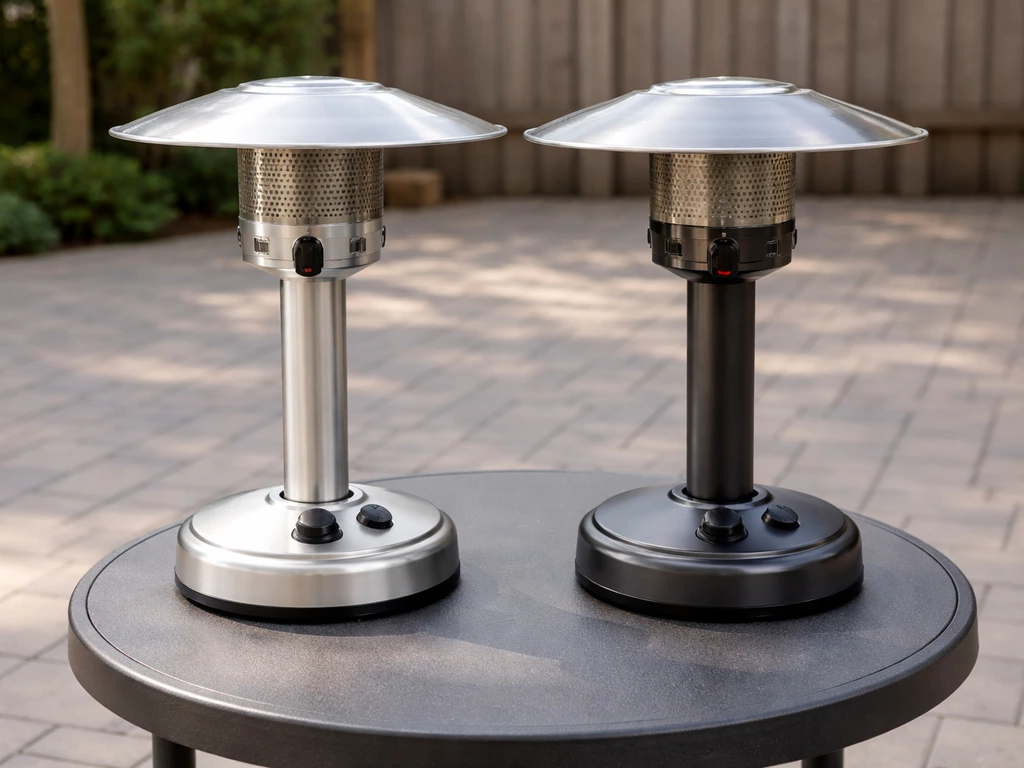
The COH-500 and COH-514 are essentially the same heater in different colorways (the COH-514 comes in dark gray). If you’re shopping specifically for tabletop models, these heater reviews can help you compare performance and value side by side tabletop patio heater reviews. Both are rated at 11,000 BTU and marketed to warm up to 30 sq. ft., which is honest and realistic. Think of it as a heater for the people immediately around a table, not a heater for a whole patio. At a 4-person bistro table, two people sitting closest to it will be comfortable, while the two farther away feel mild warmth at best.
The aluminum heat reflector on these units does a solid job of directing heat downward and outward rather than straight up. Cuisinart's Home Depot listing specifically calls this out, and it's accurate. The heat distribution feels more even than on cheaper tabletop heaters with simpler burner designs.
Ignition is dial-controlled, simple, and works well with the standard 1-lb propane cylinder. The cylinder screws directly into the base, so there's no hose to deal with. If you want longer run time, both models can connect to a 20-lb tank via an optional regulator and hose, which drops cost per hour significantly. That optional setup is worth buying if you plan to use the heater regularly rather than just on occasional weekend evenings.
Safety features on both tabletop models are genuinely important at this size. The anti-tilt safety switch automatically shuts the heater off if it tips over, and the burner screen guard prevents accidental contact with the flame. These features matter on a tabletop, where kids or pets or a bumped elbow could knock it over. For comparison, smaller tabletop heater reviews from other brands often skip the anti-tilt switch on cheaper models, so Cuisinart earns some credit here.
Material and build quality: stainless vs other finishes
The COH-300 is the model explicitly marketed as a "stainless steel propane patio heater," and the stainless steel emitter head and upper column are a real advantage in wet or coastal climates. Stainless resists rust and surface corrosion meaningfully better than painted steel or aluminum, and it looks better after a few seasons of outdoor exposure. If you live somewhere with regular rain, humidity, or salt air, this matters more than it might seem upfront. A painted steel heater that rusts in year two is not a bargain even if it cost less initially.
The COH-400's built-in table surface is also stainless, which holds up well to moisture and the occasional spilled drink. The base on both floor-standing models uses heavier gauge materials than the tabletop units, as you'd expect at their price points.
The COH-514 tabletop comes in dark gray, and while the finish is durable for a portable heater, it's a powder-coated or painted metal, not stainless. For a tabletop unit that's likely to be stored when not in use, this is acceptable. If you're leaving a floor-standing heater outside year-round, stainless construction is worth paying for. If you're bringing the tabletop inside between uses, the finish material matters less.
Cuisinart propane vs portable tabletop: which one fits your patio?
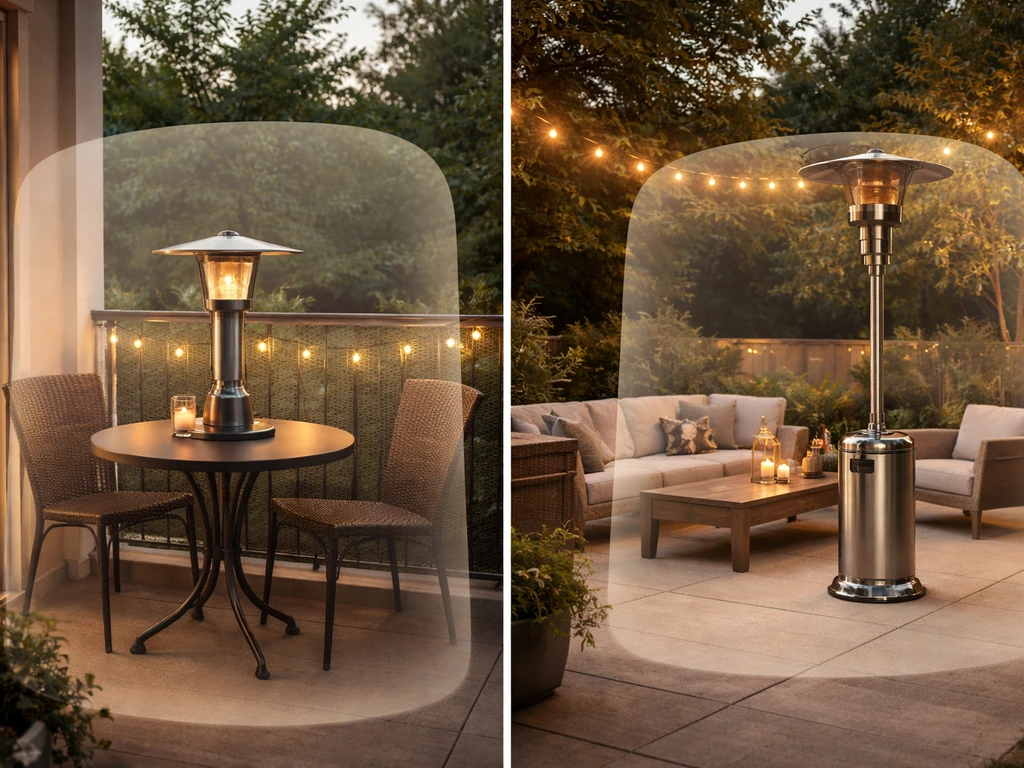
| Feature | COH-300 (Floor-Standing) | COH-400 (Overhead) | COH-500 / COH-514 (Tabletop) |
|---|---|---|---|
| BTU output | 47,000 | 38,200 | 11,000 |
| Heat coverage | Up to 200 sq. ft. | Directional (targeted seating area) | Up to 30 sq. ft. |
| Fuel | 20-lb propane tank | 20-lb propane tank | 1-lb cylinder (or 20-lb via optional regulator) |
| Portability | Wheeled base, not compact | Wheeled base, not compact | Fully portable, carry by hand |
| Best patio size | 150–200 sq. ft. | Seating areas / dining tables | Balcony or small patio under 30 sq. ft. |
| Covered vs open patio | Open or large covered (check clearance) | Open or partially covered | Either, great for small covered areas |
| Anti-tilt safety switch | Not listed | Not listed | Yes (both models) |
| Stainless steel finish | Yes (head and column) | Yes (table surface) | No (painted/powder coat) |
| Setup complexity | Low (assembly + tank connection) | Moderate (arm setup) | Very low (screw on cylinder) |
Here's the honest recommendation: if your patio is 100 sq. ft. or larger and you want to heat it as a whole space, get the COH-300. It's the most heat for the money in Cuisinart's lineup, the stainless construction is genuinely durable, and the push-button ignition and wheels make it easy to live with. If you have a defined seating area where directing heat overhead makes sense, the COH-400 is worth the premium for its directional capability and clean hidden-tank design. If you're working with a small balcony, a bistro setup, or you simply need something you can carry to different spots (including camping or tailgating), the COH-500 or COH-514 is the practical, no-fuss answer.
Buying checklist and sizing guide before you order
Before you click "add to cart," run through these questions to make sure you're getting the right heater for your specific situation.
- Measure your patio: Under 30 sq. ft. (small balcony, bistro table) go tabletop. 100 to 200 sq. ft. go floor-standing. The COH-300's 47,000 BTU is enough for spaces up to 200 sq. ft. in mild to moderate cold.
- Check ceiling clearance: The COH-300 and COH-400 are tall. If you have a covered patio with a low ceiling (under 10 feet), a floor-standing tower heater can be a fire hazard. In that case, the tabletop or a wall-mounted heater is safer.
- Think about wind exposure: Open, exposed patios lose heat fast. At 47,000 BTU the COH-300 handles light wind reasonably well, but in persistently windy spots even a powerful propane heater struggles. Adding a windbreak (pergola curtains, privacy panels) dramatically improves performance.
- Plan your fuel setup: All Cuisinart propane heaters run on propane. For the floor-standing models you need a standard 20-lb tank (not included). For the tabletop models, 1-lb cylinders are cheap and convenient for occasional use, but if you'll use it several nights a week, buy the optional regulator hose and connect to a 20-lb tank, which costs about half as much per hour of run time.
- Consider the optional regulator for tabletop models: The COH-500 and COH-514 both support a 20-lb tank connection via an optional regulator. This is not included in the box but is worth buying separately if you plan regular use.
- Budget for accessories: At minimum, budget for extra propane (one 20-lb tank per 10 to 15 hours of use on the floor-standing models, roughly 3 hours per 1-lb cylinder on the tabletop). A weatherproof cover for storage is also worth having.
- Check local regulations: Some apartment buildings and covered deck codes restrict propane heater use. Verify before buying if this applies to you.
Maintenance, operation tips, and real-world pros and cons
Getting the most out of your Cuisinart heater
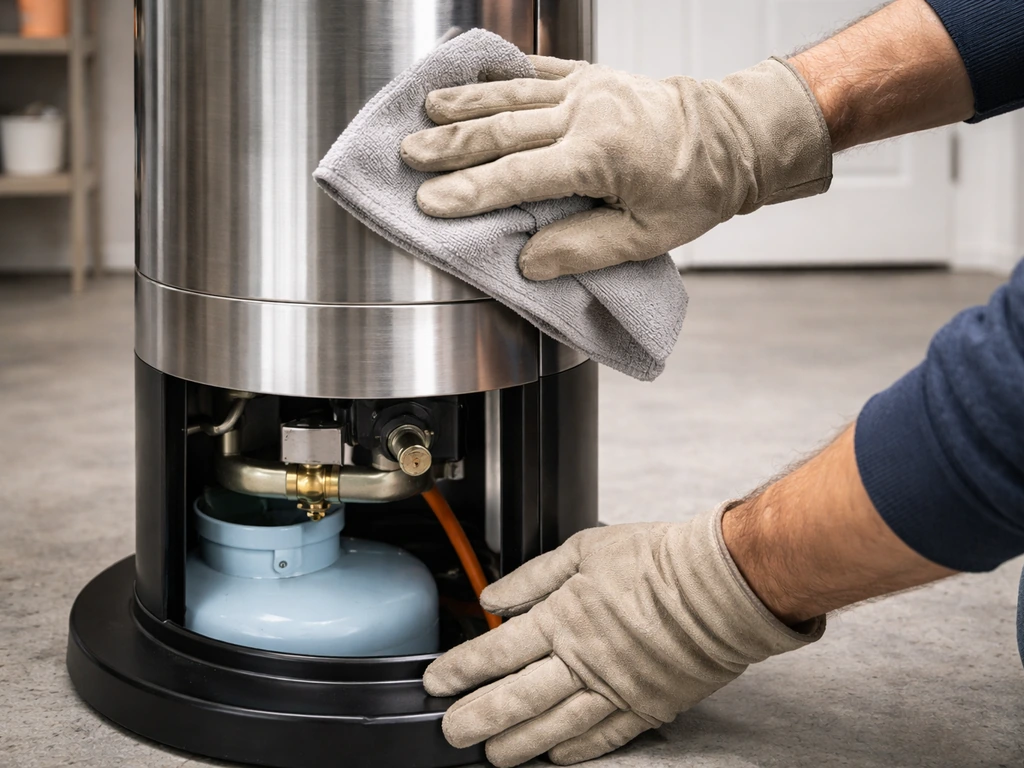
Propane heaters are low-maintenance compared to pellet or natural gas options, but a few habits make a big difference in longevity. After each season, wipe down all metal surfaces with a dry cloth and check the burner screen for spider webs or debris, which can block gas flow and cause ignition issues. This is the most common "my heater won't light" problem across all propane heaters, including Cuisinart's lineup. A quick look before the first use of the season saves a frustrating troubleshooting session.
For the floor-standing models, always connect the propane tank on a level surface, open the valve slowly, and press the igniter only after the gas has had a second to reach the burner. If it doesn't ignite in two or three tries, close the valve, wait 5 minutes to let any built-up gas disperse, then try again. Forcing repeated ignition attempts with the valve open is the main cause of minor flashback issues.
For the tabletop models, the anti-tilt switch is your friend and a reassurance. But to avoid false shutoffs, make sure the heater is on a flat, stable surface. A slightly wobbly table can trigger the tilt sensor without an actual tip-over, which is annoying. A rubber mat under the heater adds friction and helps.
When not in use, store the floor-standing heaters with the tank removed and use a fitted cover. Cuisinart's stainless components hold up well to moisture, but the base hardware and any painted components benefit from being covered between uses, especially in coastal or high-humidity environments.
Honest pros and cons from real-world use
| Model | Pros | Cons |
|---|---|---|
| COH-300 (47,000 BTU tower) | Strong heat output for the price; stainless head resists rust; easy push-button ignition; wheeled base for repositioning | Tall profile needs clearance; no good in very windy exposed spots without a windbreak; 20-lb tank not included |
| COH-400 (38,200 BTU overhead) | Directional heat is efficient for seating areas; built-in stainless table is genuinely useful; hidden tank looks clean | Lower BTU than COH-300; arm setup is slightly more involved; costs more for similar BTU to competitors |
| COH-500 / COH-514 (11,000 BTU tabletop) | Truly portable; fast setup with 1-lb cylinder; anti-tilt safety switch and burner screen guard included; aluminum reflector spreads heat evenly | Only heats 30 sq. ft., so don't expect it to warm a full patio; 1-lb cylinders get expensive with heavy use; optional regulator sold separately |
Overall, Cuisinart's patio heaters are well-made, honest about their capabilities, and backed by a brand that takes quality control seriously. If you're considering a larger, higher-output setup, you may want to check commercial patio heater reviews for brands built for heavier everyday use. For a full buying guide, see our best patio heaters reviews to compare top options by heat range and setup needs.
If you want to narrow down your choices, see these outdoor patio heaters reviews for more guidance on features, sizing, and performance. They sit in the mid-to-upper price range for residential patio heaters, and the build quality justifies that. If you're comparing against other outdoor patio heater brands in this category, the stainless steel construction on the COH-300 and the anti-tilt safety features on the tabletop models are genuine differentiators, not just marketing.
For anyone weighing tabletop options more broadly, the COH-500 and COH-514 compare favorably with other tabletop patio heaters in the same BTU class. And if you're deciding between Cuisinart's floor-standing models and commercial-grade heaters for a larger space, the COH-300 is more than enough for residential use, but commercial setups with 300-plus sq. ft. should look at higher-output units.
FAQ
How do I figure out the right Cuisinart model for my patio size, considering wind and cover?
Use the article’s sq. ft. targets as a baseline, then cut the effective coverage if your patio is exposed to steady wind or if you plan to run it under open sides. For the COH-300, the comfort radius drops noticeably in windy conditions, so a larger uncovered patio often needs the floor-standing unit even if the measured area looks close to 150 to 200 sq. ft.
Will the COH-400 heat a whole group, or is it only good for one side of the seating?
The COH-400 is designed for directional warmth using its swivel overhead arm, so people directly in the beam will feel heat more strongly than those outside it. If your seating is arranged in a full circle or wide semicircle, you may need to reposition the arm more often, or choose the COH-300 for more even 360-degree-style radiance.
What’s the practical advantage of the “hidden tank” design on the COH-400?
Beyond looks, hiding the tank lowers visual clutter during entertaining and can also make the heater feel more stable when viewed from the side because you are not dealing with an exposed tank hanging out from the base. If you are sensitive to propane-tank placement around dining areas, this is a meaningful day-to-day benefit.
How long will a 1-lb cylinder last on the COH-500 or COH-514?
It depends on the dial setting and weather, but tabletop models are best treated as short-session heaters. For predictable evenings, plan on using the 1-lb cylinder at lower to medium settings, and switch to the optional 20-lb tank setup if you want longer run time without repeatedly swapping cylinders.
Can I use the tabletop COH-500 or COH-514 on a slightly uneven table or patio furniture surface?
Avoid it. The anti-tilt system is there to shut the unit down if it tips, but it can also trigger on wobble or an out-of-level surface. Put the heater only on a flat, stable tabletop, and consider adding a rubber mat to reduce movement and false shutoffs.
What’s the correct ignition routine if the heater doesn’t light right away?
For the floor-standing COH-300 and overhead COH-400, open the tank valve slowly and allow gas to reach the burner before pressing igniter. If ignition doesn’t happen in a couple of attempts, close the valve and wait about 5 minutes before trying again, repeated quick tries with the valve open can create a flashback risk.
Why does my propane heater sometimes fail to light, and what should I check first?
The most common issue is blocked burner airflow from spider webs or debris on the burner screen. Check and clear the screen before first use each season, then confirm the gas line connection is secure and the tank valve is fully opened.
Is it safe to store a Cuisinart propane heater outside between uses?
Best practice is not to leave it exposed year-round, especially if you want maximum longevity. Store the floor-standing heaters with the tank removed and use a fitted cover. For coastal or high-humidity areas, covering painted or non-stainless components matters because corrosion can start even when the unit is “mostly protected.”
Do I need a cover for the COH-300 if it’s stainless, and what parts should I protect?
Stainless construction helps resist rust, but it does not fully protect the base hardware, joints, and any non-stainless elements from moisture and salt exposure. A cover still helps prevent debris buildup on the burner area and reduces corrosion on hardware, hinges, and any painted surfaces.
What’s the best way to clean these heaters without damaging them?
After use and once cool, wipe metal parts with a dry cloth to remove residue and dust, and inspect the burner screen for obstructions. Avoid soaking the unit or spraying water directly into the burner area, and don’t use abrasive cleaners that can scuff protective finishes.
Are the COH-500 and COH-514 truly interchangeable besides color?
They are marketed as the same tabletop model class and are intended for similar small-area heating, with the COH-514 mainly distinguished by a darker gray finish. If you are buying for performance, focus on BTU and safety features, but if you care about cosmetic matching and storage wear, the finish difference can matter.
When should I consider commercial-grade patio heaters instead of the COH-300?
If you need to heat a large, open area (often beyond typical residential coverage), residential units may be used at high output all night, which is more expensive and may not deliver uniform warmth. For larger spaces, moving up to higher-output commercial models can give better real-world coverage and reduce the number of heaters needed.