
The best stainless steel patio heater for most homeowners right now is a 304-grade propane standing heater in the 40,000-46,000 BTU range, like the Fire Sense 46,000 BTU Commercial model. It heats a 15-20 foot radius, requires no installation, and its 304 stainless construction holds up to rain and humidity far better than powder-coated steel alternatives. That said, "stainless steel" on a patio heater label doesn't always mean what you think, and picking the wrong size or fuel type for your specific patio setup is the most common expensive mistake shoppers make. Here's how to get it right.
Stainless Steel Patio Heater Reviews: Best Picks by Type

Willa Brennan
1 Jun 2026
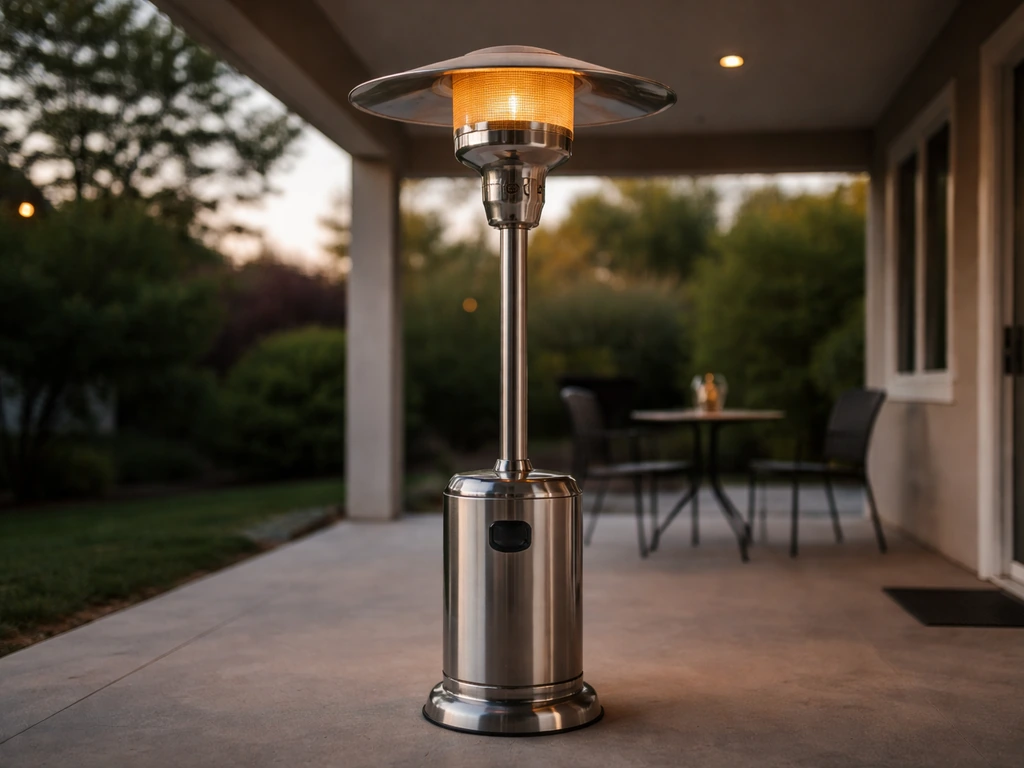
What "Stainless Steel" Actually Means on a Patio Heater
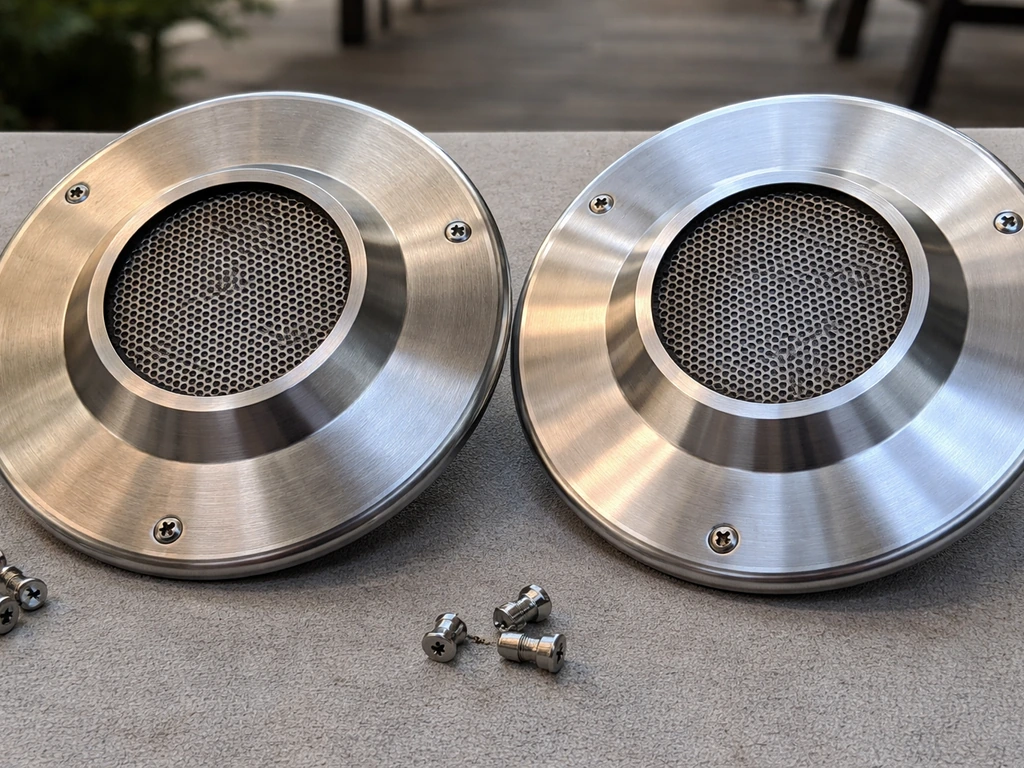
When a manufacturer calls their heater "stainless steel," pay attention to which parts they're talking about. On most mid-range and commercial-grade heaters, the term usually refers to the emitter head, hood cap, and burner assembly, while the pole, base, and reflector may be powder-coated steel or aluminum. That distinction matters a lot for long-term rust performance.
The two grades you'll see in the patio heater market are 304 and 316 stainless steel. Grade 304 is the industry standard for most residential and commercial outdoor heaters and handles rain, humidity, and general outdoor exposure very well. The Fire Sense commercial propane heaters, for example, specifically advertise 304 commercial-grade stainless steel construction. Grade 316 adds molybdenum to the alloy, which makes it meaningfully more resistant to chloride-driven pitting and crevice corrosion. If your patio is within a mile or two of the ocean, or you have a saltwater pool nearby, 316 is worth seeking out. For everyone else, 304 is more than adequate.
What you want to avoid is a heater marketed as "stainless" that only has stainless accents or trim while the structural components are plain steel with a coating. Those coatings chip and scratch over time, and once bare steel is exposed to moisture, rust follows quickly. Always read the full product description to see exactly which components are stainless, and look for the grade designation (304 or 316) rather than just the word "stainless."
Top Stainless Steel Patio Heater Picks by Fuel Type and Style
These picks are organized by the category most likely to match your setup. Each one was selected based on genuine stainless construction, verified heat output, and reliable safety features, not just brand recognition.
Best Propane Standing Heater: Fire Sense 46,000 BTU Commercial
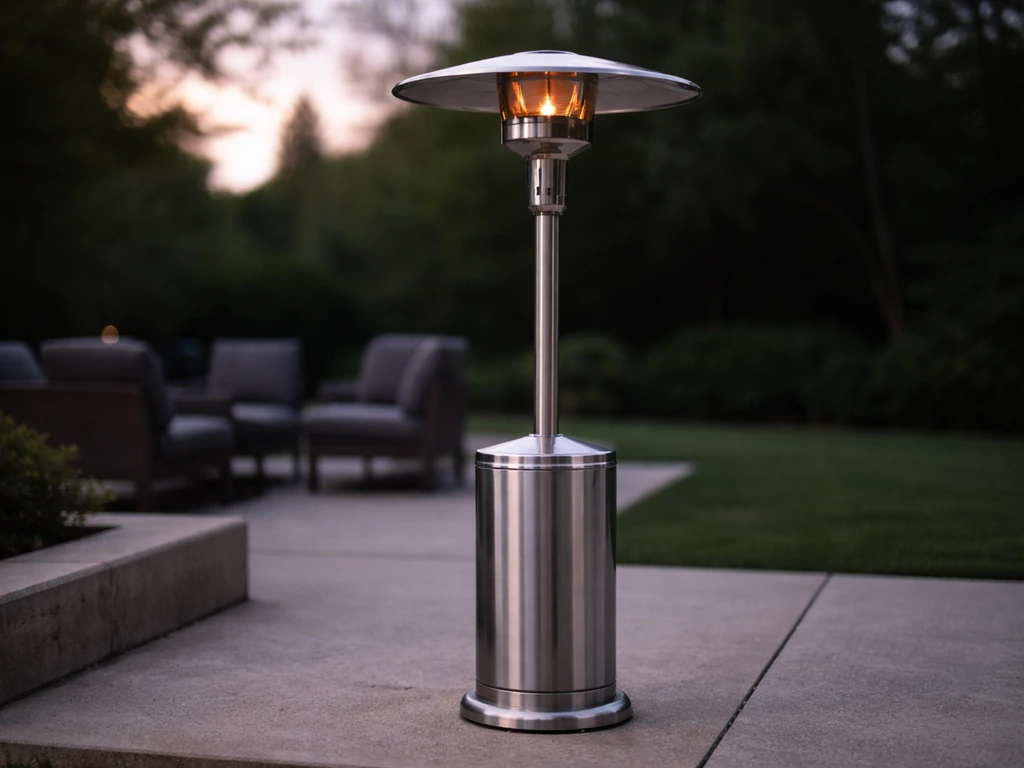
This is the workhorse recommendation for most homeowners. It's built from 304 commercial-grade stainless steel, puts out 46,000 BTU at full blast, and uses electronic ignition so you're not fumbling with a lighter in the dark. It heats a wide radius, sets up in about 20 minutes with no tools, and the commercial-grade build means it doesn't feel flimsy when the wind picks up. The reflector and hood cap are also stainless, so you're not getting a bait-and-switch on materials. It's a particularly strong choice for open uncovered patios where you need maximum heat throw.
Best Propane Tabletop Option: Fire Sense Stainless Steel Table Top Heater
If your patio is small or covered, a tabletop unit is often smarter than a standing heater. The Fire Sense tabletop model outputs 10,000 BTU and is rated to heat up to 1,000 square feet in optimal conditions, though realistically you'll feel comfortable in a 10-12 foot zone around it. It runs on a small 1 lb propane canister (or an adapter hose for a larger tank), and the stainless steel body keeps it looking clean through multiple seasons.
It's portable enough to move inside a garage in minutes. Tabletop heaters as a category are worth a deeper look if you're heating a small covered porch or dining area. If you're comparing similar units, these tabletop patio heater reviews can help you narrow down the best model for your space and fuel type tabletop heater.
Best for Larger Patios or Variable Heat: AZ Patio Heaters HLB-2400/2650 Series
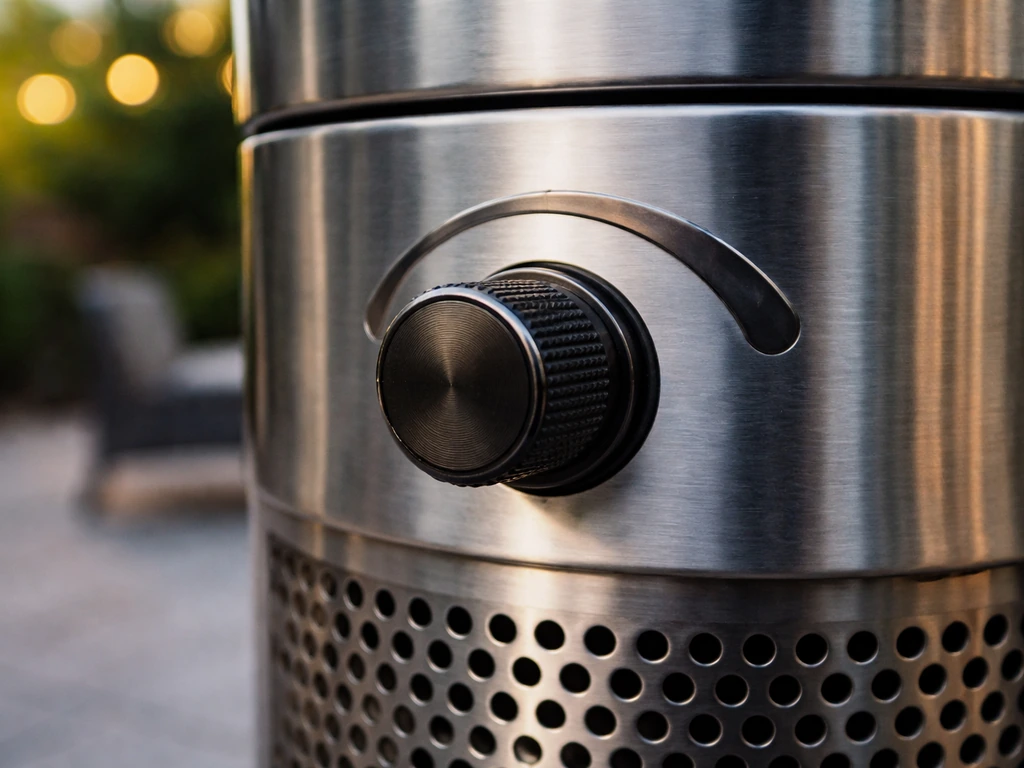
The AZ Patio Heaters HLB series earns a spot here because it's one of the few models with a genuinely adjustable output range: 25,000 BTU minimum up to 45,000 BTU maximum at 11 inches water column operating pressure. That range matters on cool evenings when you don't need to blast the full output. The burner is stainless steel, and the hood cap is also stainless per the manufacturer's manual. It's a solid choice if your evenings range from mild to cold and you want flexibility rather than a fixed-output unit.
Best Electric Infrared Option: Ouellet OCF Series
Electric infrared heaters like the Ouellet OCF are a completely different experience: no open flame, no fuel tank, no carbon monoxide risk. The OCF uses a stainless steel housing construction and complies with UL2021:2015 Ed.4 and C22.2 No.46:2013, which are the rigorous North American safety standards for infrared heaters. It also includes an automatic safety shutoff function. Electric infrared is the go-to choice for covered patios, screened rooms, and anywhere you'd otherwise worry about running a gas heater indoors. The trade-off is that you need a nearby 240V outlet in most cases, and you'll see the cost show up on your electric bill.
Best Natural Gas Option for Permanent Setups
If you have a natural gas line at your home and want a heater you'll use for years without ever buying propane, a hardwired natural gas standing heater is hard to beat on operating cost. Most commercial-grade standing heaters that come in stainless steel have natural gas variants available. Gas-fired outdoor infrared versions fall under ANSI Z83.26/CSA 2.37 certification, which means compliant models must achieve 100% shutoff of both main and pilot burner gas on flame failure. That's the certification to look for on the label. Natural gas heaters require a licensed plumber or gas technician to connect the line, so factor in that installation cost.
Performance and Coverage: Sizing the Heater to Your Patio
BTU is the most important number on a patio heater spec sheet, but it's also the most misunderstood. A BTU (British Thermal Unit) measures heat energy output per hour. More BTU means more heat, but it doesn't automatically mean more comfort, because heat distribution pattern matters just as much.
Standing mushroom-style propane heaters radiate heat outward in a cone-shaped pattern from the top emitter. At 46,000 BTU, you'll feel meaningful warmth within about 15-20 feet of the unit on a calm night. Wind is the biggest enemy of that coverage. Even a 10 mph breeze can reduce your effective comfort zone by half. For windy patios, directional infrared wall-mount or ceiling-mount heaters do a much better job because they point heat directly at seated people rather than into the air.
| Heater Type | Typical Output | Realistic Coverage | Best For |
|---|---|---|---|
| Propane Standing (full-size) | 40,000-46,000 BTU | 15-20 ft radius (calm conditions) | Open patios, gatherings |
| Propane Tabletop | 10,000 BTU | 8-12 ft radius | Small patios, covered dining areas |
| Electric Infrared | 1,500-4,000W (5,100-13,600 BTU equiv.) | Directional 10-15 ft zone | Covered patios, screened rooms |
| Natural Gas Standing | 40,000-50,000 BTU | 15-20 ft radius (calm conditions) | Permanent installations |
| Natural Gas Infrared Patio Heater | 25,000-45,000 BTU | Directional or wide radiant zone | Commercial, covered structures |
A common rule of thumb: for every 100 square feet of open patio space, you want roughly 5,000-6,000 BTU of propane output under calm conditions. For covered or enclosed spaces, you can scale that down by 20-30% because heat doesn't escape upward as readily. Covered patios also make a strong case for electric infrared since ventilation is already reduced and you eliminate any CO concern entirely.
Safety, Durability, and Weather Resistance
Safety Features to Look For
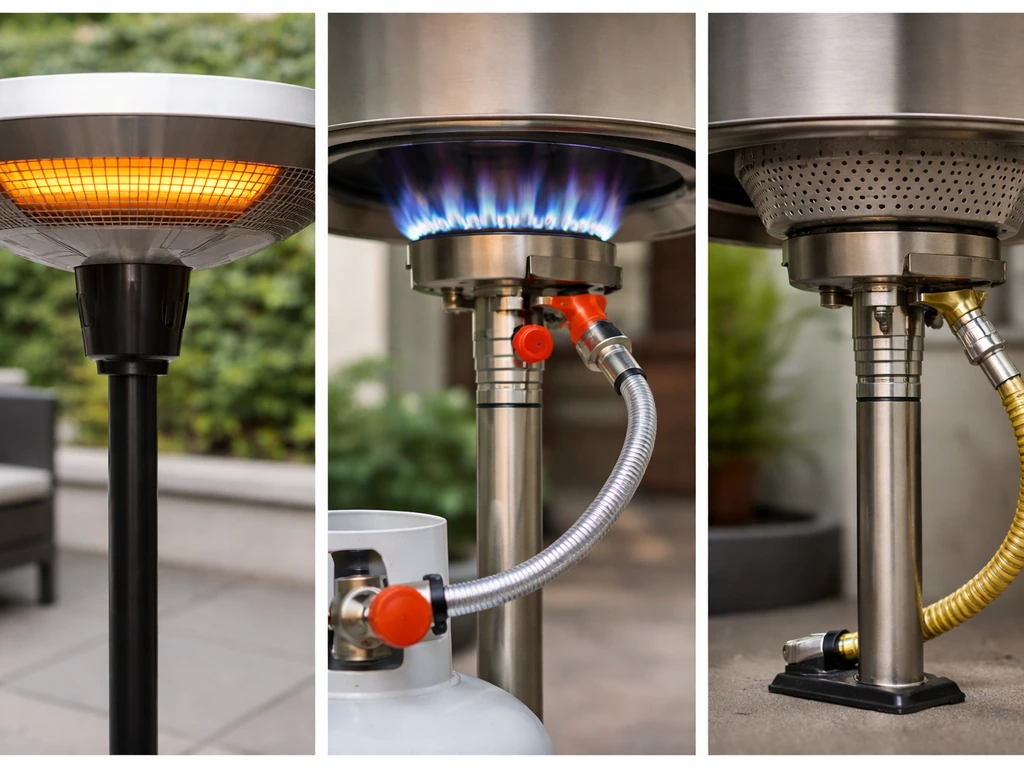
The two safety features that matter most on propane patio heaters are a thermocouple (or ODS pilot) and an anti-tilt shutoff. The thermocouple senses whether the flame is actually lit. If the flame blows out in the wind, it shuts off the gas automatically instead of letting it vent into the air. The tilt switch is a physical device that cuts the gas supply if the heater tips past a safe angle.
Wano Co explains that a tilt switch is a safety device designed to cut gas if the heater tips or tilts beyond a safe angle tilt switch is a physical device that cuts the gas supply if the heater tips past a safe angle. On a standing heater that can be bumped by a guest or knocked by wind, that's genuinely important. Look for both features on any propane model you consider.
For placement, the general guidance from fire safety authorities is to maintain at least three feet of clearance vertically and two feet horizontally from any combustibles. Keep the heater at least five feet from any exit or doorway. Standing heaters should never go under a low overhead structure, canvas umbrella, or pergola roofing unless the heater is specifically rated for covered outdoor use and you've confirmed the clearance requirements in the manual.
For electric infrared heaters, look for UL-listed and CSA-certified models. The Ouellet OCF, for instance, carries both UL2021:2015 and C22.2 No.46 compliance, which covers heating elements, housing, and the automatic safety shutoff. Always verify the certifications are current and not just marketing language.
Rust, Corrosion, and Long-Term Weather Performance
Genuine 304 stainless steel will survive years of rain, snow, and humidity without visible rust under normal residential conditions. The areas most likely to show surface discoloration first are the joints, welds, and any hardware (bolts, screws, mounting brackets) that use a different metal. Water pooling in those joints accelerates galvanic corrosion. Rinse the heater periodically, dry off standing water after rain, and those weaker points will last much longer.
If you're in a coastal environment, 316 stainless steel is worth the premium. The chloride resistance difference between 304 and 316 is significant when salt air is involved. For everyone else, 304 performs well and is the more common (and more affordable) option in the market.
Electric vs Propane vs Natural Gas vs Pellet vs Infrared: Honest Pros and Cons
| Fuel Type | Stainless Models Available | Operating Cost | Installation | Covered Patio Safe? | Best Use Case |
|---|---|---|---|---|---|
| Propane | Yes (304 grade common) | Moderate (~$1-2/hr at full output) | None (portable) | No (needs ventilation) | Open patios, versatile placement |
| Electric Infrared | Yes (stainless housing common) | Low-moderate (depends on rate) | Needs outlet (240V often required) | Yes | Covered patios, screened rooms |
| Natural Gas | Yes (same bodies as propane) | Low (cheapest per BTU) | Requires licensed gas connection | Check model rating | Permanent outdoor kitchens, patios |
| Pellet | Limited stainless options | Low (pellets are cheap) | Moderate (needs ash management) | Yes (in rated units) | Decorative/ambiance setups |
| Gas Infrared (ANSI Z83.26) | Yes (stainless components common) | Low-moderate | Requires gas line | Yes (rated for covered use) | Covered structures, commercial patios |
Propane is the most flexible starting point. You buy the heater, connect a standard 20 lb tank, and you're heating within 20 minutes. The downsides are fuel cost at scale (a 46,000 BTU heater burns through a 20 lb tank in roughly 8-10 hours at full output) and the fact that you should never run a propane heater in an enclosed or semi-enclosed space due to carbon monoxide buildup risk.
Electric infrared flips those trade-offs: no CO risk, no fuel to buy, but you're tied to a power outlet. Natural gas is the cheapest to operate per BTU once installed, but the installation cost and permanence make it a bigger upfront commitment. Pellet heaters are more of an ambiance play than a primary heat source, and truly stainless pellet options are limited. For covered commercial spaces and outdoor restaurant patios, certified gas infrared heaters under ANSI Z83.
26/CSA 2. 37 are the professional standard.
Installation, Operating Costs, and Keeping It Looking Good
Installation
Propane standing heaters are as close to zero-installation as outdoor appliances get. You assemble the pole sections, attach the emitter head, connect a standard POL or QCC1 fitting to a propane tank, and follow the lighting instructions. Most quality models like the Fire Sense commercial unit take 20-30 minutes. Natural gas heaters require a gas professional for the line connection, and you'll need a permit in most jurisdictions. Electric infrared heaters often need a dedicated 240V circuit if they're higher wattage, which means an electrician if you don't already have one at your patio.
Operating Costs
A 46,000 BTU propane heater running at full output burns about 3.5-4 lbs of propane per hour. At current propane prices around $3.50-4.00 per gallon (roughly $0.40-0.45 per lb), that's about $1.40-$1.80 per hour of full-power heating. Running at half output cuts that nearly in half. Electric infrared at 4,000W costs roughly $0.50-0.75 per hour at average residential electricity rates. Natural gas typically runs $0.50-0.80 per hour at full output, making it the most economical option for frequent users who have the line in place.
Cleaning and Maintenance
Stainless steel heaters are easier to maintain than coated alternatives, but they still need some attention. If you are shopping for a Cuisinart patio heater, these Cuisinart patio heater reviews can help you compare comfort, coverage, and reliability before you buy. After each season, clean the stainless surfaces with a mild stainless steel cleaner or diluted dish soap and a soft cloth, wiping in the direction of the grain to avoid scratching.
Pay attention to the burner area: debris, spider webs, and insect nests can partially block the burner orifice and cause uneven flames or ignition failures. A can of compressed air and a soft brush handle that job easily. Don't use steel wool or abrasive scrubbers on stainless or you'll scratch the surface and open it up to corrosion.
Winter Storage
Even the best stainless steel heater benefits from a good weatherproof cover during winter months or extended periods of non-use. Disconnect and store any propane tank separately in a sheltered outdoor area (never indoors). Store the heater upright in a garage or shed if possible. If you're leaving it outside, a fitted cover with a ventilation grill at the base prevents condensation buildup inside the emitter head. A cover also keeps spiders and insects out of the burner, which is one of the most common causes of ignition problems when heaters are brought back out in spring.
How to Choose the Right One: Quick Checklist and Mistakes to Avoid
Use this checklist before you buy. These are the same questions worth asking whether you're looking at a full commercial standing model or a compact tabletop unit.
- What is my patio size and is it covered or open? (Covered patios should default to electric infrared or a certified covered-use gas model.)
- How windy is my yard? (If exposed and breezy, directional infrared beats a standing propane heater for effective heat delivery.)
- Do I have a natural gas line, and am I willing to pay for a licensed installation? (If yes, natural gas is cheapest long-term.)
- Which parts are actually stainless steel on the models I'm comparing? (Ask for the grade, 304 or 316, and which components specifically.)
- Does the model have both a thermocouple flame-out sensor and a tilt-switch shutoff? (Non-negotiable for propane.)
- Is it UL-listed and/or CSA-certified? (Check for current certifications, not just brand logos.)
- What is my realistic budget for operating costs per season, not just purchase price?
- Do I have space to store it covered in winter, or do I need a particularly weather-hardy build?
Common Buyer Mistakes
- Buying by BTU number alone without checking the heat pattern. A 46,000 BTU mushroom heater in a windy open yard often loses to a 4,000W directional infrared in a covered patio for perceived warmth.
- Assuming "stainless steel" means the whole heater. Read the product description carefully to find out which components are actually stainless versus powder-coated.
- Running a propane or natural gas heater in a covered screened porch or semi-enclosed patio. Carbon monoxide builds up in low-ventilation spaces. Use electric infrared in those situations.
- Placing the heater centrally at a dining table and expecting even warmth for everyone seated around it. Mushroom-style heaters heat from above and outward; guests sitting at the edges feel significantly less heat.
- Skipping the cover at the end of the season and then wondering why the igniter won't fire in spring. Insects and debris blocking the burner is the most common repair call.
- Ignoring clearance requirements and putting a standing heater under a canvas umbrella or low pergola roof.
- Buying the cheapest "stainless" heater without checking if it's actually 304-grade or just a steel heater with stainless-look accents.
If you're still narrowing down the field, the broader outdoor patio heater category has more options across different materials and styles, and commercial-grade heaters are worth a look if you're running a restaurant patio or hosting large regular gatherings. If you want to compare options quickly, commercial patio heater reviews can highlight which models have the best real-world heat output and durability commercial-grade heaters.
If you want a quick starting point, these best patio heaters reviews can help you compare top picks by fuel type and coverage outdoor patio heater. For small spaces, the tabletop category specifically covers proportionally sized options that are often easier to move and store. Your ideal pick comes down to matching the fuel type, output, and verified stainless construction to your actual space and how often you'll use it, not just the marketing description on the box.
If you want to compare models side by side, outdoor patio heaters reviews can help you spot differences in heat throw, build quality, and reliability.
FAQ
How close do I need to be to feel real heat from a 40,000 to 46,000 BTU stainless propane patio heater?
For a typical 40,000-46,000 BTU stainless propane standing heater, you should plan for about a 15-20 foot comfort zone on calm nights, then reduce that distance noticeably if you sit perpendicular to prevailing wind. If your patio layout has people along one side, directional infrared units often feel warmer than a higher-BTU mushroom heater because they send heat straight at the seating area instead of dispersing it into open air.
Can I use a stainless propane patio heater under a pergola or umbrella?
Yes, but only if it is explicitly rated for the conditions. Never assume “stainless” means “covered-safe.” You must confirm clearance from combustibles in the manual and ensure the model is designed for installation near overhead structures, because reflector temperature and burner proximity requirements can differ from open-patio setups.
What are the biggest signs that a “stainless steel” patio heater is not truly stainless?
If a heater is “stainless” only for trim or an outer shell, it may still rust at the welds, burner mounting points, or structural frame once the coating chips. Look for 304 or 316 wording tied to specific components like the emitter head, hood cap, and burner assembly, then check whether the description names any other metals for the base, pole, or hardware.
Is 316 stainless really worth the extra cost for coastal patios?
If you want maximum long-term resistance to salt air, choose 316 specifically for the emitter and relevant exposed parts, not just general labeling. The premium usually pays off near the ocean or around saltwater pools because chloride-driven pitting and crevice corrosion can start in joints and hardware faster than on inland patios.
If my propane stainless heater won’t ignite consistently, what should I check first?
Set a timer and test at your normal seating time. If ignition is inconsistent, the most common causes are clogged burner orifice from debris, insect nests near the burner, or a failing thermocouple or ODS pilot that does not sense flame properly. Cleaning the burner area and verifying both safety features are functioning can prevent repeated troubleshooting.
Can I use BTU alone to size a patio heater, or is there a better method?
Not exactly. The best way to avoid overbuying is to match BTU to square footage and reduce for wind and open layout. As a practical adjustment, if your space is open and breezy, consider using fewer people per “comfort zone” distance, or upgrade to directional infrared rather than simply buying a higher-BTU mushroom model.
Is it ever okay to run a propane patio heater under a covered area if I keep the space “mostly open”?
For propane, an enclosed or semi-enclosed patio (even with openings) is a high-risk situation because carbon monoxide can accumulate. If you have limited ventilation, electric infrared or a properly installed natural gas heater with professional connection is usually the safer direction, since you eliminate the open-flame fuel source.
If I mainly heat for mild evenings, should I choose a heater with adjustable output?
Yes, and it can matter. Many heaters have multiple “outputs” or adjustable controls, but the real question is how stable the flame remains at low settings. If you choose an adjustable-output model, confirm the minimum BTU rating and whether it includes safety shutoff that still works correctly when operating at reduced output.
How should I cover and store a stainless patio heater during winter to prevent corrosion?
After cleaning, let it dry completely and avoid sealing it in a way that traps moisture. A vented cover that prevents condensation buildup at the base helps, especially if your weather includes frequent rain. Also, keep the heater upright during storage so water does not pool in welds and joints.
What’s the most common reason electric infrared patio heaters feel weak compared to their wattage rating?
Electric infrared models can be very efficient, but they depend heavily on line of sight to seated people. If furniture is behind walls, under overhangs that block radiant paths, or far from the unit, you may feel less warmth than the wattage suggests. For smaller covered areas, directional placement and mounting height can matter more than pushing wattage.
If I have a natural gas line, what certification details should I look for on gas patio heaters?
Yes, but it changes the decision. Gas infrared with the right ANSI Z83.26/CSA 2.37 certification is designed to shut off correctly on flame failure, while many cheaper or uncertified units may not meet the same performance standard. If you are converting from propane, also confirm the fuel conversion option or that you are not mixing components intended for different gas types.