
A tabletop patio heater is the right pick when you want warmth right at the table without hauling out a full-size standing heater. The best electric infrared models for small patios and balconies in 2026 are the AmazonBasics Electric Tabletop Patio Heater (1,500W), the Infralia Retable infrared heater, and the Fire Sense Tabletop Propane Heater (10,000 BTU) for anyone who prefers gas. Each one works well for two to four people seated within four to six feet of the unit, and they're genuinely practical for balconies, small decks, and restaurant-style outdoor dining setups.
Tabletop Patio Heater Reviews: Best Picks for Small Patios

Willa Brennan
6 Jun 2026
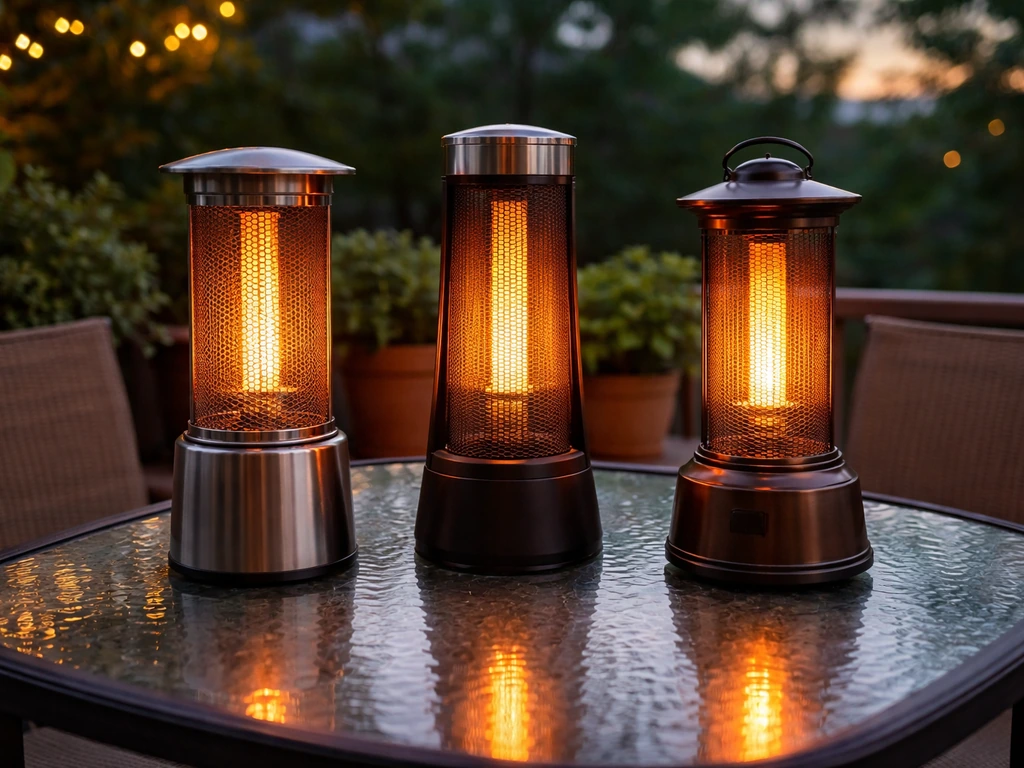
What a tabletop patio heater actually does (and where it works best)
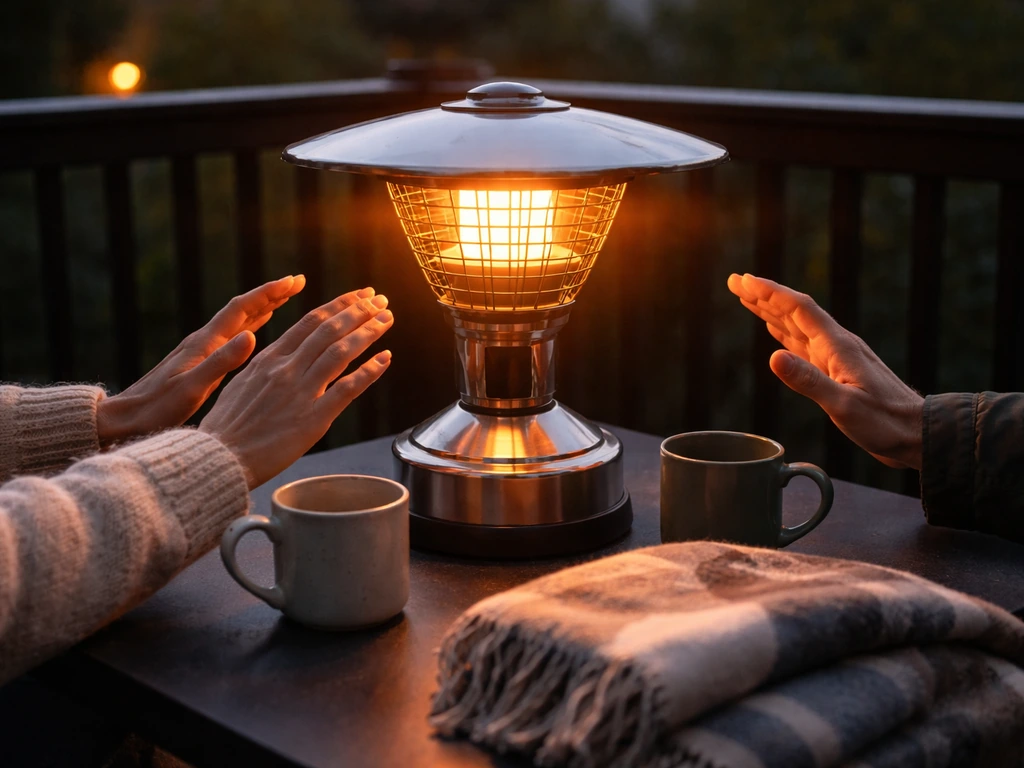
Tabletop patio heaters are blank" rel="noopener noreferrer">compact, ultra-portable radiant heaters designed to sit on or near a table and deliver warmth to a small group of people at close range. They're not meant to heat an entire patio, they're meant to heat the people sitting right around them, which is exactly what makes them useful in ways a big standing heater isn't.
They work best in situations like a small apartment balcony where a full-size floor heater would be impractical, an outdoor dining table on a covered patio, a bistro setup with two or three chairs, or a restaurant patio with individual tables. The key word there is 'covered' or 'semi-covered', tabletop heaters sit low and direct heat at people, so they're less affected by overhead wind than a tall mushroom-style heater, but they're still going to struggle in a fully open, gusty yard with no windbreak at all.
The reason they work outdoors at all comes down to the type of heat they produce. Infrared and radiant heaters warm objects and people directly through electromagnetic radiation, not by heating the surrounding air. That means a stiff breeze doesn't carry your warmth away the way it does with a convective space heater. If you've ever sat near a campfire in the wind and noticed the side facing the fire stays warm, that's the same principle at work.
Quick comparison: key specs that decide performance
Before jumping into specific models, here's a side-by-side look at the specs that actually matter when you're comparing tabletop patio heaters. Pay attention to heat output, coverage radius, power source, and safety features, those four factors will do more to decide whether a heater works for your setup than any marketing claim.
| Model | Power Source | Heat Output | Coverage Radius | Safety Features | Best For |
|---|---|---|---|---|---|
| Infralia Retable | Electric (corded) | ~1,200W | Up to 5 ft | 360° infrared, tip-over & overheat auto-shutoff | Covered patios, restaurant tables |
| AmazonBasics Electric Tabletop Heater | Electric (corded) | 1,500W | Up to 6 ft | Overheat protection, tip-over shutoff | Balconies, small decks |
| Fire Sense Tabletop Propane Heater | Propane (1 lb canister) | 10,000 BTU | Up to 7 ft | Tip-over shutoff, CSA certified | Off-grid patios, camping, no outlets |
| Campy Gear 2-in-1 Propane Heater | Propane (1 lb canister) | 4,000–10,000 BTU | Up to 9 ft | Tip-over shutoff, ODS sensor | Versatile use, mild to cold conditions |
| Bromic Tungsten Smart-Heat Electric | Electric (hardwired) | 2,000W | Up to 8 ft directional | IP55 weather rated, thermostat compatible | Permanent covered patio installs |
A quick note on BTUs vs watts: propane heaters are rated in BTUs (British Thermal Units) and electric heaters in watts. To roughly compare them, 1,000 watts is about 3,412 BTU/hr. So a 1,500W electric heater and a 10,000 BTU propane heater are in the same performance neighborhood, but the propane unit will feel more intense at close range because the flame element gets hotter.
Top tabletop patio heater picks: best options by use case
Rather than ranking these one through five, I've matched each model to the situation it actually handles best. If you want to narrow down the best option faster, read outdoor patio heaters reviews that compare heat output, coverage, and safety matched each model to the situation it actually handles best. That's a more useful way to shop than just picking a winner, because the best heater for a covered restaurant patio is different from the best one for a windy apartment balcony with no gas hookup. For more detailed comparisons and model-by-model recommendations, check our best patio heaters reviews before you buy.
Best for covered patios and restaurant-style dining: Infralia Retable
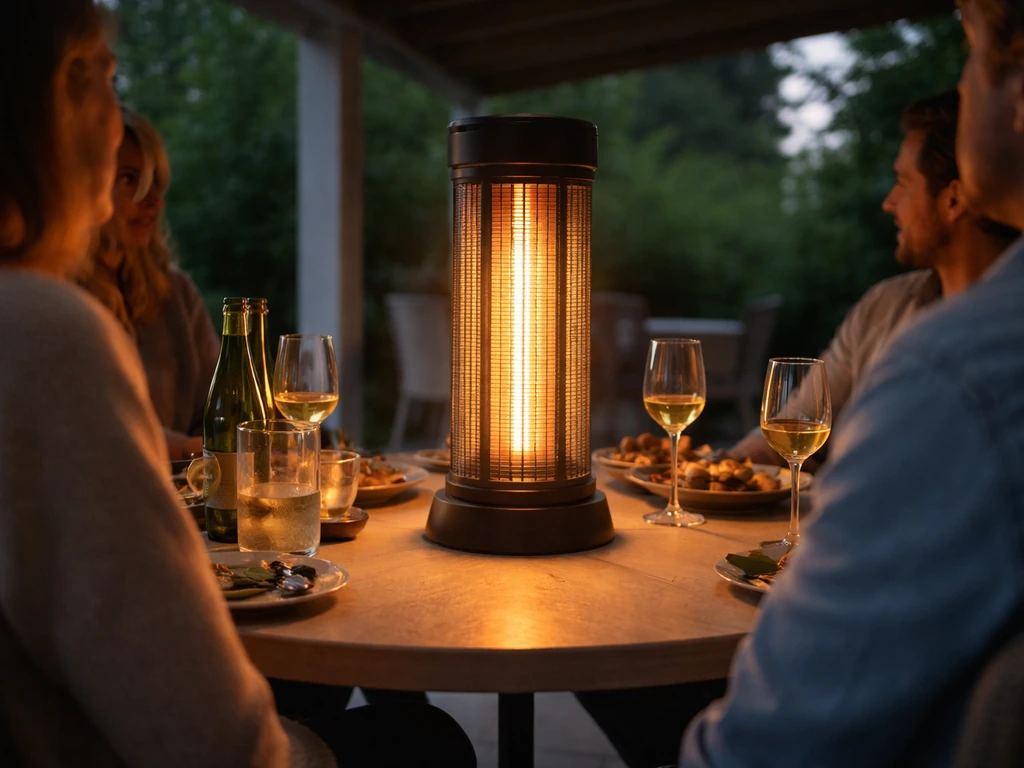
The Infralia Retable stands out because it emits heat in a full 360-degree pattern using short-wave infrared, which means everyone seated around a round or square table gets roughly equal warmth without anyone being stuck in the cold spot. It has an integrated sensor that shuts the unit off automatically if it overheats or gets knocked over, which matters a lot when it's sitting on a table near food and people. The design is also notably clean-looking, which is why you see it used in upscale restaurant patios across Europe. The main downside is that it's corded, so placement depends on where your outdoor outlet is.
Best budget electric pick for balconies: AmazonBasics Electric Tabletop Heater
If you're on a tight budget and have an outdoor outlet within reach, the AmazonBasics 1,500W tabletop heater delivers solid warmth for a surprisingly low price. It's a straightforward quartz infrared element in a compact tower design. You get tip-over shutoff and overheat protection, and the controls are simple enough that anyone can use it immediately. It's not the most attractive option, but for a small balcony or covered porch where you just need reliable heat for one or two people, it gets the job done. It won't outrun a cold, windy night, but for mild to moderate temperatures (45°F and above), it's very capable.
Best propane option for off-grid use: Fire Sense Tabletop Propane Heater
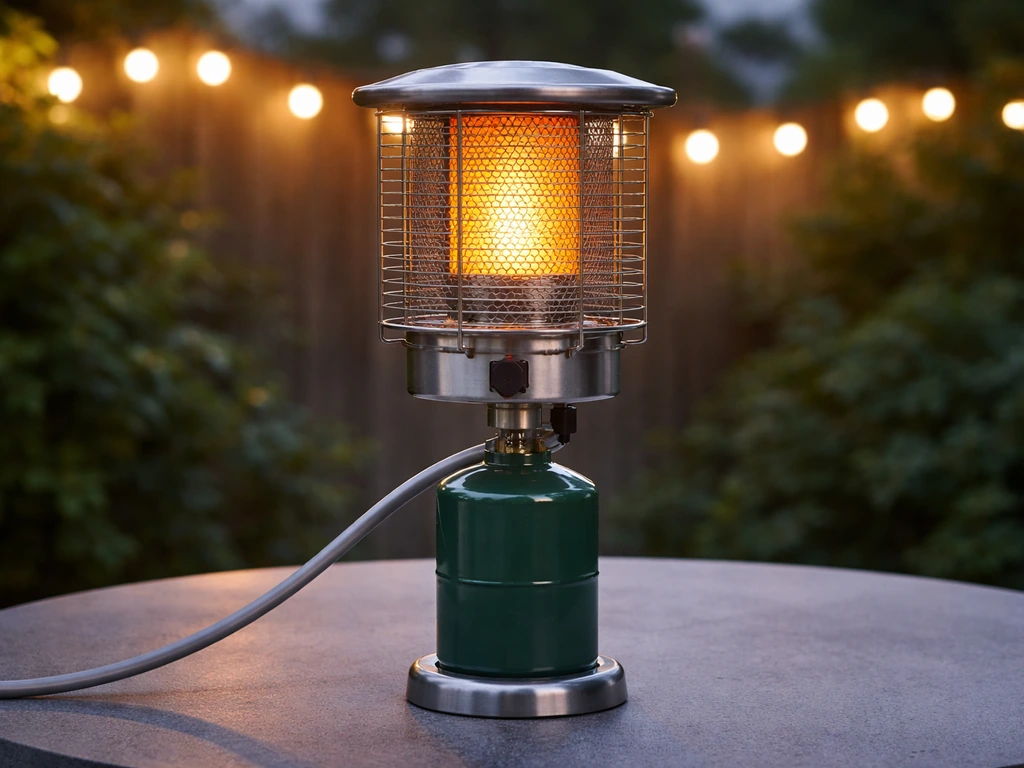
The Fire Sense runs on standard 1-pound propane canisters, which makes it genuinely portable, no cord, no outlet required. At 10,000 BTU it can push warmth out to about seven feet, which comfortably covers three to four people around a table. The CSA certification means it's been tested to actual safety standards, not just the manufacturer's claims. The tradeoff is ongoing fuel cost (a 1 lb canister lasts roughly one to two hours at full output) and the need to keep replacement canisters on hand. It's the go-to for camping, rooftop patios, or anywhere an outlet isn't practical.
Best for serious cold-weather use: Campy Gear 2-in-1 Propane Heater
The Campy Gear has a variable output from 4,000 to 10,000 BTU and can switch between tabletop and floor standing configurations. What sets it apart is the ODS (Oxygen Depletion Sensor) that will cut the heater off if oxygen levels drop, a critical feature if you're using it in an enclosed or semi-enclosed outdoor space. It also runs noticeably longer per canister at lower settings. If you live somewhere with genuinely cold fall and winter evenings (below 40°F), this is the model with the headroom to keep up.
Best for permanent covered patio installs: Bromic Tungsten Smart-Heat
Technically hardwired rather than plug-and-play tabletop, the Bromic Tungsten gets included here because people shopping tabletop heaters for a covered patio often graduate to this option once they realize they want something permanent. It's IP55 weather rated (meaning it can handle rain and dust), produces focused directional heat up to eight feet, and is compatible with smart thermostats. This is what commercial patio heater operators use. If you're outfitting a pergola or semi-permanent outdoor dining area and want something that will last years, this is worth the step up in price and installation complexity.
Infrared vs other compact heater approaches: what actually matters for you
Most tabletop patio heaters you'll encounter are infrared or radiant heaters, and that's deliberate, they're the only type that reliably works in open or semi-open outdoor spaces. Here's why: convective heaters (the kind that warm air and let it circulate) lose almost all their effectiveness outdoors because any air movement just carries the warm air away before it reaches you. Infrared heaters, by contrast, work like sunlight, they emit electromagnetic radiation that warms solid objects and people directly, regardless of what the air is doing around them.
Within infrared heaters, there are two main types worth knowing: short-wave (near-infrared) and medium-wave (far-infrared). Short-wave heaters produce a bright orange glow and heat up almost instantly, great for on/off use. Medium-wave heaters run cooler, take a minute or two to warm up, but produce a more even, gentle warmth with less glare. For tabletop use at a dining setting, medium-wave is often more comfortable because the element isn't blazingly bright at eye level.
Propane tabletop heaters produce radiant heat through a burner and reflector, which works similarly to infrared but with a visible flame element. They tend to feel more intense at very close range and have no dependency on electricity, which makes them more flexible locationwise. The tradeoff is that they require fuel management and produce a small amount of combustion byproduct, fine outdoors, but not suitable for any truly enclosed space.
| Heater Type | How It Works | Wind Resistance | Startup Time | Best Setting |
|---|---|---|---|---|
| Short-wave infrared (electric) | Heats objects/people directly via bright element | Good | Instant | Covered patios, balconies with outlets |
| Medium-wave infrared (electric) | Softer radiant heat, less glare | Good | 1-2 min | Dining tables, restaurant patios |
| Propane radiant | Radiant heat from burner + reflector | Good | ~30 sec | Off-grid, camping, outdoor events |
| Convective (electric) | Warms air and circulates it | Poor | Varies | Indoor or very enclosed outdoor only |
Sizing coverage: how far it reaches and how many you might need
The coverage numbers on tabletop heaters are almost always stated as a radius in ideal conditions (still air, moderate outdoor temperature). In real-world use, expect about 20 to 30 percent less than the stated coverage if there's any wind or if temps drop below 40°F. Here's a practical way to think about it: a heater rated for a six-foot radius will comfortably warm people sitting within four to five feet of the unit on a typical cool evening.
For a standard four-person outdoor dining table (roughly 36 to 48 inches across), one centrally placed tabletop heater with a 360-degree heat pattern is usually sufficient if the table is in a covered or semi-covered spot. If your table is larger (a six-person or eight-person setup) or fully exposed, you'll likely need two units positioned at opposite ends of the table, or you should be looking at a full-size standing patio heater instead.
- 2-person bistro table in a covered spot: one tabletop heater, any output level
- 4-person table, covered or semi-covered: one 360° infrared unit (1,200W+ electric or 10,000 BTU propane)
- 4-person table, open and windy: two units or upgrade to a standing patio heater
- 6-8 person table, any setting: two tabletop units or one commercial-grade standing heater
- Balcony with one or two chairs: one unit, placed at seating level nearby
One thing worth noting: tabletop placement height affects coverage. A heater sitting on a 30-inch dining table will direct heat at seated chest and shoulder level, which is exactly right. If you put the same heater on a low coffee table, the beam angle changes and coverage drops noticeably. Stick to standard dining height for best results.
Safety, weather resistance, and practical usage tips
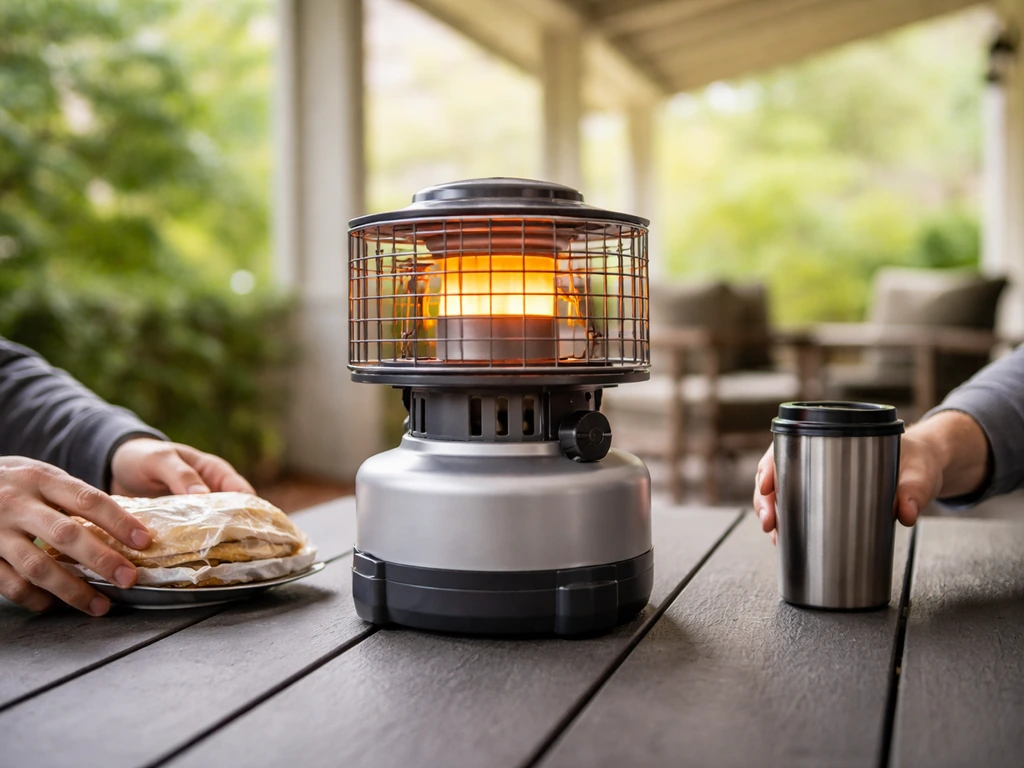
Tabletop heaters sit in close proximity to people, food, and drinks, so safety features aren't just nice-to-haves, they're essential. Here's what to check and what to actually do with these heaters once you have one.
Safety features to insist on
- Tip-over auto-shutoff: the heater cuts power within seconds if it falls or is knocked over — non-negotiable for tabletop use
- Overheat protection: shuts the unit off if the element gets too hot, usually triggered by blocked airflow or malfunction
- ODS (Oxygen Depletion Sensor): required for propane models used in semi-enclosed spaces
- Cool-touch housing: the outer casing stays at a safe temperature even when the element is running hot — important near kids
- CSA or ETL certification: third-party safety testing, not just manufacturer claims
Weather resistance: what you actually need
Most electric tabletop heaters are splash-resistant at best, they can handle light moisture but aren't designed to sit outside in the rain uncovered. Look for an IP rating if weather exposure matters to you: IP44 means protected against splashing water from any direction, IP55 means protected against water jets. For most covered patio use, IP44 is sufficient. If your heater will regularly be exposed to rain or heavy dew, IP55 or higher is worth the upgrade. Either way, bring electric models inside or cover them when not in use.
Practical day-to-day usage tips
- Place the heater in the center of the table for 360° models, or at one end angled toward seated guests for directional units
- Keep at least 18 to 24 inches of clearance above the heater and on all sides — never put it directly under an umbrella or low awning without checking the manufacturer's clearance requirements
- For propane models, inspect the canister connection before each use and never swap canisters near an open flame
- Run the heater for 5 to 10 minutes before guests sit down so the table area is already warm
- On windy evenings, position the heater upwind of seating so any heat drift moves toward rather than away from people
- Store electric units indoors when not in use; UV exposure and moisture degrade heating elements over time
- For propane, never use 1 lb camping canisters with a heater rated only for 20 lb tanks — check the compatibility in the manual
Your buying checklist before you order
Before you finalize any tabletop patio heater purchase, run through these questions. Each one can save you a return or a frustrating first use.
- Do I have an outdoor outlet within cord reach, or do I need a propane model? Most electric tabletop heaters have six-foot cords — measure the distance from your nearest outdoor outlet to where you want the heater.
- Is my patio covered, semi-covered, or fully open? Covered patios get the most out of any tabletop heater. Fully open and windy spaces need higher output or a windbreak.
- How many people am I heating? One or two people: any unit works. Three or four: go 360° infrared or 10,000 BTU propane minimum.
- Does the model have tip-over shutoff and overheat protection? Don't buy one that doesn't — especially for tabletop placement near people.
- What's the IP rating? If rain or heavy humidity is a factor, don't settle for anything below IP44.
- Is the unit CSA, ETL, or UL certified? Third-party certification means the safety claims have been independently tested.
- What's the refill or operating cost for propane models? At 1 to 2 hours per canister at full output, calculate whether the ongoing cost fits your use pattern or if an electric model makes more financial sense.
- Check the return policy and warranty before buying online — heating elements can fail in the first few uses, and a 30-day return window or one-year warranty gives you a safety net.
If you're still deciding between a tabletop model and a full-size standing heater, the honest answer is that tabletop heaters are best when portability, price, and small-group use are the priorities. For larger patios, commercial settings, or spaces where you want to heat more than six feet around you, a full-size outdoor patio heater or a hardwired commercial patio heater will serve you better. Tabletop heaters are a genuinely great tool for the right situation, they're just not a substitute for a bigger unit when the space demands it.
The bottom line: for most small covered patios, balconies, and outdoor dining tables, either the Infralia Retable or a 1,500W electric tabletop unit will handle the job well if you have power nearby. If you don't have an outlet, the Fire Sense propane tabletop heater is the most dependable gas option in this size class. Pick based on your power situation first, coverage needs second, and safety certification always.
FAQ
How close do people need to sit to get real warmth from a tabletop patio heater?
Treat the stated radius as optimistic. In typical cool conditions with even a little breeze, most users get best results within about 4 to 5 feet of the heater. If you routinely have taller guests (higher chest level) or the table is uncovered, plan for a shorter effective zone and consider two units for larger tables.
Can a tabletop heater replace a standing patio heater for a fully uncovered yard?
Usually no. Tabletop heaters are designed to warm people directly, but in fully open, gusty spaces you will lose comfort because the warm beam still has limited reach and you cannot block lateral wind. If guests will be spread farther than 6 feet from the unit, switch to a larger standing heater or add wind protection.
What’s the best choice if my patio has wind but also a ceiling overhang?
An infrared tabletop model performs better under a ceiling because wind speeds often drop near the table. Position it so the beam aims at seated torso height, keep the area around it clear of umbrellas or hanging fabric, and avoid placing it where people can block the front output with chairs or bags.
Are tabletop heaters safe to use near food, drinks, and table settings?
They can be, but only if you keep clearances and use the safety shutoff features. Infrared electric models should be placed so the hot element is not obstructed by paper menus or napkins, and propane models should not be set where the flame area could be bumped. Also never operate either type under a tablecloth that can touch the warm zone.
How should I choose between short-wave and medium-wave infrared for patio dining?
Short-wave is faster and brighter, so it works well when you want quick heat during brief use. Medium-wave is usually more comfortable at dining eye level, with less glare and a steadier feel over a longer session. If guests complain about brightness or sensitivity, medium-wave is the safer comfort bet.
Do I need to worry about cords or outlets outdoors with an electric tabletop heater?
Yes, placement depends on a safe outdoor power setup. Use only an outdoor-rated extension cord if you must extend power, keep the connection elevated and away from foot traffic, and avoid running cords across walkways where they can be stepped on or get wet. The cleanest solution is an outlet near the table and bringing the heater inside when not in use.
For propane tabletop heaters, how often will I need to replace canisters?
At full output, a 1-pound canister typically lasts about 1 to 2 hours. If you use the heater at lower settings or cycle it on only when guests arrive, you may stretch usage significantly. Plan for replacements based on your typical session length, not just the heater’s maximum BTU.
What safety feature matters most for tabletop heaters in a busy outdoor dining setup?
For electric models, tip-over shutoff and overheat protection are the big ones because tabletops invite bumps and accidental contact. For propane models, look for an oxygen depletion sensor if you are using it in semi-enclosed spaces. In all cases, keep the heater on a stable, non-tilting surface and do not place it where people can trip the base.
What should I check for weather resistance ratings, IP44 vs IP55?
IP44 is generally fine for covered patio use where you might get splashes from rain or sprinklers. IP55 is better when the heater regularly faces water jets, heavy dew, or frequent storms. If your tabletop heater is exposed even occasionally to direct rain, you should also plan to cover it or store it indoors between uses.
Why does coverage feel weaker than the number on the box?
Two common reasons are wind and temperature. Expect roughly 20 to 30 percent less real-world coverage when it’s gusty or below 40°F. Another overlooked factor is placement height, if the heater is on a low coffee table, the beam hits lower than seated torso level and people feel less warmth even if they remain within the claimed radius.
Can I mount a tabletop-style heater permanently, and is that still considered “tabletop” use?
Sometimes, but it becomes a different category. Hardwired units like the Bromic Tungsten are designed for semi-permanent setups and directional comfort, especially under pergolas. If you want a permanent solution, plan for professional installation, verify weather ratings, and confirm compatibility with your control setup.
What’s the most common setup mistake when using tabletop heaters?
Placing the heater at the wrong height or aiming it poorly. Tabletop heaters are most effective at standard dining height, around 30 inches, so the output targets seated chest and shoulders. On low surfaces, coverage drops noticeably, and guests end up feeling warm only at parts of their bodies.