
The Fire Sense Performance Series LPG patio heater is a freestanding propane-fueled tower heater that comes in 46,000 BTU and 50,000 BTU versions, stands around 89 inches tall, and is designed to heat an open outdoor space up to roughly 20 feet in diameter. If you're trying to figure out which model to buy, how to set it up safely, or why yours isn't lighting right, this guide covers all of it in plain terms. If you are also considering a Flame Pro pellet patio heater, compare how it heats and what fuel and cleanup look like before you decide Flame Pro pellet patio heater review.
Performance Series LPG Patio Heater Buying and Setup Guide

Willa Brennan
10 Jul 2026
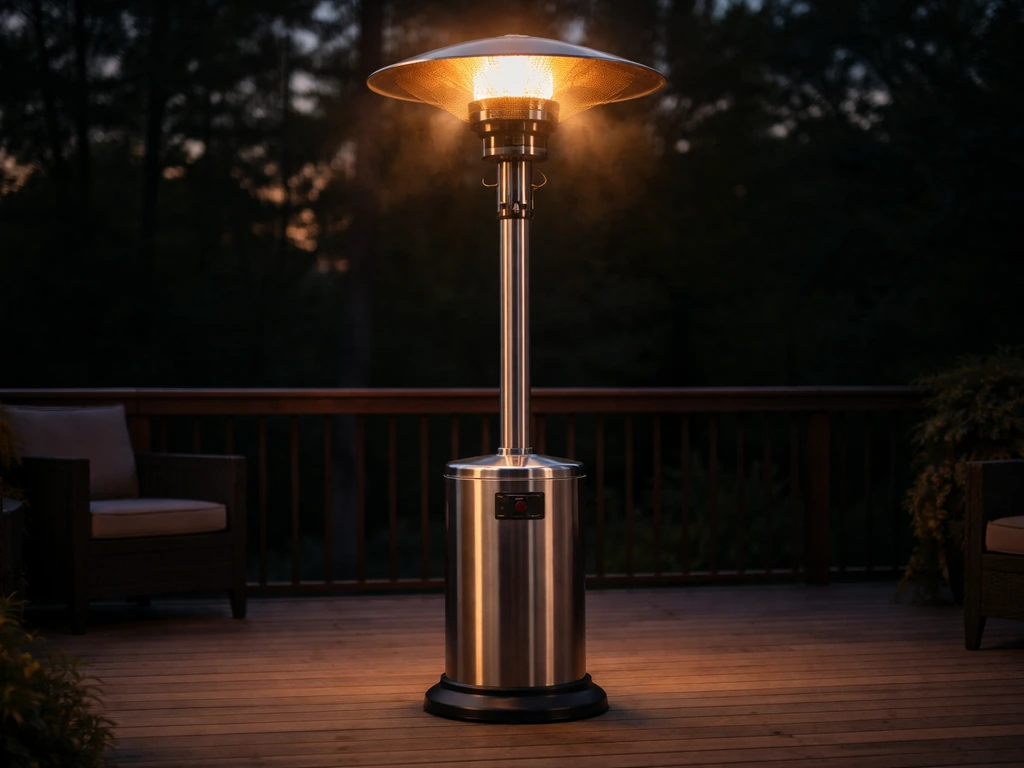
What the Performance Series actually is (and how LPG stacks up against other fuel types)
Fire Sense's Performance Series is a lineup of full-size freestanding patio heaters built around LPG (liquefied petroleum gas), which in the US means standard propane. The heaters in this family run on a 20 lb propane tank that sits inside the base, keeping the look clean and the setup portable. Model numbers in the documented range include 63713 through 63720, with the flagship model 01775 being the most widely referenced in the official user manual.
LPG propane is worth comparing to the alternatives before you commit. Propane delivers high heat output (up to 50,000 BTU in this series) with no electrical hookup needed, which makes these heaters genuinely portable. Natural gas heaters match that output but require a permanent gas line, so you can't move them around your patio. Electric heaters are cleaner and lower-maintenance but typically top out well below 5,000 watts, which is noticeably less punch in cold or windy conditions. Pellet heaters like the FlamePro models create a great ambiance but require fuel loading and more hands-on management. For most people who want serious heat, portability, and minimal setup, LPG propane is the practical sweet spot.
| Fuel Type | Typical Output | Portable? | Setup Complexity | Best For |
|---|---|---|---|---|
| LPG/Propane (Performance Series) | 46,000–50,000 BTU | Yes | Low (tank + regulator) | Open patios, flexibility, cold climates |
| Natural Gas | 40,000–50,000 BTU | No | High (gas line required) | Permanent outdoor kitchens |
| Electric | 1,500–5,000W (~5,000–17,000 BTU) | Yes | Low (plug in) | Covered patios, mild weather |
| Pellet/Wood | Varies | Limited | Medium (fuel loading) | Ambiance-focused setups |
Sizing your heater to your actual patio
Here's the practical rule from Lowe's buying guide that I keep coming back to: plan on about 20 BTUs per square foot of patio space. So a 250-square-foot open patio needs roughly 5,000 BTU at minimum, but a 50,000 BTU heater isn't overkill if you want real warmth in fall and early winter temperatures. The 50,000 BTU Performance Series model can cover a circle roughly 20 feet across (about 315 square feet) according to Home Depot's general guideline for full-size freestanding heaters. For full-size freestanding patio heaters, Home Depot offers a general guideline that a unit can cover about a 20-foot diameter area as a rule of thumb about a 20 feet across (about 315 square feet).
Covered patios are a different calculation. If you've got a pergola, awning, or covered porch trapping some heat overhead, a single heater can realistically warm 1,500 to 2,000 square feet of covered space. That sounds like a lot, but it assumes reasonable insulation from the cover above and limited wind exposure.
Wind is the factor most people underestimate. A completely open patio on a breezy evening loses heat fast. The Performance Series heaters have a mushroom-style reflector head that throws radiant heat downward and outward, which helps, but if your patio is very exposed, you'll feel the difference. In that case, positioning the heater close to where people are sitting matters more than raw BTU output.
| Patio Size | Recommended BTU | Performance Series Model Fit | Covered vs Open |
|---|---|---|---|
| Up to 150 sq ft | ~3,000–5,000 BTU | Overkill — consider tabletop | Either |
| 150–300 sq ft | ~5,000–15,000 BTU | 46,000 BTU model works well | Open or covered |
| 300–500 sq ft | ~15,000–25,000 BTU | 50,000 BTU model recommended | Open |
| 500+ sq ft | Multiple heaters | Two units or supplemental heating | Covered preferred |
Comparing Performance Series models: what the specs actually mean
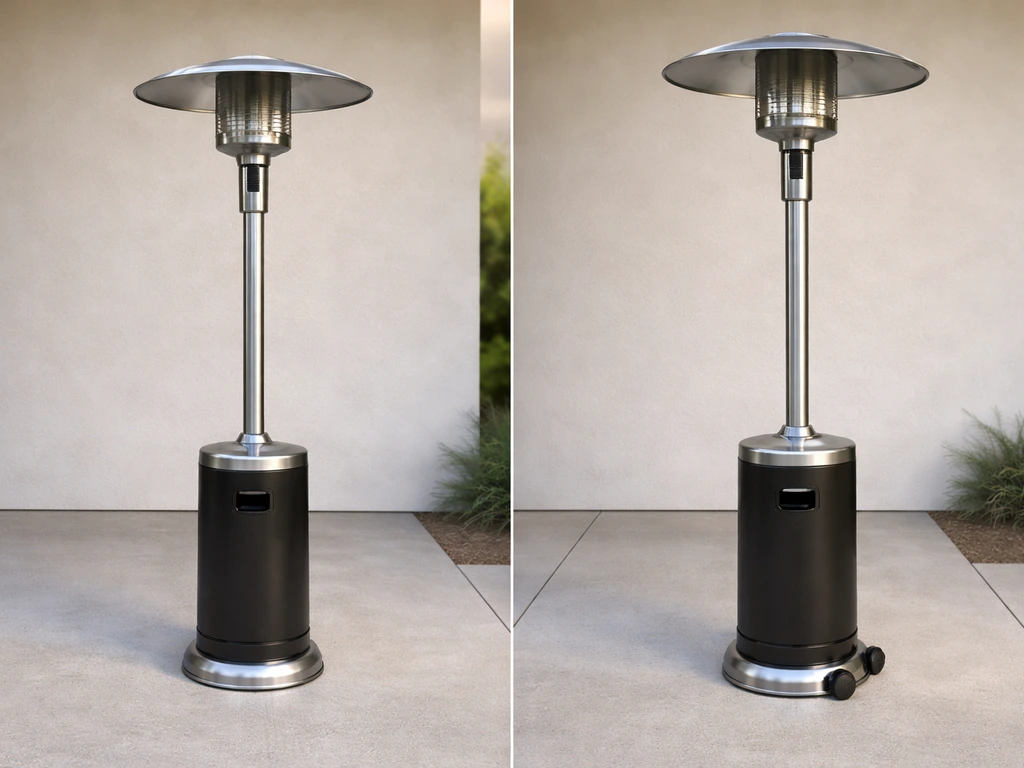
The two main variants you'll encounter in the Performance Series are the 46,000 BTU model (often listed as model 63718, available in gloss black) and the 50,000 BTU model (available with wheels, in stainless steel or matte black finishes). Both use electronic ignition and run on a standard 20 lb propane tank. The 89-inch height is consistent across the line, which keeps the reflector head at the right elevation to cast heat over a seated group.
The version with wheels (the 50,000 BTU unit sold through Best Buy and Costco) is worth the slight premium if you need to move the heater between spots or store it seasonally without help. The base rolls smoothly on a flat deck but can be tricky on uneven pavers. The non-wheeled models tend to be slightly more stable once placed.
- Output: 46,000 BTU (model 63718) vs 50,000 BTU (Costco/Best Buy version) — the 50K model adds meaningful warmth in open spaces
- Ignition: Electronic push-button on both models, which makes startup much easier than piezo lighters on older heaters
- Fuel: Standard 20 lb propane tank, tank not included with any model
- Finish options: Gloss black (63718), stainless steel (89" stainless model), matte black (Costco 50K model)
- Mobility: Wheeled base available on the 50,000 BTU model, fixed base on others
- Height: ~89 inches across the lineup — consistent reflector height for group heating
If you're comparing the Performance Series against something like the Fire Sense 63718 specifically through BBQGuys, note that retailer listings sometimes show slightly different BTU numbers because of how they're measured (input vs output). The 46,000 BTU figure is the heat input rating on the 63718. Either way, both variants are well above what you need for typical residential patio use.
Setting it up safely: tank, regulator, clearance, and location
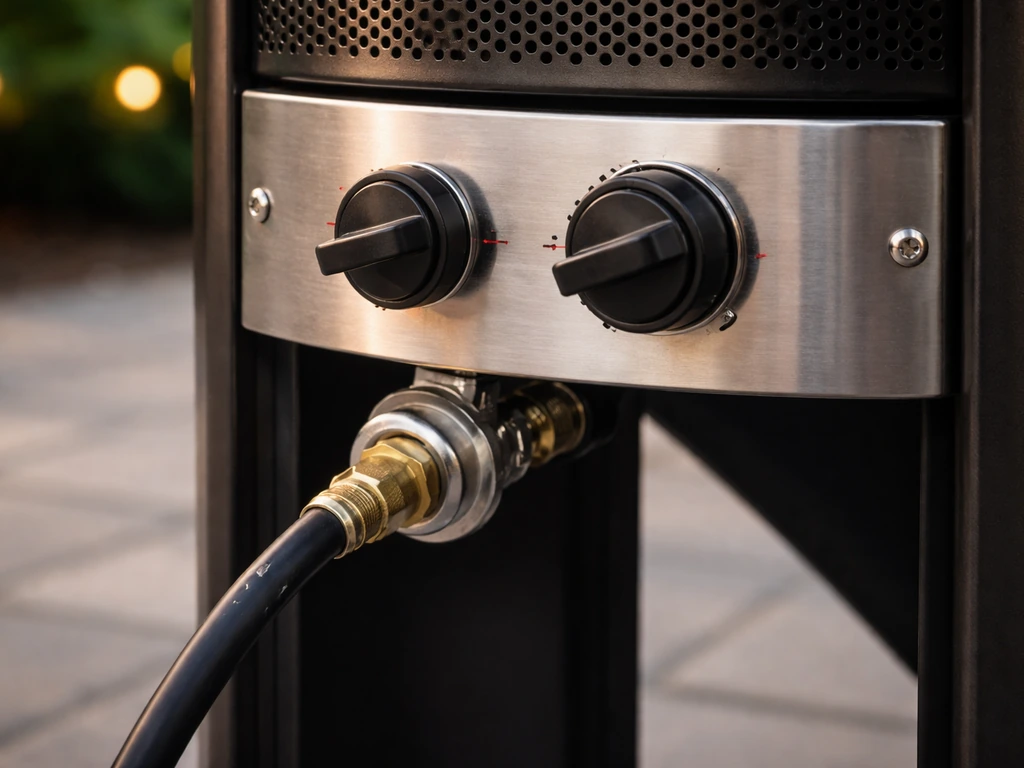
Assembly is straightforward if you follow the manual in order. The pole sections stack and bolt together, the reflector head attaches at the top, and the burner assembly connects to the regulator hose at the bottom. Always do final tightening of the regulator-to-tank connection last, and do it by hand plus about a quarter-turn with a wrench. Never overtighten.
Before you light it the first time, do a soap-and-water leak test. Mix dish soap and water, brush it on every connection point from the tank valve through the regulator and hose, then slowly open the tank valve. If you see bubbles, you have a leak. Close the valve immediately, tighten the connection, and retest. Do this in a well-ventilated area away from any open flame or ignition source.
Clearance is the safety item most people overlook. NFPA guidance says keep anything combustible at least 3 feet (1 meter) away from the heater in all directions. That means 3 feet of clearance from furniture, string lights, fabric curtains, wood fencing, and overhead structures. If you're thinking about running the heater under a pergola or louvered aluminum structure, check the manufacturer's clearance specifications first. Aluminum is non-combustible, but heat buildup under a low ceiling is still a real concern, and you should verify that minimum overhead clearance matches what the manual specifies.
- Place on a stable, level, non-combustible surface (concrete, brick, or tile paving)
- Keep 3 ft (1 m) clearance from all combustibles in every direction
- Never use indoors, in a garage, or in any enclosed space — carbon monoxide risk
- Keep the propane hose short, visible, and protected from foot traffic or heat sources
- Store spare propane tanks outdoors or in a well-ventilated structure away from buildings
- NFPA 58 governs LPG systems outside the home — if you're adding a fixed gas line setup, have it done by a qualified technician
Getting the most heat out of it: direction, runtime, and efficiency
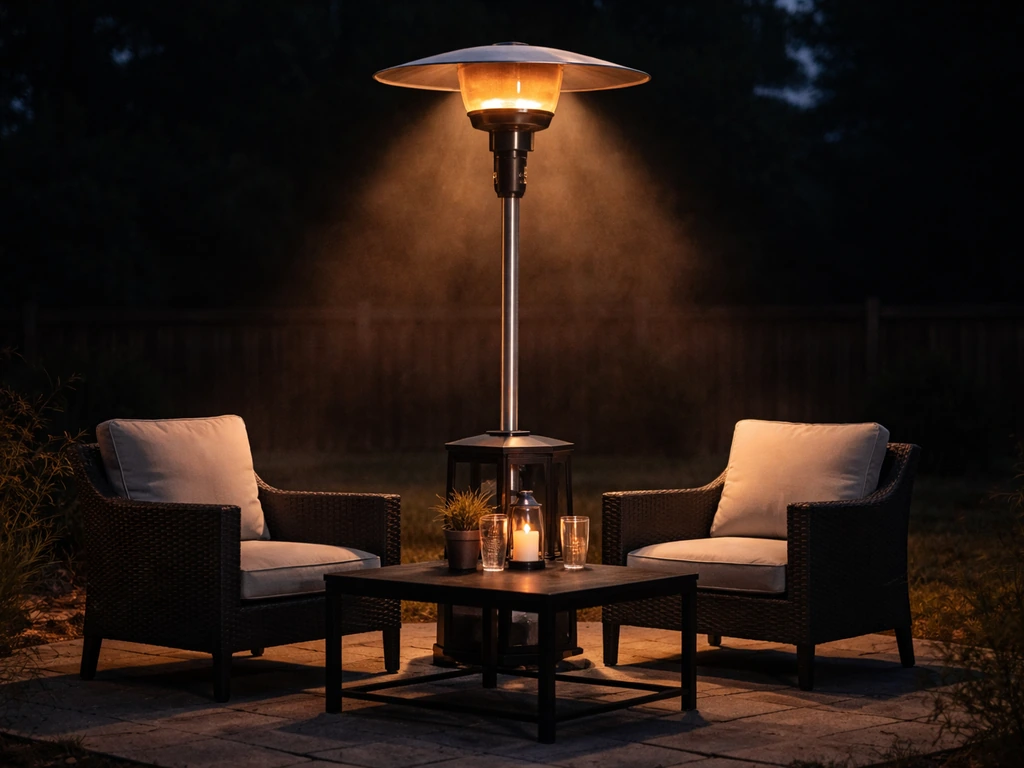
Position the heater so it's roughly centered over the group you're heating, not pushed back against a wall or fence. The reflector head throws heat downward and outward in a cone shape, so being 6 to 8 feet from seated guests is ideal. If you push it too far back, a lot of that radiant energy goes to waste on empty space.
Runtime on a standard 20 lb propane tank depends entirely on your heat setting. At full output (50,000 BTU) you'll burn through a 20 lb tank in roughly 8 to 10 hours. Dialing back to a medium setting can stretch that to 15 or more hours. Most people find medium heat is completely comfortable on a cool evening, and saving the high setting for genuinely cold nights makes a lot of sense both for warmth and fuel cost.
A few habits that genuinely stretch your fuel further: start the heater about 5 minutes before guests arrive so the area warms up, rather than trying to play catch-up on a cold patio. If you have a fence or wall on one or two sides of the patio, place the heater so the reflector faces the open direction and let the structure act as a partial windbreak. Closing off wind exposure even partially can make a dramatic difference.
Troubleshooting common Performance Series LPG problems
Heater won't ignite or flame goes out immediately
This is the most common complaint with any propane patio heater, including the Performance Series. Because the Fire Sense Performance Series is an LPG patio heater, the same ignition and flame-out troubleshooting steps apply propane patio heater. Nine times out of ten it comes down to one of three things: the ODS (oxygen depletion sensor) or thermocouple hasn't heated up yet, the gas flow is restricted, or there's a connection issue. Try holding the control knob in the ignite position for a full 15 to 30 seconds after you hear the click. The thermocouple needs time to heat up enough to keep the gas valve open. If the flame lights and then dies when you release the knob, hold it longer next time.
If it won't light at all, check that the tank valve is fully open (turn counterclockwise until it stops), confirm the regulator is fully seated, and make sure you don't have a fuel-starved situation from a nearly empty tank. Cold weather also thickens propane in the tank and can reduce pressure slightly, keeping the tank somewhere moderately warm before use helps.
Flame is low or uneven
A weak or uneven flame usually points to a partially blocked burner head or restricted gas flow. Insects (especially spiders) love building nests in burner orifices during storage. Remove the reflector, inspect the burner ports with a flashlight, and clean them with a soft brush or compressed air. Don't use metal tools that could damage the orifice. Also check that the regulator connection isn't overtightened to the point of restricting flow.
Yellow flame, soot, or unusual odor
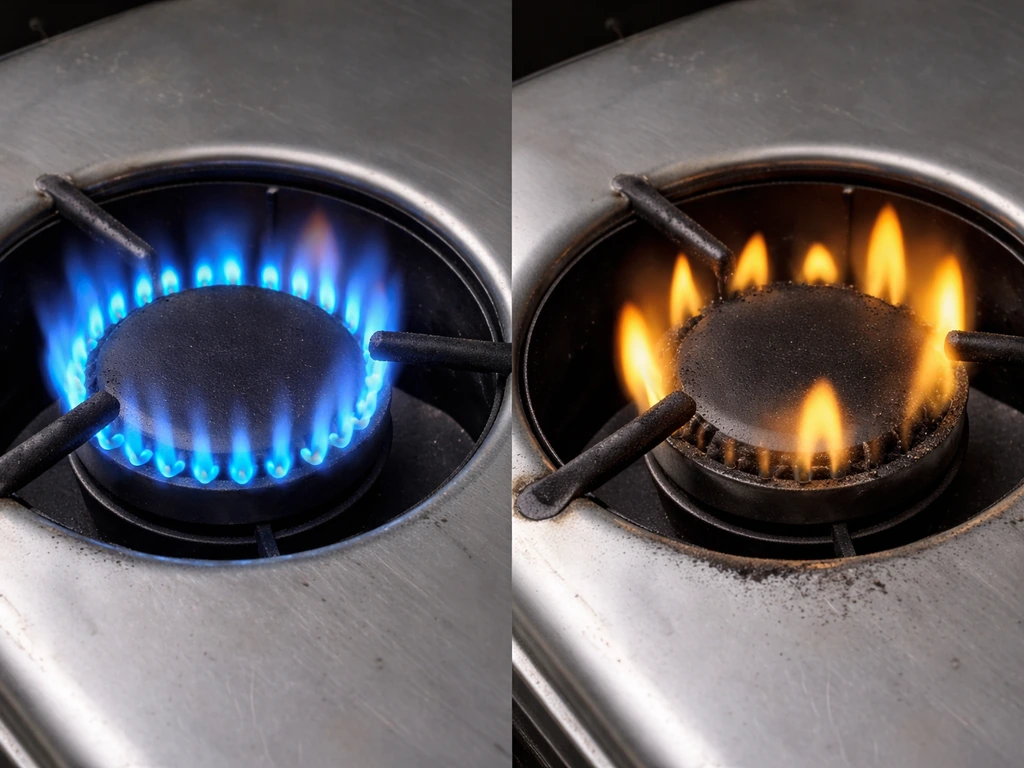
A healthy propane flame should be mostly blue with small yellow tips. A consistently yellow, flickering flame with soot buildup suggests incomplete combustion, often from a dirty burner or insufficient airflow. Clean the burner ports thoroughly and make sure nothing is blocking the air intake at the bottom of the burner assembly. A faint smell of gas at startup is normal, but a persistent sulfur or gas smell after the unit is running warrants shutting it off and performing a leak test before continuing. If you're comparing this propane-style setup to a pellet option, the flamepro 81''h steel patio pellet heater review is a useful related check for how wood pellets change heating behavior.
Heater tips over easily
This is usually a base stability issue. The Performance Series base is designed to hold the propane tank, which adds ballast once the tank is installed. If the heater is on an uneven surface or the tank is nearly empty (much lighter), it becomes less stable. Always use on a flat surface, and on a windy evening consider anchoring the base with sandbags or weighted bags designed for patio umbrella stands.
| Problem | Likely Cause | Quick Fix |
|---|---|---|
| Won't ignite | Thermocouple not warmed up, low tank, regulator issue | Hold knob 30 sec; check tank level and regulator seat |
| Flame dies after lighting | Thermocouple timing out, ODS tripping | Hold control knob longer; check for CO buildup/enclosed space |
| Low or uneven flame | Blocked burner ports, restricted gas flow | Clean burner with brush/compressed air; check regulator |
| Yellow flame / soot | Incomplete combustion, dirty burner | Clean air intake and burner ports |
| Gas smell during use | Potential leak | Shut off immediately; perform soap-water leak test |
| Heater unstable/tips | Uneven surface, low tank ballast | Level the surface; add ballast weight to base |
Keeping it running well season after season
Performance Series heaters are reasonably durable, but they reward basic care. At the start of each season, do a full visual inspection: check the regulator hose for cracks or scuffs, inspect all burner ports for debris, wipe down the reflector with a damp cloth, and tighten any bolts on the pole assembly that have vibrated loose over time. The electronic igniter electrode tip can get dirty or corroded, clean it gently with a fine-grit sandpaper or wire brush if startup becomes unreliable.
At the end of the season, let the heater cool completely, disconnect and remove the propane tank, and store it outdoors or in a ventilated area away from the living space. Cover the heater with a manufacturer-fit cover or a well-ventilated outdoor heater cover to prevent moisture and insect intrusion. Never store the heater with the propane tank attached indoors.
- Inspect regulator hose for cracks before every season (replace if cracked or stiff)
- Clean burner ports with a soft brush at the start of each season
- Wipe the reflector dish clean — buildup reduces heat reflection efficiency
- Check and tighten all pole and base bolts seasonally
- Clean the igniter electrode if startup becomes difficult
- Store with a ventilated cover; never store tank indoors
- Perform a soap-water leak test after any regulator or tank change
Who should buy a Performance Series LPG heater (and who should look elsewhere)
The Performance Series LPG models hit a strong sweet spot for homeowners who want serious heat output, the freedom to move the heater around a patio or deck, and don't want to deal with a natural gas line installation. The 50,000 BTU wheeled version is the one I'd recommend for most people: it covers more ground, it's easy to reposition, and the mobility pays off when you're storing it for winter or rearranging furniture. The 46,000 BTU model is a solid choice if you prioritize a specific finish or find it at a better price and your patio is under 300 square feet.
If your patio is fully covered and small, you might genuinely get away with a tabletop propane or electric heater and skip the full-size unit. And if you're the kind of person who enjoys a more hands-on fire experience, the pellet-style heaters in the FlamePro lineup are worth a look for the ambiance factor, though they require more management than a push-button LPG tower. For most people trying to extend the usable season on an open or semi-covered patio, the Performance Series propane heater is a genuinely practical answer.
FAQ
How do I tell if the BTU listed is input or output for a performance series LPG patio heater?
Look for whether the rating is described as heat input or heat output. Input is typically higher than output because it reflects energy delivered to the burner. If a listing only states “BTU” without clarification, treat it as input and size down only if you have a very sheltered, low-wind patio.
What distance should I keep from the heater if I have overhead string lights or a pergola ceiling?
Use the 3 feet clearance rule in every direction as a baseline, then add overhead confirmation. Even if the material above is non-combustible, heat buildup under a low cover can still be unsafe, so verify the minimum overhead clearance in the manual and avoid placing lights or fabric within that envelope.
Can I run a performance series LPG patio heater under a covered porch or near a wall?
You can, but you should not assume coverage automatically increases safety or performance. Keep the reflector pointed toward the open area, maintain the manufacturer’s clearance, and avoid positioning the heater so hot exhaust and radiant heat are trapped against a wall or ceiling.
How long should I hold the control knob in ignite after hearing the click?
Hold it after ignition long enough for the safety sensor to warm, typically 15 to 30 seconds. If it shuts off the moment you release the knob, you likely need a longer hold time, and the next attempt should be done with the tank valve fully opened and the unit positioned with good airflow around the burner.
What’s the best way to handle wind gusts on an open patio?
If gusts are common, place the heater so the reflector faces into the sheltered side, let fences or walls act as partial windbreaks, and consider using a wind block that is non-combustible. In very exposed areas, you may need either a higher setting for longer warm-up or closer placement to seated guests.
How can I estimate how many nights of runtime I’ll get from a 20 lb propane tank?
Use the setting you expect to run most often. At full output it’s roughly 8 to 10 hours, while medium can stretch to 15 hours or more. For planning, assume cooler nights and windy conditions will push you to higher settings more frequently.
Why does my flame look blue with yellow tips, but still leave soot or a smell?
Small yellow tips can be normal, but persistent soot or a strong lingering gas odor suggests incomplete combustion, often from blocked burner ports or restricted air intake. Shut it down, do a leak test, clean the burner orifices and inspect for debris, then retry only after confirming everything is clear.
What should I do if the base feels unstable even after it’s assembled correctly?
Confirm the heater is on flat ground, and check that the tank is seated properly in the base since it adds ballast. If you’re on uneven pavers or the surface slopes slightly, use a flat pad or move the unit, and for windy conditions consider anchoring with properly intended weights for patio bases.
Is it safe to store the performance series LPG patio heater covered during the off-season with the propane tank attached?
No. Disconnect and remove the propane tank before storage, and keep the tank in a ventilated outdoor location away from living spaces. Cover the heater only after it’s fully cooled, using a fit-for-purpose cover that helps keep moisture and insects out without trapping dangerous condensation.
How often should I inspect the regulator hose and burner ports?
Do a quick check before each use (look for scuffs, cracks, or looseness) and a more detailed inspection at the start of the season. If it’s been in storage, inspect and clear burner ports since insects can block orifices and cause weak or uneven flames.
Can I use a different propane tank with the same performance series LPG patio heater?
You can usually use standard 20 lb propane cylinders, but always match the correct regulator and ensure the connection seats fully. Do a soap-and-water leak test after any tank change, and never rely on “it seems connected” as your only check.