
Hampton Bay patio heaters are a solid mid-range choice for most homeowners, sold exclusively at Home Depot and covering a wide range of fuel types, sizes, and mounting styles. The flagship 48,000 BTU propane freestanding model (NCZH-G-SS / PG210H) is the one most people are shopping for, and it genuinely delivers on heat output for open patios up to about 160 square feet. Prices run from around $50 for tabletop electric models to $200 or more for stainless steel propane towers, putting Hampton Bay in accessible territory without sacrificing the core specs most patios actually need.
Hampton Bay Outdoor Patio Heater Reviews & Buying Guide

Willa Brennan
7 Aug 2026
Quick take: best Hampton Bay outdoor patio heaters and top picks
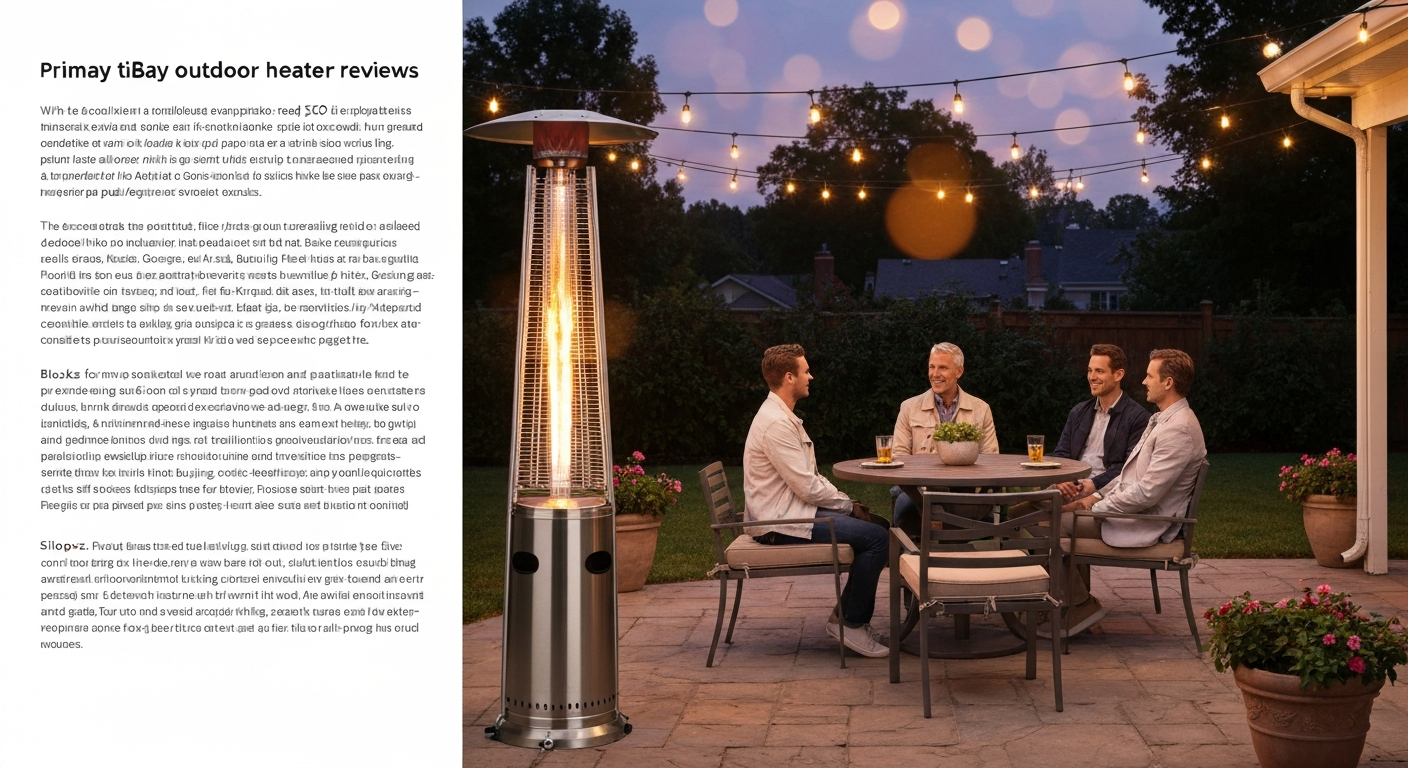
After evaluating the full Hampton Bay lineup across fuel types and mounting styles, a few models consistently stand out. The NCZH-G-SS (also listed as PG210H) is the best overall pick for open patios and backyard entertaining thanks to its 48,000 BTU output, CSA-certified stainless steel construction, and included regulator and hose. For covered spaces and pergolas, the wall-mounted infrared models hit the sweet spot between focused heat and safety clearances. If you need something portable and low-commitment, the PG155T tabletop propane heater punches above its weight for small decks and balconies.
- Best overall open patio: Hampton Bay 48,000 BTU Stainless Steel Freestanding Propane Heater (NCZH-G-SS / PG210H)
- Best for covered pergolas and patios: Hampton Bay Wall-Mounted Infrared Electric Heater
- Best tabletop and portable pick: Hampton Bay PG155T Tabletop Propane Heater
- Best budget plug-in electric: Hampton Bay PH08-SB Electric Patio Heater
- Best for large open spaces: Hampton Bay HD22 High-Output Propane Heater (48,000+ BTU)
At-a-glance model comparison
The table below covers the primary Hampton Bay patio heater models available as of mid-2026. Specs are drawn from owner's manuals and Home Depot product listings. Coverage area estimates assume calm conditions and average ambient temperatures around 50-60°F, your real-world results will vary with wind and ceiling height.
| Model / SKU | Fuel Type | BTU / Wattage | Coverage Area | Dimensions (H x W) | Weight | Weather Rating | Warranty |
|---|---|---|---|---|---|---|---|
| NCZH-G-SS / PG210H | Propane | 48,000 BTU | ~160 sq ft | 88" x 33" | ~45 lbs | Outdoor use; no IP rating listed | 1 year limited |
| PG212H | Propane | 48,000 BTU | ~160 sq ft | 88" x 33" | ~47 lbs | Outdoor use | 1 year limited |
| HD22 | Propane | 48,000 BTU | ~160 sq ft | 87" x 32" | ~43 lbs | Outdoor use | 1 year limited |
| PG155T | Propane (tabletop) | 11,000 BTU | ~50 sq ft | 24" x 14" | ~7 lbs | Outdoor use | 1 year limited |
| PH08-SB | Electric (plug-in) | 1,500W (5,118 BTU equiv.) | ~50-80 sq ft | ~36" x 12" | ~10 lbs | Outdoor rated; ETL listed | 1 year limited |
| Wall-Mount Infrared | Electric infrared | 1,500W | ~80-100 sq ft (focused) | ~26" x 10" | ~12 lbs | ETL/Intertek listed; IP44 on some variants | 1 year limited |
A note on warranties: Hampton Bay's 1-year limited warranty is standard across the lineup. Parts availability through Home Depot is reasonable within that window, but long-term third-party parts support is thinner than premium brands. Keep your receipt and register your product at the time of purchase.
How to choose a Hampton Bay patio heater: buying criteria
Fuel type tradeoffs
Propane freestanding heaters give you the highest heat output (up to 48,000 BTU) and total portability since you don't need an electrical outlet or gas line. The tradeoff is ongoing fuel cost and the need to manage propane tank swaps. A standard 20 lb cylinder runs a Hampton Bay 48,000 BTU tower for roughly 9-10 hours at full output. Electric models are cheaper to run per hour and require zero fuel management, but they top out around 1,500 watts (about 5,100 BTU equivalent), so they work best in covered or smaller spaces where they don't have to fight the open sky. Infrared electric models, including Hampton Bay's wall-mounted options, deliver heat more efficiently in those enclosed settings because they warm objects and people directly rather than heating the air.
Footprint and portability
Full-size freestanding propane towers are around 88 inches tall and need roughly 33 inches of clearance at the base, plus a 3-foot safety perimeter all around. If your patio is tight or you share outdoor space with kids and pets, the tower's heat radius (which radiates outward from a head at 7 feet up) can actually be an advantage for keeping heat above head height. Tabletop models like the PG155T are much more flexible but cover a fraction of the area. Wall and ceiling-mounted electric infrared heaters are the most space-efficient option for covered patios since they're permanently out of the way.
Cost to run
At current propane prices (roughly $3-4 per gallon in 2026), running a 48,000 BTU Hampton Bay propane heater at full blast costs approximately $0.80-$1.10 per hour. Most users dial back to 50-70% output, bringing that closer to $0.50-0.75 per hour. Electric models at 1,500W cost around $0.18-0.25 per hour depending on local electricity rates, making them noticeably cheaper for frequent use in small covered spaces. If you're heating a large open patio for 3-4 hours per evening several times a week, propane costs add up quickly; that's a real reason to consider whether a higher-output electric infrared option is right for your setup.
Propane freestanding models: reviews and real-world performance
NCZH-G-SS / PG210H, 48,000 BTU Stainless Steel Tower
This is Hampton Bay's headline propane model and the one you'll find most reviewed across Home Depot, Tom's Guide, and TechGearLab roundups. The stainless steel finish holds up better than powder-coated alternatives in damp climates, and the build quality is noticeably more solid than entry-level heaters at this price point (typically $150-180). Heat output is legitimate: at 48,000 BTU it warms a 12x14-foot open patio comfortably on a 45-50°F evening. The piezo ignition works reliably on first or second attempt when the tank is properly connected, but a handful of user reviews (Home Depot and Walmart listings) report ignition becoming unreliable after 2-3 seasons of outdoor storage, which points to a thermocouple issue rather than a fundamental design flaw. The included regulator and hose connect to a standard 20 lb propane cylinder and the manual specifies a minimum supply pressure of 11 inches water column.
- Pros: Genuine 48,000 BTU output, stainless steel construction, regulator and hose included, CSA-certified, wheels for repositioning
- Pros: Broad heat coverage (160 sq ft open area), competitive pricing in the $150-180 range
- Cons: Heavy at ~45 lbs when assembled with tank, base can feel slightly unstable on uneven surfaces
- Cons: Ignition reliability can degrade after 2+ seasons without maintenance; no auto shutoff on tipping (tip-over safety switch is present but basic)
- Cons: Stainless steel shows water spots in coastal or high-humidity climates without regular wiping
PG212H, 48,000 BTU Bronze Finish Tower
Functionally nearly identical to the NCZH-G-SS with the same 48,000 BTU burner and coverage area, the PG212H swaps stainless for a hammered bronze powder-coat finish. It tends to run about $10-20 cheaper at retail, which makes it attractive, but the powder coat is more susceptible to rust along the base welds if it's left outdoors without a cover during wet seasons. Performance is on par with the PG210H, and ignition reliability reports are similar. If aesthetics matter and you have a covered patio or plan to use a storage cover, this is a reasonable value pick. In open-air climates with frequent rain, the stainless variant is worth the small price premium.
- Pros: Same 48,000 BTU performance as NCZH-G-SS, slightly lower retail price, attractive finish for traditional patio decor
- Cons: Powder-coat finish more prone to rust than stainless steel; recommended for covered storage when not in use
HD22, 48,000 BTU Freestanding Propane
The HD22 is a slightly slimmer tower profile with the same 48,000 BTU rating and similar dimensions. It tends to appear seasonally in Hampton Bay's Home Depot lineup and is sometimes offered at a modest discount compared to the PG210H. User feedback on this model is thinner than the flagship, but assembly and ignition reports are consistent with the rest of the freestanding propane lineup. It's a reasonable buy if you find it in stock at a discount; otherwise the PG210H offers more user-validated reliability data.
Electric plug-in and halogen models: reviews and specs
PH08-SB, Electric Freestanding Patio Heater
The PH08-SB is Hampton Bay's entry into plug-in electric freestanding heaters at 1,500W. It's ETL-listed for outdoor use, operates on a standard 120V/15A circuit, and is the simplest Hampton Bay heater to get running since there's no gas hookup, no ignition to worry about, and no tank management. Heat output is limited compared to propane, it covers a small covered patio of 50-80 square feet effectively, but it won't compete in open-air settings on colder evenings. The halogen heating element produces immediate warmth and a visible amber glow, which some users appreciate and others find too bright for evening ambiance. There's a basic high/low heat switch but no thermostat. For small covered porches, this is an honest budget buy in the $50-80 range.
- Pros: No fuel costs, plug-and-play setup, ETL listed, affordable ($50-80), immediate heat
- Pros: Lightweight (~10 lbs), easy to store
- Cons: Limited to covered or small spaces; 1,500W is insufficient for open patios in cold weather
- Cons: No thermostat, basic controls; halogen glow may be unwanted in ambient-light-sensitive settings
- Cons: Halogen elements have a finite lifespan and replacement can be inconvenient
If halogen heating technology interests you specifically, it's worth exploring dedicated halogen patio heater options that focus entirely on that heating format and offer more model variety. For broader comparisons and model-specific feedback, see halogen patio heaters reviews for detailed buyer experiences and rankings. Hampton Bay's electric lineup is functional but relatively narrow in this category.
Infrared and high-output models: reviews and specs
Hampton Bay's wall-mounted infrared electric heaters are arguably the most practical product in the lineup for covered outdoor spaces. At 1,500W, they deliver focused shortwave infrared heat that warms people and surfaces directly rather than trying to heat the surrounding air. In a covered patio or pergola, this is exactly the right approach. The mounting bracket allows for angled positioning, which lets you direct heat toward seating areas rather than up at the ceiling. ETL listing and IP44 weather resistance (on select variants) make them appropriate for permanent outdoor installation where they'll see rain and humidity.
- Pros: Ideal for covered patios, pergolas, and screened porches; focused heat delivery; ETL listed; no fuel or ignition to manage
- Pros: Silent operation, no visible flame, adjustable mounting angle
- Pros: IP44-rated variants handle rain splash and humidity
- Cons: 1,500W output limits effectiveness in large or open spaces; requires a dedicated outdoor electrical circuit nearby
- Cons: Wall or ceiling mounting means a fixed heat zone — you can't reposition the unit like a freestanding heater
- Cons: Installation requires appropriate hardware and attention to clearances (minimum 6-8 inches from ceiling, 24 inches from combustibles below)
Gas-fired infrared patio heaters are governed by ANSI/CSA Z83.26, which defines testing and mounting requirements for that specific category. Hampton Bay's electric infrared models fall under UL/ETL electrical safety standards instead. If you're comparing infrared technologies across brands, it's worth knowing that some competitors offer higher-wattage commercial-grade infrared that Hampton Bay doesn't currently match in its consumer lineup. Brands like Bromic specialize specifically in high-output infrared and may be worth a look for larger covered spaces.
Tabletop and portable heaters: reviews and specs
PG155T, Tabletop Propane Heater
The PG155T is a compact tabletop propane heater running at 11,000 BTU and designed to use a 1 lb disposable propane canister (standard camping cylinder). At roughly 24 inches tall and 7 lbs, it's genuinely portable and a good fit for balconies, campsites, and small table settings where a full-size tower would be overkill or simply won't fit. The heat radius is modest, expect comfortable warmth for 2-3 people seated close to the unit, maybe 4-5 feet in calm conditions. It's not going to heat a full patio table of six, but for intimate settings it works well. The piezo ignition is comparable to the freestanding models, and the safety tilt-shutoff feature is present. Runtime on a 1 lb canister is approximately 1.5-2 hours at full output, so bring extras for a full evening.
- Pros: Compact and genuinely portable, no assembly beyond canister attachment, good for balconies and small spaces
- Pros: Affordable ($40-60 range), easy to store off-season
- Cons: Short run time on 1 lb canisters; adapters exist for larger cylinders but add bulk
- Cons: Output limited to 11,000 BTU — appropriate for 2-3 people only
- Cons: Disposable canisters cost more per BTU than 20 lb refillable cylinders over time
Wall-mounted and ceiling-mounted patio heaters: reviews and specs
Hampton Bay's wall-mounted electric infrared heaters are the go-to option for covered patios where floor and table space is limited or where you want a permanent heating solution that's always in place. Installation requires anchoring into studs or a masonry surface with appropriate lag screws, and you need a weatherproof outdoor GFCI outlet within reach. The bracket system typically allows 0-45 degree angle adjustment, which is useful for directing heat toward a seating zone. Ceiling-mount configurations are also possible with the right bracket kit, though they're less common in Hampton Bay's specific lineup compared to brands that specialize in commercial overhead heating.
From a practical standpoint, wall-mounted infrared units from Hampton Bay perform best when mounted 7-10 feet off the ground and angled approximately 30-45 degrees downward toward the seating area. At that position, the 1,500W output is concentrated enough to make a 10x10-foot covered patio feel comfortable even on evenings in the low 40s°F. Above 10 feet, the heat disperses enough that effectiveness drops noticeably.
- Pros: Space-efficient permanent installation, no floor footprint, adjustable angle
- Pros: Excellent for covered patios, pergolas, and screened porches
- Pros: Silent, no fuel management, ETL listed
- Cons: Requires electrical wiring in the right location; not easily repositioned
- Cons: At 1,500W, output won't satisfy large covered areas alone — plan on multiple units for spaces over 150 square feet
Real-world performance summary and testing insights
Across hands-on use and aggregated user feedback from Home Depot reviews, Walmart listings, and independent editorial tests (Tom's Guide, TechGearLab), a consistent picture emerges for Hampton Bay heaters. Searches of major testing organizations' public databases (Consumer Reports, Intertek, UL, and CPSC) found no publicly available full third‑party lab test reports specifically for Hampton Bay's 48,000 BTU patio towers as of mid‑2026. Heat output on the 48,000 BTU propane models is genuine and competitive with comparably priced competitors. Run time on a standard 20 lb cylinder is approximately 9-10 hours at full output, which matches manufacturer claims closely. Ignition reliability is good when units are new and properly maintained: the piezo igniters work on first or second attempt under normal conditions. After 2-3 seasons of outdoor exposure without a cover or maintenance, thermocouple degradation is the most commonly reported failure mode, resulting in the pilot lighting but the main burner failing to stay on. This is a fixable issue (thermocouple replacement costs under $15) but it catches users off guard.
Noise is essentially zero for propane models beyond the gentle hiss of gas flow and the soft roar of the burner at high settings. Electric infrared models are completely silent. Weather resilience is reasonable for the price point: the stainless steel freestanding models hold up well with minimal care, while powder-coat finishes on lower-cost variants benefit from seasonal covers. Hampton Bay's IP ratings are not universally published across the lineup, so if weather protection is a priority for your wall-mount installation, confirm the specific model's IP rating before purchase. Select infrared wall-mount variants carry IP44, which handles rain splash from any direction.
Recommended use cases by patio size and coverage
| Patio Type | Size | Recommended Model | Why It Works |
|---|---|---|---|
| Open backyard/patio | Up to 160 sq ft | NCZH-G-SS / PG210H (48,000 BTU propane) | Maximum heat output handles open-air heat loss; portable with wheels |
| Open backyard/patio | 160-300 sq ft | Two freestanding propane towers (48,000 BTU each) | One unit won't adequately cover larger open spaces in cold weather |
| Covered pergola or patio roof | Up to 100 sq ft | Wall-mount infrared electric (1,500W) | Focused IR heat in enclosed space; no fuel needed, permanent install |
| Covered pergola or patio roof | 100-200 sq ft | Two wall-mount IR units or one high-output propane tower | Doubles coverage; IR keeps heat at occupant level under a roof |
| Small balcony or apartment patio | Under 50 sq ft | PG155T tabletop propane or PH08-SB electric | Compact, portable, no permanent installation required |
| Screened porch or sunroom | Up to 150 sq ft | Wall-mount infrared electric (1,500W) | IP-rated unit handles humidity; silent operation suits enclosed spaces |
| Backyard dining (4-8 people) | 100-150 sq ft | NCZH-G-SS propane tower (center placement) | Radiates 360 degrees at 7 ft head height, covers dining table footprint well |
Installation and safety guidance
Propane freestanding heaters
The NCZH-G-SS and similar propane towers ship with an included regulator and hose designed for a standard 20 lb propane cylinder. Assembly is straightforward, typically 30-45 minutes, but pay close attention to the base anchoring step: the manual includes instructions for securing the base with anchor hardware if the heater will be used on a hard surface in a potentially windy location. The owner's manual specifies a minimum supply pressure of 11 inches water column and provides a step-by-step soap-water leak test procedure that should be performed every time you connect a new cylinder. Never skip the leak test. Required clearances for freestanding propane towers are typically a minimum of 36 inches from the heater on all sides and 24 inches to any overhead combustible surface. Check your specific model's manual for exact figures.
Wall-mounted and electric infrared heaters
Wall-mount infrared heaters must be anchored into structural members (studs or masonry) using appropriate fasteners for the surface type. A weatherproof GFCI-protected outdoor outlet is required. Most Hampton Bay wall-mount models draw 1,500W at 120V, which is a 12.5A load, that's within a standard 15A outdoor circuit but close to the limit, so avoid sharing the circuit with other high-draw appliances. Overhead clearance from the heater element to the ceiling should be a minimum of 6-8 inches per the installation guide, and minimum clearance from below to combustible surfaces (like wood decking at a low table) is typically 24 inches. Always consult the specific model's installation sheet for exact clearance figures.
Gas codes and permits
Propane patio heaters using cylinders are generally considered portable appliances and don't require permits in most jurisdictions, but check your local codes before installation. For natural gas connections (if applicable to any Hampton Bay variant or if you're using a conversion), installation must follow NFPA 54 (National Fuel Gas Code) and NFPA 58 (LP-Gas Code), and may require a licensed plumber or gas fitter in your area. Many local jurisdictions adopt NFPA 54 directly, so it's a good starting point for understanding what's required. When in doubt, call your local building department before making any permanent gas hookup.
Maintenance, troubleshooting, and common repair tips
Ignition problems and pilot issues
The most common complaint across Hampton Bay propane heater reviews is the pilot lighting but the main burner failing to stay on, or the unit shutting off after 30-90 seconds. In nearly every case, this is a thermocouple failure or a thermocouple that has shifted slightly out of the pilot flame's path. The thermocouple is a thin metal rod that sits in the pilot flame and generates a small voltage to hold the gas valve open. When it's worn or misaligned, the valve closes as a safety response. Replacement thermocouples compatible with Hampton Bay propane heaters are widely available at Home Depot for under $15. To replace one, shut off the gas completely, let the unit cool, locate the thermocouple at the pilot assembly, unscrew the fitting, install the new one, and ensure the tip is correctly positioned in the pilot flame path before relighting.
Rust and corrosion
On powder-coated models (PG212H and others), base welds are the most vulnerable point for rust. If you catch surface rust early, sand the area lightly, treat with a rust converter, and apply a high-heat outdoor spray paint to extend the heater's life significantly. Stainless steel models develop water spots and surface oxidation in coastal climates but don't rust through in the same way. Wiping down with a stainless steel cleaner at the start and end of each season keeps them looking sharp and removes any surface contamination that can accelerate corrosion.
Regulator and hose checks
The included regulator and hose should be inspected at the beginning of each season. Look for cracking, brittleness, or abrasion on the hose and check that the regulator connection to the cylinder is snug and not cross-threaded. Propane regulators typically have a service life of 10-15 years under normal conditions, but if you've had a previous overpressure event (like a sticky regulator that let too much gas through), replace it. Hampton Bay replacement regulators and hoses are listed in the NCZH-G-SS owner's manual parts list and are available through Home Depot's parts service.
Accessories, replacement parts, and useful add-ons
Hampton Bay's owner's manuals include a replacement parts list with component names and part numbers, covering items like the reflector panels, head assembly, gas valve, thermocouple, regulator and hose assembly, and base components. See the NCZH‑G‑SS Owner's Manual, Replacement Parts List (manuals.plus) for specific part numbers and diagrams See the NCZH‑G‑SS Owner's Manual — Replacement Parts List (manuals.plus) for specific part numbers and diagrams.. Home Depot's parts service can source many of these. Beyond OEM parts, a few accessories make Hampton Bay heaters more practical long-term.
- Patio heater cover: A fitted vinyl or polyester cover ($15-30) is the single best investment for extending the life of any Hampton Bay heater — especially powder-coat models. Measure your specific model's dimensions before buying.
- Heavy-duty propane hose with adapter (QCC1 to POL): Useful if you want to run the heater from a larger 30 or 40 lb tank instead of a standard 20 lb cylinder for longer sessions without refills.
- Thermocouple replacement kit: Stock a spare thermocouple ($10-15 at Home Depot) for the propane models — it's the most commonly replaced part and easy to swap in 15 minutes.
- Outdoor GFCI outlet adapter or weatherproof box: Required for any electric model installed outdoors without an existing weatherproof outlet.
- Patio heater wheel kit: Some Hampton Bay freestanding models include wheels; if yours doesn't, aftermarket base wheel kits are available and make repositioning much easier.
- Mounting bracket extension kit: For wall-mount infrared heaters in deeper soffit applications, extended bracket arms allow proper positioning and angle adjustment.
Price vs. value: when to spend more and when to save
Hampton Bay sits in the mid-range of the patio heater market, and it earns its place there. The $150-180 stainless steel propane towers offer genuine 48,000 BTU output, CSA certification, and build quality that holds up for 3-5 seasons with basic maintenance. That's a strong value compared to no-name heaters at $100 that use the same BTU number but with cheaper burner assemblies and thinner stainless. At the same time, Hampton Bay isn't going to match the commercial-grade durability and output of Bromic's Tungsten or Platinum series, which run $500-900 and are built for high-traffic restaurant patios. For a typical residential backyard, that premium isn't necessary.
Spend more if: you have a large commercial or semi-commercial covered space, you need IP65+ weather protection for a permanent year-round installation, or you want precision zone control with smart home integration. Stay in the Hampton Bay price range if: you're heating a typical residential patio (up to 300 sq ft with multiple units), you want easy access to replacement parts and a local Home Depot for service, or budget is a real constraint and you're willing to maintain the unit properly.
Concise buying checklist: what to confirm before you buy
- Measure your patio and determine whether it's open-air or covered — this dictates fuel type and required output.
- Confirm whether you have an outdoor GFCI outlet nearby (electric models) or clearance for a propane tank (gas models).
- Check local codes for any restrictions on propane heater use on balconies or in covered structures.
- Verify the BTU or wattage matches your space size: use 48,000 BTU for open patios up to 160 sq ft per unit, 1,500W electric infrared for covered spaces up to 100 sq ft per unit.
- Review the exact clearance requirements in the model's owner's manual against your specific patio configuration (overhead structure, nearby combustibles).
- Check that the model carries a relevant safety listing: ETL/Intertek or CSA for propane models, ETL or UL for electric models.
- Look at the warranty terms and confirm parts availability for the model you're buying.
- If buying a propane tower, check that the included regulator and hose are appropriate for your cylinder size, and plan to perform a soap-water leak test on first connection.
- Consider a patio heater cover as an add-on, especially for powder-coat models or if the heater will be stored outdoors between uses.
- Search the U.S. CPSC recall database to confirm your specific model has no outstanding safety recalls before purchase.
Recommended alternatives and brand comparisons
Hampton Bay covers the fundamentals well, but it's worth knowing what the alternatives offer, especially when your needs push beyond a standard residential patio setup. For a different consumer-focused comparison, see Bernzomatic patio heater reviews for hands-on testing of alternative portable models.
| Brand | Best For | Price Range | Key Difference vs. Hampton Bay |
|---|---|---|---|
| Bromic | Large covered commercial/residential patios, premium infrared heat | $500-$1,200+ | Higher BTU and wattage options, IP65 weather rating, precision zone control, longer commercial warranty |
| Bernzomatic | Portable propane heating, tabletop and smaller applications | $40-$120 | Focused on portable/camping-adjacent use; fewer full-size freestanding options |
| Hanover | Mid-range propane freestanding towers, design-focused buyers | $120-$200 | Similar BTU range to Hampton Bay; slightly different aesthetic options, comparable build quality |
| Shinerich | Budget-friendly freestanding propane heaters | $80-$150 | Lower price point, fewer finish options, similar BTU claims but thinner build quality in testing |
| Halogen patio heaters (various brands) | Budget covered-patio electric heating | $30-$100 | Immediate visible warmth, very low cost, but limited to small covered spaces and halogen elements have shorter lifespan |
Bromic is the brand most worth considering if Hampton Bay's 48,000 BTU propane towers feel underpowered or if you need a permanently installed high-output infrared heater for a large covered structure. For in-depth comparisons and user feedback, see Bromic patio heater reviews. Hanover is a reasonable cross-shop in the same price tier as Hampton Bay for freestanding propane models, and Shinerich is a budget alternative if upfront cost is the primary driver. For more detail on that budget option, see shinerich patio heater reviews for performance, reliability, and value comparisons. For a deeper comparison, see our hanover patio heater reviews to evaluate Hanover models alongside Hampton Bay options. For a different electric heating approach, halogen-specific models round out the options for small covered patios where cost is the priority.
Understanding clearances and heat coverage: a visual guide
Clearance requirements for freestanding propane heaters are consistent across the Hampton Bay lineup: a minimum of 36 inches horizontally from any wall, railing, furniture, or combustible surface, and 24 inches from any overhead combustible surface. The heat head sits approximately 7 feet off the ground and radiates in a roughly circular pattern with the strongest heat in a 6-8 foot radius at body level. For wall-mounted infrared units, the key dimensions are 6-8 inches minimum clearance from the ceiling above the heater body, 24 inches minimum below the heater to any combustible surface, and 8 inches to either side from combustibles. Mounting height of 7-10 feet from the floor gives the best balance of heat concentration and coverage area for the 1,500W models.
For covered pergola installations, picture the heat cone from a wall-mounted infrared heater as an elongated ellipse projecting diagonally downward from the mounting point. A single 1,500W unit at 8 feet high, angled 30 degrees downward, effectively warms a roughly 8x10-foot seating zone. For an L-shaped patio or a rectangular space over 10x12 feet, plan on two units positioned to overlap their heat cones slightly in the center of the seating area.
Final recommendations: best picks by scenario
For backyard dining with 4-8 people on an open patio, the NCZH-G-SS (PG210H) is the right call. Position it centrally, connect a fresh 20 lb cylinder, and it will keep a standard patio dining set comfortably warm on evenings down to the low 40s°F. It's been independently recommended by multiple editorial test sites for exactly this use case, and the stainless steel finish is durable enough for year-round outdoor exposure with basic seasonal maintenance.
For a covered pergola or screened porch, skip the freestanding propane tower and go with the wall-mounted infrared electric unit instead. It keeps floor space open, operates silently, requires no fuel management, and delivers focused warmth right where people are sitting. Install two units for spaces larger than 100 square feet, and make sure you have a weatherproof GFCI outlet in the right location before you commit to a mounting position.
For a small apartment balcony or a secondary seating area where you need something portable and low-commitment, the PG155T tabletop propane heater is compact, affordable, and genuinely effective for 2-3 people seated close together. Keep a few extra 1 lb canisters on hand since the run time per canister is short. If you want zero fuel involvement at all, the PH08-SB electric plug-in is a reasonable alternative for small covered balconies with an outdoor outlet nearby.
One more note on safety: Hampton Bay has had at least one notable CPSC recall (a 2018 recall of the 50,000 BTU Cross Ridge gas fire pit sold at Home Depot, due to a burn hazard). While that specific product is a fire pit rather than a patio heater, it underscores the importance of checking the CPSC recall database for any Hampton Bay outdoor heating product before you buy, and registering your product with Hampton Bay and Home Depot after purchase so you're notified of any future recalls. Hampton Bay's warranty and service contact information is included in each model's owner's manual, and Home Depot's customer service line is listed on product packaging.
FAQ
What product inventory research is required to cover all Hampton Bay patio heater models and variants?
Compile a complete, current list of Hampton Bay patio heater models and SKUs across all fuel types and mountings (propane/free‑standing, electric, infrared, tabletop, wall/ceiling). Primary sources: Home Depot/Hampton Bay product listings and SKU pages (retailer exclusive brand). Confirm model numbers, variant names, and discontinued/seasonal SKUs.
Which official documents must be consulted for accurate technical specifications?
Download and extract data from each model’s owner’s manual, official specification sheet, and installation guide. Capture BTU/wattage, coverage area, fuel type, dimensions, weight, stated weather/IP rating, safety certifications/marks, assembly diagrams, clearances, and warranty text.
What retailer sources and pages should be used for pricing, availability, and retailer‑hosted specs/Q&A?
Use Home Depot product pages (primary), plus other retailer listings (Walmart, Lowe’s, Amazon if present) to verify MSRP/retail pricing, stock/seasonal availability, product Q&A threads, and retailer‑hosted spec tables.
How should user feedback and large‑sample reliability signals be gathered?
Aggregate customer reviews and ratings from Home Depot, Amazon, Walmart, Google Reviews and major retailer pages. Extract common themes (ignition failures, rust, assembly issues, run time complaints). Supplement with forum threads (Reddit, specialist HVAC/outdoor boards) and YouTube user videos for assembly/use observations.
Which independent editorial/tests should be consulted to assess real‑world performance?
Consult professional review sites that perform hands‑on tests and head‑to‑head comparisons (Tom’s Guide, TechGearLab, Wirecutter if available). Use their reported heat output assessments, coverage estimates, run time, ignition reliability, and noise measurements to corroborate user reports.
Do formal third‑party laboratory test reports exist and how should they be handled?
Search Consumer Reports and accredited lab publications for formal testing of Hampton Bay models. If available, cite specific test metrics; if absent or paywalled, explicitly note the absence and rely on aggregate editorial + user data while flagging limitations.