
The best infrared patio heater for most UK gardens right now is a wall-mounted electric infrared model in the 2,000W to 3,000W range with at least an IP55 weatherproof rating, a quartz or carbon-fibre element, and a remote control or timer. That combination covers the widest range of UK patios, works fine in covered and semi-covered spots, and keeps running costs predictable. If you have a specific setup, a small balcony, a large open terrace, a pergola with a roof, the right pick shifts a little, and that's exactly what this guide walks you through.
Best Infrared Patio Heater UK Guide: Reviews, Costs, and Pick

Willa Brennan
23 Jun 2026
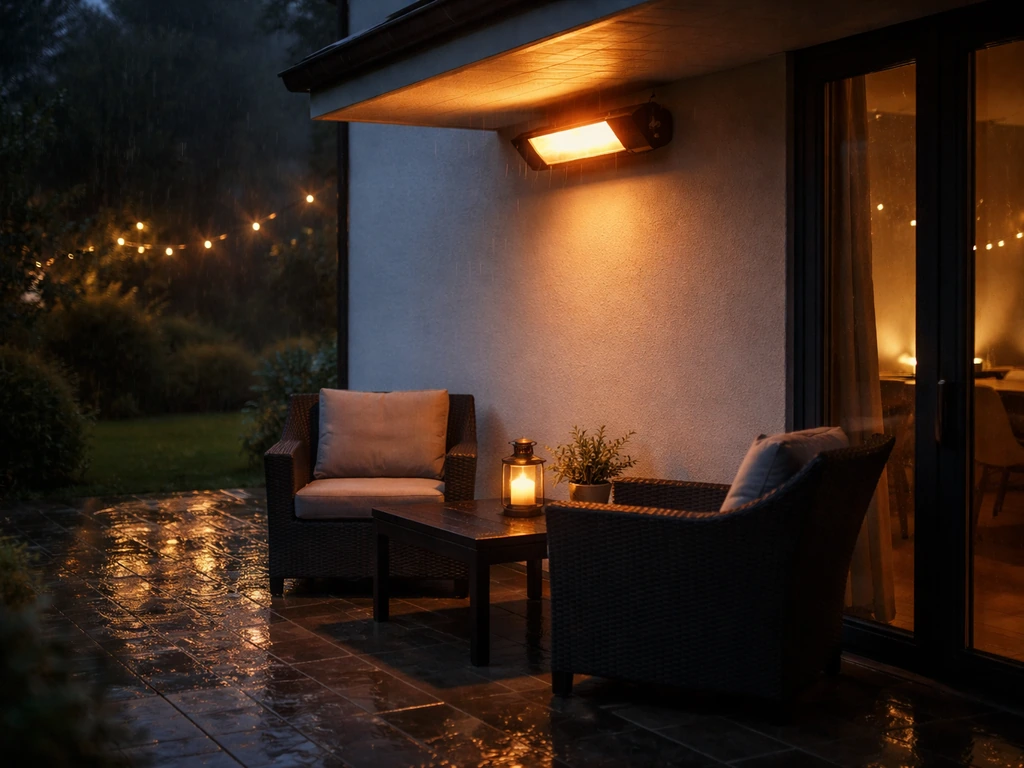
How infrared patio heaters actually work (and why it matters outdoors)
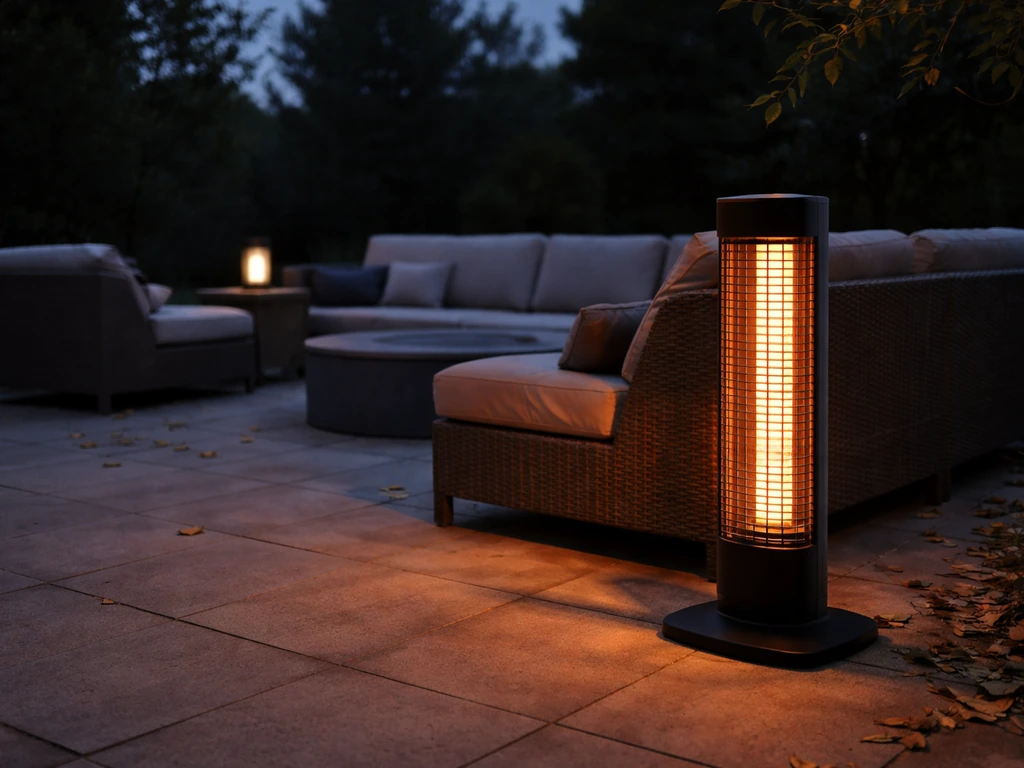
Most patio heaters, propane gas towers, electric fan heaters, even some pellet options, warm the air around you. That feels fine indoors, but outside, a breeze carries that warm air away almost instantly. Infrared heaters work differently. They emit infrared radiation, which travels in waves and heats solid objects and people directly, rather than the air between you and the heater. Think of standing in sunlight on a cold day: the air might be chilly but you feel warm. That's infrared at work.
This makes infrared heaters genuinely more effective outdoors than convection-style alternatives, especially in the UK where we're constantly dealing with wind and intermittent rain. The heat isn't wasted on air that gusts away, it hits you, your table, your guests, and your patio furniture directly.
Within infrared heaters, there are a few different element types worth understanding. Short-wave heaters use quartz halogen, quartz tungsten, or quartz carbon-fibre tube emitters. These heat up almost instantly (within seconds), glow visibly orange, and produce intense, focused warmth. Medium-wave heaters take longer to reach full output and don't glow as brightly, but they tend to feel gentler and produce slightly less glare. For most UK patio use, short-wave quartz or carbon-fibre elements are the practical choice, they're responsive, powerful, and widely available.
One more component that's easy to underestimate: the reflector. The reflector behind the element isn't just there to look nice, its shape and material determine how the infrared energy is directed. A well-designed parabolic or angled reflector focuses heat toward your target zone and minimises sideways or upward loss. Cheap heaters often cut corners here, and you'll feel the difference in coverage and efficiency. Always check whether a model mentions its reflector design, and treat it as a quality signal.
Quick shortlist: what to check in every UK infrared model
Before you look at individual models, run every heater you're considering through this checklist. These are the specs that actually determine whether a heater will work well in your specific situation.
| Spec | What to look for | Why it matters |
|---|---|---|
| Wattage / heat output | 1,500W for small areas; 2,000–3,000W for medium patios; 3,000W+ for larger zones | Directly determines how much space the heater can warm effectively |
| Element type | Quartz carbon-fibre or quartz halogen for fast heat; medium-wave for softer ambience | Affects heat-up speed, glow intensity, and longevity |
| IP rating | IP44 minimum for sheltered spots; IP55 or IP65 for exposed patios and rain-prone areas | UK weather demands real weatherproofing — don't skip this |
| Coverage area | Manufacturer claims in m²; treat with scepticism in open/windy settings — halve the estimate | Prevents buying underpowered heaters for your space |
| Mounting type | Wall, ceiling, freestanding, or tabletop — must suit your setup | Affects installation complexity, flexibility, and safety |
| Controls | Remote control, timer, and multiple heat settings add real convenience | Especially useful when heater is mounted out of reach |
| Safety features | Overheat protection, cool-touch guard, tip-over cutoff (for freestanding) | Non-negotiable, especially in households with children or pets |
| Noise level | True infrared heaters are silent; avoid models with any fan assistance if noise is a concern | Convection fans ruin the quiet outdoor atmosphere |
| Warranty and after-sales | 2 years minimum; UK-based support is a bonus | Important for a product exposed to weather year-round |
Infrared patio heater reviews UK: top picks and who they suit
Rather than recommending a single universal winner, here are the key categories of infrared heaters available in the UK market right now, with honest guidance on who each suits best. If you're specifically looking for patio infrared heater reviews, compare these categories side-by-side to match the wattage and mounting style to your space. Specific model availability shifts, but these categories remain consistent, and knowing which category fits your needs makes model-level shopping much faster.
Best for small covered patios and balconies: compact wall-mount models (1,500W–2,000W)
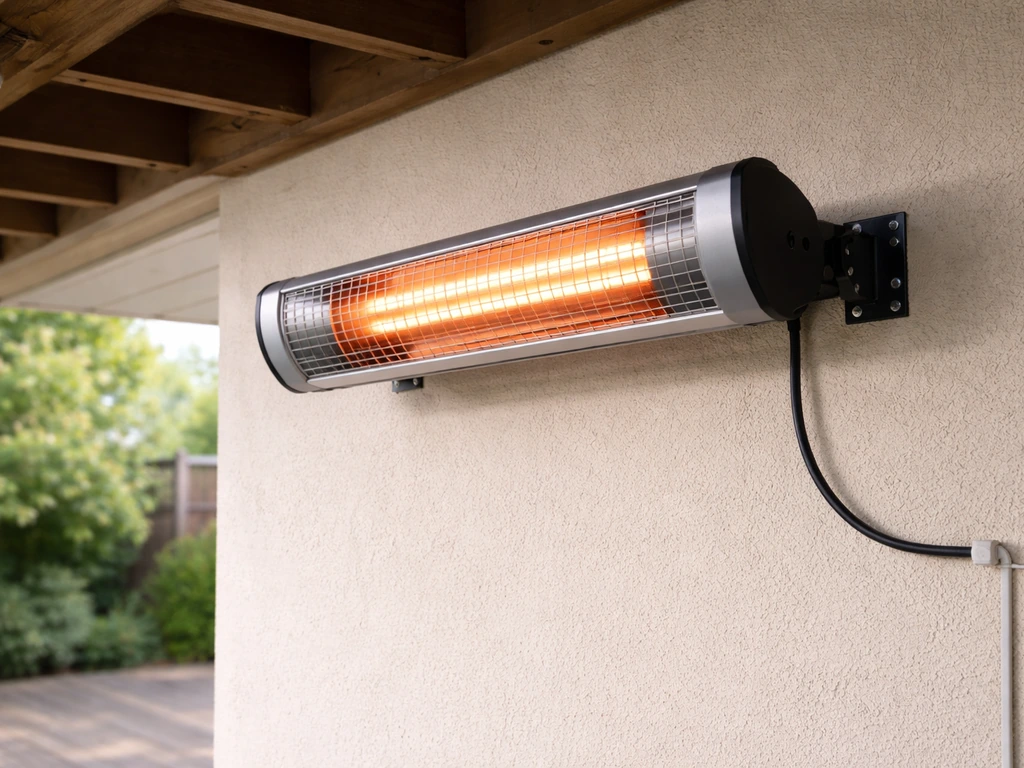
A 1,500W to 2,000W wall-mounted infrared heater is the sweet spot for a small covered UK patio, a balcony, or a lean-to. These models are typically bracket-mounted at head height on a wall, angle downward toward the seating area, and plug into a standard 13A socket. Look for IP44 or better, a carbon-fibre or quartz element, and a remote control so you're not getting up to adjust it.
Brands like Herschel, Kettler, and various own-brand options from the major UK electrical retailers all offer solid models in this bracket. Coverage of around 6–8 m² is realistic for sheltered use. If you're comparing options, the best electric infrared patio heater is the one that matches your outdoor conditions, coverage area, and IP rating.
Best for medium-sized open patios: 2,000W–3,000W adjustable-head wall or ceiling mount
For a medium patio of roughly 10–15 m² with some exposure to wind, step up to 2,500W or 3,000W and prioritise an IP55 or IP65 rating. Ceiling-mounted models work well under pergolas, while adjustable wall-bracket models let you tilt and swivel to target the seating area precisely. The Herschel Summit range and similar premium-tier products in this wattage bracket typically include a well-engineered reflector, multi-power settings, and a proper weatherproof build. Expect to need a dedicated fused spur installation if the model runs above 2,000W (your electrician can advise).
Best for large terraces or commercial-style use: 3,000W+ panel or tube heaters
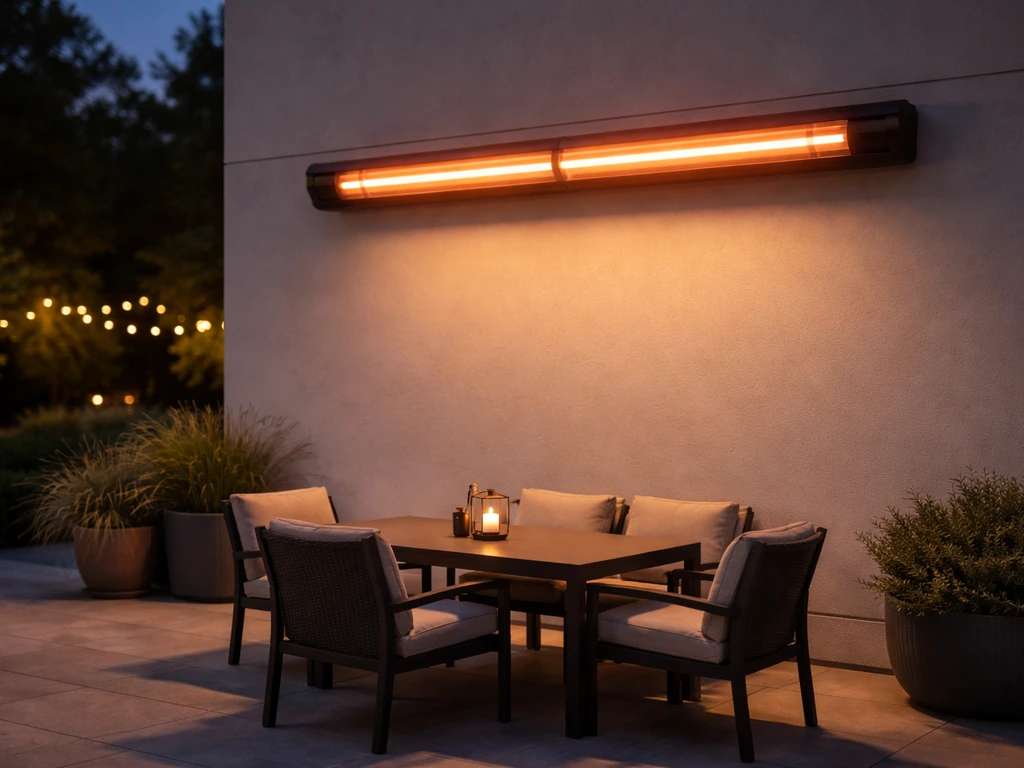
For larger outdoor spaces, think a 20 m²+ terrace, a garden dining area, or a pub/restaurant-style setup, you'll likely need multiple heaters or a single high-output unit of 3,000W to 4,000W. Tube-style infrared heaters (long bar heaters, sometimes called patio bar heaters) distribute heat across a wider linear area and suit pergolas or overhead installations very well. These almost always require hardwired installation rather than a plug-in connection. Brands like Infralia, Burda, and Bromic have strong reputations in this space and are worth comparing against each other on element quality and reflector design.
Best for flexibility and renters: freestanding or tabletop electric infrared heaters
If you can't mount anything to walls or ceilings, freestanding infrared heaters with a weighted base are a practical alternative. They typically sit at standing height and direct heat across a small seating area, covering roughly 6–10 m². For a detailed briza infrared patio heater review, compare coverage, element type, and IP rating against how exposed your patio really is.
Look for a tip-over cutoff switch (mandatory safety feature for freestanding use), a stable wide base, and an IP44 rating at minimum. These are less efficient than fixed mounts because you lose some upward and sideways heat, but the portability is genuinely useful. Tabletop models in the 600W–1,200W range suit a small bistro table for two on a covered balcony, don't expect them to heat a full patio.
It's also worth comparing infrared-specific products against broader radiant patio heater categories. There's meaningful overlap with what gets marketed as 'radiant patio heaters,' and the core buying logic is largely the same, element type, reflector quality, and IP rating remain the deciding factors regardless of what the product label says.
Choosing by patio size, setup, and where to mount it
Getting the wattage wrong is the most common mistake people make when buying a patio heater. The table below gives you a starting framework, but remember: these figures assume a sheltered or semi-sheltered setup. If your patio is exposed to regular wind, treat your space as one size larger than its actual dimensions.
| Patio size | Recommended wattage | Best mounting type | IP rating needed |
|---|---|---|---|
| Up to 8 m² (small patio/balcony) | 1,500W–2,000W | Wall bracket or tabletop | IP44+ |
| 8–15 m² (medium patio) | 2,000W–3,000W | Wall or ceiling mount | IP55+ |
| 15–25 m² (large patio/terrace) | 3,000W–4,000W or 2x 2,000W | Ceiling/overhead or dual wall mount | IP55+ |
| 25 m²+ (large terrace/garden dining) | Multiple units or 4,000W+ bar heater | Hardwired ceiling/bar installation | IP65 recommended |
Covered vs. uncovered patios
A covered patio (under a pergola, lean-to, or canopy) changes the equation in your favour. The ceiling or structure reflects some infrared energy back downward, which improves efficiency. It also means you can sometimes get away with slightly lower wattage than an open-air equivalent. Fully uncovered spaces with open sky overhead lose heat upward, and wind dramatically reduces effective coverage, so always err toward higher wattage and consider windbreak screens to help the heater do its job.
Wall vs. ceiling vs. freestanding: which works best where
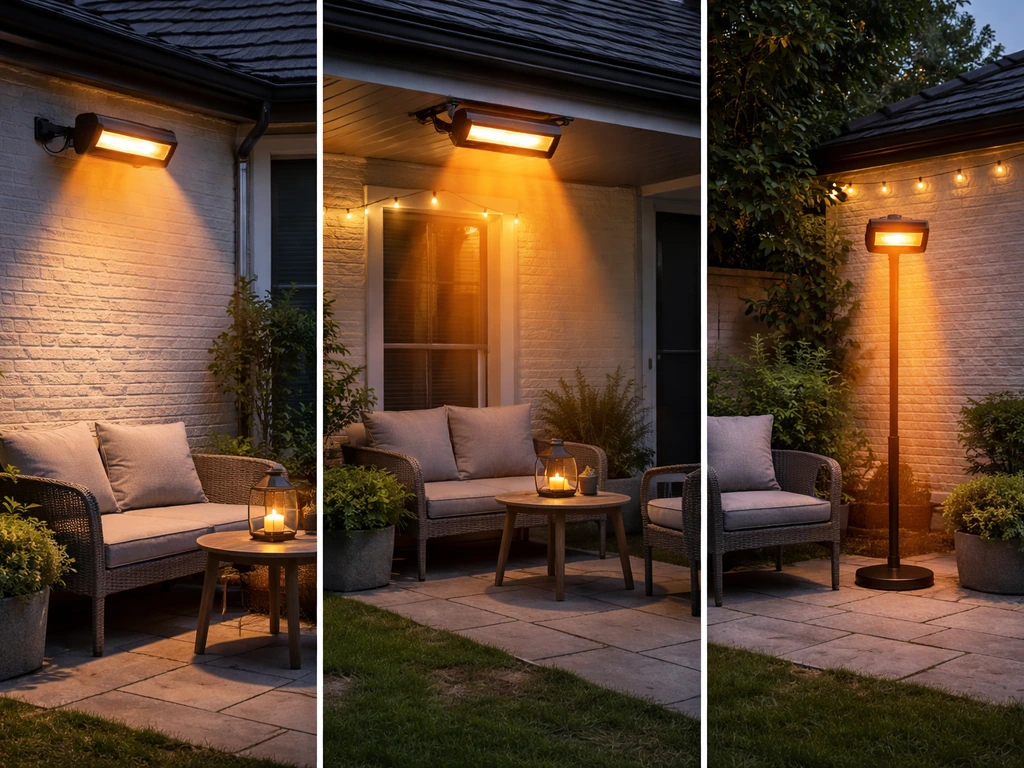
Wall mounting at around 1.8m to 2.2m height, angled 30–45 degrees downward, is the most practical setup for most UK patios. It keeps the heater out of reach, directs heat precisely at the seating zone, and is relatively simple to install. Ceiling mounting suits pergolas and covered areas well, as heat radiates straight down onto the people below. Freestanding models give you maximum flexibility but are less efficient and require safe placement away from flammable materials, children, and walkways. Avoid placing any infrared heater closer than 0.5m to flammable surfaces, check the manufacturer's minimum clearance distance, which varies by model.
Running costs in the UK: what your electricity bill actually looks like
As of mid-2026, the UK electricity unit rate sits at roughly 24–25p per kWh for most households under the standard price cap (check your own tariff, as rates vary). Here's what that means for common infrared heater wattages, run for a typical 2-hour evening session.
| Heater wattage | Cost per hour (at 24p/kWh) | Cost per 2-hour session | Approx. seasonal cost (3x/week, 6 months) |
|---|---|---|---|
| 1,500W | 36p | 72p | ~£56 |
| 2,000W | 48p | 96p | ~£75 |
| 2,500W | 60p | £1.20 | ~£94 |
| 3,000W | 72p | £1.44 | ~£112 |
These figures assume the heater is running at full power continuously. In practice, most people use power settings: a 3,000W heater run at its mid setting (1,500W) costs the same as a 1,500W model at full blast. This is why multiple power settings are a genuinely useful feature, not just a marketing tick, you can dial down on milder evenings and save money without turning the heater off entirely.
Compared to propane or butane gas patio heaters, electric infrared heaters are generally more expensive per hour to run based on energy unit cost alone, but they're far easier to control, don't need refilling, and don't produce combustion by-products. Over a full season, a well-sized electric infrared heater in a covered patio often works out comparable to gas because you're not heating wasted air, the efficiency of radiant heating genuinely makes a difference. If running costs are your priority, a medium-power infrared heater on a smart plug timer will give you much better control than a gas tower you fire up and forget.
Safety, weatherproofing, and installation guidance
IP ratings explained simply
IP ratings tell you how well a heater is protected against dust and water. The two digits matter: the first covers dust/solids, the second covers water. For UK outdoor use, IP44 means protected against splashing water from any direction, adequate for a sheltered patio. IP55 adds protection against water jets and is suitable for semi-exposed positions. IP65 is fully dust-tight and handles stronger water jets, which is what you want if the heater is exposed to driven rain or is mounted in a position where it gets hit directly. Never use an indoor heater or a heater rated below IP44 outdoors, it's both a safety and a warranty issue.
Installation: what you can DIY and what needs an electrician
Plug-in models up to 2,000W (standard 13A plug) can be installed without an electrician, just bracket, plug, and go. Above 2,000W, or for any hardwired installation, you need a Part P-compliant electrician to install a dedicated fused spur or circuit. This is UK building regulations, not optional, and it affects both safety and home insurance validity. Budget around £100–£200 for a straightforward outdoor spur installation, and ask for an Electrical Installation Certificate when the work is done.
Safety features you shouldn't compromise on
- Overheat protection: cuts power automatically if the element exceeds a safe temperature
- Cool-touch guard or cage: essential if children or pets are nearby; prevents contact burns
- Tip-over cutoff: mandatory for any freestanding model; check it's present before buying
- Minimum clearance distances: always follow the manufacturer's stated distance from walls, ceilings, and flammable materials
- CE/UKCA marking: confirms the product meets UK safety standards; don't buy from suppliers who can't confirm this
- RCD protection: if your outdoor socket isn't already RCD-protected, add an RCD adaptor for plug-in models
Your buyer's checklist and next steps
You've got the framework, here's how to pull it together into an actual purchase decision. Work through these steps in order and you'll avoid the most common mistakes.
- Measure your patio and identify whether it's covered, semi-covered, or open — this determines your minimum wattage requirement
- Decide on mounting type (wall, ceiling, or freestanding) based on your space and whether drilling/hardwiring is an option
- Set your IP rating floor: IP44 for sheltered covered patios, IP55 for semi-exposed, IP65 for fully exposed positions
- Check the power requirement: if the heater is above 2,000W, budget for an electrician and a dedicated spur before you buy
- Shortlist models with at least two power settings, a remote or timer, and overheat protection as standard
- Calculate the running cost using your actual tariff rate and your typical usage hours — a 2,500W model at 24p/kWh costs 60p per hour
- Read UK-specific reviews (not just generic product listings) and look for feedback from people with similar setups — covered vs. open, windy vs. sheltered
- Verify the warranty is at minimum 2 years and that replacement parts or after-sales support are available in the UK
- Once installed, position the heater to direct heat at the seating zone rather than the centre of the patio — people, not empty space, should be in the beam
If you want to go deeper on any specific product category covered here, whether that's comparing specific electric infrared models, digging into radiant heater reviews from real UK users, or looking at what's changed in the market since earlier buying guides, there's a lot more detail worth reading through before you finalise. The core advice stays consistent: match the wattage to your space, get the IP rating right for your exposure level, and don't skip safety features to save a few pounds. Get those three things right and you'll have a heater that genuinely extends your outdoor season, not one that disappoints on its first cold October evening. If you're searching specifically for the best infrared heater for patio use, pay close attention to wattage, IP rating, and mounting options to match your space.
FAQ
Do infrared patio heaters actually warm people, or do they mostly heat the air like other heaters?
Infrared heaters primarily warm solid objects and people in their line of sight, not the air volume. That means if you sit off to the side of the beam, or behind patio furniture, you may feel less warmth even though the heater is running.
How much spacing do I need between an infrared heater and outdoor furnishings?
Use the manufacturer’s minimum clearance figure, not a generic rule. Even though infrared is less “hot air” than convection, the front cover and element area can still get hot, so keep cushions, covers, and umbrellas well clear (especially for wall and ceiling units).
Will a wall-mounted infrared heater work if my patio is very windy?
It works better than air-heating models, but wind can still reduce coverage by pushing you out of the effective beam zone and cooling surfaces. In high wind, choose higher wattage within the recommended category and angle the heater to concentrate warmth at seating, and consider a windbreak screen.
Are quartz or carbon-fibre infrared elements better for UK patios?
Quartz short-wave elements generally reach output quickly and can feel more intense, while carbon-fibre options often produce a steadier feel with less visible glow and can be easier on the eyes for some people. The “better” choice usually depends on comfort preferences and how exposed your seating is, not just heat output.
What’s the difference between IP44, IP55, and IP65 in practical everyday use?
IP44 is mainly for sheltered patios where splashes happen occasionally, IP55 suits semi-exposed spots where jets and heavier rain are plausible, and IP65 is built for driven rain and direct impacts. If your heater is under an opening that still catches sideways rain, consider IP65 rather than relying on a “covered” assumption.
Can I leave an outdoor infrared heater outside year-round?
You can leave weather-rated models outside, but “outdoor rated” does not mean “no maintenance.” After wet spells, let the heater cool, keep the vents unobstructed, and consider covering or storing if the manufacturer recommends it for winter to protect electrical components.
Do I need a hardwired electrician for all infrared patio heaters in the UK?
No, plug-in versions up to 2,000W can usually be installed without an electrician if the model uses a suitable outdoor-rated plug and socket setup. Any heater above that wattage, or any hardwired install, typically requires a Part P-compliant electrician and a dedicated fused spur or circuit.
Is a smart plug enough, or should I use the heater’s built-in timer and remote?
A smart plug can control on/off schedules, but it cannot adjust multi-power settings or precisely manage warm-up behavior like a heater’s remote or controller. If you want power savings on mild evenings, prioritize models with multiple power levels or a built-in timer/thermostat function.
How do I estimate running cost if I don’t know my heater’s exact power setting?
Use the heater’s selected wattage in kW (for example, 1,500W is 1.5kW) multiplied by your tariff pence per kWh. Also factor that many people use mid settings, not full power continuously, so the practical cost is often lower than worst-case calculations.
What if my heater is mounted too high or at the wrong angle, will it still work?
Mounting height and tilt affect coverage because infrared needs a clear path to where you sit. If it’s aimed too high, you may warm the outdoor air and furniture backs rather than faces and laps, so adjust the angle toward the seating zone within the manufacturer’s guidance.
Do tabletop or small bistro infrared heaters require the same safety clearances?
They still need clearance, but the risk is often easier to underestimate because they look “small.” Keep them away from tablecloths, umbrellas, and any fabric covers, and ensure the heater is stable on a flat, non-combustible surface.
Are freestanding infrared patio heaters safe on decking or near foot traffic?
Choose a model with a tip-over cutoff and a wide, weighted base. Place it away from walkways where feet can bump it, and keep it away from flammable materials even if the IP rating is suitable, because impact or instability can create a safety hazard.
Can I use an infrared heater under a pergola with slats or partial coverage?
Often yes, but slats and open gaps can let infrared energy escape upward, reducing effective warmth. If your structure has significant openings, consider a higher wattage or multiple units, and aim the heat downward toward seating rather than straight out at the open air.
What is the most common reason people are unhappy with an infrared patio heater purchase?
Mismatched coverage, usually from underestimating wind exposure or sitting outside the heater’s effective beam. Confirm the heater’s stated coverage with your actual patio layout, not just the square meter number, and verify the mounting angle can target where people will sit.