
Radiant patio heaters are the right call for most outdoor spaces, especially if wind is a factor. Unlike convection heaters that warm the air (which then blows away the moment a breeze picks up), radiant heaters send infrared energy directly to people and surfaces in their path. You feel it immediately, whether it's breezy or calm. The best overall pick for most homeowners is an electric infrared wall or ceiling-mount unit in the 1,500W range for smaller patios, or a 40,000 BTU propane radiant tower for larger, open-area use. Below is everything you need to match the right model to your actual space.
Radiant Patio Heater Reviews: Best Picks by Size and Fuel

Willa Brennan
12 Jun 2026
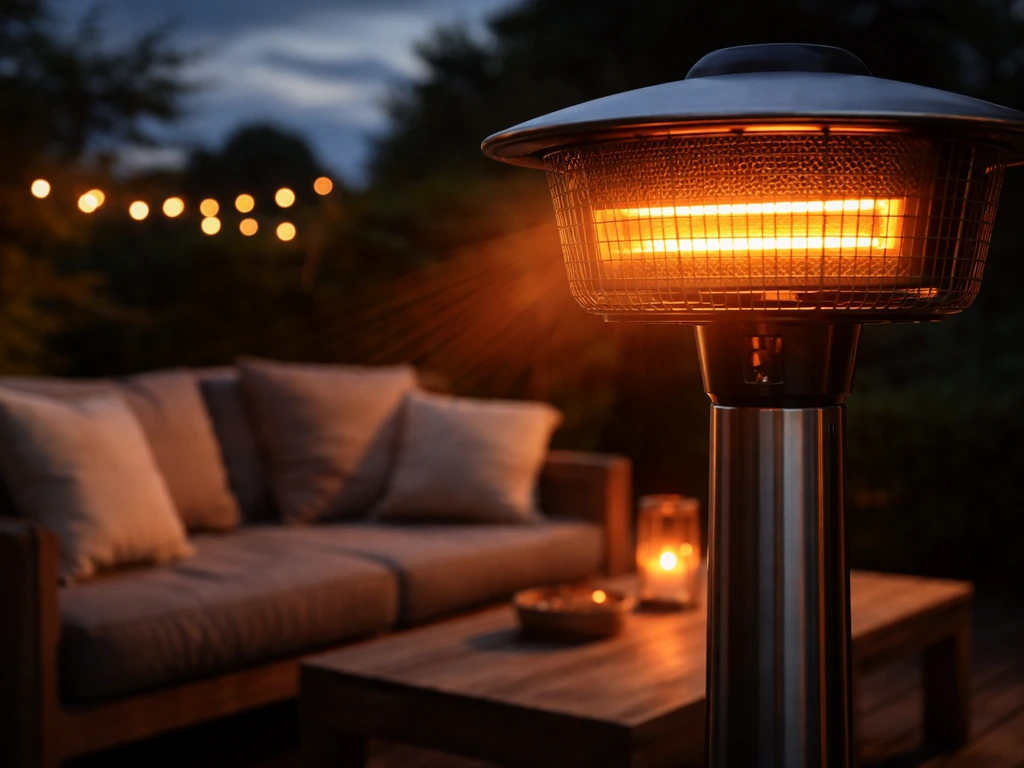
What radiant patio heaters are (and why they feel different)
A radiant patio heater works by emitting infrared radiation, which is basically the same mechanism as sunlight warming your skin on a cool day. The energy travels through the air without heating it, and the moment it hits a person, a chair, or a table surface, it converts to warmth. That's a fundamentally different experience from a convection heater, which heats the air around it and relies on that warm air staying put long enough to reach you.
In wind, convection heating is nearly useless. Cold replacement air wipes out the warm pocket almost as fast as it forms. Infrared radiant heat, on the other hand, doesn't care about wind because it's not heating air at all. You can be standing in a stiff breeze and still feel the warmth from an infrared beam pointed at you. This is why radiant heaters dominate restaurant patios, covered pergolas, and any outdoor setup where comfort actually matters.
Within the radiant category, you'll see a few emitter types. Quartz tube heaters (short-wave, IR-A) heat up and cool down quickly and perform especially well outdoors because their low thermal mass makes them less susceptible to wind heat loss. Carbon-fiber emitters, like those used in the Ouellet OCF series, also reach temperature fast and produce only a soft ambient glow rather than a harsh orange light. Both outperform the older ceramic emitters for outdoor use. Electric infrared units and propane radiant models both use these principles, just with different energy sources.
Electric vs propane (and other radiant types) compared
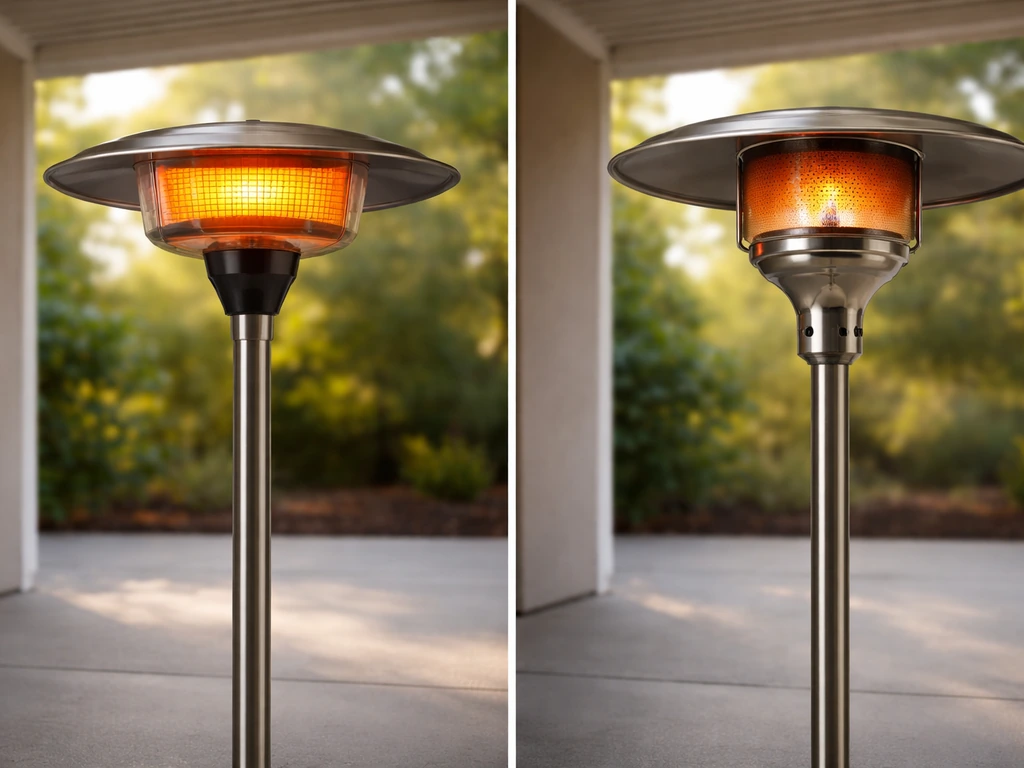
Choosing between electric and propane comes down to your setup: do you have a covered space with an outlet nearby, or a big open yard where running wiring isn't practical? Here's how the main radiant types stack up across the factors that actually matter.
| Feature | Electric Infrared | Propane Radiant | Natural Gas Radiant |
|---|---|---|---|
| Startup time | Instant (2–3 seconds) | 30–60 seconds to stabilize | Similar to propane |
| Wind performance | Excellent (no combustion to extinguish) | Good, but flame can be affected | Good, but similar flame concerns |
| Typical output | 1,500W (wall/ceiling mount) | 18,000–48,000 BTU (freestanding) | 30,000–50,000 BTU (freestanding or overhead) |
| Coverage area | 150–300 sq ft per unit | Up to 450 sq ft (18,000 BTU) to larger areas (40,000+ BTU) | Similar to propane |
| Running cost (per hour) | ~$0.18–$0.23 at avg. U.S. electricity rates | ~$1.70/hr for a 40,000 BTU model | Lower than propane with gas line |
| Installation | Plug-in (120V) or hardwired | No install needed, tank swap | Requires gas line hookup |
| Portability | Low (usually wall/ceiling mounted) | High (freestanding, wheeled) | Low (fixed line) |
| Safety shutoffs | Overheat protection standard | Tip-over switch, flame-out shutoff | Same as propane |
| Weatherproofing | IP55–IP65 typical for outdoor rated models | Built for outdoor use, no IP rating system | Built for outdoor use |
| Best for | Covered patios, pergolas, balconies | Open yards, events, large areas | Permanent outdoor kitchens, large patios |
Electric infrared is the better choice when you have a covered space (pergola, screened porch, covered patio) because you can mount the heater overhead, direct it where people sit, and control it with a remote or thermostat. Propane radiant towers give you flexibility to move the heat source around a large open yard and deliver more raw BTUs per unit, which matters in genuinely cold weather. Natural gas makes the most sense if you already have a gas line running to an outdoor kitchen or fire pit area and want a permanent, lower-cost-per-hour solution. Pellet-based radiant options exist but are niche and better suited to fire pit ambiance than targeted heating comfort.
Top radiant patio heater reviews by use case
Best for small patios and balconies: Dr. Infrared DR-238
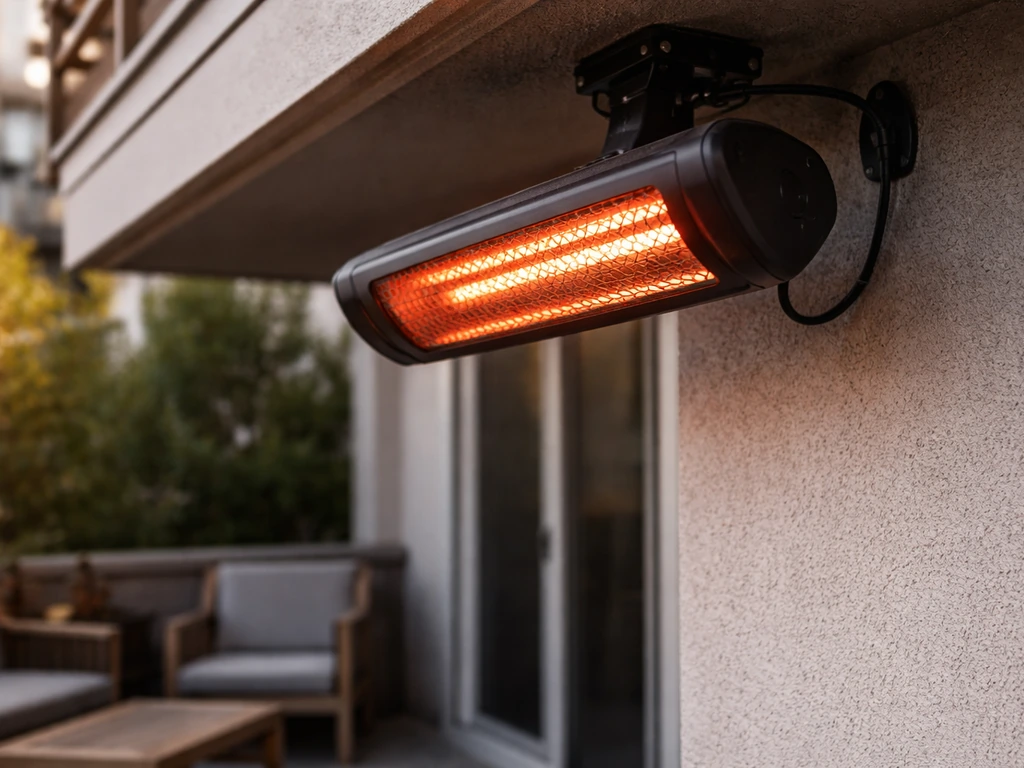
The Dr. Infrared DR-238 is a solid wall or ceiling-mount electric infrared heater with three power settings: 900W, 1,200W, and 1,500W. It runs on a standard 120V plug (no electrician needed), comes with a remote, and delivers instant warmth. The manufacturer claims up to 1,000 sq ft of heating area, which is generous marketing math, but for a covered balcony or small covered patio in the 150–300 sq ft range, this unit punches above its weight. It's a practical, low-hassle starting point for anyone who just wants a plug-in solution that works.
Best weatherproof electric pick: Heat Storm HS-1500-OTR-R
The Heat Storm HS-1500-OTR-R is marketed as weatherproof with IP35/65 protection and delivers instant, directional heat with a remote control. It's wall-mountable, 1,500W, and designed specifically for outdoor use. Coverage in real conditions runs around 150 sq ft depending on ceiling height and exposure. It's a good pick if you're in a wetter climate and want something you can leave mounted outdoors year-round without worrying about moisture damage.
Best for quick setup anywhere: ThermoMate 1500W
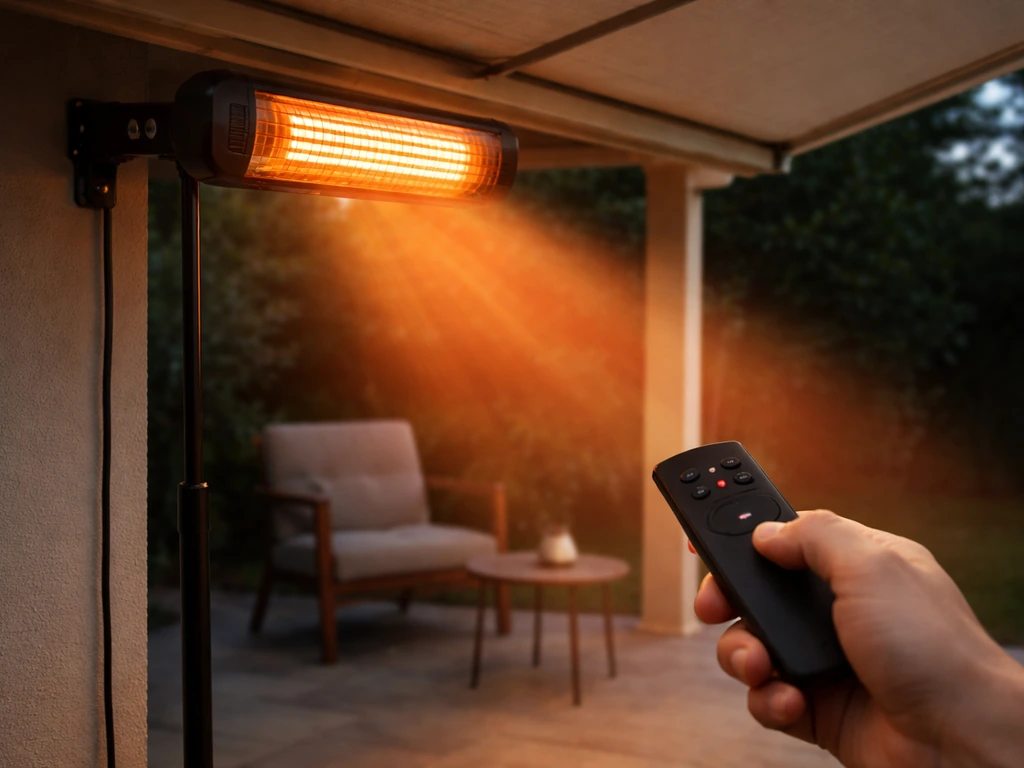
The ThermoMate 1500W infrared patio heater is straightforward: it heats up in about 3 seconds, covers 200–300 sq ft, includes a remote, and plugs into a standard outlet. It's a versatile option if you want something you can reposition seasonally. The controls are simple power-level based rather than a full thermostat setpoint, which is typical for this category of outdoor infrared heater.
Best for style-conscious covered patios: Ouellet OCF Series
Ouellet's OCF series uses carbon-fiber emitter technology that produces directional infrared warmth with minimal visible glow, which matters if you don't want an orange light competing with your string lights. The 1,500W and 3,000W models include an integrated on/off regulator and a remote with 6 heat settings, giving you genuine control rather than just on/off. The OCF carries an IP65 weatherproof rating, making it one of the more robustly protected electric options on the market. This is a premium pick for a covered patio or pergola where looks and fine-tuned control both matter.
Best budget electric with decent ratings: Briza 1500W
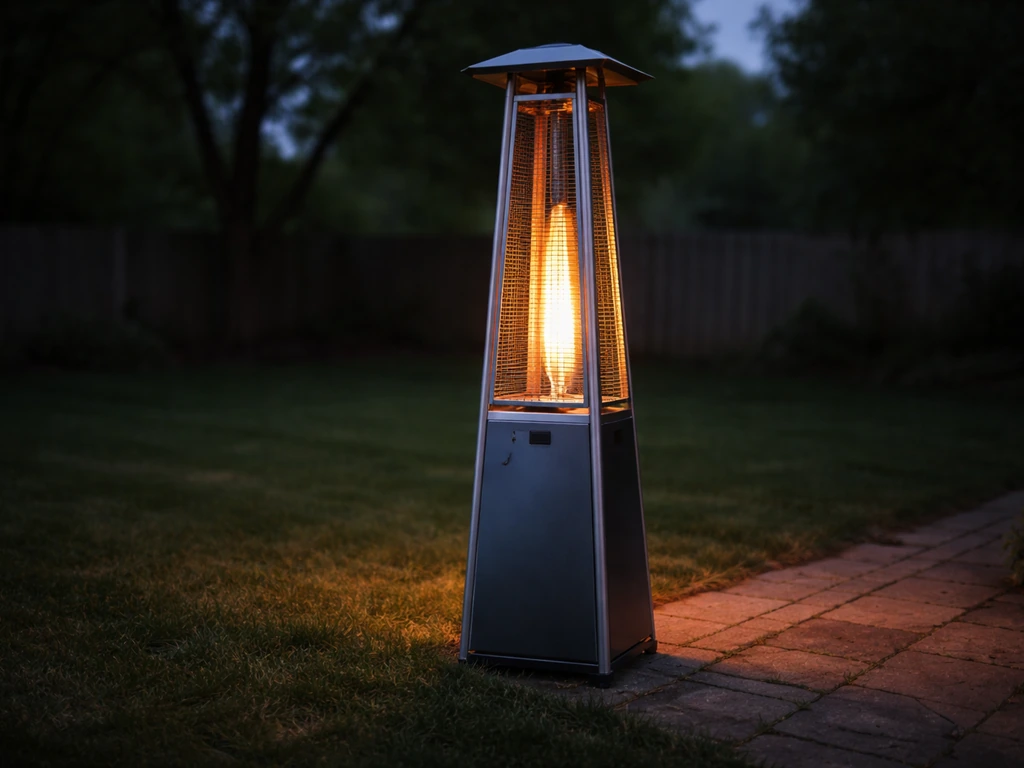
The Briza 1500W comes in at a lower price point, carries an IP55 outdoor rating, and works as a competent infrared heater for covered patios. The control system is power-level based without a thermostat setpoint, and Briza's own documentation recommends using it in areas protected from strong wind and rain for optimal performance and safety. That's honest guidance. It's a solid budget choice for a sheltered spot, but don't push it into fully exposed conditions. A more detailed breakdown of this model is available in a dedicated blank" rel="noopener noreferrer">Briza infrared patio heater review on this site. If you’re considering the Briza for a sheltered patio, our Briza infrared patio heater review goes deeper into coverage and day-to-day performance.
Best for open yards and large areas: 40,000 BTU propane radiant tower
For a large open backyard, a 40,000–48,000 BTU freestanding propane radiant heater is the practical answer. Models from Mr. Heater (including the 48,000 BTU Portable Propane Patio Heater) and the Dyna-Glo HeatAround 360 (18,000 BTU, good for up to 450 sq ft) cover this range. Look for CSA certification, a tip-over shutoff that activates at a 45-degree tilt, and an automatic flame-out shutoff. At 40,000 BTU you'll burn through about 0.44 gallons of propane per hour at full output, so running cost scales directly with how often you're at full blast.
Sizing and placement for real coverage (including windy patios)
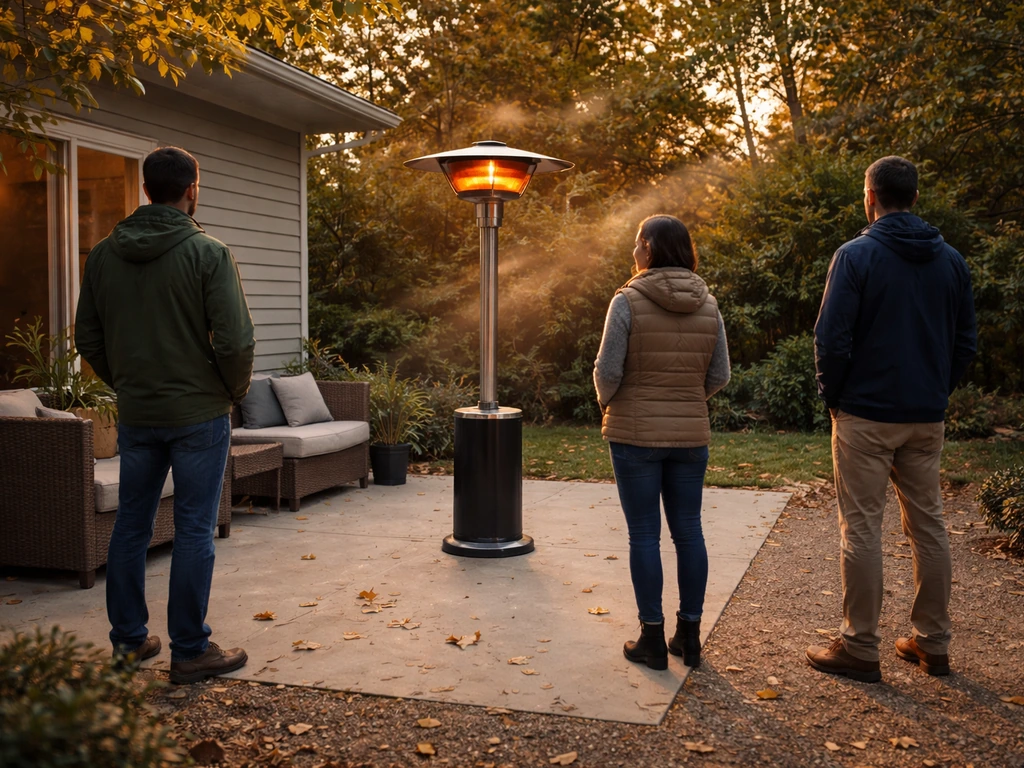
The indoor "20 BTU per square foot" rule doesn't translate well to outdoor radiant systems because you're heating people, not conditioning air in an enclosed room. MAD Design USA explains that this indoor 20 BTU per square foot shortcut does not map well outdoors because radiant heating targets people directly rather than conditioning air that drifts away The indoor "20 BTU per square foot" rule doesn't translate well to outdoor radiant systems.
A better starting point for electric infrared is roughly 150–200 watts per square meter in a protected space like a covered patio, and up to 300 watts per square meter in more exposed locations. That means a 1,500W heater realistically covers about 75–100 sq ft in a sheltered spot, not the 1,000 sq ft some marketing claims suggest.
For propane, the same principle applies. An 18,000 BTU heater handles a tightly grouped seating area in mild cold. A 40,000+ BTU unit is what you want for a larger gathering space or genuinely cold nights below 40°F. Plan on one heater per defined seating zone rather than trying to cover an entire yard with one unit.
Mounting height matters significantly for electric overhead heaters. A minimum of 6 feet (1.8m) from floor to heater face is the standard for UL-listed units, and some manufacturers (like Infratech) specify 8 feet for non-listed configurations. Too high and the beam spreads too wide and weakens; too low and you're cooking people's heads. The sweet spot for a covered patio ceiling mount is typically 8–10 feet of ceiling height. Keep 18 inches of clearance on all sides of the heater, and at least 36 inches directly in front of the emitter face, away from combustibles.
For windy patios, mount electric infrared heaters under roof overhangs or pergola structures rather than on open posts. Aim the beam slightly downward toward seating positions rather than horizontally across the space. A floor reradiates heat back up to occupants, so warming the surface under a covered patio actually extends the comfort zone. For propane towers in wind, look for models with a wind guard around the burner assembly and place them with the reflector angled toward the seating group.
Safety, weatherproofing, and reliability factors to check
On the electric side, IP ratings are your guide to weather resistance. IP55 means the heater is protected against dust and low-pressure water jets from any direction, which covers most rain scenarios. IP65 adds full dust-tight protection. For covered patios, IP55 is usually sufficient. If the heater will be exposed to direct rain, go IP65 minimum. Avoid any heater without an outdoor IP rating for patio use, regardless of how it's marketed.
For propane radiant heaters, the safety features to confirm before buying are: an automatic tip-over shutoff (ideally activating at 45 degrees), a flame-out shutoff that cuts the gas if the pilot or burner goes out, and a safety certification from CSA or a similar recognized body. All of these should be listed in the product specs, not just implied in marketing copy. Mr. Heater's MH40 overhead radiant and Mi-T-M's propane radiant models both document a tip-over switch and automatic flame-out shutoff in their product sheets. That's the standard to hold other brands to.
For electric heaters, look for overheat protection (a thermal cutoff that shuts down the unit if it gets too hot) and make sure the heater is listed for outdoor use, not just outdoor-adjacent. A plug-in unit running outdoors should also be plugged into a GFCI-protected outlet, which protects against electrical shock if moisture reaches the cord or receptacle.
Reliability over time often comes down to build quality of the emitter and the reflector. Quartz tube emitters will need replacement eventually (Infratech sells replacement elements, and this is a normal maintenance expectation for this category). A dented or dirty reflector dramatically reduces effective heat output. Check that your model has accessible reflectors you can clean and, ideally, a housing that makes emitter replacement a reasonable DIY task.
Cost to run and maintenance expectations by fuel type
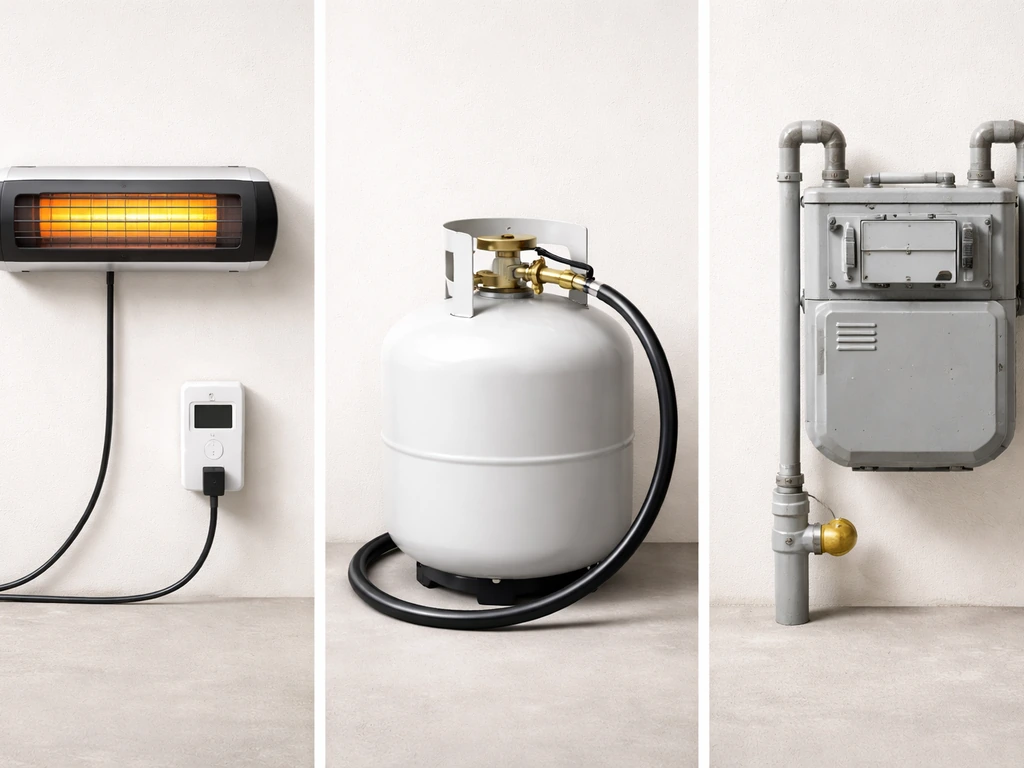
Electric infrared running costs
A 1,500W electric infrared heater uses 1.5 kWh per hour of operation. At the U.S. average residential electricity rate of around $0.16–$0.17 per kWh, that's roughly $0.24–$0.26 per hour at full output. Running it 3 hours an evening adds up to under a dollar a night for a covered patio. Electric models also have no combustion maintenance: no fuel tank to swap, no burner to clean. The main maintenance is periodic cleaning (wipe the housing, rinse the reflector, clean the quartz element with isopropyl alcohol when cool and unplugged) and eventual emitter replacement, typically every few years of regular use.
Propane running costs
A 40,000 BTU propane heater burns about 0.44 gallons of propane per hour at full output. At current propane prices around $3.50–$4.00 per gallon, that's roughly $1.54–$1.76 per hour, consistent with estimates around $1.70/hr commonly cited in the industry. A standard 20-lb tank holds about 4.7 gallons, giving you roughly 10–11 hours of full-output heating per tank. In practice, you won't run at full blast the whole time, so a tank typically lasts 2–3 evenings of actual use. Maintenance involves checking hoses and connections for leaks seasonally, cleaning the burner screen, and storing tanks safely per manufacturer guidance.
Natural gas running costs
Natural gas radiant heaters cost significantly less per BTU than propane once you have the line installed. The tradeoff is the upfront cost of running a gas line and having a licensed plumber or gas technician do the hookup. If you're planning a permanent outdoor kitchen or large covered entertainment space, natural gas almost always makes financial sense over time. Maintenance is similar to propane: annual hose/connection inspection, burner cleaning, and professional gas system checks every few years.
Quick recommendation checklist and next steps
Use this checklist to narrow down which radiant patio heater actually fits your situation before you buy anything.
- Covered or open? Electric infrared wall/ceiling mounts work best under a roof, pergola, or overhang. For fully open spaces, a propane freestanding tower is more practical.
- How big is the seating zone? Not the whole patio, just where people actually sit. Budget 150–200W per square meter (covered/protected) or up to 300W/sq m in exposed locations for electric infrared. For propane, 18,000 BTU handles a compact grouped seating area; 40,000+ BTU covers a larger or colder space.
- Do you have a 120V outlet nearby? Plug-in electric heaters (DR-238, ThermoMate, Briza) require nothing else. Hardwired models need an electrician. Propane needs no wiring at all.
- Check the IP rating for electric models. IP55 minimum for covered outdoor use, IP65 if the heater might see direct rain or spray.
- Confirm safety features. For propane: tip-over shutoff + flame-out shutoff + CSA/ETL certification. For electric: overheat protection + outdoor IP rating + GFCI outlet.
- Mounting height: aim for 8–10 ft ceiling height for overhead electric mounts. Minimum 6 ft from floor face for UL-listed models. Maintain 18 in clearance on all sides and 36 in directly in front of the emitter.
- Budget for ongoing costs. Electric: roughly $0.25/hr. Propane: roughly $1.70/hr at full output. Natural gas: cheaper per hour, higher upfront installation cost.
- Plan for maintenance. Quartz tube emitters need periodic cleaning and eventual replacement. Propane hoses and connections need seasonal inspection. Keep reflectors clean for best performance.
For most covered patios and pergolas, start with a 1,500W electric infrared heater mounted overhead (the DR-238 is a low-friction entry point, the Ouellet OCF is the premium step-up, and the Heat Storm OTR is the best weatherproofing value). For shoppers comparing options, this is the same starting point many people use when they search for the best infrared patio heater uk 1,500W electric infrared heater.
For buyers who want to compare options like the best infrared patio heaters 2021, this 1,500W range is a common sweet spot 1,500W electric infrared heater. For open backyards and larger spaces, a 40,000–48,000 BTU propane radiant tower with proper safety certifications is the move. If you're comparing specific infrared models in more depth, the patio infrared heater reviews and best electric infrared patio heater guides on this site go deeper on individual model performance.
Start with your coverage zone and fuel preference, and the right pick gets pretty clear quickly. To find the best electric infrared patio heater for your setup, focus on wattage, coverage, and weather protection ratings like IP55 or IP65. If you want a single shortcut to the best infrared heater for patio comfort, match wattage and mounting style to your coverage zone first right pick.
FAQ
Do radiant patio heaters heat the air, or do they only warm people and furniture?
They primarily warm surfaces the infrared beam hits (people, chairs, tables). You will still feel comfortable with airflow because the heater is not trying to trap a warm air pocket, but objects outside the beam line will stay cooler.
How much wind is too much for an electric radiant patio heater?
Electric radiant heaters handle wind better than convection, but high gusts can still reduce how much the beam lands on your seating. The practical fix is mounting under an overhang or aiming the heater slightly downward toward the seating zone rather than horizontally across open space.
Can I use a radiant patio heater on a covered balcony with a ceiling fan running?
Yes, but position matters. A ceiling fan can move your clothes and reduce perceived warmth, so aim the beam at seated people and start on a lower setting until you confirm comfort with the fan speed you typically use.
Do I need a thermostat on an electric radiant heater, or is a remote with power levels enough?
Power-level control is often sufficient for outdoor use because conditions change quickly (wind, clouds, crowd size). If you want room-like control, prioritize models that explicitly offer thermostat setpoints or closely controlled temperature features, not just on/off or simple wattage steps.
What is the safest mounting height for overhead electric infrared models?
Check the listing for your specific unit, but for UL-listed electric infrared heaters, a common minimum is about 6 feet from floor to heater face. Many installations feel best around 8 to 10 feet on covered patios, and staying too low can overheat nearby surfaces.
How close can a radiant heater be to walls, railings, or umbrellas?
Follow the manufacturer clearance spec, and treat it as a hard limit. The article guidance of roughly 18 inches on the sides and at least 36 inches in front is a good baseline, but tighter clearances near umbrellas, fabric covers, or planters can create unwanted heat buildup.
Why does my heater seem weaker than expected even though the wattage is correct?
Most “it doesn’t reach” complaints come from mounting angle, obstructions, dirty reflectors, or the seating zone being outside the beam. Cleaning a dented or film-covered reflector and re-aiming downward toward the people usually restores performance more than upgrading wattage.
Can I plug an outdoor electric radiant heater into any extension cord?
Use a correctly rated outdoor cord (and keep it as short as practical), and ideally avoid extension cords altogether. More importantly, plug the heater into a GFCI-protected outlet, because moisture on the cord or receptacle is the main shock risk outdoors.
What GFCI trip issues should I expect with outdoor electric heaters?
If your outlet is sensitive or damp, a heater can nuisance-trip, especially when repeatedly switching power levels. Ensure the connection is dry, verify the outlet is properly installed, and inspect the cord ends for damage before using full power.
How do I calculate how many heaters I need for a gathering?
Plan around defined seating zones, not total yard area. For example, a 1,500W electric unit commonly covers a smaller protected zone, while a larger yard often needs multiple heaters aimed at the seating group to maintain even comfort.
Is it worth choosing IP65 instead of IP55 for an electric radiant patio heater?
If the heater will see direct rain or frequent wetting, IP65 is the safer choice because it is dust-tight and better protected against stronger water exposure. For a truly covered patio where rain never hits the housing, IP55 is usually sufficient.
Do propane radiant towers need to be vented like indoor heaters?
They are designed for outdoor use, not indoor use, so they should not be used in enclosed spaces. For outdoor placement, keep them away from building openings and ensure stable footing, because wind can affect flame behavior and reflector warmth distribution.
What propane tank size gives the longest evening runtime?
A 20-lb tank is typically around 4.7 gallons, which supports roughly 10 to 11 hours at full output for a 40,000 BTU unit. In real life, you usually run below full blast, so expect fewer full-output hours and a longer usable evening per tank.
How do I reduce propane costs without losing comfort?
Run on a lower setting more often, and aim the beam so it hits people and furniture directly. Also group seating closer, because one heater used for a tight zone will feel warmer than trying to cover distant parts of the yard.
What maintenance should I do before and after patio heater season?
Electric: inspect and clean the reflector, wipe down the housing, and check the cord connection. Propane: check hoses and fittings for leaks seasonally, clean the burner screen, and store tanks safely per guidance. If you notice soot or irregular flame, stop using and service the unit.
How often do quartz tube or emitter components need replacement?
Quartz tube emitters generally wear out over time with regular use, so plan on eventual replacement rather than expecting “set and forget.” Choosing models with accessible reflectors and replacement parts can reduce downtime and cost.
Can I use a radiant heater near children, pets, or high-traffic pathways?
Position and guardrail choices matter. Choose wall or ceiling mounting when possible, keep clearances strict, and avoid placing the emitter where someone can accidentally touch hot areas or where drapes, cushions, or surfaces can slide into the beam path.
What safety checks should I confirm on propane radiant heaters before buying?
Look for an automatic tip-over shutoff (commonly around a 45-degree tilt) and an automatic flame-out shutoff that stops gas if the flame/pilot goes out. Also confirm CSA or equivalent certification is listed in the product specs, not only mentioned in marketing text.