
The best infrared patio heaters from 2021 that still hold up as strong recommendations are the Bromic Tungsten Smart-Heat Electric (available in 2000W, 3000W, 4000W, and 6000W), the Infratech WD-Series dual-element units, and the Heat Storm Tradesman 1500W for smaller covered spaces. Each one earned its spot by delivering real, usable warmth rather than just impressive spec-sheet numbers, and the principles behind choosing among them haven't changed much even if you're shopping today. If you want a quick, buyer-focused shortlist for the best infrared patio heater uk options, use the criteria in the next section as your checklist.
Best Infrared Patio Heaters 2021: Top Picks and How to Choose

Willa Brennan
2 Jun 2026

Infrared patio heaters 101: how they actually heat you
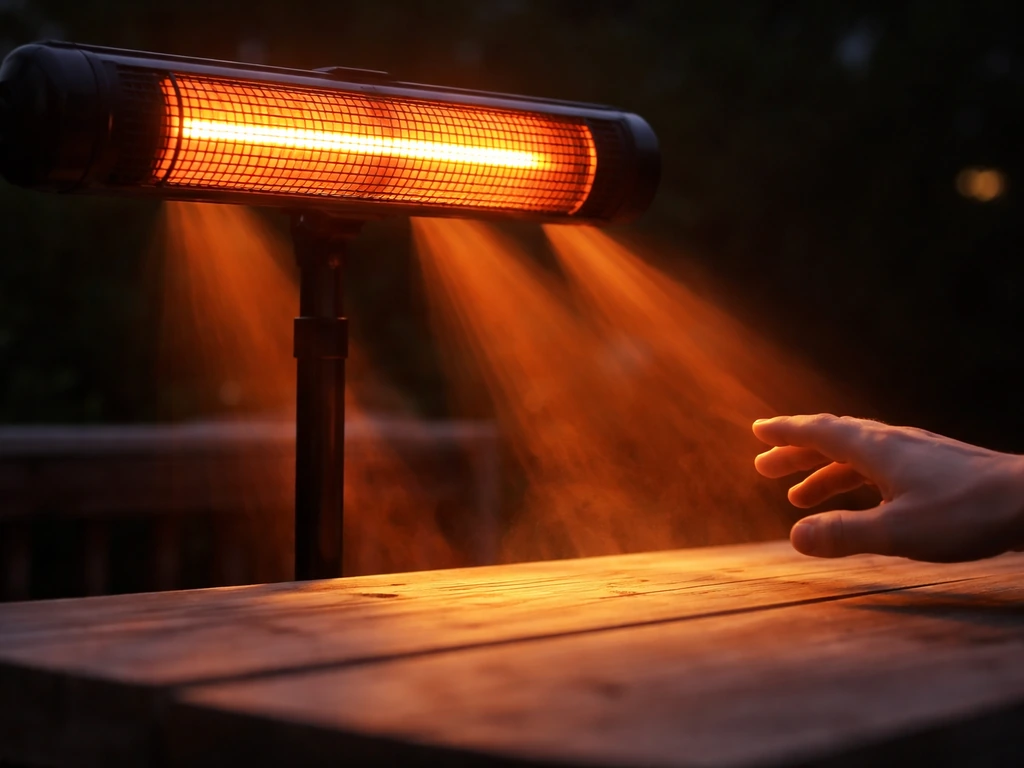
Infrared heaters work completely differently from the space heater sitting in your living room. Instead of warming the air around you, they emit radiant energy that travels through the air and heats objects and people directly. Your skin absorbs the radiation and you feel warm, almost like standing in a patch of sunlight. blank" rel="noopener noreferrer">The air temperature barely changes, which is exactly why these heaters work so well outdoors.
That distinction matters more than people realize. Conventional convective heaters, like a propane mushroom-top tower, heat the surrounding air. Put one on a breezy patio and the wind just blows that warm air away before it reaches you. An infrared heater throws radiant energy that passes right through the air, so wind has a much smaller impact on how warm you feel. You still lose some comfort in strong wind, but you're not starting from zero every gust.
Warmup time is another practical win. Infrared heaters reach usable output in seconds to under a minute because there's nothing to warm up except the heating element itself. You flip the switch, sit down, and feel heat almost immediately. A gas convection heater or baseboard-style unit can take several minutes to make a dent.
Most electric infrared patio heaters use a high-resistance heating element, often a nickel-chromium wire inside an insulating refractory or a quartz tube, that glows and emits thermal radiation when current passes through it. The element type affects color temperature, warm-up speed, and longevity, but from a practical standpoint the core experience is the same: targeted, immediate, wind-resistant warmth.
What 'best' actually meant in 2021
In 2021, buyers were comparing infrared patio heaters on a short list of criteria that actually translate to comfort, and it's worth being honest about which specs matter and which are just marketing.
- Wattage and real coverage area: Manufacturer coverage claims are optimistic. A 4000W Bromic Tungsten was listed at roughly 130 sq ft; the 6000W version claimed about 160 sq ft. Those numbers assume a covered, protected space at an ideal mounting height. Treat them as a ceiling, not a guarantee.
- IP (ingress protection) weather rating: For a heater mounted outdoors permanently, IPX4 was the accepted minimum in 2021 (protected against water splashing from any direction). IP55 and IP65 models offered more peace of mind in rainy climates. Units without a proper IP rating belong indoors only.
- Heating element quality: Quartz tube elements are common in mid-range units. Carbon filament and ceramic elements appear in premium models. Better elements mean longer service life and more consistent output.
- Mounting flexibility and angle adjustment: The best 2021 models could be wall or ceiling mounted and offered adjustable angles (typically 0°, 30°, 45°, and 60°) so you could aim heat precisely where people sit.
- Certifications: ETL/cETL (Intertek) for US/Canada markets. CE/UKCA for UK buyers. These aren't optional — they matter for insurance and safety.
- Controls: Remote control, wall switch compatibility, and in premium units, smart/zone control integration. Day-to-day convenience adds up.
- Portability vs. permanent install: Some buyers wanted a plug-in unit they could move around; others wanted a hardwired ceiling mount. The right answer depends on your patio, not a spec sheet.
The honest bottom line from 2021: the units that consistently earned top ratings combined adequate wattage for the space, a legitimate IP rating, a real safety certification, and some form of remote or wall-switch control. Models that checked all four boxes reliably outperformed cheaper units that only hit one or two.
Top infrared patio heater picks for common patio setups
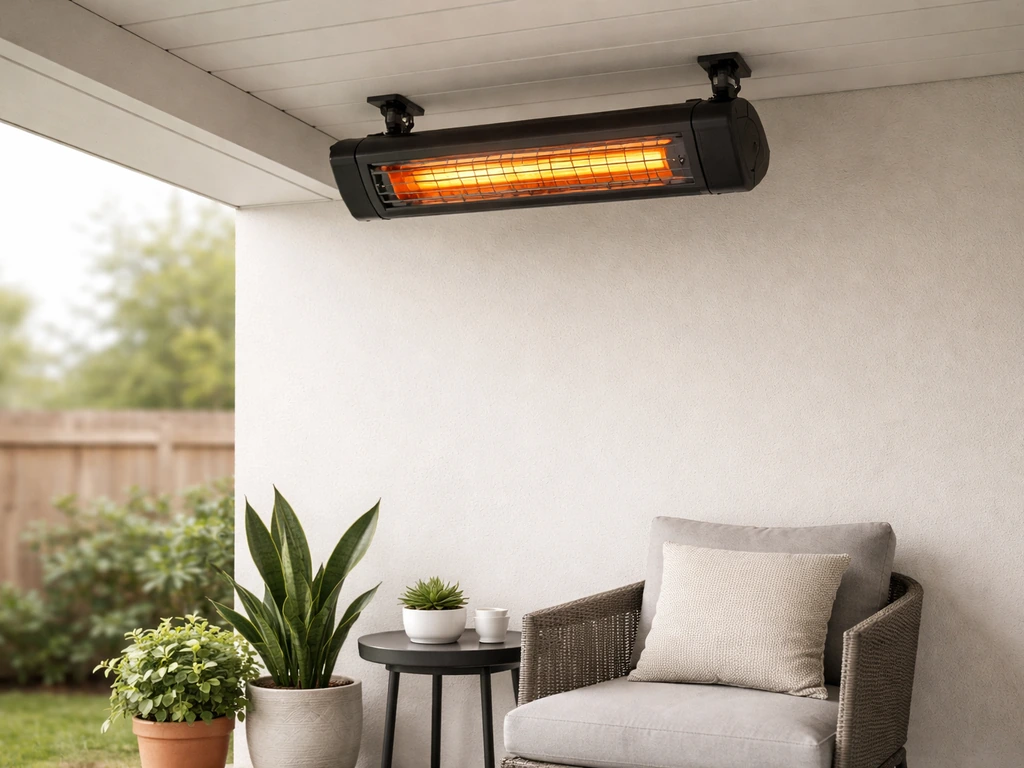
Small covered patios (up to about 80 sq ft)
The Heat Storm Tradesman 1500W was one of the best-selling options at this end of the market in 2021. It's rated to heat up to 150 sq ft according to Best Buy listings from that period, it's weatherproof, and it includes a remote. For a small covered porch or a snug seating nook, it's hard to beat the combination of price, plug-in convenience, and no-electrician installation. It pulls standard 120V power, meaning you can literally plug it into any outdoor outlet. The tradeoff is that 1500W is about the ceiling for a 120V circuit, so if your space is drafty or you run cold, you may feel limited.
The Eurofase EF30 3000W is a strong step up if you want a mounted unit for a small-to-medium covered space. It covers roughly 8 x 8 feet (about 64 sq ft of focused warmth), installs best at a 7–9 foot mounting height, and gives you angle options of 0°, 30°, 45°, or 60° to target seating precisely. It does require a 240V circuit, which means an electrician visit if you don't already have one, but the quality and focused output are noticeably better.
Medium patios (roughly 100–150 sq ft)
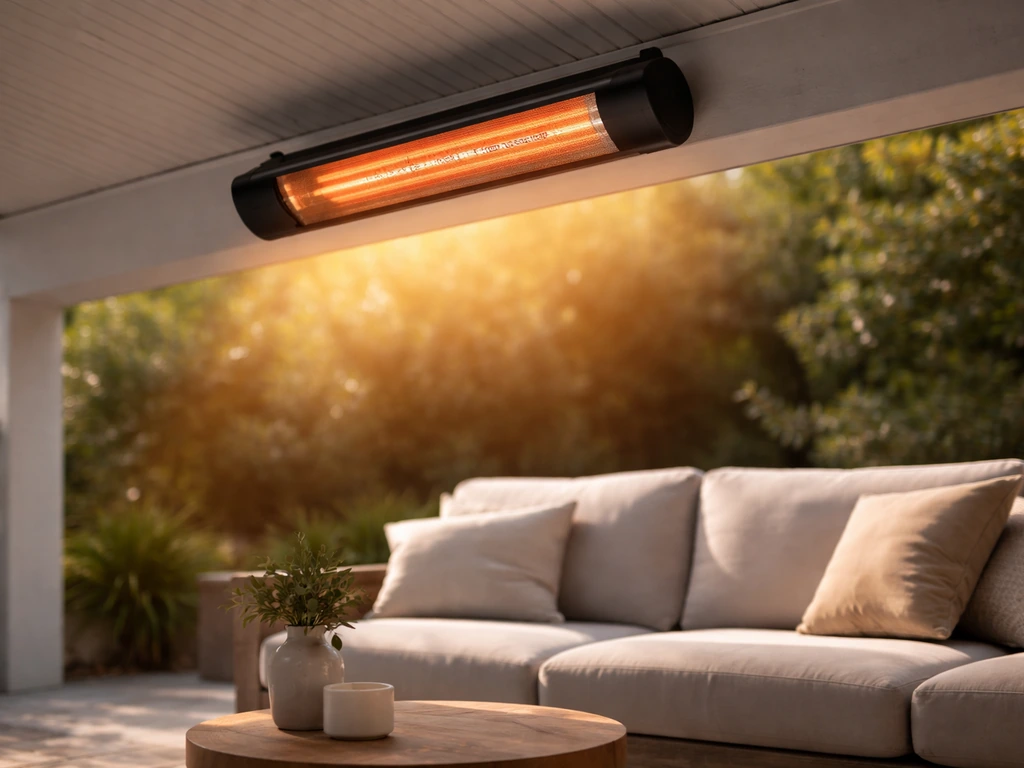
This is where the Bromic Tungsten Smart-Heat Electric 4000W became a go-to recommendation in 2021. If you want a hands-on briza infrared patio heater review style breakdown, it helps to compare coverage, controls, and wind performance the way these models are tested in real use Bromic Tungsten Smart-Heat Electric 4000W. Bromic's published spec sheet from that period listed its coverage at approximately 130 sq ft, which is realistic for a covered patio with adequate mounting height.
It's ETL/cETL certified for US and Canadian use, carries an IPX4 weather rating, and integrates with Bromic's smart control system if you want zone-based or app-connected control. It hardwires at 240V, so again, plan for an electrician, but the installation is straightforward and the unit feels properly built rather than flimsy.
If you wanted a dual-element alternative in this range, the Infratech WD-Series (particularly the WD60 at 6000W for larger medium spaces) was a credible competitor. The WD60 carries an IPX4 rating, outputs 6000W from a dual-element design, and Infratech's 2021-era manuals specified the same outdoor-rated wiring standards and clearance guidance you'd expect from a commercial-grade unit. It's a solid pick for anyone who wanted something with more of a commercial pedigree.
Large patios or open entertaining areas (160+ sq ft)
At this size, a single heater is rarely enough. The Bromic Tungsten Smart-Heat Electric 6000W claimed roughly 160 sq ft of coverage, but a better strategy for a large open patio is two 4000W units positioned to create overlapping coverage zones rather than one 6000W unit pushed to its limits. The Eurofase EF60 6000W (which warms an approximate 11 x 11 foot area) is another well-regarded option at this tier, with a maximum recommended mounting height of 12 feet. Above that height, the radiant footprint spreads and weakens significantly.
| Model | Wattage | Coverage (claimed) | Voltage | IP Rating | Certification | Best for |
|---|---|---|---|---|---|---|
| Heat Storm Tradesman | 1500W | ~150 sq ft | 120V | Weatherproof | Not listed | Small covered porch, plug-in convenience |
| Eurofase EF30 | 3000W | ~8' x 8' (64 sq ft focused) | 240V | Not listed | Not listed | Small covered patio, mounted |
| Bromic Tungsten 4000W | 4000W | ~130 sq ft | 240V | IPX4 | ETL/cETL | Medium covered patio, smart control |
| Infratech WD60 | 6000W | ~130–160 sq ft | 240V | IPX4 | UL listed | Medium-large covered patio |
| Bromic Tungsten 6000W | 6000W | ~160 sq ft | 240V | IPX4 | ETL/cETL | Large covered patio or paired coverage |
| Eurofase EF60 | 6000W | ~11' x 11' | 240V | Not listed | Not listed | Large covered space, max 12' mount height |
Placement, sizing, and coverage: what the spec sheets don't tell you
Coverage numbers from manufacturers assume ideal conditions: covered space, no wind, correct mounting height, and the heater aimed at the right angle. In the real world, you need to size up from those numbers. A good practical rule is to plan for 150–200 watts per square meter for a covered, protected patio, and up to 300 W/m² for an exposed or drafty location. That translates to roughly 14–19 watts per square foot for covered spaces and up to 28 watts per square foot if your patio is open and windy.
Mounting height has an outsized effect on comfort. The Eurofase EF30 works best between 7 and 9 feet. The EF60 should be no higher than 12 feet. The Bromic Tungsten manuals include minimum floor clearance requirements too. Go too high and the radiant beam spreads too wide, thinning the heat before it reaches sitting height. Go too low and you'll feel intense heat directly underneath but poor coverage elsewhere. Aim for the midpoint of the manufacturer's recommended range and adjust the angle downward to direct the beam toward where people actually sit, not straight down.
Covered vs. uncovered patios
Infrared heaters are far better suited to covered patios than open ones, not because the infrared stops working, but because a cover reflects radiated heat back down and keeps the space from losing warmth at the edges. On a fully open patio, infrared is still far better than convective heating, but you'll need more wattage per square foot and should lean toward the 300 W/m² sizing estimate. For open spaces, a lower mounting position (closer to seated head height) also helps direct heat where it's needed instead of radiating it into the open sky above.
Wind considerations
One of the most common mistakes is assuming infrared heaters are completely immune to wind. They're not immune, they're just far less affected than convective heaters. Strong wind can carry away some of the re-radiated warmth from your skin and clothes, making you feel cooler even though the heater is still working. In consistently windy spots, add a windbreak (a privacy screen, planting, or glass panel) rather than trying to solve it with more wattage alone.
Installation and power requirements
This is where a lot of buyers get surprised, so let's be direct. Any quality infrared patio heater above 1500W runs on 240V power, not the standard 120V outlets on your home's exterior. That means running a dedicated circuit from your electrical panel, which requires a licensed electrician in most jurisdictions. Budget for that cost upfront. It's typically $200–$500 depending on distance and local labor rates, and it's not optional.
For wiring, Infratech's 2021-era installation manuals specified that all outdoor wiring components must be UL/CUL/CE listed for outdoor use. Bromic's manual ties the IPX4 weather rating to using IPX4-rated conduit and following specific installation practices. Basically: if the electrician cuts corners on outdoor-rated conduit and fittings, you may void the heater's safety rating and create a genuine hazard. Specify outdoor-rated components when you hire.
Clearance to combustibles matters just as much as the electrical work. Infratech's August 2021 instructions specifically state to keep electrical cords, drapery, furnishings, and other combustibles at least 3 feet from the heater. Bromic's manual includes similar clearance-to-combustibles requirements as well as minimum floor clearance. These aren't suggestions: infrared elements run extremely hot and can ignite flammable materials faster than you'd expect.
For ceiling or wall mounting, use the mounting hardware rated for the heater's weight and intended for outdoor environments. Most premium units like the Bromic Tungsten and Infratech WD-Series ship with mounting brackets, but confirm the fastener ratings for your ceiling or wall material, especially if you're mounting into wood framing versus masonry.
Safety, controls, and day-to-day maintenance
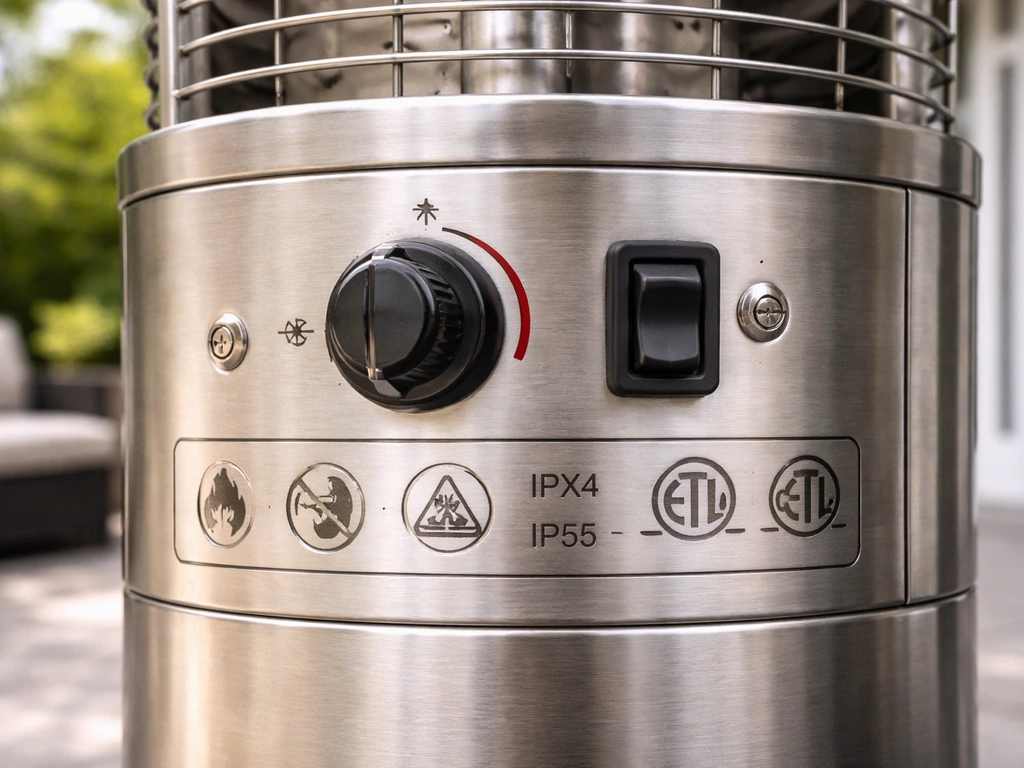
Safety features worth checking
- IP weather rating: IPX4 minimum for any outdoor unit. IP55 or IP65 for wetter climates or uncovered installations.
- Safety certification: ETL/cETL for US/Canada (Bromic carries this). CE and UKCA for UK buyers. Don't buy a heater without one.
- Tip-over protection: More relevant for freestanding units, but Bromic's installation manual includes tip-over warnings for their units. Verify it applies to your specific model.
- Clearance compliance: Maintain the 3-foot combustibles clearance specified by Infratech and similar guidance from Bromic. Don't mount near overhead combustible materials like wood pergola beams without checking clearance specs first.
Controls
Remote controls are the baseline expectation on any heater over $200. The Heat Storm Tradesman includes one. The Bromic Tungsten series supports wall-switch integration and Bromic's smart zone controllers, which let you group multiple heaters on a single control. For permanent installs on a deck or outdoor kitchen area, a wall switch tied to the 240V circuit is the most practical day-to-day setup: it's quick, doesn't require hunting for a remote, and works even if someone loses the handset.
Maintenance
Electric infrared heaters are genuinely low maintenance compared to gas heaters. There's no gas line, no burner to clean, and no pilot light to relight after a storm. The main tasks are: wipe the reflector housing occasionally to remove dust and debris (a dirty reflector reduces output), inspect the element for discoloration or damage annually, and check that the mounting hardware hasn't loosened, especially after a winter season. If the element looks dark or cracked, replace it rather than ignoring it. Replacement elements for most Bromic and Infratech units are available and cost less than a service call.
If your exact 2021 model isn't available anymore
Model availability in the patio heater market shifts regularly. A specific SKU from 2021 may be discontinued, out of stock, or replaced by an updated version. The good news is that infrared heater technology hasn't fundamentally changed, so picking a substitute is straightforward if you match a few key specs rather than just a model name.
- Match wattage class first: If you were targeting a 4000W unit, find another 4000W model in the same mounting category (ceiling or wall). Bromic's coverage data gives you a baseline: ~130 sq ft for 4000W, ~160 sq ft for 6000W. Use those as your comparison anchor.
- Verify the IP rating: IPX4 minimum, no exceptions for permanently mounted outdoor units. Any replacement should match or exceed the IP rating of your original target.
- Confirm the safety certification: ETL, UL, or cETL for North America. Don't accept an uncertified unit just because it's cheaper or available.
- Check mounting height compatibility: The Eurofase EF30's 7–9 foot optimal range and EF60's 12-foot maximum are useful reference points. If a replacement specifies a similar range, the heating footprint should be comparable.
- Look at angle adjustment: Models with 0°/30°/45°/60° angle options give you flexibility to optimize coverage even if the beam pattern is slightly different from your original choice.
If you're comparing electric infrared options specifically, the category of best electric infrared patio heaters has grown considerably since 2021, and there are now more choices at every wattage level than there were a few years ago. Similarly, if you're weighing whether electric infrared is right for your space at all, a broader look at radiant patio heater reviews across fuel types can help you confirm you're not missing a better-fit option, particularly if you don't have easy 240V access or prefer a freestanding unit.
The core decision framework hasn't changed: figure out your square footage, decide covered or uncovered, calculate your wattage need using the 150–200 W/m² (or 300 W/m² for exposed) rule, then match IP rating and certification to your climate. Do that and you'll land on a heater that works, whether it's the exact model from this list or a current equivalent.
FAQ
Can I use a 120V outdoor outlet for a 2000W infrared patio heater, and when do I need 240V?
Yes, 120V can work for lower wattage models like typical 1500W class units, but many higher-output infrared heaters will require 240V for safe, adequate performance. As a rule of thumb, if the heater is rated above the 120V ceiling (commonly around 1500W for typical circuits), plan on a dedicated 240V circuit with a licensed electrician.
Do infrared patio heaters really “not need windproofing,” or will wind still make them feel weak?
Wind won’t affect infrared like convective heaters, but it still reduces perceived warmth by carrying heat away from your clothing and skin. If your patio is consistently gusty, adding a windbreak (privacy screen, glass panel, or solid landscaping) often improves comfort more than adding wattage alone.
How should I size wattage if my patio is partially covered, like under a pergola or near a door opening?
Don’t use the fully covered numbers. Treat partially exposed areas closer to the exposed calculation (up to about 300 W/m²), especially if breezes come through gaps. A practical approach is to start with covered sizing for the area closest to the wall, then increase wattage for the more exposed edge.
What mounting height should I choose if my patio ceiling or eave is outside the recommended range?
If you are forced above the maximum height, you will likely lose heat intensity at seating height, so you should compensate by lowering the effective beam angle and possibly using additional units. If you are below the minimum height, you may get overly intense hotspotting under the heater, so consider aiming at a slightly farther seating zone rather than straight down.
Is it better to buy one high-watt heater or two smaller ones for a wide patio?
Two units usually give more even coverage than one heater pushed to its limit, especially when you can overlap beams intentionally. Overlapping zones reduce dead spots and help maintain comfort as people move within the seating area.
What IP rating is “enough” for year-round outdoor use in the UK or other rainy climates?
For outdoor durability, prioritize heaters with a legitimate IP rating and weatherproof installation practices, not just “water resistant” language. In the 2021 models mentioned, IPX4-type ratings were common, but you should still avoid directing runoff onto wiring connections and ensure outdoor-rated conduit and fittings are used.
Do I need to worry about voiding safety ratings if an electrician uses non-outdoor-rated wiring parts?
Yes. Even if the heater itself is rated, using indoor-rated or non-weather-rated conduit, fittings, or connections outdoors can compromise safety and can affect warranty coverage. Ask your electrician to use outdoor-rated, listed components that match the heater manual’s requirements.
How much clearance do I actually need from combustibles like furniture, umbrellas, and curtains?
Keep combustibles farther away than you might expect, following the manual’s specific clearance-to-combustibles guidance. If you have umbrellas, pergola fabric, or removable covers, confirm they cannot drift into the clearance zone when they sway or during wind gusts.
Can I mount an infrared heater under a roof soffit, or does it require open airflow around it?
You can mount under many types of roofs, but you must still respect clearance to combustibles and maintain the manufacturer’s floor or underside clearance requirements. Also verify the bracket and fasteners are rated for your mounting surface (wood framing versus masonry) and for the heater’s weight.
Is a remote the only control option, or is wall switching better for permanent patios?
Remote control is convenient, but for frequent use, a wall switch is usually more practical and faster. If your heater supports wall-switch integration and smart zone control, you can also group multiple heaters so one switch manages zones instead of managing multiple remotes.
What maintenance should I do beyond wiping the housing, and when should I replace the element?
Inspect annually for discoloration, cracks, or signs of element failure, and check that mounting hardware hasn’t loosened after seasons. If the element shows damage or severe darkening beyond normal operating glow, replace it rather than continuing use, since performance and safety can degrade.
How do I choose a replacement if the exact 2021 model is discontinued?
Match the replacement on the parts that affect real comfort: total wattage, IP/weather rating, required voltage (120V versus 240V), mounting height guidance, and control capability (remote, wall switch, or zone control). Don’t rely on coverage claims alone, especially if your patio is exposed or windy.
Are infrared heaters safe to run on a timer, and are there any special electrical cautions?
They can often be used with controls, but confirm the heater’s allowed control methods and compatibility with timers or smart plugs (especially for 240V hardwired setups). For safety, avoid undersized wiring, extension cords, or DIY adapters, and make sure the control device is rated for the heater’s electrical load.