
The Briza infrared patio heater is a solid, no-fuss electric option for small to medium covered patios, and it's worth buying if you need fast, quiet, directional warmth without running a gas line. At 1,500W max and an IP55 weather rating, it handles light rain and moisture without complaint, heats up in about three seconds, and gives you three power levels plus a remote timer, all on a standard 120V outlet. That said, it's not a room-heater or a garage-filler. If you aim it at people and surfaces within roughly 6 to 8 feet, it works great. If you expect it to warm open air or a large uncovered deck in a stiff breeze, you'll be disappointed.
Briza Infrared Patio Heater Review: Real-World Results

Willa Brennan
22 Jun 2026

What the Briza infrared heater actually is (and how it works)
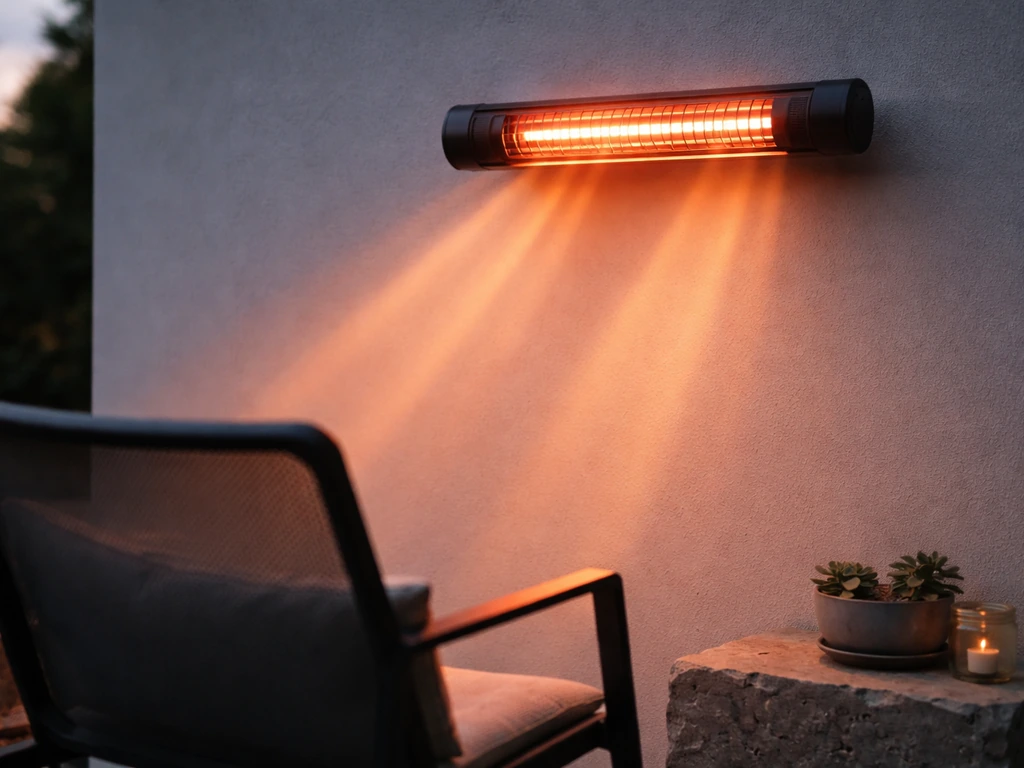
Briza makes a line of electric infrared patio heaters, and the two models you'll encounter most are the BA-CIH-S and the SF711A. Both are wall or ceiling-mountable electric infrared units that run on a standard 120V household outlet, no gas line, no propane tank, no special wiring beyond making sure your outlet can handle 12.5 amps continuously. The BA-CIH-S is the more widely available version, sold at Best Buy, Menards, and Walmart. The SF711A is a slightly different variant with its own manual but nearly identical specs, except its weather rating listed in the manual is IPX4 rather than IP55. More on that difference below.
Infrared heating works on the same principle as feeling warmth from a hot stovetop element across the room, the heat isn't warming the air between you and the source, it's radiating directly onto whatever it hits: your skin, your clothing, your chair, the floor. The U.S. Department of Energy describes it well: infrared radiation passes through air without meaningfully heating it and gets absorbed by solid surfaces and people directly in line with the emitter. That's why an infrared heater can feel warm on your face while the air two feet away from your chair still feels cold. It also explains why wind barely affects it the way it kills a propane heater's perceived warmth, the radiant energy doesn't blow away.
This is fundamentally different from a propane mushroom heater or an electric resistance coil heater, both of which warm the surrounding air and rely on that warm air staying put. Infrared skips the air entirely, which makes it ideal for open patios, pergolas, and breezy spots where convective heat just drifts away. If you're shopping for the best electric infrared patio heater for your setup, focus on coverage, weather rating, and how quickly it warms up electric infrared patio heaters.
How it actually performs: heat throw, coverage, and real-world feel
The BA-CIH-S claims to heat up in about three seconds, and that claim is accurate, you feel warmth almost immediately after switching it on. There's no waiting for a burner to warm up, no smell, no click-click ignition. That rapid warm-up is one of the genuinely useful things about infrared heaters: you flip it on when you sit down, not fifteen minutes before.
In terms of real coverage, plan on an effective comfort zone of roughly 6 to 8 feet directly below or in front of the emitter at full 1,500W power. At the 900W low setting, that shrinks considerably, useful for mild evenings or when you just want a little edge taken off. Because infrared is line-of-sight, hot spots and cold spots are determined almost entirely by geometry: the person sitting directly under or in front of the heater feels it strongly; someone 10 feet off to the side may barely notice it. Angling the heater toward your seating area makes a significant difference and is worth planning before you mount it permanently.
One honest limitation: a Woot/Amazon reviewer noted the Briza did not noticeably warm a garage space even after extended runtime. That tracks with how infrared works, it's warming you, not the room. In a large, uninsulated, open garage, the radiant energy hits surfaces and dissipates without raising the ambient temperature. For a small covered patio where you're seated relatively close to the heater, it's a different story entirely.
On uncovered patios in calm conditions, infrared still outperforms propane or resistance heaters in wind because the radiant energy isn't disrupted by airflow the way warm air is. However, direct line-of-sight coverage still matters, you need to be within the heater's beam, which is roughly a 60-degree cone depending on the reflector design. For fully exposed, large outdoor spaces, you'd want multiple units or a higher-wattage commercial infrared setup.
The specs that actually matter before you buy
Power and heat settings
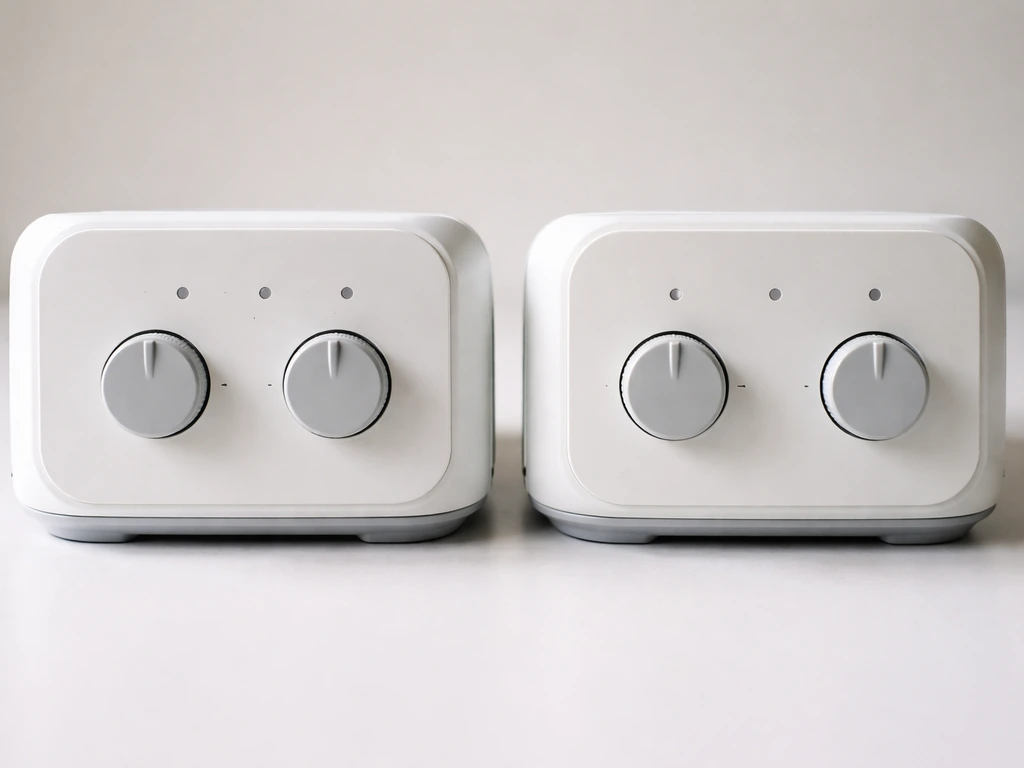
The BA-CIH-S offers three heat levels: 900W, 1,200W, and 1,500W. The SF711A is slightly different, stepping through 500W, 1,000W, and 1,500W, a lower bottom end that's gentler for mild weather. Both run on 120V / 60Hz standard household power. The remote controls both heat level and a programmable timer set in one-hour increments from 1 to 9 hours, so you can set it to shut off automatically without going back outside.
Weather rating: IP55 vs IPX4
This is the one spec difference worth paying attention to between models. The BA-CIH-S is rated IP55, meaning it's protected against dust ingress (the first "5") and low-pressure water jets from any direction (the second "5"). That's a meaningful all-weather rating, light rain, splashing, and humid patio conditions are no problem. The SF711A manual lists IPX4, which means splash-resistant from any direction but no dust rating specified. Both are marketed for indoor/outdoor use, but if you're in a wet climate or mounting somewhere exposed to driving rain, the BA-CIH-S's IP55 is the better bet.
Mounting and installation
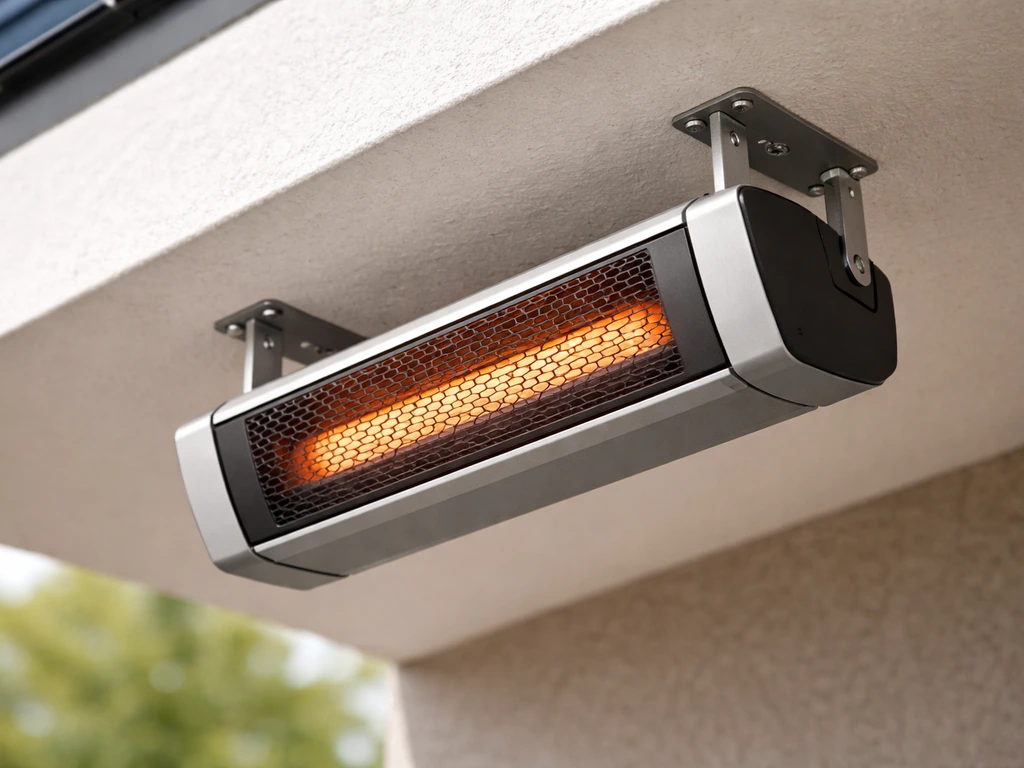
Both models are designed for fixed wall or ceiling mounting, not freestanding use. The manual includes installation dimensions and mounting hardware guidance. You'll want to mount it at a height that puts the beam squarely on your seating area, too high and the radiant intensity drops off noticeably. Reddit discussions among infrared heater owners suggest that ceiling heights above 10 feet start to reduce perceived warmth significantly. For most covered patios with 8 to 10-foot ceilings, mounting centered over or angled toward the seating area at about 7 to 9 feet is the practical sweet spot. The heater needs to be near a standard 120V outlet, so factor in cord routing or whether you'll need an outdoor-rated extension setup.
Safety and build quality
The Briza is a fixed-mount heater, so tip-over isn't a risk the same way it is for a freestanding unit, but the SF711A manual explicitly flags that the top center of the heater (described as a "fireplace" in the manual) gets hot to the touch during operation. That's worth knowing if you're mounting it somewhere children or pets could reach it, or somewhere you might bump it while reaching up. For wall mounts at proper height, it's a non-issue.
Based on owner impressions, the unit includes a tip-over safety shutoff sensor, useful if it's knocked during handling or installation before it's fully secured. Infrared heaters have essentially no moving parts, no gas, no open flame, and no combustion byproducts, which makes them among the safest outdoor heater types overall. There's no risk of carbon monoxide, no propane leak concern, and no pilot light to blow out.
Build quality on the Briza is in line with mid-range electric patio heaters. The housing is black metal, looks clean and modern, and holds up well in typical outdoor conditions within its IP rating. It's not a commercial-grade unit, but for residential patio use it's solid enough for year-round mounting.
What it costs to run, and how to maintain it
Running costs for an electric infrared heater are straightforward to calculate: (watts ÷ 1,000) × your electricity rate = cost per hour. At the U.S. residential average of about 18.2 cents per kWh in 2026, here's what the Briza costs at each setting:
| Heat Setting | Watts | Cost Per Hour (@ $0.182/kWh) |
|---|---|---|
| Low | 900W (BA-CIH-S) / 500W (SF711A) | $0.16 / $0.09 |
| Medium | 1,200W (BA-CIH-S) / 1,000W (SF711A) | $0.22 / $0.18 |
| High | 1,500W (both models) | $0.27 |
Running the Briza at full power for three hours every evening costs roughly 80 cents, less than $25 a month for nightly patio use. That's competitive with propane patio heaters, which burn through a 20-pound tank (roughly 430,000 BTU) at a rate that costs more per hour of actual warmth once you account for the open-air losses. The Briza's electricity cost is also predictable month to month, unlike propane, which varies with fuel prices.
Maintenance is minimal. Because there's no combustion, no fuel, and no moving parts, there's nothing to clean or service regularly. Wipe down the reflector and emitter surface occasionally with a dry cloth when the unit is cool and unplugged, dust accumulation on the emitter can reduce output slightly over time. Check the mounting hardware once a season to make sure nothing has loosened. That's genuinely about all there is to it.
Noise is essentially zero. Infrared heaters don't use fans, don't have ignition clicks, and don't have combustion roar. If you're used to the loud hiss of a propane mushroom heater, the Briza will feel almost unnervingly quiet at first.
Briza vs other patio heater types: honest comparison
Before deciding the Briza is right for you, it helps to understand where it sits relative to other options. If you're exploring the broader infrared patio heater category, there's a lot to compare. If you want help choosing between models, these radiant patio heater reviews break down key differences like heat output, coverage, and weather ratings infrared patio heater category.
| Heater Type | Warmth Style | Wind Performance | Running Cost | Best For |
|---|---|---|---|---|
| Briza infrared (electric IR) | Radiant, directional | Good — radiant isn't blown away | ~$0.27/hr at max | Covered patios, seating zones |
| Electric resistance (coil/quartz) | Convective + some radiant | Poor — warm air drifts | ~$0.27/hr at 1,500W | Indoor or very sheltered spaces |
| Propane mushroom heater | Convective (hot air rises) | Poor — warmth disperses fast | Varies with propane price | Large open patios, temporary setups |
| Natural gas patio heater | Convective | Poor in open spaces | Lower fuel cost, fixed line needed | Permanent installs, large patios |
| Pellet patio heater | Convective + ambiance | Poor | Moderate, requires pellet supply | Aesthetic, ambiance-focused setups |
| Other IR brands (higher wattage) | Radiant, directional | Good | Higher at 2,000W–4,000W | Larger covered areas, commercial use |
The Briza's main competition within the electric infrared category is higher-wattage models from brands like Dr. Infrared, Bromic, or Infratech. Those can run 2,000W to 4,000W and cover noticeably larger areas, but they require 240V circuits and professional installation. The Briza's 120V plug-in design is genuinely its biggest practical advantage: you can mount it, plug it in, and use it the same day without calling an electrician. If you need more coverage or are outfitting a large covered structure, the best electric infrared patio heater options worth comparing are mostly in the 240V commercial tier. If you want the best infrared patio heater uk picks for similar coverage, compare wattage, coverage angle, and weather ratings before choosing a model best electric infrared patio heater options. For a standard residential patio under 100 square feet, the Briza's 1,500W is adequate.
Compared to propane, the Briza wins on convenience, running cost predictability, and safety. Propane heaters produce more raw heat output (most residential models are 40,000 to 48,000 BTU, versus the Briza's ~5,100 BTU equivalent at 1,500W), but much of that heat is wasted in open-air or windy conditions. If your patio is large and uncovered, propane's sheer output can compensate. For a small covered patio or pergola, the Briza's directional efficiency makes it the smarter choice.
Who should buy the Briza, and who shouldn't
The Briza infrared patio heater is a strong match for a specific type of setup. If you're specifically shopping for the best infrared heater for patio use, the Briza is worth considering for a covered setup where you want fast, directional warmth. Here's how to know if it's yours.
Best patio sizes and placement
The Briza works best on covered patios or pergolas up to about 80 to 100 square feet where people sit in a defined zone. Think a 10x10 covered deck with a table and chairs, a screened porch, or a garage entry area. Mount it at 7 to 9 feet high, angled directly at the primary seating area. If your patio has two distinct seating zones, you'll want two units. For a narrow rectangular patio (like a long balcony), a single unit centered lengthwise with a slight downward angle covers the space well.
Buy the Briza if:
- You have a covered or semi-covered patio under roughly 100 square feet
- You want plug-and-play installation on a standard 120V outlet
- Quiet operation matters to you (no fan noise, no combustion)
- You want fast on/off heat without warm-up wait time
- You're in a windy area and convective heaters have disappointed you before
- You want to avoid propane tanks or gas lines
- Running cost predictability matters more than raw BTU output
Skip the Briza if:
- Your patio is large (over 150 square feet) or fully uncovered with no overhead structure
- You need to heat a garage or enclosed room to a comfortable ambient temperature — infrared heats objects, not air
- You're in a very cold climate (below 25°F) and need serious BTU output to stay comfortable
- You want a 240V high-output commercial infrared setup — the Briza isn't built for that tier
- You need a freestanding heater you can move around easily
Before you order: things to verify and test on arrival
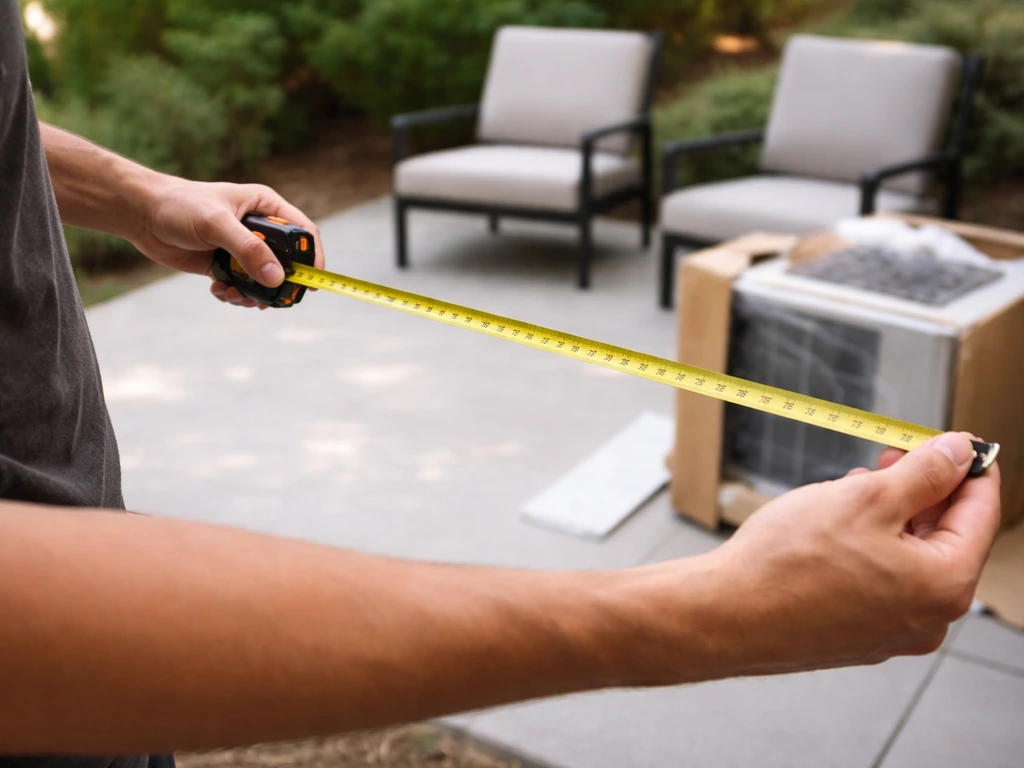
Take a few measurements before you click buy. Measure your patio's primary seating area dimensions, note your ceiling or overhead structure height, and confirm you have a 120V outdoor-rated outlet within reach of where you want to mount the unit. If you need an extension, use a heavy-duty 14-gauge or 12-gauge outdoor-rated cord, undersized extension cords are a fire risk with continuous 12.5-amp loads.
Also confirm which model you're getting: the BA-CIH-S (IP55, heat levels 900/1,200/1,500W) or the SF711A (IPX4, heat levels 500/1,000/1,500W). Both are legitimate Briza models but have slightly different specs. For wetter climates or exposed mounting positions, the BA-CIH-S's IP55 rating is the better choice.
When your unit arrives, check the mounting bracket hardware is complete before you start drilling. Power it on at all three settings and verify the remote timer functions before mounting it permanently. Confirm the emitter glows evenly with no dark spots on the heating element, uneven glow can indicate a partially failed element, and it's much easier to return a unit before it's wall-mounted. Point it at your hand from about 4 feet away at full power; you should feel noticeable warmth within seconds. If you don't, something's off.
Overall, the Briza infrared patio heater earns its place as a practical, affordable, and genuinely effective solution for the right setup. If you want a broader take, see our patio infrared heater reviews for additional models, coverage expectations, and buying tips. It's not trying to be a whole-patio space heater, and if you understand that going in, it won't let you down.
FAQ
Can I use the Briza infrared patio heater on an uncovered deck or in windy weather?
It can still help, but only if you stay within its line of sight and your seating area is relatively protected. Infrared is directional, if you are off to the side or farther than about 6 to 8 feet, the perceived warmth drops quickly. For fully exposed large spaces or stiff winds, you will usually need multiple units or a higher-wattage 240V setup.
What outdoor outlet requirements should I confirm before mounting it?
Verify you have an outdoor-rated receptacle that can safely support continuous 12.5A draw (the unit runs on 120V and up to 1,500W). If you must use an extension cord, use a heavy-duty outdoor-rated 14-gauge or 12-gauge cord, undersized cords can overheat under continuous load.
How far above the seating should I mount it, and what if my ceiling is higher than 10 feet?
For typical covered patios, mounting around 7 to 9 feet high (and aimed at your main seating) is the practical sweet spot. If your ceiling is above 10 feet, many owners report reduced perceived warmth, you may need to lower the aiming angle, reduce the distance to the seating, or consider a higher-output unit.
Do I need to worry about the unit being hot to touch after mounting?
The SF711A manual warns that the top center area (“fireplace” in the manual) gets hot during operation. Even though it is fixed-mount, keep it out of reach of children or pets, and avoid locating it directly where someone will bump it while reaching overhead.
Is the Briza safe to run in light rain, and does model choice matter?
Yes for light rain, but the ratings differ. BA-CIH-S is IP55, it is protected against dust and low-pressure water jets from any direction, which is better for wet climates or splash exposure. SF711A lists IPX4, it is splash-resistant but lacks the dust and low-pressure jet protection specified for IP55.
How do the low power settings affect real-world comfort?
Lower wattage reduces radiant intensity, so the effective comfort zone shrinks. At 900W you may notice warmth only when seated close and lined up with the emitter, while 1,200W and 1,500W give a noticeably wider and stronger zone. If you are between two seating distances, start by testing at the lower setting to confirm you are still in the beam.
Can I mount the heater without permanently installing it first?
Yes, it is a good idea to do a quick functional test before drilling. After unboxing, power it on at all heat levels and verify the remote timer works. Then check for even glow on the emitter surface, uneven or dark spots can indicate a defective element and are easier to exchange before it is mounted.
What should I expect regarding heating a garage or open room?
Do not expect it to raise the ambient temperature of a garage or open space. Infrared primarily warms objects and people directly in line with the emitter, if surfaces are far away or there is lots of air movement, the heater may feel weak even after long runtime. For garages, consider whether you truly need person-focused warmth near the doorway instead of room heating.
How much does it actually cost to run, and how do I estimate for my electricity rate?
Use (watts ÷ 1,000) × your electricity rate, for example at 1,500W (1.5 kW) you pay 1.5 times your per-kWh price per hour. The article’s example uses a national average rate, your local utility rate can differ, so plug in your own cents per kWh to estimate nightly cost accurately.
Does it need maintenance beyond cleaning and checking the mount?
Minimal maintenance is expected. When the unit is cool and unplugged, wipe the reflector and emitter surface with a dry cloth to remove dust, dust buildup can slightly reduce output. Also recheck mounting hardware periodically, especially after seasonal temperature changes.
What is the best way to aim it for two seating areas?
Because infrared is line-of-sight, a single heater may not cover separated seating zones well. If your patio has two distinct areas, the more reliable approach is using two units, or repositioning so each seating zone is within the heater’s beam angle and distance limits.