
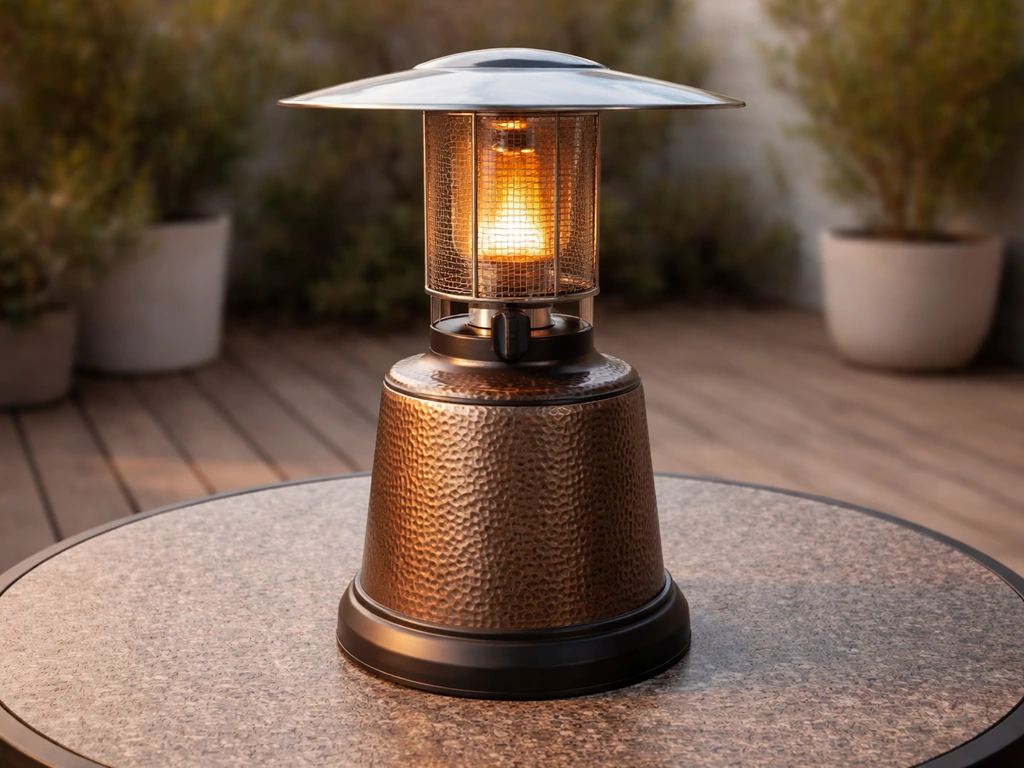
The Fire Sense blank" rel="noopener noreferrer">Hammer Tone Bronze tabletop patio heater you're looking for is model 61322, a 10,000 BTU propane-powered unit that runs on a 1 lb. For a true hammer tone bronze finish patio heater, look for the Fire Sense Hammer Tone Bronze tabletop model 61322. propane canister and sits directly on your patio table. It stands about 35 inches tall, covers roughly an 8-foot diameter around the flame head, and can raise the ambient temperature by 10 to 25 degrees Fahrenheit in calm conditions. If you've been browsing listings and seeing slightly different names like "Hammered Bronze Tone" or "Hammer Tone Bronze Finish," those are the same heater marketed under slightly varied wording across retailers.
Fire Sense Hammer Tone Bronze Table Top Patio Heater Guide

Willa Brennan
12 Jun 2026
Confirm you have the right model
Model number 61322 is the one you want. Fire Sense's official tabletop heater manual actually covers three item numbers (60262, 61322, and 62969), which are variants in the same family sharing the same instruction set. The 61322 is the Hammered Bronze version specifically. Retailer item numbers may differ (Woodland Direct lists it as item 1551176, for example), but the model number stamped on the unit itself and in the manual should read 61322. Before buying, cross-check the listing for that model number and confirm it says propane-fueled with a 1 lb. canister connection. If a listing says "electric" or doesn't mention propane, you're looking at a different product entirely.
Key specs that matter for tabletop use
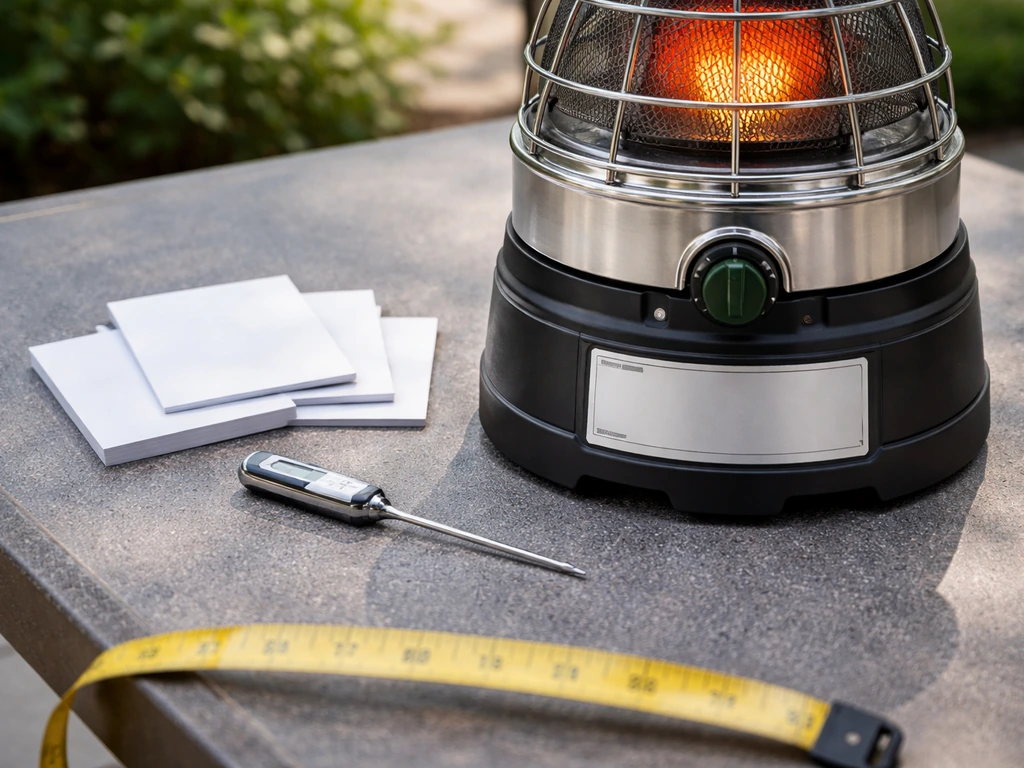
Before you set this on your patio table, you need to make sure it actually fits your setup physically and practically. Here are the numbers that matter most:
| Spec | Detail |
|---|---|
| Model Number | 61322 |
| Fuel Type | Propane (1 lb. canister) |
| Heat Output | Up to 10,000 BTU (adjustable) |
| Height | 34.65 inches |
| Width | 13.4 inches |
| Depth | 20.9 inches |
| Heat Coverage Claim | 8-foot diameter |
| Temperature Lift | 10°F to 25°F above ambient |
| Ignition | One-step Piezo igniter |
| Safety Features | ODS (oxygen depletion sensor), auto tilt shutoff, CSA approved |
| Fuel Tank Included | No (1 lb. propane canister sold separately) |
At just under 35 inches tall and about 13 inches wide, this heater has a relatively compact footprint for a tabletop model. That said, you'll want a table that's stable and large enough to keep the heater well away from chairs, umbrellas, and any fabric elements nearby. The adjustable heat output is a genuine plus here since you're not locked into full 10,000 BTU output at all times.
What kind of heat coverage to actually expect
The marketed 8-foot diameter coverage claim is a best-case figure. In real-world use on a small patio, wind is the biggest variable. Verified reviewers on Home Depot have noted that the heater performs well when wind is nominal but falls short in gusty conditions. One reviewer reported burning through a 1 lb. canister in under two hours in colder or windier conditions, so if you're in a climate that regularly dips below 40°F or has consistent breezes, temper your expectations.
For a covered patio or a sheltered corner, 10,000 BTU at the table level is actually quite effective for two to four people seated close together. Think of it as personal-zone heating rather than whole-patio heating. It won't heat a 300-square-foot uncovered deck, but it will keep a bistro table gathering comfortable on a cool autumn evening. If your space is uncovered and exposed to wind, an infrared electric tabletop heater will outperform this unit because infrared heat warms people directly rather than heating air that blows away.
For comparison, the full-size Fire Sense hammer tone bronze standing heaters run around 46,000 BTU with an 18-foot diameter coverage, so the tabletop 61322 is a focused, intimate solution rather than a whole-patio powerhouse. Keep that distinction in mind when sizing your expectations.
Fuel type and what you need before first use
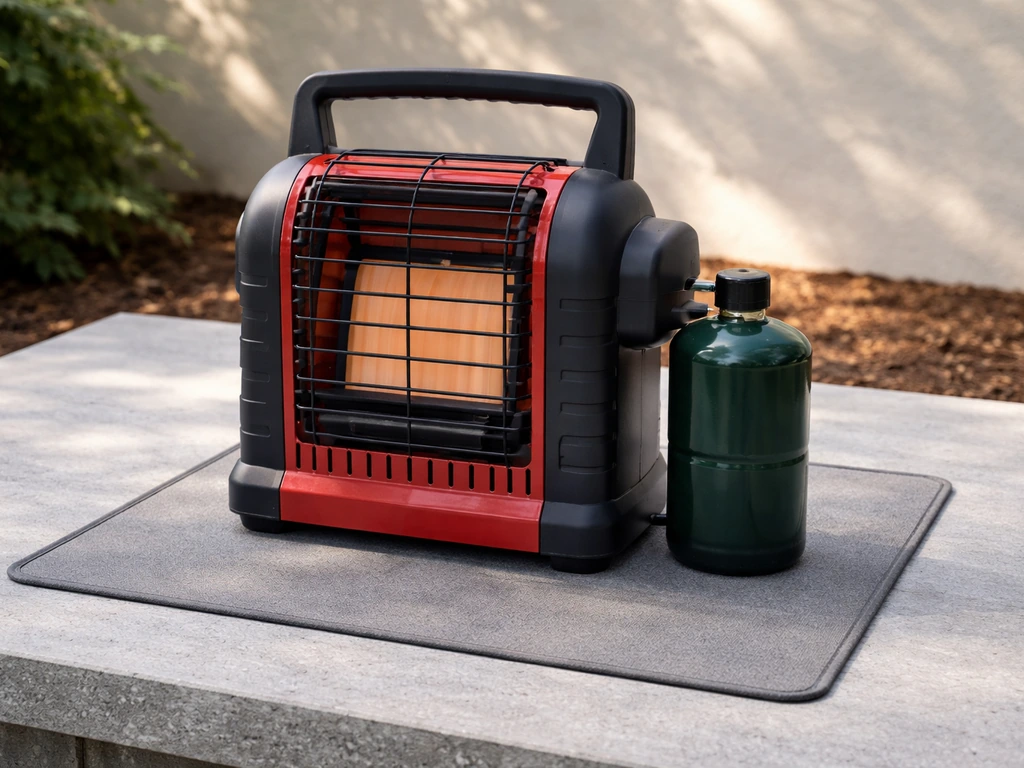
This is a propane heater, full stop. There's no electric version of this specific model. It connects to a standard 1 lb. disposable propane canister (the kind you'd use for a camping stove), which screws into the base. The canister is not included, so pick one up before you're ready to use it. A 1 lb. canister holds about 0.4 lbs of usable propane, which translates to roughly 1 to 2 hours of runtime at higher BTU settings, and longer if you dial it back.
Some users opt to use an adapter hose to connect to a larger 20 lb. propane cylinder instead of going through 1 lb. canisters constantly. This extends runtime significantly and reduces per-use cost, though it means the heater is no longer sitting independently on the table (the hose runs down to the larger tank on the ground). If you plan to use this heater regularly throughout a season, that adapter hose setup is worth the small investment.
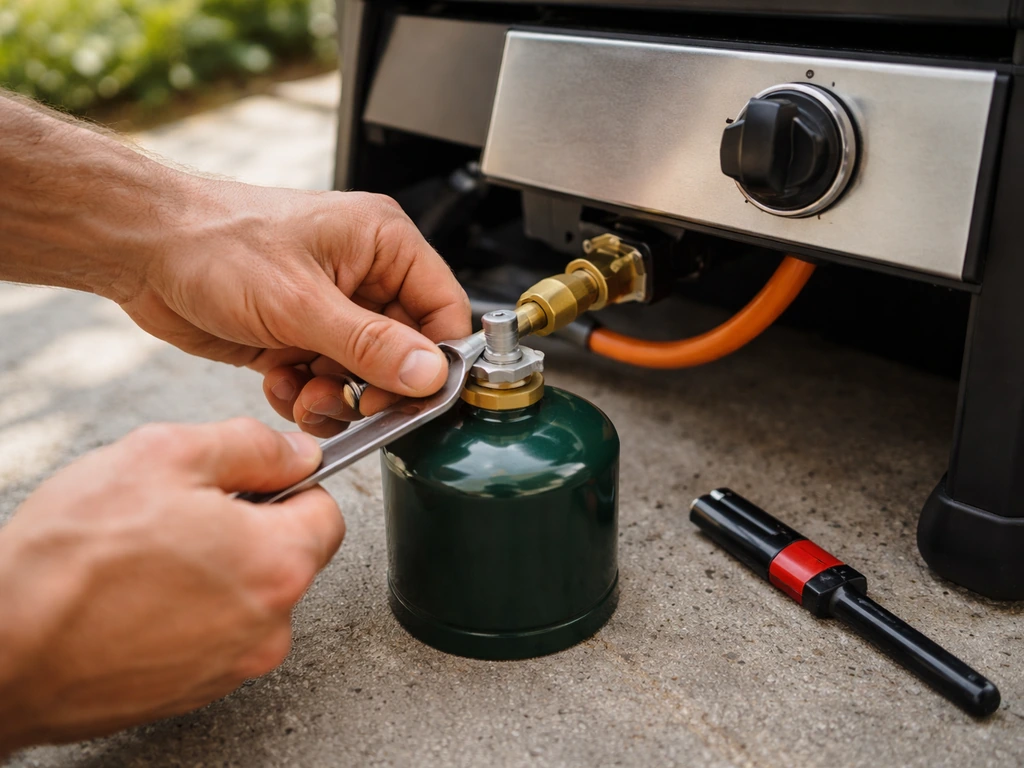
Before your first use, the manufacturer manual requires you to check for gas leaks at the connection using a soapy water solution. Apply it to the connection point while the gas is turned on but before igniting. If you see bubbles, tighten the connection. Don't skip this step. It's quick, and it's the right habit to build with any propane appliance.
- Purchase a 1 lb. propane canister (or adapter hose and larger tank) before first use
- Thread the canister into the base connection firmly but don't overtighten
- Check for leaks with soapy water at the connection point
- Turn the control knob to the ignition position, press the Piezo igniter button
- Adjust the flame/heat output using the control knob to your comfort level
- Never leave the heater unattended while in operation
Safety and placement on a tabletop
Tabletop propane heaters have specific placement rules that are different from freestanding floor models, and this one is no exception. The Fire Sense manual for the 61322 specifies a minimum of 18 inches of clearance above the heater and 24 inches on all sides from any combustible materials. That means no patio umbrellas opened above it, no hanging string lights nearby, no fabric chair backs within arm's reach, and no wood or resin furniture directly adjacent.
The surface underneath matters too. The manual is explicit: blank" rel="noopener noreferrer">always place the heater on a hard, level surface. A glass-top patio table is fine. A glass-top patio table is fine, and if you ever add a patio heater top reflector shield, keep it compatible with the heater's intended outdoor, tabletop placement. A wobbly resin table with uneven legs is a problem. The heater has a tilt auto-shutoff valve that cuts gas flow if it tips over, which is a good safety net, but you want to prevent tipping in the first place. Center the heater on the table rather than placing it near an edge, and keep it clear of table edges where it could be bumped.
This heater is rated for outdoor use only. A patio table top fire pit can provide a similar cozy flame experience, but it’s important to compare heat output and safety clearance requirements before you choose. The oxygen depletion sensor (ODS) is designed to shut the unit down if oxygen levels drop too low, but that's not a substitute for proper ventilation. Don't use it in a screened enclosure with poor airflow, under a low pergola with solid roof panels, or anywhere that feels enclosed. The manufacturer treats it as an open-air appliance, and so should you.
- 18 inches minimum clearance above the heater from any combustible material
- 24 inches minimum clearance on all sides from combustibles
- Hard, level surface only (glass-top or stone patio tables work well)
- Outdoor use only, never in an enclosed space
- Keep away from patio umbrellas, awnings, string lights, and fabric elements
- If you smell gas: shut off the propane immediately, move away from the area, and call your gas supplier before attempting to relight
- The tilt shutoff is a backup safety feature, not a substitute for a stable placement
Honest pros, cons, and who this heater is actually best for
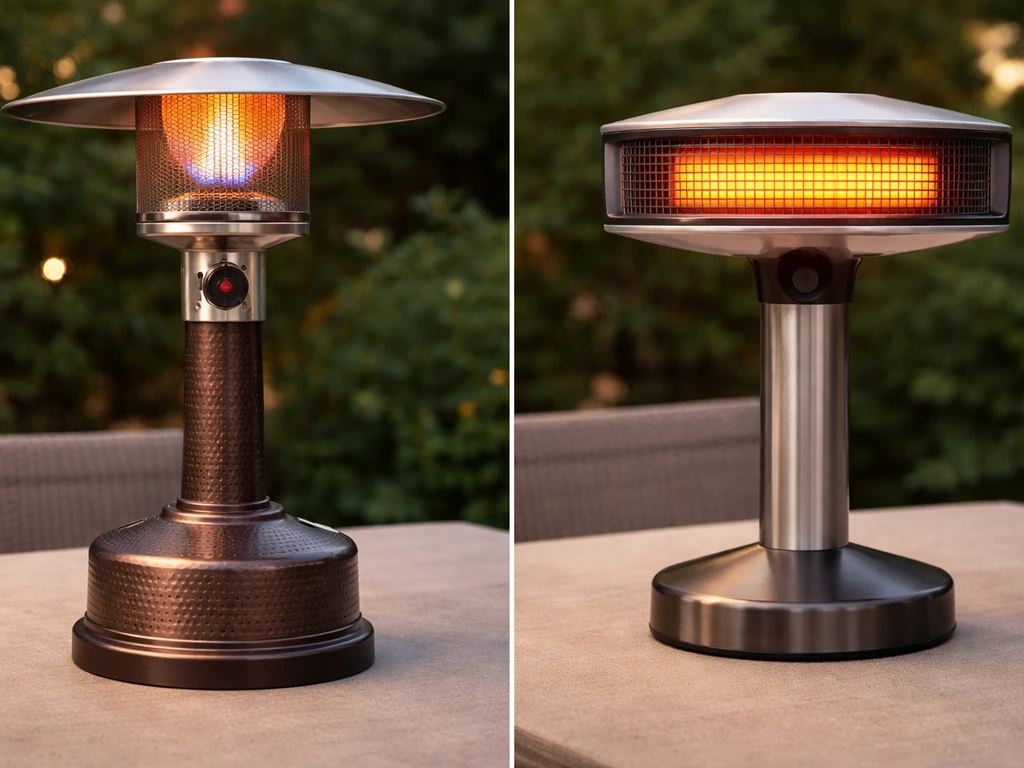
The Fire Sense 61322 hits a sweet spot for portability and ambiance. It looks good, it heats a small table gathering effectively in calm conditions, and you don't need an electrical outlet anywhere nearby. That portability advantage over electric tabletop infrared heaters is real if your patio doesn't have convenient outlet placement. If you're deciding between propane and alternatives, comparing a patio heater top for your specific coverage needs can help you choose the right style electric tabletop infrared heaters.
| Factor | Fire Sense 61322 (Propane) | Electric Infrared Tabletop Heater |
|---|---|---|
| Fuel/Power | 1 lb. propane canister (portable) | Requires electrical outlet |
| Heat Output | Up to 10,000 BTU | Typically 1,500W (approx. 5,100 BTU equivalent) |
| Wind Performance | Sensitive to wind, open flame affected | Infrared warms people directly, less wind-affected |
| Runtime | 1-2 hrs per 1 lb. canister (ongoing cost) | Unlimited while plugged in |
| Safety System | ODS + tilt shutoff, CSA approved | No combustion, no gas risk |
| Ambiance | Real flame, warm visual effect | No visible flame |
| Covered Patio Use | Good with ventilation clearance | Better suited for enclosed/covered spaces |
| Setup | No wiring, portable anywhere | Needs outlet within cord reach |
Where the 61322 falls short: wind sensitivity is a genuine limitation backed by multiple user reports. If your patio is exposed, the open flame gets disrupted and efficiency drops fast. The ongoing cost of 1 lb. canisters adds up if you're using it several nights a week (the adapter hose workaround helps). And 10,000 BTU from a tabletop position heats a zone, not a space, so don't expect it to do the work of a full standing heater.
This heater is genuinely best for someone who wants a portable, attractive propane tabletop heater for occasional use on a sheltered patio or balcony, gathered around a bistro or small dining table with two to four people. If you're comparing it against the Paramount or Hampton Bay tabletop models, the Fire Sense holds its own on BTU output and safety certification, though your choice may come down to aesthetics and retailer availability.
For shoppers specifically comparing Hampton Bay table top patio heaters, this Fire Sense 61322 is a propane option with a focused heat zone suited to sheltered, small-table setups. If you are specifically shopping for a paramount table top patio heater, compare size, BTU output, and safety certifications the same way you would for the 61322. For covered or semi-enclosed spaces where you'd prefer to avoid an open flame, an electric tabletop infrared alternative is worth a serious look.
Buying checklist and troubleshooting
Before you buy: confirm these things
- The listing shows model number 61322 and specifies propane fuel (not electric)
- The finish description matches "Hammered Bronze" or "Hammer Tone Bronze" (same product, different retailer wording)
- Your patio table is stable, level, and large enough for the 13.4" x 20.9" footprint with safe clearance on all sides
- You have or can easily get 1 lb. propane canisters, or you're prepared to purchase an adapter hose for a larger tank
- Your patio is open-air or well-ventilated (not a low-clearance pergola or screened room with limited airflow)
- You have no patio umbrella, awning, or overhead combustibles within 18 inches directly above the heater position
Troubleshooting common issues
| Problem | Likely Cause | Fix |
|---|---|---|
| Won't ignite on first try | Air in the gas line or loose canister connection | Tighten canister, wait 30 seconds, try igniter again while holding the knob depressed |
| Flame ignites but won't stay lit | ODS triggered or thermocouple needs warming | Hold the control knob depressed for 10-15 seconds after ignition to allow thermocouple to heat up |
| Very low or weak flame | Partially open valve, cold canister, or near-empty canister | Open valve fully, warm the canister slightly in your hands if cold, replace if near empty |
| Heater shuts off by itself | Tilt shutoff activated or ODS triggered (low oxygen) | Ensure heater is on a level surface; if in a semi-enclosed space, increase ventilation |
| Smell of gas before or after lighting | Leak at canister connection | Shut off gas immediately, disconnect canister, check O-ring seal, test connection with soapy water before retrying |
| Canister running out very fast | High BTU setting in cold or windy conditions | Dial back the heat setting, add wind protection, or switch to adapter hose with a larger tank |
| Heat feels insufficient | Wind disrupting flame or temperature too low for 10,000 BTU range | Add a windbreak, move to a more sheltered spot, or consider an infrared electric model for exposed patios |
If you're still having ignition problems after checking the connection and trying the extended hold technique, the Piezo igniter itself may need replacement (a common wear item on propane heaters after a season or two). You can light the heater manually with a long-reach lighter while holding the knob, then replace the igniter when you have a chance. The manual covers this process in detail in its troubleshooting section. If you need a replacement top shield reflector for outdoor propane patio heaters, look for a compatible shield designed for your heater model.
Your next step is simple: confirm model 61322 is in stock at your preferred retailer, pick up at least two 1 lb. propane canisters (or grab the adapter hose at the same time), and measure your table to make sure you have the clearance distances covered before the heater arrives. If you do that groundwork first, setup takes about five minutes and you'll be comfortable on your patio the same evening. If you are also shopping for az patio heaters round tile top firepit styles, double-check dimensions and fuel options before ordering.
FAQ
Can I use a different fuel source or a different size propane tank with the Fire Sense 61322?
No. The Fire Sense 61322 tabletop unit is propane-only, so you need the correct 1 lb disposable propane canister connection at the base. If a listing says electric, battery, or “dual fuel,” it is not the same product family and will not match the burner system or fuel requirements described for this model.
If I use an adapter hose to a 20 lb propane cylinder, is it safe and does it change placement rules?
Yes, but only if the adapter is made for propane connection use and you follow the same leak-check routine every time you connect the hose. The adapter hose setup changes where the tank sits (ground instead of tabletop), so also confirm the hose length keeps the heater positioned and cleared correctly and does not create a trip or snag hazard.
How can I get the longest runtime from the 1 lb canister on windy or cool nights?
Expect shorter runtime if you run the heater high frequently and if conditions are cold or windy. A practical approach is to start on a lower output setting first, then adjust based on how quickly the seated area warms, since the 1 lb canister runtime can drop notably in gusty conditions.
What table characteristics matter most for safe operation on a patio table?
Place it on a hard, level tabletop and keep it centered to reduce tipping risk. Do not place it near the table edge where it can be bumped, and avoid tables that flex, rock, or have uneven supports (including glass tops over unstable frames). The auto-shutoff helps if it tips, but preventing tip events is still required for safe use.
How strict are the clearance distances for umbrellas, lights, and nearby furniture around a tabletop propane heater?
Keep it away from anything that can block airflow or create extra heat exposure, especially umbrellas, nearby chair fabrics, and string lights overhead. Even if the heater “fits” physically, clearance requirements are about both heat and ignition risk, so do not count on being able to tuck items close to the sides to save space.
Is the oxygen depletion sensor enough to let me use this heater under a covered or partially enclosed patio?
Avoid using it in screened enclosures, areas under low solid-roof pergolas, or anywhere airflow feels restricted. Even with the oxygen depletion sensor, the unit is intended for open-air use, so if you cannot reasonably feel outdoor ventilation, choose a different heating type or location.
What should I do if it won’t light after checking the connection and doing the leak test?
If ignition fails even after confirming the canister is connected correctly and you have rechecked for leaks, the most common fixes are to ensure the knob position and connection are correct, then troubleshoot the igniter system. The igniter can wear out after seasonal use, and manual lighting with a long-reach lighter can be a temporary workaround while you arrange a replacement.
How do I decide whether this 10,000 BTU tabletop heater is enough for my patio area?
Yes, you should measure and plan for comfort rather than coverage alone. The stated coverage is best-case and wind-sensitive, so if your goal is to warm more than a small bistro area, you may need a different heater style (for example, an infrared electric tabletop type or a higher-output standing model) depending on exposure.
When exactly should I perform a soapy water leak test, and what should I do if I see bubbles?
Use the leak-check method described before first use and anytime you swap the canister or adapter hose connection. If bubbles appear, do not ignite, tighten the connection, and recheck until you get a bubble-free result. Skipping this step increases the risk of a hazardous leak.
Why does the flame seem weak or unstable, and what can I do besides waiting for calmer weather?
It is normal for the flame performance to shift with wind, but you should treat persistent “weak flame” or heavy flame blowout as an efficiency and safety concern. Reposition within allowed clearances (keep it centered), consider wind direction, and if the area is consistently gusty, switch to a sheltered location or an alternative heating method.