
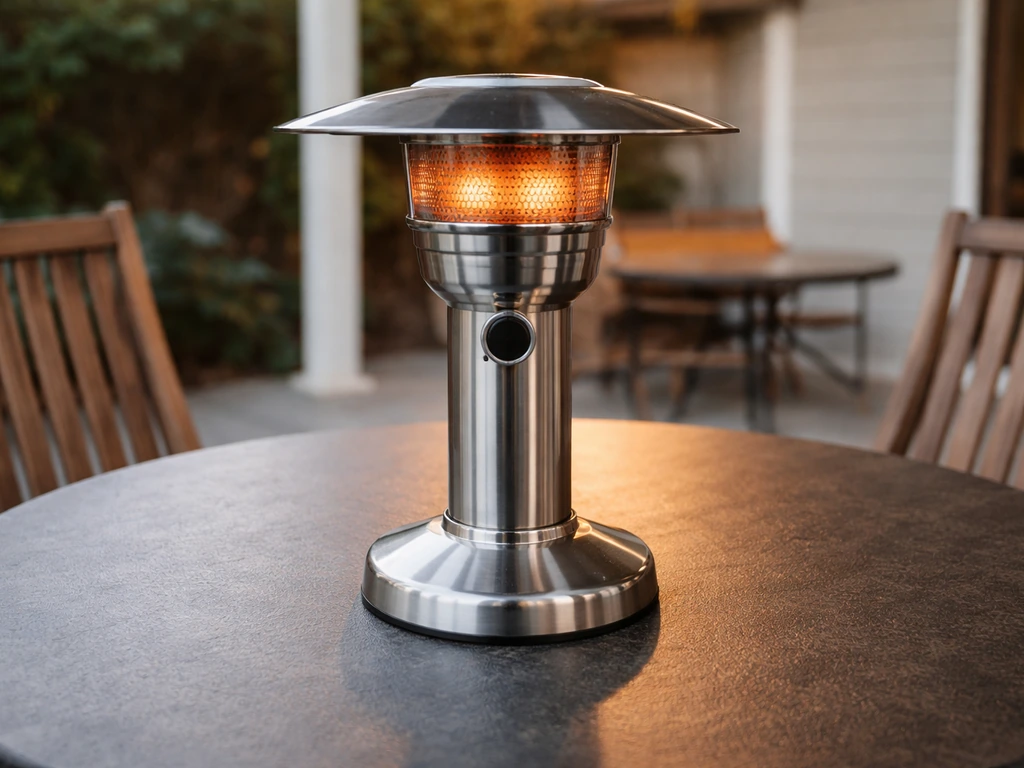
The Paramount stainless steel table top patio heater (model PH-T-107-SS) is a compact propane unit putting out 11,000 BTU, sized to warm a circle of about 30 square feet around your table for roughly 3 hours on a single 1 lb propane cylinder. It stands just over 38 inches tall, uses a simple one-step piezo ignition, and includes an auto-shutoff tilt sensor plus a safety grill guard. If you want something you can set in the middle of a bistro table, light with one click, and have comfortable warmth for a dinner or evening drinks, this is a solid choice, as long as you understand its real limits around wind, coverage, and clearance. A patio table top fire pit is a great alternative if you want a more traditional flame look while keeping the heat focused near your seating area.
Paramount Table Top Patio Heater Guide and Buying Checklist

What the Paramount tabletop heater is and who it's actually for
Tabletop patio heaters are a completely different category from the tall standing mushroom-head models you see at restaurant patios. They sit directly on your table surface, they heat a small zone close to seated guests, and they're designed to be moved around easily. The Paramount PH-T-107-SS fits squarely in this category: stainless steel construction, a classic tower profile scaled down to tabletop size, and a base that houses the 1 lb propane tank so everything is self-contained.
This heater is best suited for people with a small outdoor table seating two to four people on a covered or semi-covered patio, a balcony, or a compact backyard space. If you host larger gatherings or have an open deck with several seating areas, a single tabletop unit won't do the job, you'd be better served by a full-size freestanding heater. But for a cozy two-person dinner on a cool evening, or keeping the chill off a small seating corner, the Paramount tabletop hits the mark.
Paramount also offers the PH-T-113 Flame Table Top Heater as a second option in their tabletop lineup. Home Depot Canada lists the Paramount Flame Table Top Heater under model number PH-T-113. The PH-T-113 uses a quartz-glass tube with visible "dancing flames," giving it more of an ambiance-first aesthetic alongside the heat. It also runs on a 1 lb cylinder or can be adapted for a 20 lb tank, which is a meaningful advantage if you want longer run times without swapping cylinders. Keep the flame aesthetic and adapter flexibility in mind when comparing the two models.
The specs that actually matter when comparing tabletop heaters
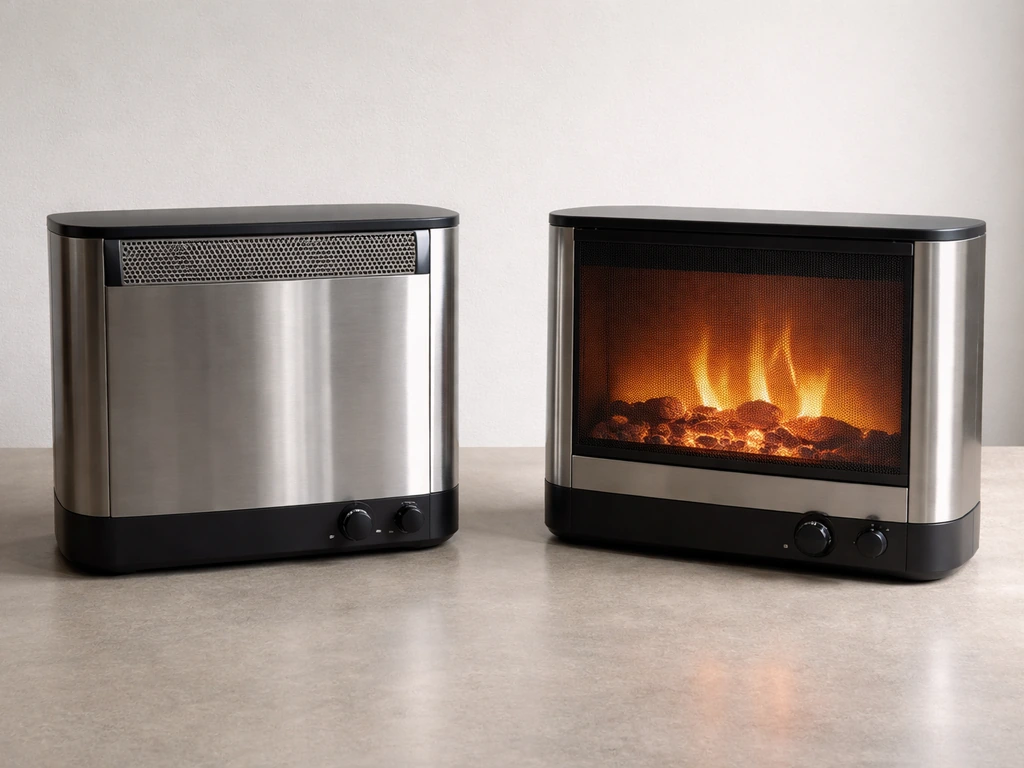
Here's a quick look at the Paramount PH-T-107-SS specs alongside the PH-T-113 Flame model, so you can compare at a glance before diving deeper.
| Feature | PH-T-107-SS (Stainless Steel) | PH-T-113 (Flame) |
|---|---|---|
| Output | 11,000 BTU | Not publicly listed — check retailer |
| Fuel | Propane | Propane |
| Tank size | 1 lb (included in base) | 1 lb standard, or 20 lb with adaptor |
| Run time (1 lb tank) | ~3 hours | Varies by output setting |
| Heat coverage (claimed) | ~30 sq ft | Not specified |
| Height | 38.0 in (Home Depot) / 36.4 in (brochure) | Check current listing |
| Width/Depth | ~20.87 in | Not specified |
| Ignition | Piezo (one-step) | Not specified |
| Safety features | Auto-tilt shutoff, safety grill guard | Check listing |
| Certification | CSA | Not listed |
| Finish | Stainless steel | Not specified |
| Heat style | Radiant/convective propane flame | Quartz glass tube, visible flame |
A few things worth calling out in those numbers: 11,000 BTU is on the lower end for propane heaters, but that's appropriate for a tabletop unit that's meant to heat a close-range zone, not a large open area. The 30 sq ft coverage claim is realistic only when guests are seated within about 3 to 4 feet of the unit and wind is minimal. Treat the coverage figure as a best-case scenario on a calm, covered patio, not a guarantee on an exposed deck. The 38-inch height means the heat emitter is roughly at eye level for a seated adult, which is actually ideal for directing warmth toward people rather than up into the air.
Fuel type and setup: what changes depending on what you buy
Both Paramount tabletop models are propane, so there's no electric option in this lineup. That matters for your buying decision in a few practical ways. With propane, you don't need an outdoor outlet or extension cord, which makes placement completely flexible. The downside is that 1 lb "camping" cylinders are consumable and run about 3 hours each on the PH-T-107-SS. If you're hosting a longer evening, you'll either need spare cylinders on hand or a model like the PH-T-113 that accepts a 20 lb tank via adaptor.
Setup on the PH-T-107-SS is as simple as it gets: thread the 1 lb cylinder into the base, turn the control knob, push and hold to release gas, and press the piezo igniter button. The CSA certification means the components have been safety-tested, and the one-step piezo means you don't need a lighter or match. Just be sure you do a quick leak test any time you attach a new cylinder or reconnect the hose, the manual is explicit about this. Apply a leak-test solution (soapy water works) to the regulator and cylinder connection, and check for bubbles before you light it. Do this outdoors every time.
If you're comparing this to an electric tabletop heater (not a Paramount model, but common in the category), electric units typically plug into a standard 120V outlet and offer instant-on convenience with no fuel to buy. The trade-off is that you're tethered to an outlet, and an extension cord on a wet patio creates its own safety headaches. For most people who want a simple, portable, no-wires setup for occasional evening use, the propane approach the Paramount uses is the more practical choice. A fire sense hammer tone bronze finish tabletop patio heater can be a solid alternative if you want a similar small, close-range heating setup with a decorative finish propane approach the Paramount uses.
How it actually performs outside, wind, coverage, and table setup
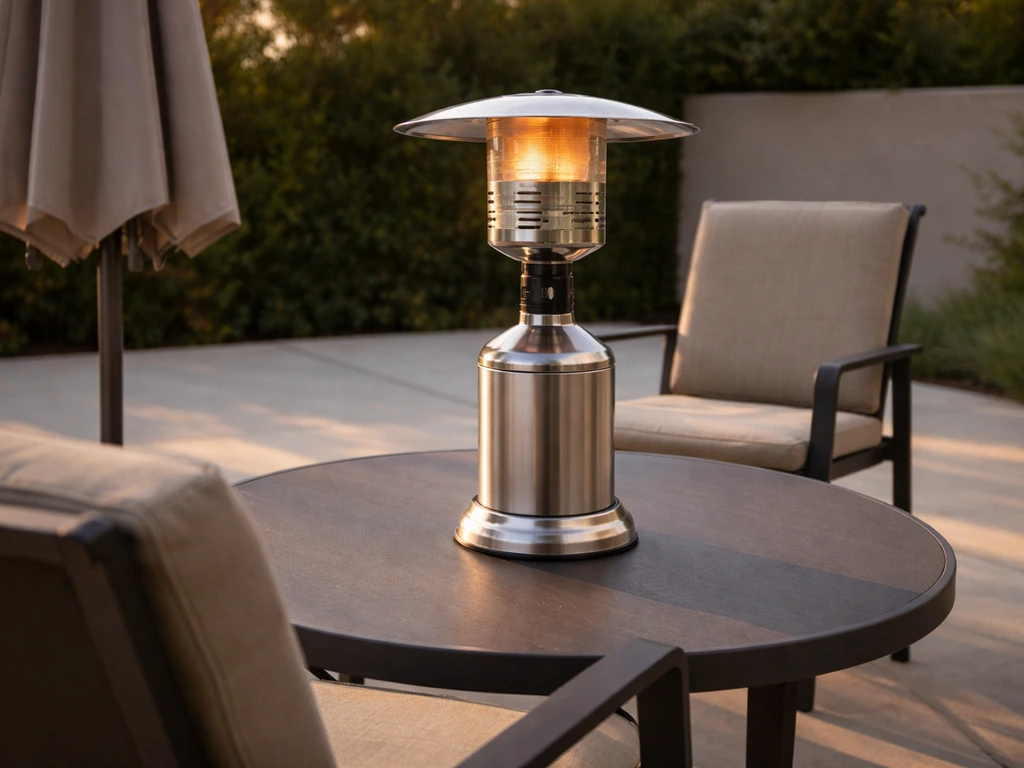
Here's the honest truth about tabletop propane heaters in wind: they don't like it. The Paramount PH-T-107-SS manual is clear that you should not use the heater when wind velocity exceeds 10 mph. That's a light breeze. If you've ever held your hand out the car window at 10 mph, you know that's not a lot of wind. On an open, exposed deck or patio with no windbreak, you'll fight flame instability, reduced heat output, and potentially the unit extinguishing itself. This heater genuinely performs best on a covered patio, under a pergola, or in a space with a natural windbreak like a fence or wall.
For uncovered patios, the heat disperses fast in even mild conditions, and you lose a significant chunk of those 30 usable square feet. On a covered or enclosed porch, though, this unit can noticeably warm the air around a small table within a few minutes. Guests seated within 3 to 4 feet will feel it clearly. Beyond that distance, the warmth drops off quickly.
Table height and heater placement matter more than most buyers realize. At 38 inches tall, the heater's emitter sits at roughly seated head height, which puts the radiant warmth right at the level of people sitting around it. A top reflector shield can help redirect radiant heat downward toward seated guests instead of letting it waste upward. Place it in the center of the table with enough clearance (more on that below), and the heat distribution is fairly even for seated guests. Don't put it at the edge of the table or behind a centerpiece, you'll block airflow and reduce the radius of effective warmth.
Safety, maintenance, and keeping it working all season
Clearance rules you can't ignore
This is where tabletop heater buyers most often get into trouble. Because the unit is sitting on a table surrounded by chairs, cushions, umbrellas, and people, clearance becomes a real safety issue. The Paramount manual requires [at least 24 inches of clearance on all sides from any combustible material](https://www. tssa.
org/tssa-patio-heater-safety-guidelines), and at least 12 inches of clearance above the top of the heater. For heaters designed for a round, tile-top firepit setup, always match the clearance space to the manufacturer’s safety requirements 24 inches of clearance on all sides. That means if you have a patio umbrella, an awning, or overhead string lights, you need to measure before you light it.
A standard patio umbrella pole centered in a table is almost certainly within that 12-inch overhead zone, check yours carefully. Chair cushions and tablecloths pushed close to the unit can also violate the 24-inch side clearance.
NFPA guidelines also recommend keeping propane-fueled outdoor heaters at least 10 feet away from any building opening like a door or window. If you are shopping for a hampton bay table top patio heater, double-check BTU output and coverage for the distance of your seating tabletop propane heaters. This is worth noting if you're placing the heater on a small covered porch that's close to sliding doors.
The tilt shutoff and cool-down rules
The auto-tilt shutoff on the PH-T-107-SS is a real and useful safety feature. If the unit gets knocked over (a real possibility on a table with active guests), the gas shuts off automatically rather than continuing to feed an open flame on a flat surface. The safety grill guard around the burner head reduces the chance of accidental contact with the hot surface, but it doesn't make the heater safe to touch.
The manual is unambiguous: do not touch or move the heater for at least 45 minutes after turning it off. That stainless steel body holds heat for a long time. If you need to re-light a hot heater, wait at least 5 minutes after extinguishing before trying to re-ignite.
Weather exposure and storage
Stainless steel is more weather-resistant than painted steel, but the Paramount manual still advises sheltering the heater from direct rain, sleet, hail, snow, dust, and debris. Don't leave it out uncovered through a rainstorm. The burner and control compartment must stay dry, moisture in those areas creates ignition problems and can corrode components over time. Store it indoors or under a weatherproof cover when not in use, and never leave the propane cylinder attached and exposed to direct sunlight or excessive heat. Remove the cylinder, store it upright in a cool, shaded spot, and cover the heater.
Maintenance that keeps it lighting reliably
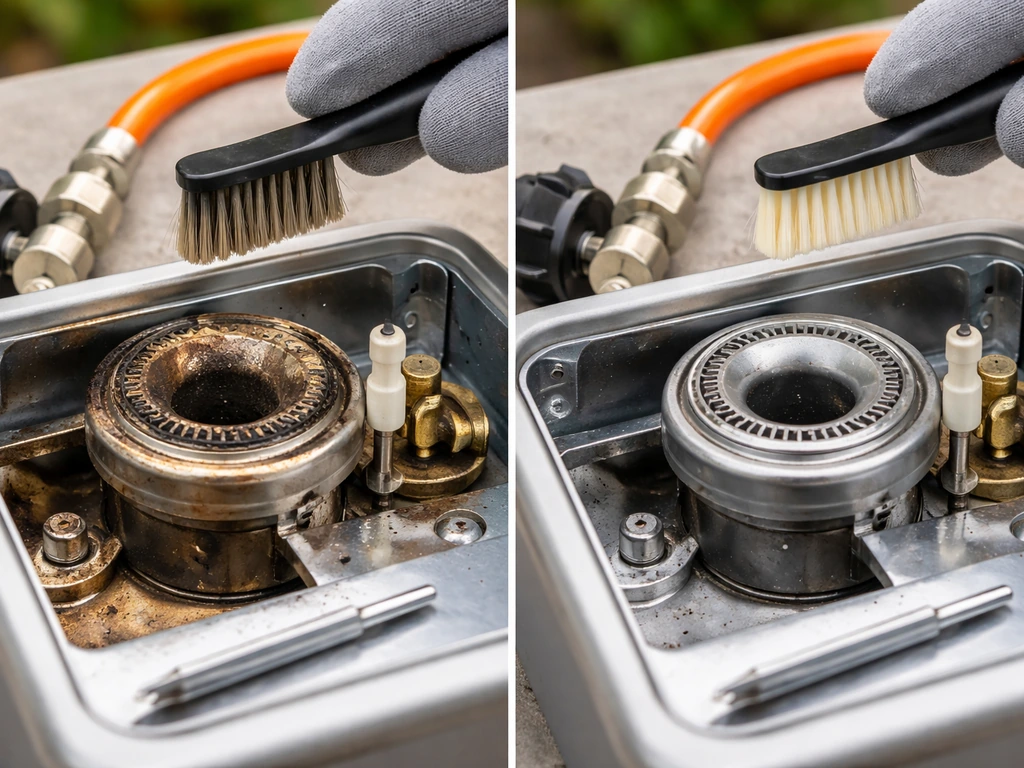
The most common reason a propane tabletop heater stops igniting reliably is a blocked burner. If your Paramount patio heater stops producing heat, you may also need a replacement top shield reflector to restore the reflector performance blocked burner. Insects, particularly spiders, love to nest in gas passages during storage. Before every season (and honestly before the first use after any extended break), inspect the burner holes and air circulation passages.
Clear any blockages using a heavy-duty pipe cleaner, don't use water or liquid cleaners directly in the burner. Also check the hose assembly for wear, abrasion, or cuts before each use. A compromised hose is a safety hazard, and a replacement is inexpensive compared to the alternative. Inspect the regulator connection every time you swap a cylinder.
How to choose the right tabletop heater for your setup
Before you buy, work through these questions honestly. They'll save you from the most common tabletop heater disappointments. If your goal is a warmer, more central heat layout, a patio heater top can be a useful comparison point alongside a tabletop unit like the PH-T-107-SS.
- How many people are you heating? A 30 sq ft zone is realistic for two to four closely-seated people. If you have a large table with six or more guests spread out, one tabletop unit won't cover everyone — consider two units or a freestanding model instead.
- Is your patio covered or open? Covered or semi-covered spaces with a windbreak are where these heaters shine. Open, exposed patios with regular breezes above 10 mph are not a good match for the PH-T-107-SS.
- How long are your typical sessions? At roughly 3 hours per 1 lb cylinder, a single tank suits a dinner or drinks session. If you regularly host all-evening gatherings, stock up on spare cylinders or consider the PH-T-113 with its 20 lb tank adapter option.
- Do you have clearance on your table? Measure 24 inches in all directions from where the heater will sit, and 12 inches above the top. If you can't meet those clearances due to umbrellas, cushions, or overhead structures, a tabletop model is not safe in that specific spot.
- What's your budget? Tabletop propane heaters in this category generally run between $80 and $180 CAD. The running cost of 1 lb cylinders adds up — factor that in versus a model with a 20 lb tank adapter if you'll use it frequently.
- Do you want ambiance or pure heat? The PH-T-107-SS is a clean, stainless heat-focused unit. The PH-T-113 Flame model adds the visual appeal of a visible quartz-tube flame. If atmosphere matters as much as warmth, the flame model is worth comparing.
Common mistakes buyers make with tabletop heaters
- Expecting it to heat a whole patio. Tabletop units heat a zone, not a space. If you want whole-patio warmth, you need a full-size freestanding or wall-mounted unit.
- Forgetting about wind. Checking the 10 mph wind limit sounds fussy until you light it on a breezy evening and the flame keeps going out. Plan for wind before you buy.
- Ignoring clearance requirements. A patio umbrella, canvas awning, or nearby cushions within 24 inches of the heater is a genuine fire risk. Measure first.
- Not testing for leaks after cylinder swaps. This takes 30 seconds and protects against a serious hazard. Make it a habit.
- Leaving it outside in wet weather. Stainless steel is durable, but the burner and control components are not waterproof. Cover or store it after every use.
- Underestimating the cool-down time. The 45-minute no-touch rule feels long, but the unit stays dangerously hot for a while after shutoff. Don't reach for it to move it inside as soon as the flame goes out.
- Buying based on BTU alone. 11,000 BTU sounds modest compared to full-size 40,000 BTU freestanding models, but that comparison is meaningless for a tabletop unit. The right question is whether the heat reaches seated guests at close range — and for this unit, it does.
Quick decision framework
If you have a small covered or semi-covered patio, a table seating two to four, and you want a clean stainless steel look with simple one-click ignition and built-in safety features, the Paramount PH-T-107-SS is a practical, well-spec'd choice at an accessible price point. If you want longer run times without cylinder swaps and don't mind the flame aesthetic, look closely at the PH-T-113 with its 20 lb adapter option.
If your patio is large, open, or consistently windy, skip tabletop heaters entirely and look at full-size freestanding propane or electric models better suited to those conditions. Other brands in the tabletop space worth comparing include the Fire Sense and Hampton Bay tabletop models, which offer similar BTU ranges in different finish options like hammer tone bronze.
The Paramount stainless finish stands out for durability and a clean modern look, but the core performance tradeoffs (wind sensitivity, limited coverage, short run time per cylinder) apply across the category, not just to this brand.
FAQ
Can I place a paramount table top patio heater under a patio umbrella or pergola?
Yes, but only if you can provide the required clearance and stable mounting. For the PH-T-107-SS, you need at least 24 inches of clearance on all sides from combustibles, and at least 12 inches above the heater top. A standard patio umbrella with the pole centered over the table is a common way to accidentally violate the overhead clearance, so measure with the umbrella fully deployed (including any canopy tilt).
If I have no outdoor outlet where I want to place the heater, is a propane table top unit still the safest option compared with electric models?
Use caution with extension cords and wet conditions. The Paramount tabletop heaters are propane and do not require electricity, which avoids outlet and cord risks. If you compare against an electric tabletop heater, put the outlet location and any extension cord well away from the heater, and avoid cords that rest on the floor where they can get wet or snagged by guests.
What should I do if my seating is farther than 4 feet from the paramount table top patio heater?
Do not rely on the 30 sq ft coverage claim if your seating area is more than about 3 to 4 feet from the heater or if you get any gusts. In open, exposed areas you can see a major reduction in effective warmth. A practical approach is to treat it as a “seat-near” heater for two to four people, then add a second heater for separate seating zones instead of trying to cover a wide area with one unit.
Is it safe to swap the propane cylinder right after turning the heater off?
Replace the cylinder only after the unit is completely off and allowed to cool, then always perform the leak check before lighting. A good workflow is: shut off, let it sit, remove the cylinder, reinstall securely, apply soapy water to the regulator and connection, check for bubbles, then ignite. If you see bubbles at any point, stop and re-seat the connection or get the hardware serviced.
What are the most common reasons a tabletop propane heater shuts off or won’t stay lit?
If the heater keeps extinguishing, start by checking wind conditions first, then inspect the burner area for blockage. The manual limit is 10 mph, and even a light breeze can destabilize propane tabletop flames. After that, clear any insect debris from burner holes using a pipe cleaner (no water or liquid cleaners in the burner), and verify the hose assembly is not damaged.
Does table placement change how well the paramount table top patio heater warms people?
Make “top-of-table” clearance your priority. Because the emitter sits near seated head height, heat distribution depends on keeping the center of the table unobstructed and avoiding a bulky centerpiece or items directly in the heater’s path. If you use a table topper (glass, tray, or decorative cover), confirm it does not reduce clearance to combustibles or trap heat around the unit.
Can I leave the propane heater outside under a cover during the season, or should I store it fully?
For rain, moisture management matters more than the stainless body. Keep the burner and control compartment dry, shelter the heater from direct rain or snow, and store it indoors or under a weatherproof cover when not in use. Also remove the propane cylinder and store it upright in a cool, shaded spot, never leaving the cylinder attached and exposed to sun or heat.
How long should I wait before I touch, move, or re-light the heater?
If it has been recently used, wait. The manual guidance is not to touch or move the heater for at least 45 minutes after turning it off. For re-lighting, wait at least 5 minutes after extinguishing before attempting ignition again, especially if the unit was hot or tilted during use.
When the heater performance drops, should I clean the burner or replace parts like the top shield/reflector?
Yes, and it’s usually a smarter fix than trying to clean around a damaged area. A blocked burner is common after storage, but if you cannot restore proper performance or the reflector is compromised, using a replacement top shield reflector can bring the radiant behavior back closer to normal. Also keep a simple season-start routine, inspect burner holes and air passages, and clear debris before first use.