
A hammer tone bronze finish tabletop patio heater is a compact, table-mounted outdoor heater coated in a textured bronze finish that mimics the look of hand-hammered metal. The finish isn't just decorative: it hides minor scuffs and fingerprints better than flat paint, and it's a genuine spec you can verify in product photos before buying.
Hammer Tone Bronze Finish Tabletop Patio Heaters: How to Choose

Willa Brennan
30 May 2026
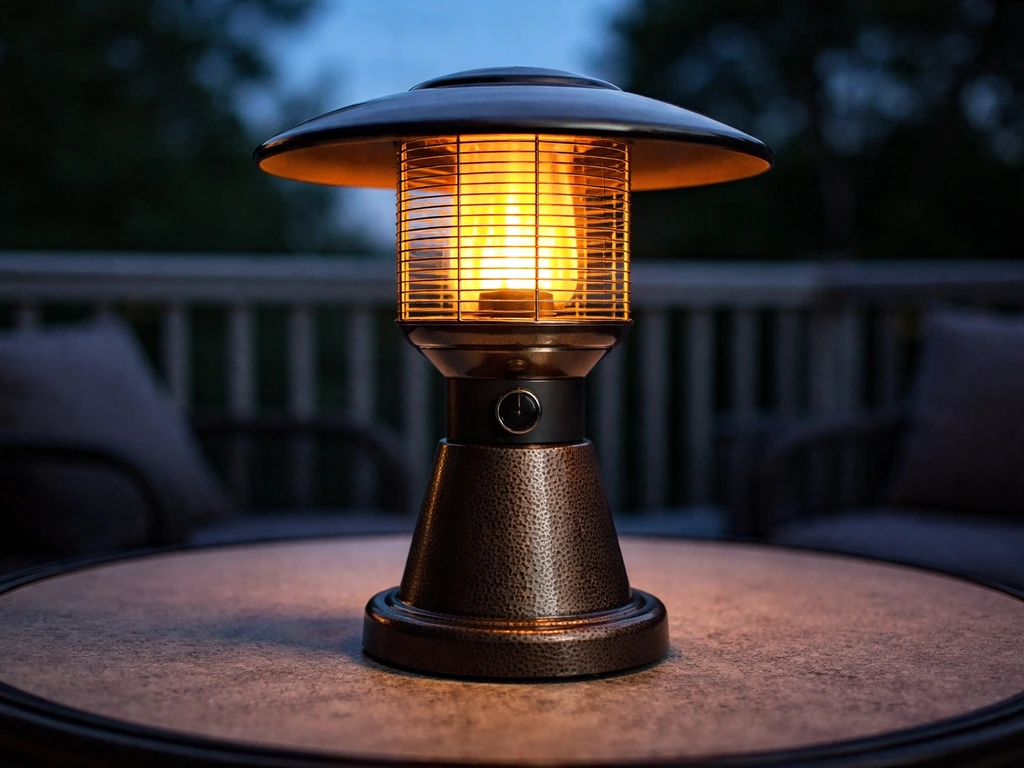
The most common versions you'll find today run on small propane canisters or plug into a standard outlet as infrared electric units, and they're designed to heat a tight radius of about 3 to 6 feet around the table. If you're specifically shopping for an az patio heaters round tile top firepit style, use these heater size and fuel considerations to make sure it will deliver the warmth you expect on your patio.
If you've been searching for this specific style and want to know which one actually fits your patio, fuel situation, and budget, here's everything you need.
What "hammer tone bronze" finish actually means and how to verify it
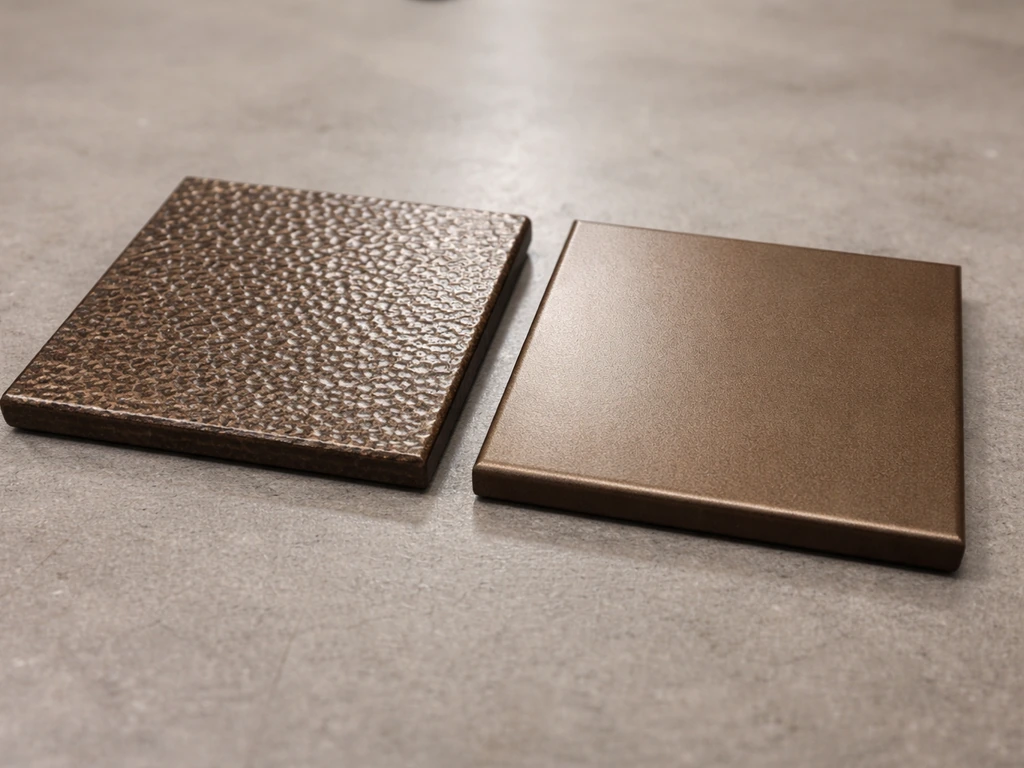
"Hammer tone" is a coating technique, not just a color name. The finish is applied as a textured powder coat or paint that dries with a pebbled, dimpled surface designed to replicate the look of metal that's been struck repeatedly with a hammer.
Beger’s Hammer-Tone Finish TDS explains that the hammer-tone appearance is produced by a textured coating designed to create a characteristic hammered surface rather than a flat or brushed metallic look [Hammer-Tone Finish TDS explains the hammered texture effect](https://www. beger. co. th/uploadfile/product/technical/TDSBegerHammerToneFinishTH-EN.
pdf). You get visual depth and a slightly rough texture you can feel, versus a flat or satin bronze which reads as a smooth, uniform metallic sheen. When patio heater product listings say "[Hammer Tone Bronze](https://www. wayfair.
com/outdoor/sb1/bronze-patio-heaters-c36336-a74887~273519. html)," they're specifically calling out this textured coating finish in a warm bronze/tan color family.
To confirm you're actually looking at a hammer tone finish in online listings, zoom into the product photos. A genuine hammer tone coating will show small circular or oval indentations across the surface, often with slight variation in light reflection between the raised and recessed areas. If the surface looks mirror-smooth or uniform, it's likely a standard painted or satin bronze finish, not hammer tone. The texture is the tell. Some listings also use the phrase "hammered bronze" interchangeably, which refers to the same visual effect, but always cross-reference the photo with the description to be sure.
From a durability standpoint, the textured coating is practical for outdoor furniture. The hammered surface scatters light, which means everyday scratches, fingerprints, and minor surface abrasions are far less visible than they would be on a polished or flat-painted finish. That's a genuine benefit for something sitting on your patio table all season.
Tabletop vs. standard patio heaters: what actually changes
Standard freestanding patio heaters, the tall mushroom-cap propane towers or standing electric units, are built to heat a broad perimeter, often 10 to 20 feet in diameter, from height. They stand 6 to 8 feet tall and need floor clearance and open space around them. A tabletop heater does something fundamentally different: it sits directly on your patio table or a small surface, operates at seating height, and delivers concentrated heat to the people immediately around it. A paramount table top patio heater is a great example of this seating-height, concentrated approach tabletop patio heater. The coverage radius shrinks to roughly 3 to 6 feet, but within that zone the warmth feels immediate and personal.
That placement difference matters a lot in practice. Because the heat source is at table level, it warms torsos and faces rather than just the air above you. On a small balcony, bistro setup, or intimate outdoor dining table, that's often more comfortable than a tall tower pushing heat overhead. The trade-off is that tabletop heaters don't scale.
If you have a large open patio with six or eight people spread out, a tabletop unit won't cut it as your only heat source. If you're outfitting a small covered patio, a compact balcony, or a bistro table on a deck, a tabletop heater is often the right call, and the hammer tone bronze finish keeps it looking intentional rather than industrial.
One thing to check before assuming a tabletop heater fits your space: clearance to combustibles. Even compact units need clear space above and around the emitter head, typically 24 to 36 inches minimum to any overhead surface like an umbrella, pergola roof, or awning. Always check the manufacturer's clearance spec before placing one under a covered structure.
Propane vs. electric: which fuel type makes sense for a tabletop heater
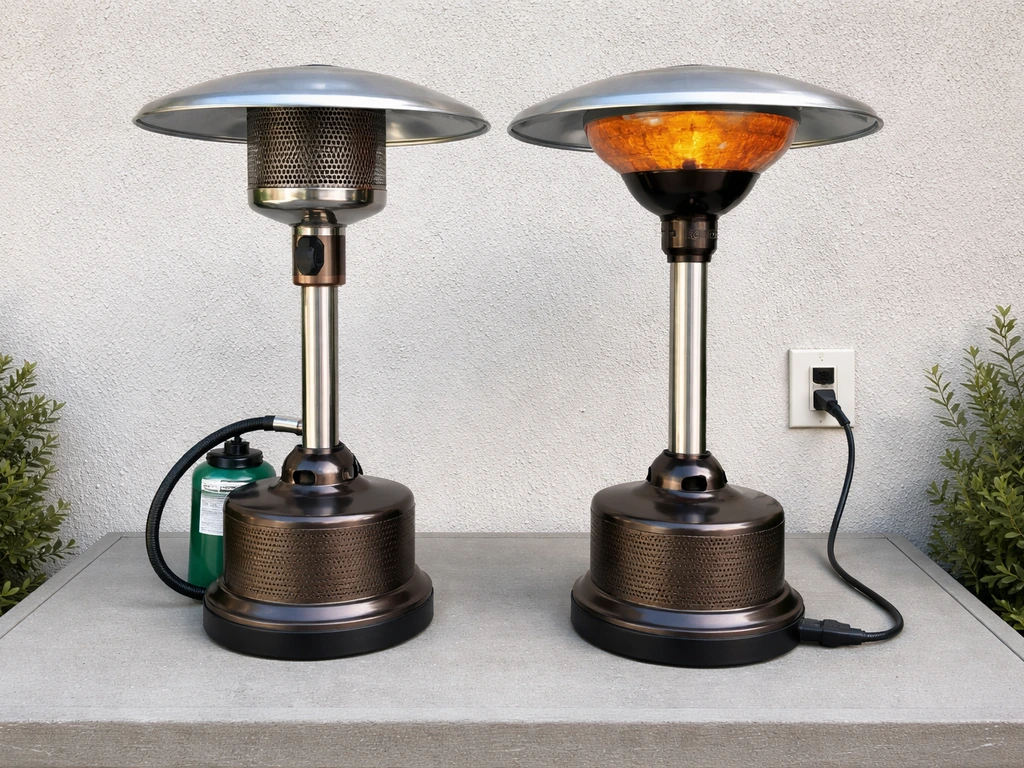
For tabletop patio heaters in a hammer tone bronze finish, you'll realistically be choosing between propane and electric infrared. Natural gas is essentially not an option at the tabletop scale: the fixed gas line connection and rigid plumbing make it impractical to build into a portable, compact unit. Here's how propane and electric actually compare for tabletop use.
| Feature | Propane Tabletop | Electric Infrared Tabletop |
|---|---|---|
| Heat output | 10,000 to 12,000 BTUs typical | 750 to 1,500 watts (roughly 2,500 to 5,100 BTUs equivalent) |
| Cord/fuel dependency | Uses 1 lb propane canisters, no outlet needed | Requires standard 120V outdoor outlet nearby |
| Best placement | Anywhere outdoors, no outlet needed | Must be within cord reach of outlet |
| Wind sensitivity | Flame can blow out in sustained wind | No flame, unaffected by wind |
| Heat feel | Radiant warmth, flame ambiance | Infrared: instant, directional warmth, no flame |
| Portability | Fully portable | Limited by cord length |
| Covered space use | Needs ventilation, check clearances | Safer under covered patios, no combustion |
| Running cost | Propane canister cost per session | Electricity cost, typically lower per hour |
| Finish options | Hammer tone bronze widely available | Hammer tone/hammered bronze available on some infrared models |
My honest recommendation: if you're on a covered patio or balcony with an outlet nearby, an electric infrared tabletop heater in a hammered bronze finish is the cleaner, lower-maintenance choice. No fuel to buy, no flame to monitor, no pilot light issues in the wind. If you want to use the heater somewhere without an outlet, or you want the warm glow of a real flame, a propane tabletop unit gives you full flexibility. Just keep a couple of backup 1 lb canisters on hand, because a small canister runs out faster than you'd expect on a cold night.
The specs that actually matter before you buy
Heat output
For propane tabletop heaters, look for at least 10,000 BTUs if you want meaningful warmth on a cool evening (below 55°F). Units at 7,500 BTUs or less are fine for mild weather but will feel inadequate once temperatures drop. For electric infrared tabletop heaters, 1,500 watts is the practical ceiling for a standard 15-amp household outlet, and that's roughly equivalent to a low-BTU propane unit in terms of felt warmth in close proximity.
Safety features
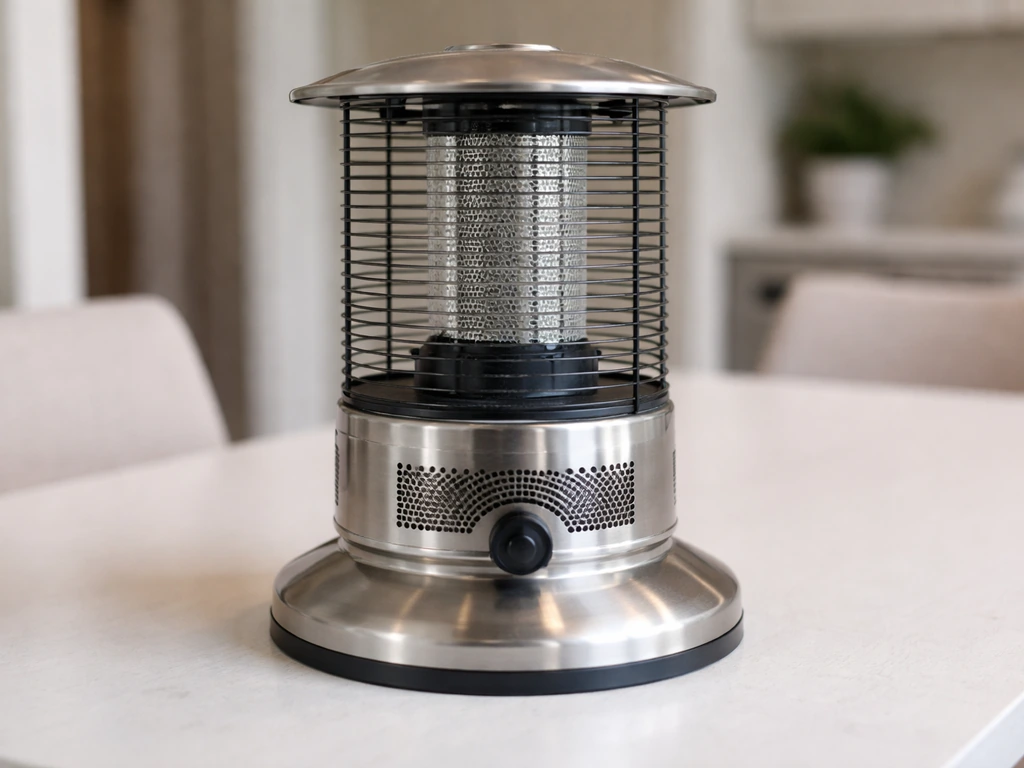
Tip-over auto-shutoff is non-negotiable for any tabletop heater. The unit sits on a table surface and can be knocked over, so confirm this feature is listed before you buy. For propane models, also look for an oxygen depletion sensor (ODS) if you ever plan to use the heater in a semi-enclosed space. For electric units, look for overheat protection and a cool-touch housing on the base and sides.
Ignition and controls
Piezo electronic ignition on propane models means no lighter needed, just a push-button start. That's the standard expectation now, and any propane tabletop heater still using a match-light ignition is a step behind. Electric units simply power on with a switch or dial. Heat level adjustability (at least a high/low setting) is worth looking for on both fuel types so you can dial back on milder evenings and extend your fuel or minimize your electricity draw.
Weather and finish rating
Check whether the heater is rated for outdoor use specifically. For electric infrared models, look for an IP rating of at least IP44, which means protection against splashing water from any direction. For the hammer tone bronze finish itself, check whether the manufacturer specifies a powder coat or baked-on coating versus a simple spray finish. A quality powder coat will resist UV fading and surface rust significantly longer than a basic painted finish.
Dimensions and base stability
Measure your table before ordering. Tabletop heaters typically have a base diameter of 8 to 12 inches and a height of 18 to 30 inches. Make sure the base will fit the usable center or side space of your table without blocking plates and glasses, and that the overall height clears any overhead structure by the required margin. A wider, weighted base is more stable on an outdoor table than a narrow post-style base, especially if your patio gets occasional gusts.
Setup, safe operation, and getting the most warmth out of your heater
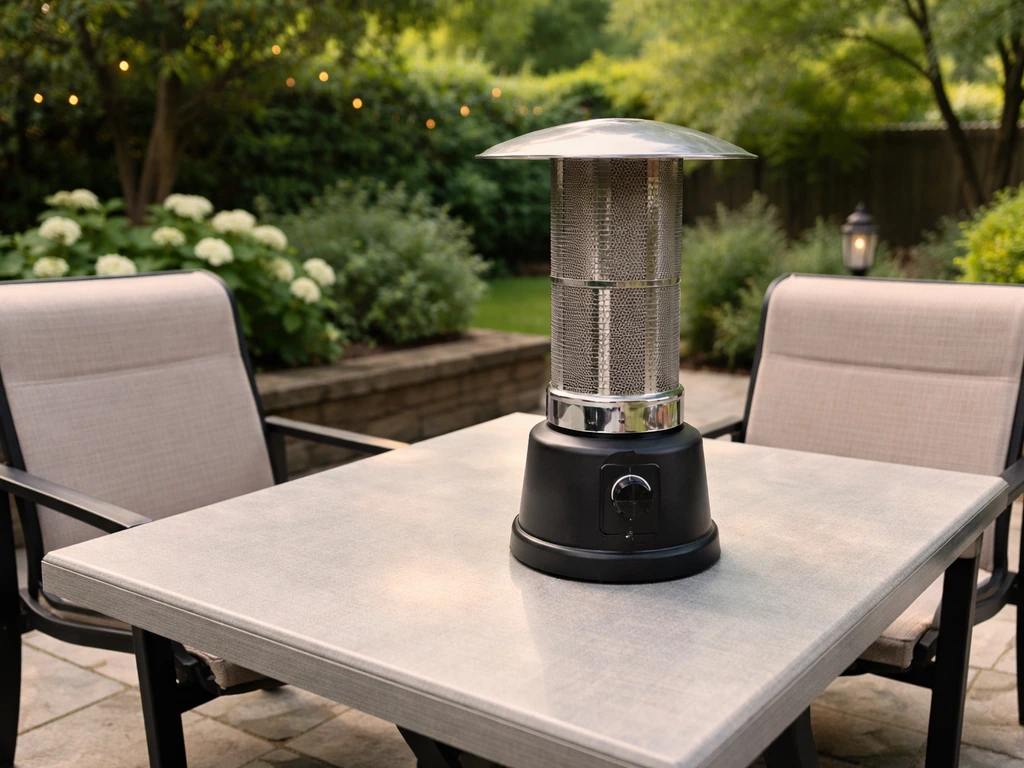
Position the heater toward the center of your table or at the edge closest to most of your seating. The goal is to keep the heat emitter within 3 to 5 feet of the people you want to warm. Avoid placing it directly under an umbrella or patio cover without first confirming it meets the clearance requirement in the manual. A common mistake is setting it up under a closed patio umbrella that's only 18 inches above the heater top, which creates a fire hazard.
For propane tabletop heaters, screw the 1 lb fuel canister into the base connection fully, then turn the control knob to the pilot position and hold it in while pressing the ignition button. Keep holding the knob for about 10 to 15 seconds after the flame catches to let the thermocouple warm up, then release. If the flame goes out immediately, repeat the hold time. This is the most common startup issue people run into, and it's nearly always just not holding the knob long enough.
For electric infrared tabletop heaters, plug into a dedicated outdoor GFCI outlet and avoid using an extension cord if possible. If you must use one, use a heavy-duty outdoor-rated cord of at least 14-gauge wire. Thin indoor extension cords with a 1,500-watt infrared heater are a fire risk.
Wind is the biggest enemy of propane tabletop heaters. If your patio is consistently exposed, consider positioning a windscreen on the prevailing wind side, or choose an electric infrared unit instead. Many tabletop patio heater designs also include a top reflector shield to better redirect heat toward people at seating height patio heater top reflector shield. Electric infrared produces no flame, so wind doesn't extinguish it, and the infrared energy heats people and surfaces rather than the air, so light breezes don't dissipate the warmth the way they would with a convection heater.
Keeping the finish looking good and the heater running clean
The hammer tone bronze coating holds up well outdoors, but it isn't impervious. The textured surface traps airborne grime, pollen, and moisture in the recesses of the hammered pattern over time. A soft cloth wipe-down with mild soapy water at the start and end of each season handles the bulk of it. Avoid abrasive scrubbers or steel wool on the finish: the powder coat is durable but can be scratched through aggressive scrubbing, and once the coating is compromised, rust can develop on the underlying steel.
If you notice early-stage surface rust on any exposed metal (common around screws, seams, or any spot where the coating has chipped), treat it quickly with a rust-inhibiting primer and a matched bronze-tone spray paint. Small touch-ups are easy to do and prevent the rust from spreading under the coating. Applying a thin coat of automotive wax or an outdoor metal protectant spray to the hammer tone finish once per season gives the coating extra UV and moisture resistance.
For propane models, check the burner orifice and venturi tube for spider webs and insect nests at the start of each season. This is the leading cause of low or uneven flames in propane tabletop heaters that have been stored for a few months. If you still notice weak or uneven heat after clearing the burner path, you may need a replacement top shield reflector for outdoor propane patio heaters to restore proper heat reflection propane tabletop heaters.
A thin wire or can of compressed air clears the blockage in seconds. For electric models, wipe the quartz infrared tube gently with a dry cloth to remove dust before firing it up, and inspect the cord and plug for cracks or fraying.
Store your tabletop heater under a cover or indoors during the off-season. If you leave it outside year-round, a fitted waterproof cover is the single best investment you can make to protect both the finish and the internal components. Remove the propane canister before storing any propane unit.
Your quick buyer checklist before you pull the trigger
Run through this list before buying any hammer tone bronze finish tabletop patio heater. It takes about five minutes and eliminates most of the regret-purchases I've seen people make with patio heaters.
- Confirm the finish in photos: look for visible texture and dimpling, not a smooth bronze surface. If the product images don't show close-up texture detail, ask or look for alternate listings.
- Match fuel type to your space: outdoor outlet within cord reach means electric is viable. No outlet, or you want portability and flame ambiance, means propane.
- Check heat output: 10,000+ BTUs for propane, 1,500 watts for electric if you're heating in temperatures below 55°F.
- Verify tip-over auto-shutoff is listed in the features. This is a must-have, not a bonus.
- Measure your table and overhead clearance before ordering. Confirm the heater's base dimensions fit your surface and the top clears any umbrella, cover, or awning by the required minimum (usually 24 to 36 inches).
- Check the coating spec: powder coat lasts significantly longer outdoors than basic painted finishes. Look for "powder coated" in the description.
- Confirm the weather/IP rating for electric models: IP44 minimum for any use in rain-prone areas.
- Budget for accessories: an outdoor cover, backup 1 lb propane canisters if going propane, and a GFCI outlet extension if going electric.
If you want to compare specific models in this finish family, the Fire Sense line is one of the most commonly found brands producing hammer tone bronze finish tabletop heaters, and there are also compelling tabletop options from brands like Paramount and Hampton Bay worth comparing side by side. Beyond the finish, the decision usually comes down to whether you need the portability of propane or the wind-proof simplicity of electric infrared. Both can deliver real, usable warmth on a small patio when you match the spec to your actual setup rather than just buying on looks. If you're comparing options like a Hampton Bay table top patio heater, use the same checks for size, clearance, heat output, and safety features before deciding.
FAQ
How can I tell the difference between true hammer tone bronze and a regular bronze painted finish online?
Look for small repeated circular or oval dimples and uneven light reflection across the whole surface, not just at the edges. Hammer tone usually looks “textured everywhere,” while satin or spray finishes tend to be uniformly smooth and consistent under zoom.
Will a hammer tone bronze tabletop patio heater work on a covered patio without overheating risk?
It can, but you must treat the clearance requirement as a hard limit, not a guideline. Measure the space between the heater top and the lowest part of the cover (umbrella fabric, pergola slats, or awning) and confirm it meets the manufacturer’s spec for that exact model.
What’s the minimum safe distance to an umbrella, curtains, or nearby furniture?
Use the manufacturer’s stated minimum clearance to combustibles, then add extra buffer if nearby items can sway in wind. For example, umbrella canopies can move downward when fabric stretches or when breezes catch them.
Do tabletop heaters actually heat people evenly, or do you only get warmth right in front of the unit?
Because the emitter sits at seating height and heats a concentrated radius, warmth is strongest directly in front and within roughly the 3 to 6 foot coverage zone. If your seating is off to the side, choose positioning that keeps the heat source aimed toward the center of the group, or pick a model with a wider reflector.
Is propane better if my patio has frequent wind?
Often no, wind is still the main challenge for propane at tabletop scale. If you get consistent gusts, an electric infrared unit usually holds temperature better, or choose propane with an effective windscreen and keep the heater positioned on the sheltered side of your patio.
What fuel and heat output should I target for propane tabletop use below 55°F?
Aim for at least 10,000 BTUs for meaningful warmth when it gets cold. If the listing only shows BTUs without clarifying it’s an outdoor-rated heater, double-check that it is intended for outdoor use at tabletop height, since indoor-rated units can’t be substituted safely.
Can I run an electric infrared tabletop heater on a regular outdoor extension cord?
Avoid extension cords if possible, because a 1,500-watt draw can overheat thin cords. If you must extend power, use a heavy-duty outdoor-rated cord with adequate gauge (not a typical indoor cord), and keep the connection protected from moisture.
What safety features should I verify before buying any tabletop model?
Confirm tip-over auto shutoff is included. For propane, also look for an oxygen depletion sensor (ODS) if you might use it in semi-enclosed spaces. For electric models, check for overheat protection and that the housing is cool-touch enough to reduce accidental burns.
Why does my propane tabletop heater go out when I release the knob?
Most often you are not holding the control knob at the pilot position long enough for the thermocouple to warm. Try holding for the recommended seconds after ignition, and if it still extinguishes immediately, inspect for burner obstruction like insect nests or debris.
How often should I clean the hammer tone finish, and what products are safe?
Wipe it at the start and end of the season with mild soapy water and a soft cloth. Avoid abrasives because the textured coating can be scratched, and once the coating is compromised, the underlying metal can rust around the damaged spots.
Do I need to protect the finish from rust even if the surface looks fine?
Yes, especially around seams and screw points where coating chips can start. If you spot early rust, treat it quickly with a rust-inhibiting primer and matching bronze-tone paint, then seal with a suitable outdoor metal protectant so the damage does not expand under the coating.
What maintenance is unique to propane tabletop heaters after storage?
Inspect the burner area for spider webs or insect nests at the start of the season. If flame behavior is uneven after cleaning, also check whether the reflector or top shield is correctly positioned, since blockage or misalignment can reduce effective heat reflection.
How do I choose the right size for my table, beyond just overall height?
Check both base diameter and emitter height relative to your tabletop items. Make sure the base fits the usable center or side space without blocking glasses or plates, and confirm the overall height clears your cover with the required margin.
Is it okay to use a tabletop heater on any outdoor surface, like a glass-top table?
Be cautious. Tabletop heaters transfer heat to the immediate area and can heat the table surface under the base, so verify the manufacturer’s approved surfaces and ensure stability. If the table is slippery or too lightweight, prioritize a model with a wider, weighted base.
Should I store the heater outside year-round if it is hammered bronze?
No, even durable coatings need protection from rain and grime. Use a fitted waterproof cover for off-season storage, and for propane models, remove the canister before storing to avoid leaks and to simplify safe storage.