
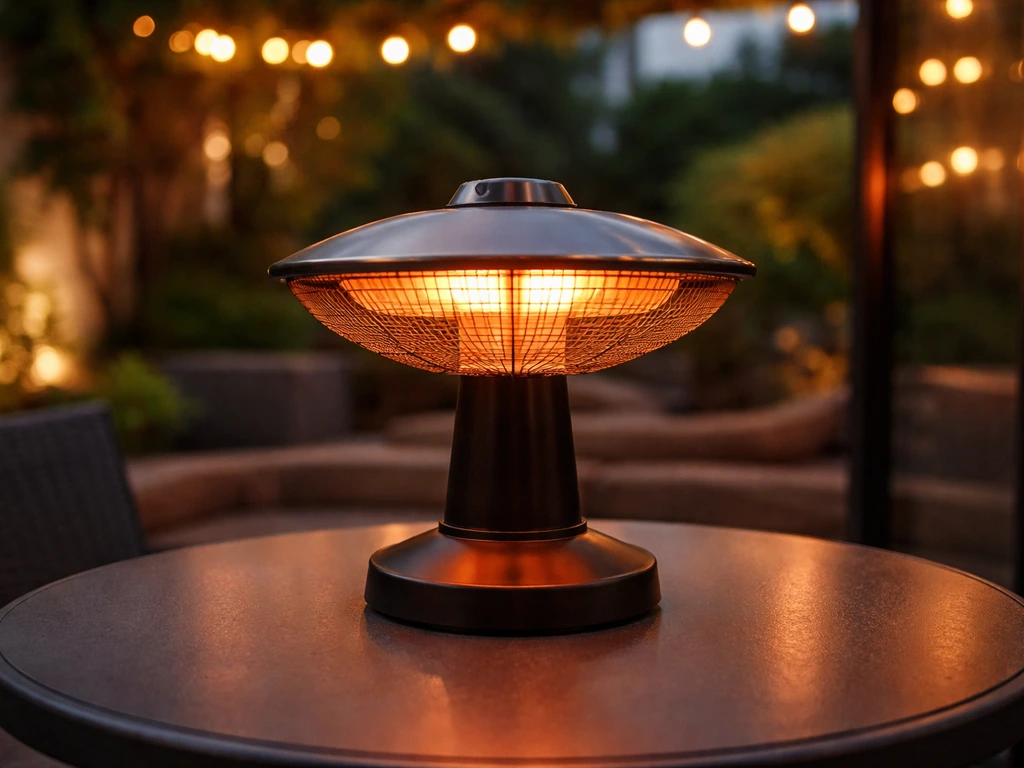
The La Hacienda tabletop electric patio heater is a solid, plug-in infrared heater designed to keep a small outdoor seating zone warm rather than heat an entire patio. If you have a covered balcony, a small dining table setup, or a compact courtyard and you want instant heat without gas cylinders, it does the job well. If you're hoping to warm a large open garden or a windy terrace, you'll hit its limits fast.
La Hacienda Table Top Electric Patio Heater Buying Guide

Willa Brennan
20 Jun 2026
What the La Hacienda tabletop electric heater actually is (and what it's built for)
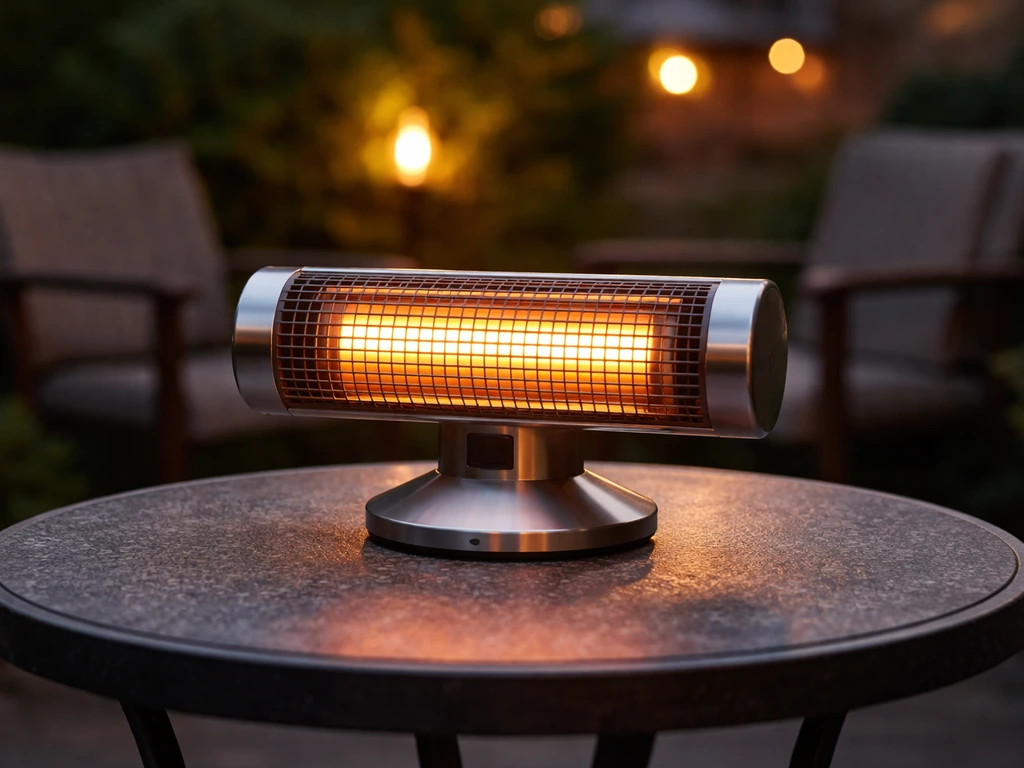
La Hacienda makes a small family of tabletop electric patio heaters, and the two you'll most commonly find are the halogen infrared models 69516 (silver) and 69535 (copper). Both run at 2100W on a single heat setting, use a halogen infrared element, and are rated IP44 for outdoor use. They look like a tall lamp with a reflector dish at the top, stand H89 x D50cm, and come with a weighted base that includes an anti-tip safety cutout. The element has an approximate rated lamp life of 5,000 hours, and both models run on standard 220–240V/50Hz mains power.
There are also a couple of other models worth knowing about. The Industrial Table Top Heater (69577) is a chunkier unit with switchable 900W/2100W settings, which gives you more flexibility in mild weather. The Nero Rotating Tabletop Heater (58666) takes a different approach entirely: it uses a carbon fibre element, sits at 350W/700W, is rated IPX4, and rotates to spread warmth. These are meaningfully different products, so if a retailer is stocking "La Hacienda tabletop electric," it's worth checking which model you're actually getting.
The key thing to understand about all of these heaters is how they work. They're infrared radiant heaters, which means they heat bodies and objects directly rather than warming the surrounding air. That's a genuinely important distinction outdoors: warming the air around you on an open patio is essentially pointless because the wind just carries it away. Infrared heaters sidestep that problem by beaming warmth straight at you, much like the sun does. The glow you see from the halogen element is the visible sign that it's working.
Heat coverage in the real world: patio size, wind, and covered vs uncovered
This is where expectations need calibrating. A 2100W tabletop halogen heater delivers solid warmth, but to a zone, not a whole outdoor space. Think of it as heating the people sitting within roughly 1 to 1.5 metres of the unit comfortably, with diminishing warmth beyond that. It's personal-zone heating, not whole-patio heating. An HVAC professional quoted by Livingetc put it well: patio heaters work more like grills, and warmth drops off sharply with distance. If you are comparing different brands and styles, reading endless summer patio heater reviews can help you judge real-world warmth and performance. Wind accelerates that effect.
For a small bistro table with two chairs on a covered balcony or under a pergola, the 69516/69535 is genuinely effective. The cover keeps infrared from dissipating as quickly and reduces wind interference. In these conditions, two people can feel warm even on a cold evening. Move it to a large, exposed garden patio and you'll notice it struggles to do more than warm one or two people sitting very close to the unit. Wind pulls heat away before it reaches you properly.
The weighted base is rated to stay stable in moderately strong gusts, which is reassuring, but wind that strong will also be stripping the warmth away from the people it's meant to be heating. The practical limit here is: if your outdoor area is regularly exposed to strong wind, a wall-mounted or overhead infrared heater aimed directly down at your seating is a far better solution than any tabletop unit.
| Patio Scenario | How Well It Works | Notes |
|---|---|---|
| Small covered balcony (under 5 sq m) | Excellent | Ideal use case; covered space amplifies radiant heat |
| Small bistro table under pergola/parasol | Very good | Two people stay comfortable in most cool-weather conditions |
| Open patio, calm evening (up to ~10 sq m) | Moderate | Works for nearest seats; heat drops off quickly |
| Large open garden/terrace | Poor | Insufficient coverage; better options exist |
| Windy exposed outdoor space | Poor | Wind defeats radiant tabletop output at this wattage |
Key specs to check on the exact model you're buying
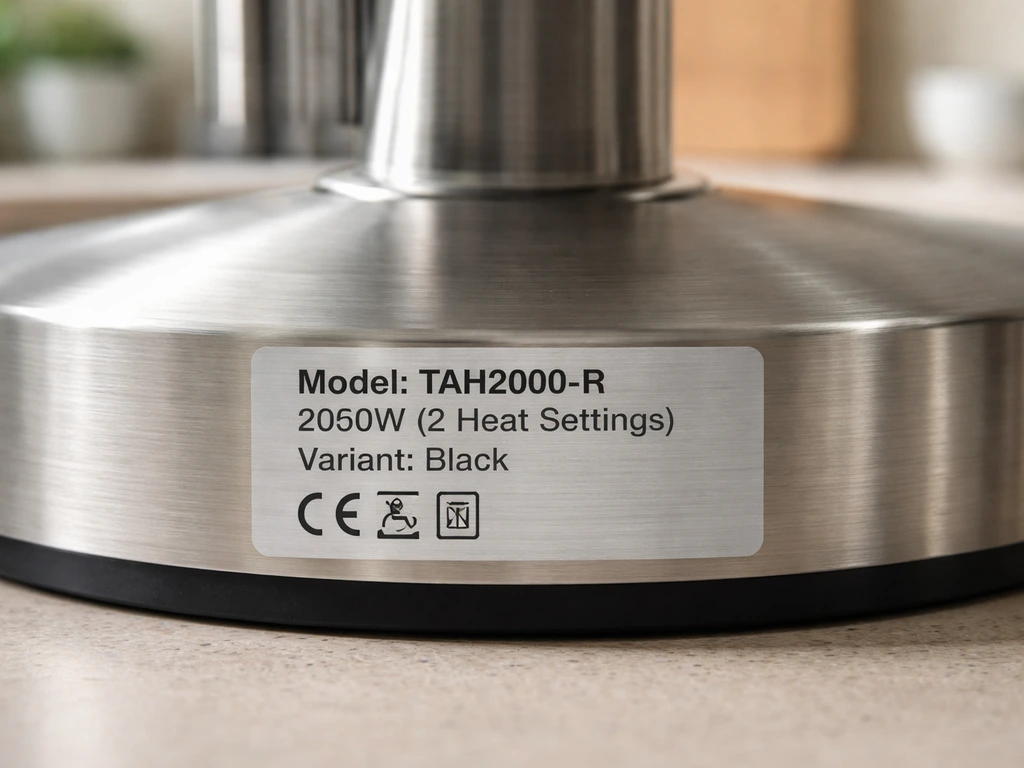
Because La Hacienda sells several tabletop electric variants under similar-sounding names, you should verify a few things before buying or plugging anything in.
- Wattage: The main halogen models (69516/69535) are 2100W with a single fixed heat setting. The Industrial model (69577) offers 900W/2100W dual settings. The Nero (58666) runs at 350W/700W via a carbon fibre element. More wattage means more radiant output, but the single-setting models give you no way to dial back on milder evenings.
- IP rating: Both 69516 and 69535 are IP44, meaning they're protected against solid objects over 1mm and water splashing from any direction. That's fine for covered outdoor use and light rain, but not for heavy rain or direct hosing. The Nero is IPX4, which offers similar water splash protection. Neither model is designed to be left out in a downpour.
- Anti-tip safety cutout: The weighted base on the 69516/69535 includes an automatic cutout that kills power if the unit tips over. This is a critical safety feature for any freestanding heater, and the La Hacienda design handles it well.
- Halogen element life: Around 5,000 hours rated lamp life. Elements are replaceable, which extends the product's lifespan. Keep that in mind if the heat output suddenly drops.
- Cord length: One commonly noted practical limitation is the 2-metre power cord on the 69516/69535. This restricts where you can position the unit unless you use an extension lead, which brings its own considerations (more on that below).
- Power requirements: Standard 220–240V/50Hz mains, same as any UK household socket. No special wiring needed, but the 2100W draw is substantial: it'll pull around 9 amps, so make sure the outdoor socket or extension you're using can handle it.
- Controls: The 69516/69535 have a soft-touch setting for power on/off, but no dimmer or variable heat. Simple and foolproof, but inflexible.
Setup and safe use: placement, power, weather, and maintenance
Placement and positioning
Position the heater so the reflector dish is aimed at the people seated at the table, not at a wall or a gap in the seating arrangement. The unit is 89cm tall, which puts the element at roughly head height when seated, and that's intentional: it directs infrared downward at an angle toward your body. Keep it central to your seating group if possible, or just off to one side if the table is narrow. Follow the manufacturer's clearance recommendations for any nearby combustibles (cushions, parasol fabric, overhead canopy material): the ASHRAE infrared radiant heating guidance is consistent with this, recommending manufacturer clearances be strictly followed.
Avoid placing it where it can be easily knocked into by kids, pets, or people walking past. The anti-tip cutout will kill the power if it falls, but it's better not to have it go down in the first place. The weighted base helps, but it's still a tall, relatively narrow unit.
Power and extension cord safety
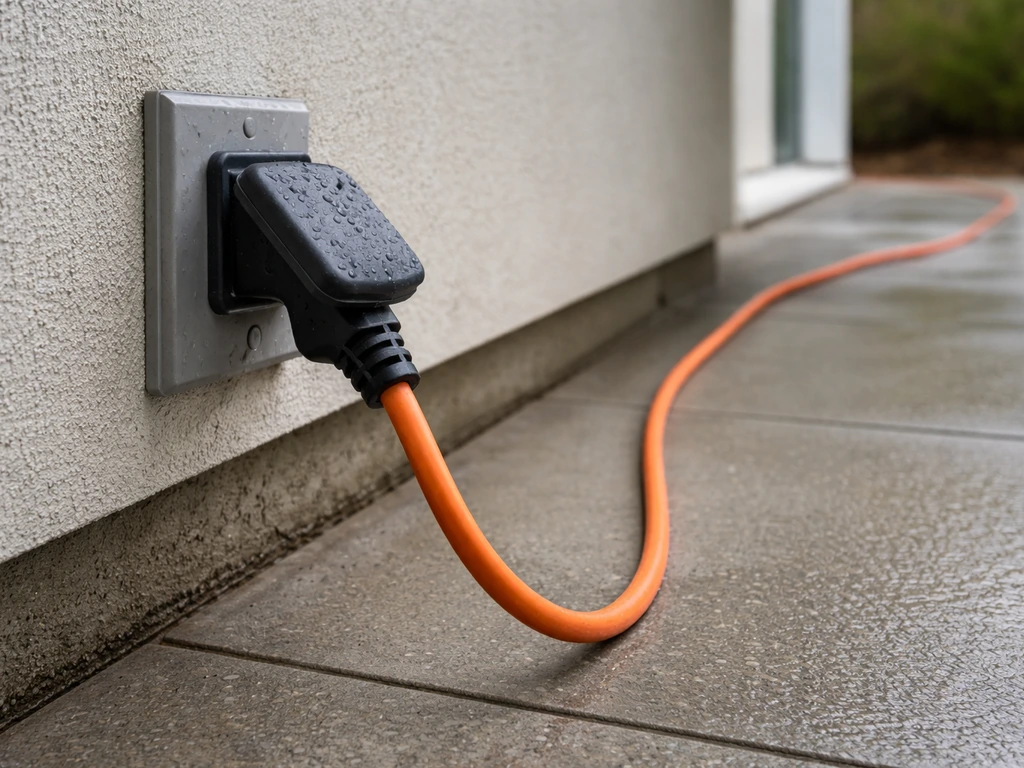
If the 2-metre cord doesn't reach your outdoor socket, you'll need an extension. The standard guidance from electrical safety organisations is to use a heavy-duty outdoor-rated extension lead rated for at least the heater's wattage (2100W, so at least 10 amps, preferably more). Avoid coiled extension leads, which can overheat at sustained high loads: unroll the lead fully before use. The University of Michigan safety guidance specifically warns against plugging heaters into surge protectors or portable power strips. Use a proper, rated outdoor lead plugged directly into a wall socket.
Weather handling and storage
IP44 means splash-resistant, not waterproof. If heavy rain is expected, bring the unit inside or cover it. Don't leave it outdoors long-term in wet weather. For storage between seasons, keep it in a dry space and protect the halogen element from knocks. Inspect the cord and plug before each season for any damage, since outdoor use adds wear.
Maintenance
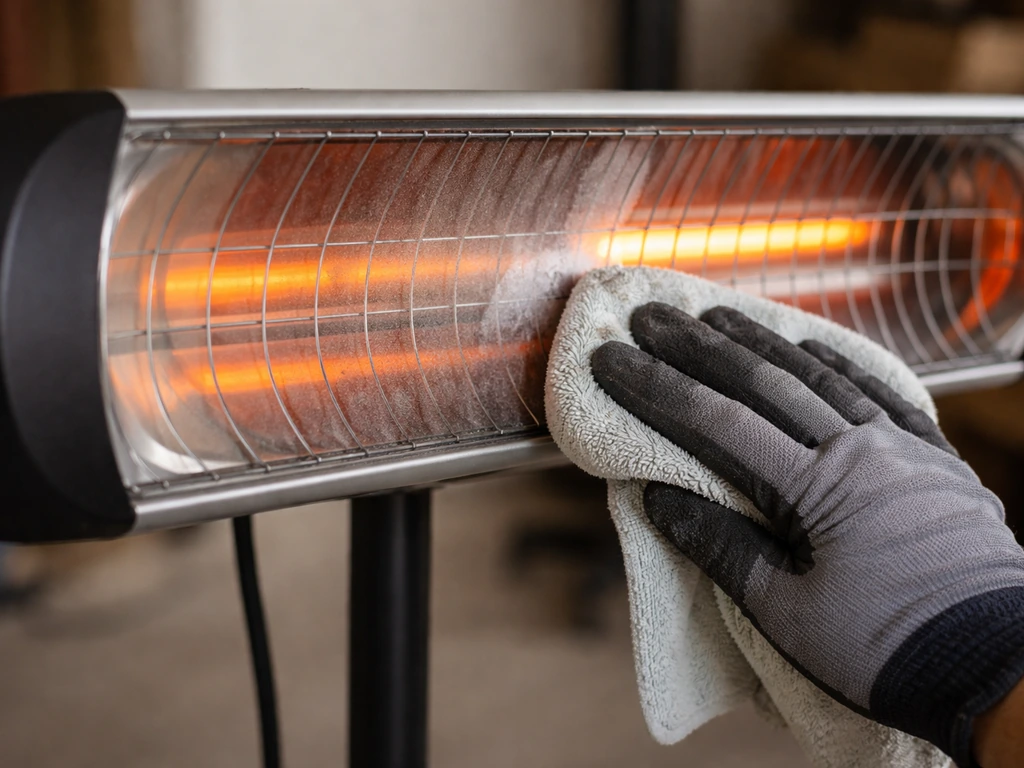
Infrared heaters require very little maintenance. The main task is cleaning the reflector dish periodically: dust and grime on the reflector reduce how efficiently heat gets directed toward your seating area. Wipe it down with a dry or slightly damp cloth when the unit is cool and unplugged. If heat output drops noticeably over time, the halogen element is likely the culprit and can be replaced. Beyond that, check the base and cord connections periodically, and you're done.
How it compares to other heater types
It helps to be clear-eyed about how the La Hacienda tabletop electric sits within the broader world of patio heating, especially if you're deciding between fuel types or heater styles.
| Heater Type | Heat Output / Coverage | Best For | Key Drawbacks |
|---|---|---|---|
| La Hacienda tabletop electric (69516/69535, 2100W halogen) | Personal zone, ~1–1.5m radius | Small covered patios, balconies, bistro tables | Short cord, single setting, wind-sensitive |
| Propane/gas tabletop heater | Slightly larger zone, no cord | Areas without outdoor power, more remote spots | Gas cylinder refills, no cord means more freedom but ongoing fuel cost |
| Standing propane/gas patio heater (mushroom style) | Up to 4–5m radius (often 12,000–46,000 BTU) | Larger open patios, multiple guests | Bulky, gas refills, more expensive, wind still reduces output |
| Wall/ceiling-mounted electric infrared | Up to 1,000 sq ft (high-end units); directional beam | Permanent covered spaces, larger seating areas | Requires installation, not portable |
| Pellet heater (tabletop/freestanding) | Variable; typically lower consistent output | Ambiance-focused, low-wind covered areas | Fuel handling, more maintenance, slower heat |
| La Hacienda Nero tabletop (58666, 350W/700W carbon fibre) | Lower output, rotating | Mild evenings, indoor/outdoor transitions, subtle warmth | Not enough for cold nights outdoors |
The honest comparison: if you have an outdoor power socket and a small covered or sheltered seating area, the La Hacienda tabletop electric is genuinely convenient. If you're looking specifically for an endless summer table top patio heater, check that it's suited to your patio size and wind exposure. No gas cylinders, no refills, instant heat at the touch of a button.
Where propane or gas wins is in portability and in raw output for larger open spaces where a cord isn't practical. For permanent installations, a wall-mounted electric infrared (like units from brands such as Dr Infrared or similar) will outperform any tabletop unit significantly, covering much larger areas, but they require installation and lose the tabletop convenience entirely.
Compared to other tabletop electric options on the market, including the rattan-style models and those from brands like Garden Sun, Endless Summer, and Member's Mark, the La Hacienda halogen models are competitive at 2100W. A rattan table top patio heater offers a more decorative look, but it's still important to check the heat output and weather rating before you rely on it outdoors. Their key differentiators are the weighted anti-tip base and IP44 weatherproofing. Where some competitors offer multiple heat settings as standard, the 69516/69535 keeps it simple with one fixed setting, which suits people who just want to turn it on and forget it, but frustrates those who want to fine-tune output.
Is it worth buying? Who should get it (and who shouldn't)
For the right setup, the La Hacienda tabletop electric heater is a genuinely good buy. If you're shopping for an east oak patio heater, read these reviews to compare real-world heat performance and coverage before you buy east oak patio heater reviews. It's practical, safe, easy to use, and does exactly what it promises. NFPA’s “Outdoor Heaters Fact Sheet” is safety guidance intended to help ensure propane and electric patio heaters are used safely. For the wrong setup, it'll leave you cold and disappointed. Here's a straightforward way to check which side you're on.
Buy it if you can tick most of these
- You have a small seating area: a bistro table for two to four people, a compact balcony, or a sheltered courtyard
- Your outdoor space is covered or semi-covered (pergola, parasol, canopy, roof overhang)
- You have a reliable outdoor power socket within 2 metres of where you'll place the heater, or you're happy to use a rated outdoor extension lead
- You want instant heat without the hassle of gas cylinders, ignition lighting, or refuelling
- You're mainly using it to extend the usable season (spring and autumn evenings) rather than heating through a deep winter outdoors
- Portability matters to you: you want to bring it indoors for storage easily
Skip it (and look at other options) if any of these apply
- Your patio is large and open (more than roughly 10–12 sq m of seating area)
- You're regularly dealing with strong winds: the warmth will dissipate before it reaches people
- You need to heat more than a small group of two to four people at one time
- There's no outdoor power socket, and you don't want to run a cord
- You want variable heat settings as standard on a halogen unit (look at the 69577 Industrial model for 900W/2100W, or consider a different brand)
Next steps
- Measure your seating area and count your guests: if it's a small table with up to four people in a sheltered spot, the 69516 or 69535 is your shortcut to a decision.
- Check your power situation first: locate your outdoor socket, measure the distance, and decide if you need an outdoor-rated extension lead (if so, buy a quality one rated for 13 amps minimum).
- Decide whether you want one fixed heat setting (69516/69535) or variable output (look at the 69577 Industrial model or the Nero 58666 for lower-wattage flexibility).
- If your space is large or regularly windy, step up to a standing propane heater or a wall/ceiling-mounted electric infrared unit instead: the tabletop format simply won't deliver the coverage you need.
- Once you've bought it, run a test evening before guests arrive: position the heater centrally to the seating area, note the warmth radius, and adjust placement accordingly.
The La Hacienda tabletop electric heater earns its place on a small, sheltered patio. It's not a heater that tries to do everything, and that's actually what makes it reliable for the job it's designed for. Match it to the right space, handle the cord situation sensibly, and it's a plug-in, maintenance-light, instant-warmth solution that removes a lot of the friction that comes with gas alternatives. If you're considering a member's mark patio heater with LED table features, it helps to compare how the heat coverage, footprint, and weather handling stack up against a tabletop infrared model like this one.
FAQ
Will the La Hacienda table top electric patio heater warm an entire patio?
Yes, but only in the sense of personal-zone heating. Infrared tabletop models typically feel effective for the people nearest the unit, roughly within about 1 to 1.5 metres, and the warmth drops quickly past that distance, especially with gusts.
What extension lead should I use if the patio socket is far from the heater?
Use an outdoor-rated extension lead that matches or exceeds the heater’s power draw, and fully unroll it. For a 2100W heater, choose a lead suitable for at least 10A (higher is better), and plug directly into a wall socket, not a surge protector or portable power strip.
Can I leave the heater outdoors all year if it has IP44 protection?
Don’t rely on IP44 as a “leave it outside” rating. IP44 is splash-resistant, not waterproof, so bring it in for heavy rain and store it dry between seasons. Also inspect the plug and cable at the start of each season because outdoor use accelerates wear.
Where exactly should I position the heater for best warmth?
It usually points at your seating group, but do not aim it at a wall or uncovered gap where the reflector dish might waste heat. Central placement over the table works best, or slightly off-center for narrow tables, so the infrared beam lands on people’s bodies.
How can I tell if the heater is actually working or if the element is failing?
If you want a quick check, dim the lights and watch for the halogen glow when the heater is on. If you don’t see the element glow or warmth feels much weaker after it warms up, the halogen element may be failing and may be replaceable.
How many people can it realistically heat on a typical patio setup?
Two-person comfort on a cold evening is realistic when the area is sheltered and the heater is close to the chairs. For larger groups or open, windy areas, you will typically need either multiple units, a different heater style, or an overhead or wall-mounted infrared heater aimed at seating.
What if I need more heat than a single-setting 2100W tabletop model provides?
Higher settings are not the solution because the common halogen tabletop models run on a single output. If you frequently expect breezier or colder conditions, consider a model with switchable wattage (like the heater listed with 900W/2100W) or a different mounting style.
Does wind completely ruin infrared patio heating?
Yes, infrared reduces the “warming the air” problem, but it can’t overcome strong wind. In regular gusts, the wind carries the radiant heat away before it reaches you, so a tall tabletop unit may feel weak compared with an overhead or wall-mounted heater that blocks wind and angles heat more effectively.
How should I manage placement so it is safe around kids, pets, and foot traffic?
Avoid placing it where it can be knocked over, even with the anti-tip cutout. Keep it on stable flooring, keep kids and pets away, and ensure the cord cannot be tripped. If the cable routes across walkways, secure it and consider a different placement so accidental contact is less likely.
How do I know my outdoor power setup can handle the heater?
A practical compatibility check is to confirm your patio socket can supply the full load and that the extension lead rating and length are appropriate. If you can’t reach with a properly rated outdoor lead, it’s safer to change the heater location than to use an undersized cable.