
A rattan tabletop patio heater is a compact, decorative heater designed to sit on a table or low surface and warm a small outdoor gathering area, typically 6 to 10 feet in diameter. The 'rattan' part refers to the housing or outer casing, which is styled to mimic woven rattan or cane, giving it a natural, furniture-friendly look that blends into patio décor rather than looking like a utilitarian appliance. These units run on either propane (or butane) gas or plug-in electric power, and they're genuinely useful for small patios, balconies, and dining areas where a full-size standing heater would be overkill or just won't fit.
Rattan Table Top Patio Heater: How to Choose and Use

Willa Brennan
31 May 2026
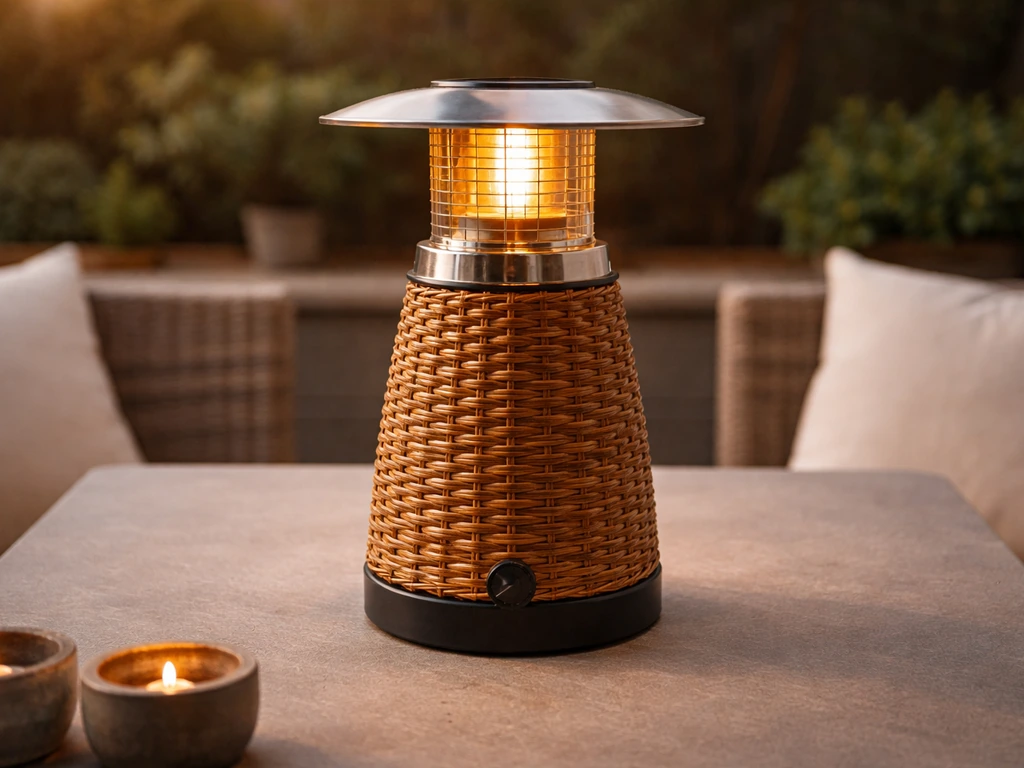
What a rattan tabletop patio heater actually is
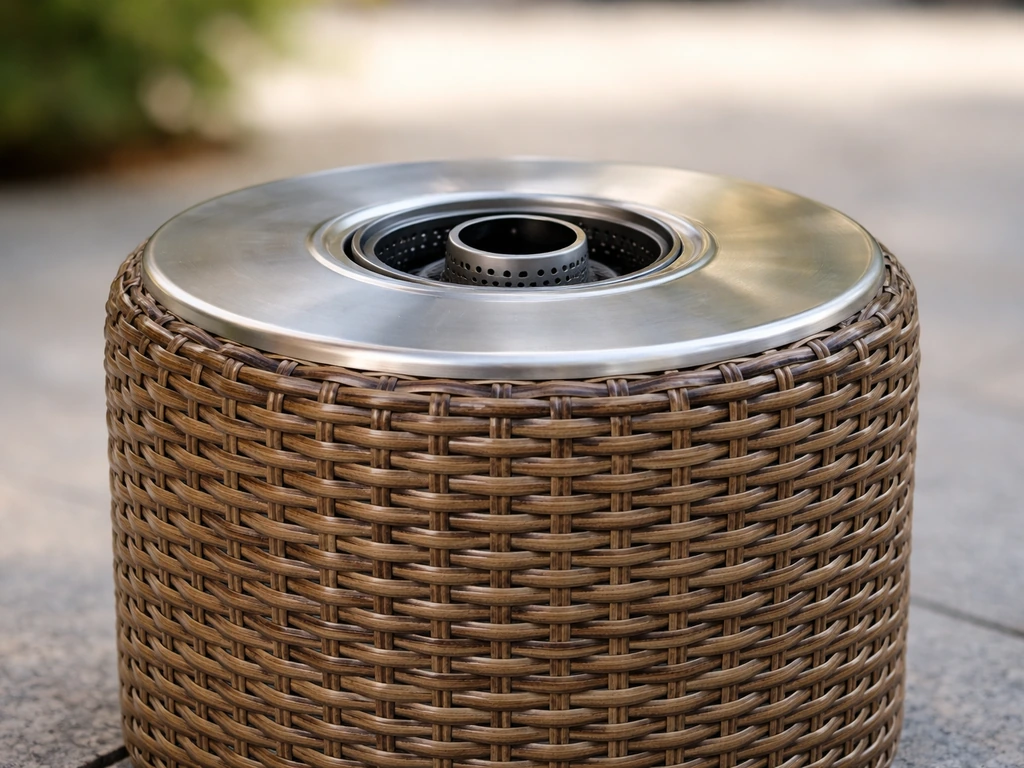
Think of it as two things combined: a functional heat source and a piece of patio furniture styling. The rattan weave or rattan-grain exterior is either real woven PE rattan (a synthetic weather-resistant material used widely in outdoor furniture) or a molded finish that mimics the look. Underneath that exterior sits either a gas burner assembly (for propane/butane models) or a radiant electric heating element (for plug-in versions). The result is a heater that doesn't look out of place among your chairs and cushions.
Propane rattan tabletop heaters often take the form of a small fire table or fire bowl, with an open flame or covered burner at the center. Some models, like units from Outsunny and similar brands, are essentially miniature propane fire pit tables with a rattan-style surround. Follow the manufacturer-style propane assembly and installation steps for these fire-table units, as shown in the Outsunny RY28-0011 manual miniature propane fire pit tables with a rattan-style surround. Electric versions tend to be more upright, with a halogen or infrared heating element inside a decorative housing. Both types are meant for small-group use, typically seating two to four people comfortably within their warmth radius.
Choose the right fuel type for your patio
This is the first real decision you need to make, and it matters a lot for day-to-day convenience, running costs, and where you can actually use the heater.
Electric tabletop heaters
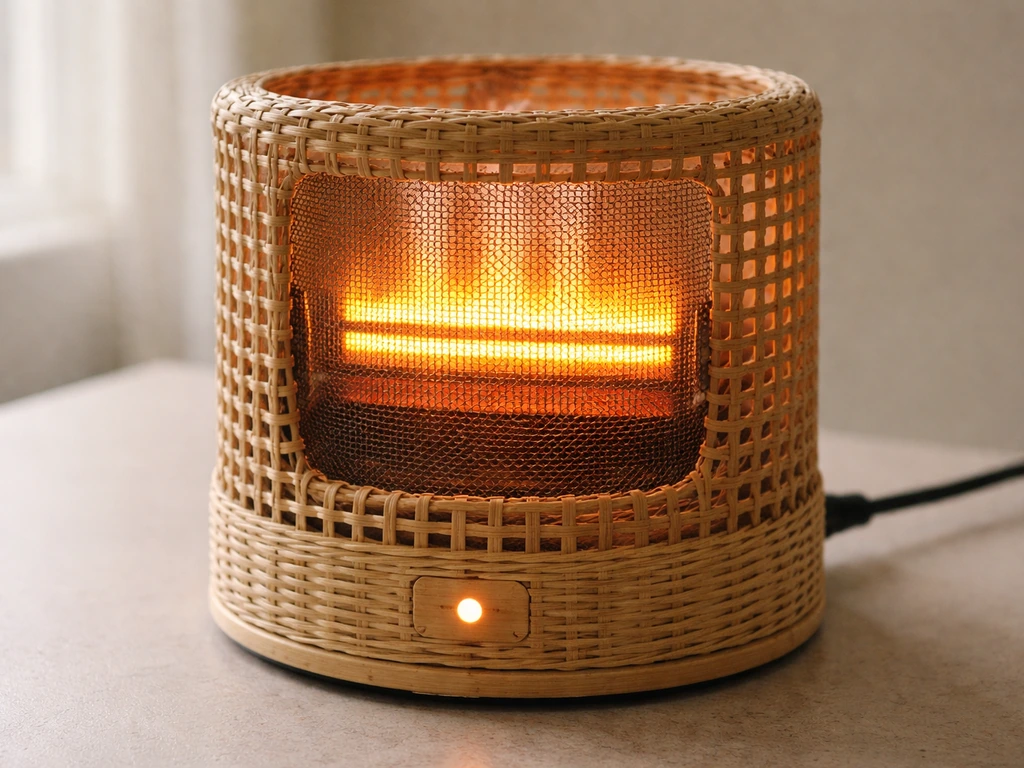
Electric rattan tabletop heaters typically run at 1,000 to 1,500 watts and use halogen or infrared elements to produce radiant heat. You just plug them in, which makes them ideal for covered patios, balconies with an outlet nearby, and enclosed or semi-enclosed spaces where you can't safely vent combustion gases. They heat up instantly, require zero fuel management, and tend to have the most straightforward safety features, including overheat protection and tip-over shutoff that cuts power the moment the unit tilts. Running costs are predictable: at 1,500W, you're looking at roughly $0.18 to $0.25 per hour depending on your local electricity rate. The trade-off is that you're tethered to an outlet and a power cord running across your patio.
Propane (and butane) tabletop heaters
Propane versions give you portability and higher heat output. A propane bistro-table style heater like the Desa TD113 puts out between 9,500 BTU on low and 16,000 BTU on high, which is meaningfully warmer than most electric tabletop options. You can use them anywhere outdoors without hunting for an outlet. The downside is fuel management: you'll need small 1-lb propane canisters or a connection to a standard tank, and you have to think about oxygen depletion and ventilation. Quality propane tabletop heaters include an ODS (Oxygen Deprivation System) or oxygen depletion sensor that shuts the unit off automatically if oxygen levels drop, plus a tip-over shutoff. For propane tabletop models, Napoleon’s manual describes an ODS (oxygen deprivation system) that shuts the unit off if oxygen levels drop, along with lighting and ignition steps for safe operation. Never use these in fully enclosed spaces. Running costs depend on how often you run them and at what output, but a 1-lb canister typically gives you 1 to 2 hours at a medium setting.
Side-by-side comparison
| Feature | Electric Tabletop | Propane Tabletop |
|---|---|---|
| Heat output | 1,000–1,500W (roughly 3,400–5,100 BTU equivalent) | 9,500–16,000 BTU (adjustable) |
| Portability | Limited (needs outlet) | High (fully portable) |
| Startup time | Instant | Near-instant (ignition required) |
| Running cost | ~$0.18–0.25/hr (electricity) | ~$1–2/hr (1-lb canister) |
| Indoor/covered use | Safe for covered patios | Outdoor/vented areas only |
| Safety features | Tip-over shutoff, overheat protection | ODS, tip-over shutoff, flame failure |
| Maintenance | Minimal | Check connections, replace canisters |
| Aesthetic options | Good (rattan housings available) | Very good (rattan fire table style) |
The honest recommendation: if you have a covered patio or balcony with an outlet, go electric for simplicity and safety. If you want to use it on an open terrace, poolside, or anywhere without power, propane gives you real warmth and flexibility. For the most decorative 'rattan fire table' look, propane models dominate that style.
Sizing, heat coverage, and real outdoor performance
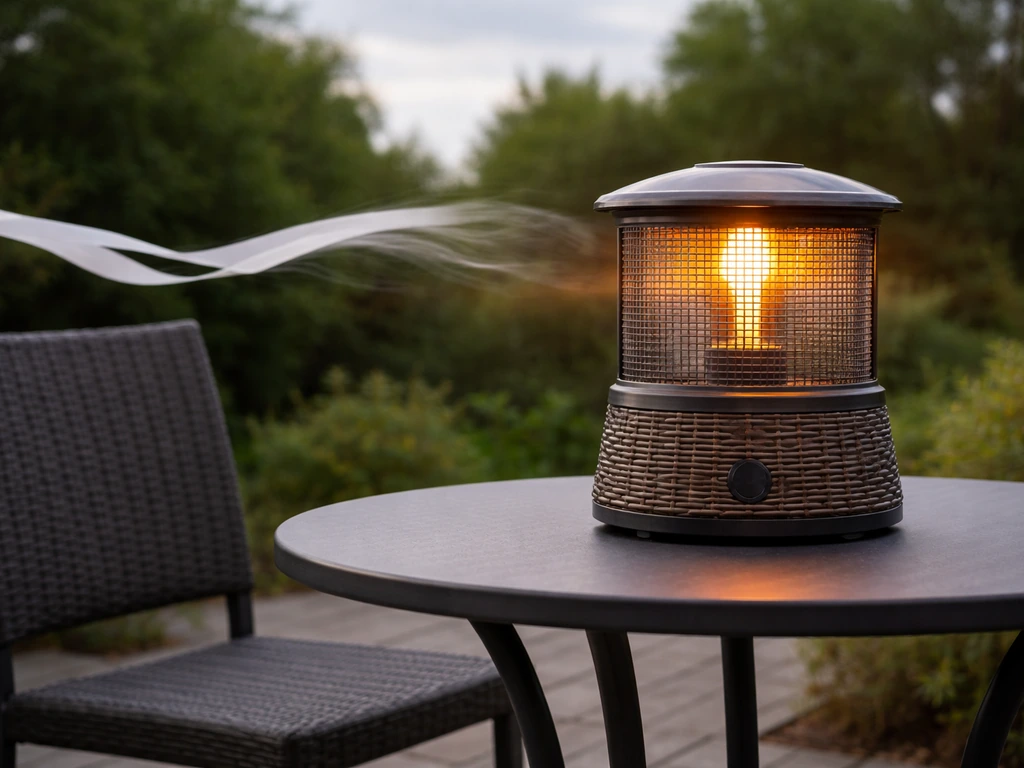
Tabletop rattan heaters are designed for intimate spaces, and it's important to go in with realistic expectations. A 1,500W electric unit or a propane unit at 9,500–16,000 BTU will comfortably warm a zone of about 6 to 10 feet around the heater in calm conditions. Think two to four people seated around a bistro table, not a 12-person dinner party spread across a large deck.
Wind is the single biggest performance killer for tabletop heaters. Even a light breeze of 5 to 10 mph will blow heat away from the seating area and cut the effective warmth radius significantly. Electric infrared/radiant heaters perform somewhat better in mild wind because the radiant heat warms objects and people directly rather than just heating air. Propane open-flame models suffer more in wind. If your patio is consistently breezy, consider positioning the heater to use a wall, fence, or windbreak, or look at models with a protective glass or mesh guard around the flame/element.
For temperature drop expectations: a well-performing tabletop propane unit at 16,000 BTU can take the edge off on evenings down to about 45°F (7°C) for people seated close to it. Below that, you'll likely need supplemental heating or a larger unit. Electric models at 1,500W are best for cool evenings in the 55–65°F range. Neither tabletop format is the right tool for genuinely cold nights below freezing.
Safety and weather-readiness checklist
Before you buy or use a rattan tabletop patio heater, run through this checklist. These are the things that actually matter from a safety and durability standpoint.
- Tip-over shutoff: Non-negotiable for any tabletop heater. If it tips, it should cut heat immediately. Confirm this is listed in the product specs.
- Oxygen depletion sensor (ODS): Required for propane/gas tabletop models. The Napoleon and ULINE-category tabletop gas heaters both include this. If a gas unit doesn't list an ODS, skip it.
- Flame failure device: On gas models, this shuts off the gas if the flame goes out unexpectedly, preventing unburned gas from accumulating.
- Overheat protection: Especially important for electric models. The Global Industrial 1,500W tabletop heater explicitly lists this as a built-in safety device.
- Cool-touch surfaces/guards: If children or pets are nearby, check whether the outer housing stays cool and whether there's a protective guard over the heating element.
- CSA or ETL certification: Look for a recognized safety certification mark (CSA, ETL, UL). The Flynama rattan propane fire pit table, for example, is listed as CSA certified.
- Clearance requirements: Most manufacturers specify at least 18 inches of clearance above and 24 inches to the sides from any combustible material. Keep tablecloths, umbrellas, cushions, and overhead structures at safe distances.
- Weather/IP rating: Check the IP rating for any electric model. Most tabletop heaters are rated for covered outdoor use, not direct rain exposure. Propane fire table models with rattan exteriors often have PE rattan that handles moisture but confirm the burner assembly is rated for outdoor use.
- Ventilation: Propane units must never be used in enclosed spaces. Semi-covered patios with open sides are generally fine; a fully enclosed room is not.
Setup, placement, and day-to-day operating tips
Setup for most rattan tabletop heaters is straightforward, but placement decisions matter more than people realize. Here's what to get right from the start.
Where to put it
Place the heater at the center of your seating area whenever possible so warmth radiates outward toward everyone. On a rectangular dining table, the center works well. On a small bistro table for two, center placement is usually the only option. Keep at least 18 inches of clearance above the unit and 24 inches to the sides from anything combustible, including patio umbrellas, fabric cushions, overhanging plants, and decorative string lights. If you have a patio umbrella, either close it during use or ensure the umbrella pole and canopy are well outside that 24-inch radius.
Starting and operating a propane unit
Attach your propane canister or connect your hose to the regulator before doing anything else. Open the gas valve slowly, press the ignition button or use a long lighter near the burner, then adjust the output using the control knob. Most units have a low-to-high range. Start on low, let the unit stabilize for 30 seconds, then adjust upward. Never force-start a unit that doesn't ignite on the first or second attempt: turn off the gas, wait 5 minutes to clear any accumulated gas, then try again. When you're done, turn off the gas at the tank first, then let the flame burn out the remaining gas in the line before closing the burner valve.
Starting and operating an electric unit
Plug into a grounded outdoor-rated outlet. Keep the power cord routed away from foot traffic and away from the heater element itself. Most electric tabletop heaters have a simple dial or button control with heat settings. Radiant/halogen models heat up within seconds. Don't leave an electric tabletop heater running unattended, and always unplug it when you bring it inside or put it away.
Using near furniture, covers, and umbrellas
Never operate any tabletop heater under a protective cover or furniture dust cover. Remove patio furniture covers completely before use. If your table has a glass top, confirm the manufacturer says it's suitable for use with a tabletop heater, as heat stress can crack glass over time. Wicker or rattan chair backs near the heater should be kept at safe distances per the clearance guidance above.
Maintenance, storage, and rattan housing durability
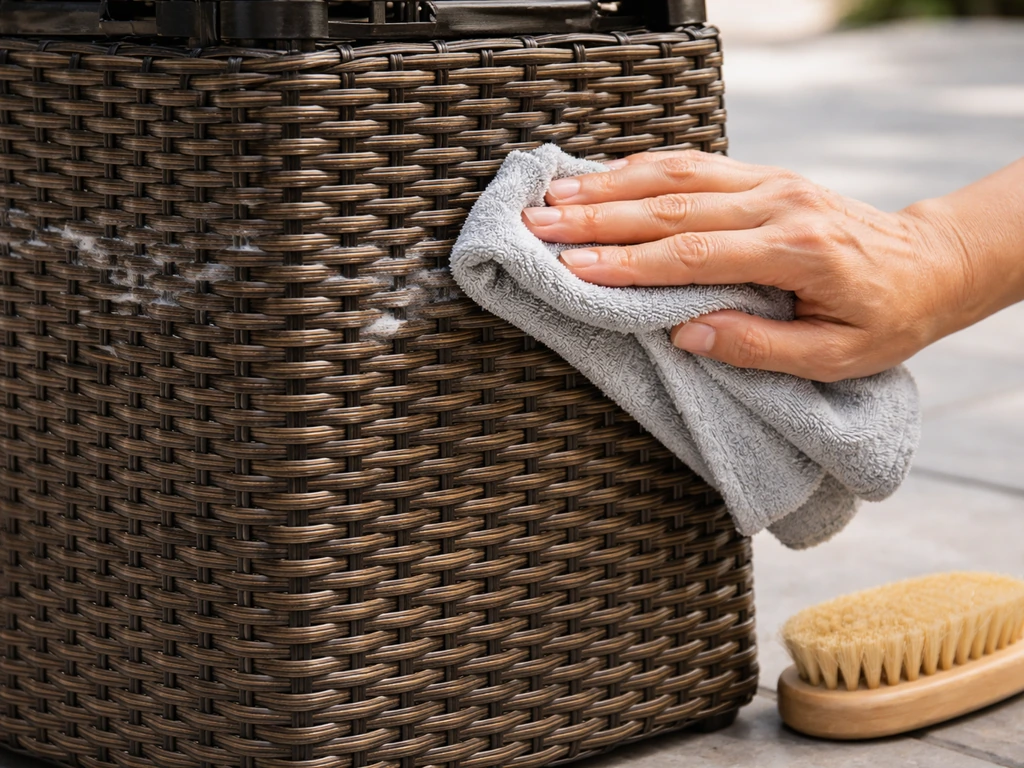
The rattan-style exterior is one of the main reasons people choose these heaters, so it makes sense to take care of it properly. Most rattan patio heater housings use PE (polyethylene) synthetic rattan, the same material used in quality outdoor furniture. This is UV-resistant, doesn't rust, and handles moisture far better than natural rattan, which would warp, mold, and deteriorate outdoors.
Cleaning the exterior
Wipe down the PE rattan weave with a damp cloth and mild soap every few weeks during the season. Use a soft brush to get into the weave pattern where dust and debris collect. Avoid high-pressure water jets, which can force water into the internal components. For the metal frame underneath, check for any signs of surface rust at connection points and wipe dry after rain or cleaning.
Weatherproofing and covers
Even if the rattan housing handles moisture well, the internal burner or heating element usually doesn't. Use a fitted patio heater cover when the unit isn't in use. When rain is incoming, bring electric models indoors or under cover. Propane models are more tolerant of being left covered outdoors, but always disconnect and store the propane canister separately, in a cool, ventilated space away from ignition sources.
End-of-season storage
Before storing for winter: clean the entire unit, remove any propane canisters, dry all surfaces completely, and store in a dry indoor location if possible. Garages work fine. If you must store outdoors, use a weatherproof cover and elevate the unit off the ground to prevent moisture wicking. For propane models, check the gas connections and O-rings at the start of each season and replace any that show cracking or wear.
Lifespan expectations
A well-maintained PE rattan tabletop heater should last 3 to 6 seasons with proper care. The rattan housing itself is rarely the weak point; the burner assembly, igniter, or heating element typically wears out first. Electric models are often easier to repair or replace parts for if the element fails. With propane fire table models, the burner and igniter are the parts most likely to need attention after 2 to 3 seasons of regular use.
How rattan tabletop heaters compare to other patio heating options
A rattan tabletop heater is a specific solution for a specific situation. Here's how it stacks up against the alternatives you might be weighing.
| Option | Best for | Heat output | Portability | Aesthetics | Price range |
|---|---|---|---|---|---|
| Rattan tabletop heater | Small tables, balconies, 2–4 people | Low-medium | High | Decorative/furniture-style | $80–$300 |
| Standard tabletop patio heater | Small patios, same footprint needs | Low-medium | High | Functional/utilitarian | $50–$200 |
| Freestanding tall patio heater | Medium-large patios, 6–10 people | High (40,000+ BTU) | Medium | Variable | $100–$600 |
| Tabletop fire pit/fire bowl | Ambiance + light warmth, 2–4 people | Low-medium | High | Very decorative | $60–$400 |
| Infrared wall/ceiling heater | Covered patios, fixed installation | High | None (fixed) | Minimal/modern | $150–$800 |
| Chiminea or fire pit | Open yards, larger groups | High (variable) | Low | Rustic/natural | $100–$600 |
If you need to heat more than four people or an area larger than about 10 feet across, a rattan tabletop heater is not the right tool. In that case, look at a freestanding tall propane heater or a wall-mounted infrared unit for a covered patio. For pure ambiance with mild supplemental warmth, a rattan fire table or tabletop fire bowl is a close cousin to the rattan tabletop heater, with a similar aesthetic but usually more of a social centerpiece than a serious heat source.
It's also worth knowing that branded tabletop patio heaters from brands like Endless Summer, Garden Sun, and East Oak occupy a similar market segment, with some offering rattan-inspired styling. If you are looking at Garden Sun tabletop patio heaters, compare the fuel type, heat output, and included safety features before you buy. If you're looking specifically for East Oak patio heater reviews, compare models by fuel type, heat output, and safety features before you buy. If you're cross-shopping, those lines are worth comparing directly since some offer LED table features or come with consistently strong consumer reviews that are relevant to the rattan tabletop category. Many shoppers also compare specific models like the Member's Mark patio heater, including what people say in LED table review guides, before choosing one for their outdoor setup LED table features.
How to choose yours and what to do next
Here's a practical set of steps to get from 'interested' to 'confident purchase' in the next 30 minutes.
- Measure your space. Note the table size where the heater will sit, the seating area it needs to cover, and whether there's an outlet within easy reach. This alone narrows your choice to electric or propane.
- Identify your coverage. Two to four people around a bistro or small dining table? A tabletop heater is the right size. More than that? Consider a freestanding model instead.
- Check your ventilation. Covered patio with walls on multiple sides? Stick with electric. Open or semi-open patio? Either type works, but propane gives more heat.
- Confirm safety certifications. Look for CSA, ETL, or UL on the spec sheet. Confirm the propane model lists an ODS and tip-over shutoff, and the electric model lists overheat protection and tip-over shutoff.
- Set your budget. Decent rattan tabletop heaters start around $80 to $120 for electric versions and $120 to $250 for propane fire table styles with rattan housing.
- Check the BTU or wattage against your temperature expectations. For cool evenings (55–65°F), 1,500W electric is adequate. For colder nights (45–55°F), go propane with at least 10,000 BTU.
- Read recent user reviews specifically for wind performance and rattan durability. Manufacturer specs rarely address real-world wind performance; buyer reviews often do.
- Buy from a retailer with a clear return policy. Tabletop heaters can underperform expectations in specific spaces, and being able to return without friction matters.
A rattan tabletop patio heater is a genuinely good solution for the problem it's designed to solve: keeping a small outdoor table warm while looking good doing it. If you're comparing electric options, the La Hacienda tabletop electric patio heater is a good example of how radiant element heating can keep a small outdoor table area comfortable. If you need a compact tabletop option for everyday outdoor use, this is exactly the kind of outdoor patio heater table top design that works well for small gatherings. Go in knowing its limitations (small heat radius, wind sensitivity, not a replacement for a full patio heater), pick the right fuel type for your space, confirm the safety features are there, and you'll have a heater that pulls double duty as a piece of patio décor and a practical heating source through the cooler months.
FAQ
Can I use a rattan table top patio heater on a glass-top table or near outdoor furniture cushions?
Only if the manufacturer explicitly says it is compatible with glass. Glass can crack from repeated heat stress even when the heater seems stable. For cushions, keep at least the stated side clearance (24 inches) and also account for how cushions sag when someone sits, since that can reduce your safe gap.
What outdoor conditions matter most for a rattan table top patio heater, besides temperature?
Wind and surface reflectivity matter. Wind can cut the effective warmth radius quickly, so aim the heater so it faces into the seating area and use a wall, fence, or umbrella frame as a windbreak. Dark tabletops and nearby hard surfaces reflect radiant heat better than light fabric areas.
How do I tell whether an electric rattan table top patio heater is safe to run on my balcony?
Use a grounded outdoor-rated outlet (GFCI if your system has it) and verify the heater’s cord length is enough to avoid tension or kinks. Avoid running it across walkways where people can tug the cord, and never operate it under a cover, including patio furniture covers.
How much propane do I actually need for a rattan table top patio heater on a typical evening?
Plan in ranges, then verify with your usage. A 1-lb canister often lasts about 1 to 2 hours at a medium setting, but burn time drops at higher output and in wind. Start on low, increase gradually after 30 seconds, and adjust output based on how quickly guests complain it is getting cool.
What should I do if a propane rattan table top patio heater fails to ignite?
Turn off the gas, wait about 5 minutes to clear any accumulated gas, then try again. Do not keep clicking the ignition repeatedly. If it still won’t light, check the canister connection and ensure the burner area is clear and dry.
Is it safe to use a propane rattan table top patio heater under a gazebo or under a covered patio?
Covered areas can still be unsafe if they are enclosed or restrict airflow. The article notes not to use propane tabletop units in fully enclosed spaces because of oxygen depletion risk. If your cover is mostly open to airflow, follow the stated clearances and keep the heater away from fabric and umbrella canopies, but prioritize full openness.
Can I leave a rattan table top patio heater outdoors while it rains?
For PE rattan housings, the exterior handles moisture well, but the internal burner or heating element often does not. Remove or cover correctly only as the manufacturer allows, and for incoming rain, bring electric units under cover or indoors. For propane, disconnect and store the canister separately in a cool, ventilated place away from ignition sources.
How should I clean the PE rattan exterior without damaging the internal components?
Wipe with a damp cloth and mild soap, and use a soft brush to pull debris from the weave. Avoid high-pressure washing, since forcing water can get into electrical or burner components. After cleaning, dry thoroughly before storage, especially around connection points and any metal frame joints.
Do I need to replace parts on a rattan table top patio heater, and what fails first?
Typically the rattan-style housing lasts longer than the burner or heating element. For propane models, the burner and igniter are common wear items after a couple of seasons of regular use. For electric models, the heating element is often the first component to fail, and replacement may be easier than propane part service.
What storage steps prevent issues when I store my rattan table top patio heater for winter?
Clean the full unit, remove any propane canisters, and dry all surfaces completely. Store indoors if possible, and if you must store outdoors, use a weatherproof cover and elevate the heater off the ground to prevent moisture wicking. For propane, inspect gas connections and O-rings at the start of the next season and replace anything with cracking or wear.
How far should a rattan table top patio heater be from string lights or plants?
Follow the clearance guidance as a hard rule, 24 inches to the sides from anything combustible, including patio umbrellas, fabric items, and decorative string lights. Also consider plant leaves and vines that can move in a breeze, since their position can change relative to the heater during use.