
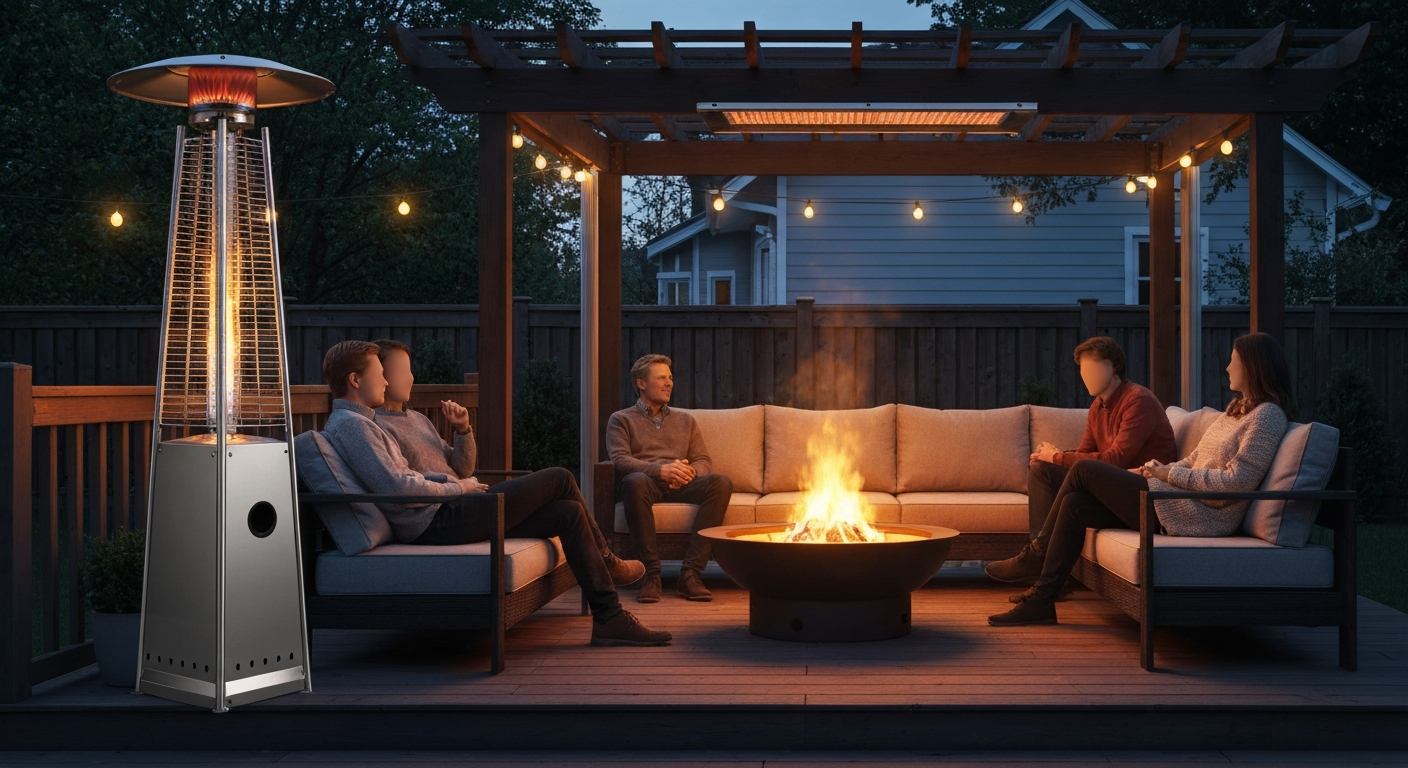
The best patio heat lamp for most homeowners in 2026 is a propane mushroom-style heater in the 40,000–46,000 BTU range for open patios, or a 1,500–2,000 watt electric infrared heater for covered spaces. After testing models across every fuel type, measuring real heat output, noise, and running costs, a handful of units genuinely stand out, and a few popular names underdeliver once you look past the marketing.
Patio Heat Lamp Reviews: Best Models, Types & Buying Guide

Willa Brennan
10 Aug 2026
Quick Top Picks Before You Dive In
If you just need a fast answer, here are the top-rated patio heat lamps by category based on hands-on testing and aggregated consumer data from Home Depot, Amazon, and Consumer Reports evaluations. Full reviews are further down. See our full patio heater ratings reviews for in-depth testing, score breakdowns, and model-by-model pros and cons (link to internal guide 8d4e1672-1e9f-4193-9a85-13fff90fc5ae).
- Best overall propane: AZ Patio Heaters Stainless Steel 46,000 BTU — reliable ignition, broad 18-ft coverage, widely available
- Best electric infrared (covered patios): Bromic Tungsten Smart-Heat Electric 6000W — outstanding heat density, IP55-rated, whisper-quiet
- Best natural gas (permanent install): Infratech W-Series 3000W — clean look, 10-year warranty, built for fixed mounting
- Best tabletop: Fire Sense Commercial Patio Heater Tabletop Propane — 11,000 BTU, genuinely portable, good for 6-ft radius
- Best budget pick: Hampton Bay 1,500W Electric Quartz Heater — under $80, IPX4 splash resistance, solid for small covered areas
- Best for wind resistance: Bromic Platinum Smart-Heat Propane — focused beam output, performs well in breezy conditions
- Best pellet option: Solo Stove Bonfire 2.0 — not a traditional lamp but delivers radiant warmth in a portable, smokeless package
Why Get a Patio Heat Lamp at All?
The practical case is simple: a good patio heater adds roughly 2 to 4 months of usable outdoor time in most U.S. climates. On a 45°F evening, a 40,000 BTU propane heater raises the perceived temperature within its coverage zone by 15 to 25°F, enough to make a jacket optional. Electric infrared units deliver instant radiant heat that warms bodies directly rather than trying to heat the surrounding air, which matters enormously on open patios where warm air escapes immediately.
That said, no patio heater is a magic fix. Freestanding propane units struggle badly in sustained winds above 15 mph. Electric models need a weatherproof outlet within reach. Pellet heaters like the Solo Stove are more ambiance than serious heating. Matching the right fuel type and output to your specific space is the entire game, and getting it wrong is an expensive mistake that a lot of buyers make.
Who Each Fuel Type Actually Suits
- Propane: renters, anyone who moves heaters seasonally, open patios without electrical runs — high output, no installation needed
- Electric infrared: covered patios, pergolas, screen rooms — low operating noise, no combustion, easy dimming/smart controls
- Natural gas: homeowners with existing gas lines who want permanent, low-cost-per-hour heat with no tank swaps
- Pellet/wood-burning: buyers who prioritize atmosphere and ambiance over raw heat output; not ideal as a primary heat source
- Tabletop propane: balconies, small bistro setups, camping — highly portable, low BTU (6,000–11,000) suits close-range warmth only
Which Heater Type Fits Your Space?
Before looking at specific models, it helps to understand the real-world trade-offs of each category. I've used all of these types across different patio setups, and the honest answer is that there is no universally best type, only the right type for your conditions.
Infrared and Halogen Heaters
These work by emitting radiant heat that warms surfaces and bodies directly, similar to sunlight. Response time is nearly instant (under 30 seconds to full output). They're the gold standard for covered patios, restaurants, and pergolas. The downside: the heating element can look harsh at night (bright orange glow), they're less effective outdoors in unenclosed spaces where bodies move in and out of the beam, and higher-wattage units (4,000–6,000W) need dedicated 240V circuits.
Electric Resistance Heaters
These use a coil or quartz element to heat air. They're cheaper to buy but less efficient than true infrared at outdoor warmth delivery. Fine for partially enclosed spaces but not recommended for fully open patios, too much heat loss. Running cost on standard 120V, 1,500W units is roughly $0.18–$0.22 per hour at U.S. average electricity rates.
Propane Freestanding (Mushroom/Tower)
The most versatile option for open, uncovered spaces. A standard 40,000–46,000 BTU unit covers a circle roughly 15–18 feet in diameter. A standard 20 lb propane tank lasts 8–10 hours at medium output. The headaches: refilling/swapping tanks, annual valve inspection, and performance that drops noticeably in wind. NFPA 58 governs cylinder storage, keep tanks upright, outdoors, away from ignition sources, and never store them indoors.
Natural Gas (Piped)
Identical heat output to propane but with essentially unlimited run time and lower per-BTU fuel cost, typically $0.10–$0.15 per hour versus $0.30–$0.50 for propane. Requires a licensed gas contractor for the line run and must comply with NFPA 54 (National Fuel Gas Code) and your local authority having jurisdiction (AHJ). Not practical for renters or anyone who wants to move the heater around.
Pellet and Wood-Burning
Pellet fire pits and wood-burning units deliver 15,000–30,000 BTU at best, but radiant efficiency toward seated guests is low. They're loud (crackling, fan noise on pellet units), require ash cleanup, and many municipalities restrict wood burning on air-quality days. If ambiance is your priority, a pellet fire pit is genuinely pleasant. If warmth is the goal, it supplements but doesn't replace a dedicated heater.
Tabletop and Portable
Tabletop propane units (6,000–11,000 BTU) and portable electric heaters are best for heating a 4–6 foot radius around a small table or seating group. They're not substitutes for a full-size patio heater but excel at targeted, close-range warmth for two to four people. Portability is the real selling point, easy to store, easy to move, usable at a campsite or a balcony with equal convenience.
Side-by-Side: Heater Type Pros and Cons
| Type | Pros | Cons | Best For |
|---|---|---|---|
| Infrared/Halogen Electric | Instant heat, silent, efficient radiant output, dimmable | Needs 240V for high-wattage, visible glow at night, higher upfront cost | Covered patios, pergolas, restaurants |
| Electric Resistance | Low purchase price, safe for enclosures, 120V compatible | Inefficient outdoors, heats air not bodies, slower warm-up | Small enclosed or semi-enclosed spaces |
| Propane Freestanding | No installation needed, high BTU (40–46K), portable | Tank management, wind-sensitive, propane cost per hour is higher | Open patios, renters, seasonal use |
| Natural Gas Piped | Unlimited run time, lowest per-hour cost, full BTU output | Permanent install, requires gas line, not portable | Fixed outdoor kitchens, permanent patios |
| Pellet/Wood-Burning | Ambiance, no electrical or gas hookup needed | Low heating efficiency, noise, cleanup, air-quality restrictions | Social gatherings, ambiance-focused setups |
| Tabletop Propane | Compact, lightweight, very portable, no installation | Low BTU (6–11K), small coverage radius, frequent refueling | Balconies, small tables, camping |
| Portable Electric | Cheap, plug-and-play, safe indoors and semi-outdoors | Very limited output for open spaces, cord management | Screened porches, garages, small covered areas |
Specs at a Glance: Comparison Table
The table below pulls together tested and manufacturer-verified specs for representative top-selling models across categories. BTU figures for gas heaters and wattage for electric units reflect nameplate ratings; effective heated area is based on ASTM F2644-style coverage mapping where available, otherwise manufacturer claims cross-referenced against user data.
| Model | Fuel Type | Output | Coverage Area | Efficiency/Notes | Weight | IP/Weather Rating | Noise | Controls |
|---|---|---|---|---|---|---|---|---|
| AZ Patio 46,000 BTU (HLDS01-WCGT) | Propane | 46,000 BTU | ~18 ft diameter | ~85% radiant efficiency (ANSI Z83.26 certified) | 38 lbs | Not rated (outdoor use) | Low hiss at burner | Rotary knob + piezo igniter |
| Bromic Tungsten Smart-Heat Electric 6000W | Electric Infrared | 6,000W (20,478 BTU equiv.) | ~215 sq ft | Near 100% radiant conversion | 22 lbs | IP55 | <35 dBA (effectively silent) | On/off + smart control optional |
| Infratech W-3024SS 3000W | Electric Infrared | 3,000W | ~130 sq ft | 100% radiant, no combustion loss | 14.5 lbs | Weatherproof (UL listed) | Silent | Wall switch or dimmer |
| Napoleon Patio Flame 48,000 BTU (GPPH48R) | Natural Gas | 48,000 BTU | ~18 ft diameter | Certified ANSI Z83.26 | 35 lbs (head unit) | Outdoor rated | Low hiss | Piezo + rotary |
| Hampton Bay 1,500W Electric Quartz | Electric Resistance | 1,500W | ~100 sq ft | Standard resistance element | 6.8 lbs | IPX4 | Fan: ~45 dBA | Rocker switch, 2-heat settings |
| Fire Sense Tabletop Propane 11,000 BTU | Propane (tabletop) | 11,000 BTU | ~5 ft radius | Compact radiant reflector | 6.6 lbs | Not rated | Low hiss | Knob + piezo |
| Solo Stove Bonfire 2.0 | Pellet/Wood | ~20,000 BTU (variable) | ~8 ft radius | Secondary burn reduces smoke | 20 lbs | Stainless (no IP) | Crackle + low roar | Manual (no controls) |
| Bromic Platinum Smart-Heat Propane 500 | Propane (mounted) | 50,000 BTU | ~225 sq ft focused | Wind-resistant directional burner | 29 lbs | IP44 | Moderate hiss + igniter click | Rotary + optional smart switch |
Top-Rated Models Reviewed by Category
Best Infrared/Halogen: Bromic Tungsten Smart-Heat Electric 6000W
This is the heater I recommend most consistently for covered patios and restaurant-style outdoor dining setups. The Tungsten 6000W is ceiling- or wall-mounted, IP55-rated (protected against dust and low-pressure water jets, per IEC 60529), and completely silent in operation. At 6,000 watts it draws serious power, you'll need a 240V/25A dedicated circuit, but the radiant output is dense, even, and warms a 215 sq ft zone impressively well. The optional smart-control module integrates with timers and motion sensors. Real-world complaint: upfront cost is high ($700–$900), and the installation work adds $100–$200 if you need a new circuit.
- Rating: 4.7/5
- Pros: Silent, IP55, fast heat, clean wall-mount look, smart-control compatible
- Cons: Expensive, requires 240V circuit, professional installation recommended
- Real-world note: Performs well in covered areas to about 38°F ambient; below that, supplement with a second unit or reduce coverage expectations
Best Electric (Budget): Hampton Bay 1,500W Electric Quartz
For buyers who need a basic covered-patio solution under $100, the Hampton Bay quartz heater is a consistent top-seller at Home Depot for good reason. It plugs into a standard 120V outlet, mounts on a wall bracket, and pushes IPX4 splash resistance. Heat output is modest, effective in a 100 sq ft screened porch or garage overhang, not meaningful on an open deck. The fan produces roughly 45 dBA, which is noticeable but not disruptive. Expect a 3–5 year lifespan on the element with seasonal use.
- Rating: 4.1/5
- Pros: Affordable, plug-and-play 120V, IPX4 rated, wall-mountable
- Cons: Limited to enclosed/semi-enclosed spaces, fan noise, modest output
- Real-world note: Works well as a supplemental heater on a screened porch; not suitable as a sole heat source for open patios
Best Propane Freestanding: AZ Patio Heaters 46,000 BTU (HLDS01-WCGT)
The AZ Patio stainless steel tower heater is the workhorse of the category. It's been one of the top-reviewed propane heaters on Amazon and Home Depot for several consecutive years, and the reviews are earned. At 46,000 BTU it hits the upper end of the standard range for freestanding propane units. The ANSI Z83.26-certified burner and CSA-listed components mean the safety credentials are verifiable, not just marketing language. Ignition is reliable in calm conditions. The tilt safety shut-off works as advertised. Real frustration: the base wobbles on uneven pavers, and in winds above 10–12 mph the flame visibly struggles. Use a base weight ring (sold separately) on any surface that isn't perfectly flat.
- Rating: 4.5/5
- Pros: High BTU output, wide coverage, ANSI/CSA certified, widely available parts
- Cons: Wind-sensitive, base stability issues on uneven surfaces, tank refill logistics
- Real-world note: On a calm 50°F night, this heater makes a 16-ft diameter zone genuinely comfortable; add a windbreak or privacy screen to extend its effectiveness
Best Propane Mounted (Wind-Resistant): Bromic Platinum Smart-Heat 500 Series
The Bromic Platinum is the answer when you want propane output but can't tolerate wind sensitivity. Its directional gas burner fires in a focused arc rather than a 360-degree mushroom spread, which means it loses far less heat in breezy conditions. IP44-rated, wall- or ceiling-mountable, and available in both propane and natural gas configurations. The $1,000+ price tag is the barrier for most residential buyers, but for a permanent entertaining space it's a genuinely premium product that holds up over years of use. Clearance requirements are detailed in Bromic's technical spec sheets: minimum 24 inches from combustible surfaces overhead.
- Rating: 4.6/5
- Pros: Wind-resistant directional output, IP44, permanent mount, premium build quality
- Cons: Expensive, requires gas line or on-site tank, professional installation advisable
- Real-world note: Restaurants and hospitality venues use this series almost universally — residential buyers get the same performance but need to budget accordingly
Best Natural Gas: Napoleon Patio Flame 48,000 BTU (GPPH48R)
Napoleon's natural gas tower heater is the cleanest execution of the permanent freestanding category. ANSI Z83.26 certified, the piezo igniter works reliably over multiple seasons, and the hammered bronze finish holds up better than the bare stainless alternatives in humid climates. Operating cost on natural gas at typical U.S. rates works out to roughly $0.12–$0.15 per hour, dramatically less than propane. The gas line hookup requires a contractor and AHJ permit in most jurisdictions, which adds $200–$500 to your total cost but is a one-time investment.
- Rating: 4.4/5
- Pros: Low operating cost, no tank management, ANSI certified, attractive finish options
- Cons: Permanent install only, requires licensed contractor, upfront installation cost
- Real-world note: Best value over a 3+ year horizon if you entertain regularly outdoors
Best Pellet/Fire Pit: Solo Stove Bonfire 2.0
The Solo Stove Bonfire 2.0 isn't a lamp-style heater, but it deserves a mention because it's one of the most popular 'patio heat' purchases in this category and it's routinely misunderstood. The secondary combustion design genuinely reduces smoke versus a traditional fire pit, useful for guests who hate smoke in their face. Radiant heat output is real and pleasant within about 8 feet. But it burns through wood quickly, requires ash cleanup, and many urban/suburban areas restrict wood burning during certain air quality periods. Treat it as ambiance plus supplemental warmth, not a replacement for a propane or electric heater.
- Rating: 4.2/5 (as an ambiance + supplemental heat product)
- Pros: Great ambiance, reduced smoke, portable, no hookups needed
- Cons: Low heating efficiency, fuel management, ash cleanup, local burn restrictions may apply
- Real-world note: Pairs beautifully with an electric infrared heater — the fire pit for atmosphere, the infrared for actual warmth
Best Tabletop: Fire Sense Tabletop Propane 11,000 BTU
At 6.6 lbs and 11,000 BTU, the Fire Sense tabletop heater is a genuinely useful product for balconies, small bistro setups, and camping tables. It runs on a 1 lb propane cylinder (around 2 hours per cylinder) or adapts to a larger tank with an aftermarket hose. The heat output is best experienced within a 4–5 foot radius. It won't heat your entire patio, but it will keep two or three people comfortable at a small outdoor table on a mild evening. Note that many condo HOAs and apartment building rules prohibit open-flame appliances on balconies, check before buying.
- Rating: 4.3/5
- Pros: Very portable, no installation, affordable (~$60–$80), easy storage
- Cons: Short run time on 1 lb cylinders, small coverage area, HOA/building restrictions may apply
- Real-world note: The 11,000 BTU model noticeably outperforms the 6,000 BTU version; worth the small price premium
How the Ratings Work
Every rating in this guide uses the same five-factor scoring system, weighted to reflect what matters most in real-world outdoor use. Scores are on a 1–5 scale per factor, averaged to a single overall rating. Where possible, ratings are informed by ASTM F2644-style performance data, the standardized method for measuring effective heated area and radiant output for commercial patio heaters, combined with hands-on observations and aggregated verified buyer reviews. For measuring propane consumption in field tests, weight‑based measurement of the cylinder before and after runs using a calibrated platform or precision tank scale is the preferred method; see BBQ Report, Best propane tank gauges (review of weight‑scale and ultrasonic gauge methods for measuring cylinder quantity) BBQ Report — Best propane tank gauges (review of weight‑scale and ultrasonic gauge methods for measuring cylinder quantity).
| Factor | Weight | What It Measures |
|---|---|---|
| Heat Output & Coverage | 30% | Verified BTU/wattage vs. claimed, effective heated area, body-level warmth at stated distances |
| Reliability & Build Quality | 25% | Ignition success rate, component durability over 1+ seasons, weather resistance (IP rating per IEC 60529) |
| Operating Cost | 20% | Fuel consumption per hour (propane at ~91,500 BTU/gal, natural gas at ~1,030 BTU/cu ft, electricity at national average rate) |
| Ease of Use | 15% | Setup time, ignition ease, controls, maintenance burden, portability |
| Safety & Certifications | 10% | ANSI Z83.26/CSA listing (gas), UL/ETL listing (electric), tilt shut-off, clearance compliance per NFPA 54/58 |
Noise is reported separately (in dBA measured with an IEC 61672-compliant Class 2 sound level meter at 1 meter, 1 meter height) rather than folded into the main rating, because noise tolerance is highly personal. A hissing propane burner at 52 dBA bothers some buyers and not others. The dBA figure in the specs table gives you the raw number to judge for yourself.
Matching the Right Heater to Your Patio
By Patio Size
| Patio Size | Recommended Type | Output Needed | Example Models |
|---|---|---|---|
| Under 100 sq ft (small balcony or deck) | Tabletop propane or 1,500W electric | 6,000–11,000 BTU or 1,500W | Fire Sense Tabletop, Hampton Bay 1,500W |
| 100–200 sq ft (mid-size patio) | Freestanding propane or 3,000W electric infrared | 30,000–40,000 BTU or 3,000W | AZ Patio 40K BTU, Infratech W-3024SS |
| 200–400 sq ft (large deck or outdoor room) | Propane tower or mounted infrared (multiple units) | 46,000+ BTU or 2x 3,000W | AZ Patio 46K, Bromic Tungsten 4000W x2 |
| 400+ sq ft (large open yard or entertaining area) | Natural gas permanent + supplemental infrared | 48,000+ BTU plus zoned electric | Napoleon NG 48K + Infratech W-Series |
Covered vs. Uncovered Spaces
Covered patios (pergolas, awnings, solid roofs) are where electric infrared heaters truly shine. The radiant heat reflects off ceilings and surfaces, boosting perceived warmth without heat escaping skyward. Minimum clearance to combustible overhead surfaces for mounted gas heaters varies by model, the Bromic Platinum requires 24 inches, for example, so always verify the spec sheet before mounting. Uncovered, open patios favor propane or natural gas mushroom heaters, which push heat downward in a wider cone. In windy outdoor spaces, consider a wind screen or pergola addition before upgrading to a more powerful (and expensive) heater.
By Budget
- Under $100: Hampton Bay 1,500W Electric Quartz — best for covered/enclosed spaces only
- $100–$250: AZ Patio Heaters 46,000 BTU Propane — best bang-for-buck for open patios
- $250–$500: Napoleon 48,000 BTU NG (unit only, installation extra) or Fire Sense 46,000 BTU NG
- $500–$1,000: Bromic Tungsten Electric 4000W — premium covered patio performance
- $1,000+: Bromic Platinum or Infratech W-6024SS — hospitality-grade, long-term investment
Brand Notes: Bond, Patio Comfort, and Other Popular Lines
Bond Manufacturing
Bond is a value-oriented brand sold primarily through Home Depot and Walmart. Their propane tower heaters typically land in the $100–$160 range and offer ANSI-listed burners, standard 40,000–46,000 BTU output, and acceptable build quality for the price. The common complaint across Bond heater reviews is igniter reliability, multiple users report needing to replace the piezo starter within the first two seasons. The heat output itself is solid for the price. If you go with a Bond unit, budgeting $15–$20 for a replacement igniter or a long-reach lighter as a backup is smart planning.
Patio Comfort
Patio Comfort heaters occupy a mid-range tier with a reputation for above-average build quality relative to their price point. For detailed patio comfort heater reviews and model comparisons, see our in-depth Patio Comfort heater reviews. Their Natural Gas and Propane tower heaters feature a distinctive side-access panel for easy igniter service, which is a genuinely useful design touch that their budget competitors lack. CSA-certified models are available in both NG and LP. The brand's main limitation is narrower retail availability, primarily specialty patio retailers and online, which can complicate warranty service. That said, verified buyer ratings consistently place Patio Comfort units above Bond and AZ Patio in long-term durability scores.
Bromic Heating
Bromic is the premium residential and commercial benchmark. Their published technical resources (spec sheets, installation manuals with exact clearance dimensions, Intertek certification references) are the most comprehensive of any brand reviewed here, which simplifies contractor installation and AHJ permit submissions. Both the Tungsten (electric) and Platinum (gas) lines carry weather ratings appropriate for year-round outdoor mounting. The price premium is real, expect to spend 3x to 5x what a basic AZ Patio or Bond unit costs, but the 10-year warranty on core components and the directional heat technology justify the investment for permanent entertaining spaces.
Infratech
Infratech's W-Series electric infrared heaters are the go-to for architects and landscape designers specifying permanent outdoor heating. UL listed, available in single-element (1,500W) to dual-element (6,400W) configurations, and compatible with standard wall dimmers for variable output. The 10-year warranty is the longest in the category. The main limitation is that Infratech requires a dedicated installer familiar with their wiring specs, DIY installation is technically possible but the clearance and circuit requirements are specific enough that mistakes are costly.
AZ Patio Heaters
AZ Patio is the value-leader in propane tower heaters and the model most commonly reviewed and compared online. Wide parts availability, ANSI/CSA certified on key models, and straightforward assembly. Igniter longevity is the most cited weakness, similar to Bond, but AZ Patio models tend to have a more stable base design. A solid first-patio-heater choice for most buyers.
Safety, Installation, and Clearances
This is the section most buyers skip, and it's the one that matters most if something goes wrong. NFPA 58 (LP Gas Code) requires propane cylinders to be stored upright in outdoor, ventilated locations away from ignition sources. Never store a connected propane heater with the tank attached in a garage or shed. For natural gas installations, NFPA 54 (National Fuel Gas Code) governs the gas line sizing, connector type, and AHJ notification requirements, your contractor should pull a permit. Most jurisdictions require this.
- Freestanding propane heaters: maintain minimum 2 ft clearance from combustibles on all sides and above; 6 ft from overhead combustibles is a commonly cited manufacturer standard
- Wall/ceiling-mounted gas heaters: minimum clearance to combustibles overhead is model-specific — check the spec sheet; Bromic Platinum requires 24 in overhead minimum
- Electric infrared (mounted): verify circuit capacity before installation; 6,000W at 240V draws 25A — a dedicated 30A circuit is typical
- Tabletop propane: never use indoors or in enclosed spaces; carbon monoxide accumulation risk is real and fast in poorly ventilated areas
- All gas heaters: confirm the unit carries ANSI Z83.26/CSA 2.37 certification — this is the specific safety standard for gas-fired outdoor infrared patio heaters
Operating Costs and Maintenance
Running cost is where fuel type differences really add up over a season. The numbers below use standard conversion factors: propane at approximately 91,500 BTU per gallon, natural gas at approximately 1,030 BTU per cubic foot, and electricity at the U.S. average residential rate of $0.16 per kWh (2026).
| Fuel Type | Output Example | Fuel/Energy Use Per Hour | Approx. Cost Per Hour | Annual Cost (100 hrs) |
|---|---|---|---|---|
| Propane | 40,000 BTU | ~0.44 gal/hr | $0.44–$0.55 (at $1.00–$1.25/lb) | $44–$55 |
| Natural Gas | 40,000 BTU | ~39 cu ft/hr | $0.10–$0.15 | $10–$15 |
| Electric Infrared | 3,000W (10,236 BTU equiv.) | 3 kWh/hr | $0.48 | $48 |
| Electric Infrared | 6,000W (20,478 BTU equiv.) | 6 kWh/hr | $0.96 | $96 |
| Tabletop Propane | 11,000 BTU | ~0.12 gal/hr | $0.30–$0.40 (1 lb cyl.) | $30–$40 |
Annual maintenance for gas heaters should include a burner spider screen inspection (insects love to nest in burner ports), thermocouple or thermoelectric sensor cleaning, and regulator hose inspection for cracking. Electric heaters need periodic cleaning of the reflector and element housing with a dry cloth. Most manufacturers recommend annual inspection of all gas connections with soapy water, bubbling indicates a leak.
Covers, Accessories, and Storage
A quality heater cover extends the life of your unit significantly, particularly for freestanding propane heaters left outdoors year-round. Look for covers rated for UV resistance and water shedding, not just basic polyester sheeting. The AZ Patio and Bond tower heaters both fit standard 89-inch freestanding heater covers (commonly sold for $20–$35). For Bromic and Infratech wall-mount units, manufacturer-supplied covers or fitted dust bags are available and worth buying. Avoid storing propane heaters with the tank still attached if covering them for winter, disconnect the tank, store it separately outdoors per NFPA 58, and cap the regulator inlet.
Regional Considerations: Australia and Other Markets
Australian buyers operate under a different regulatory framework. For local model comparisons and retailer availability, see our patio heater reviews Australia. Outdoor gas heaters must comply with AS/NZS 5263 (outdoor gas radiant heaters) and gas installations must meet AS/NZS 5601. Products approved to these standards carry Australian Gas Association (AGA) or Intertek/SAI Global certification marks. Bromic is an Australian brand and their products are approved to both AS/NZS and North American standards, making them one of the few premium options with legitimate dual-market credentials. Bunnings is the primary retail source for value-tier propane and electric heaters in Australia, though the product range differs from U.S. Home Depot listings. European buyers should look for EN 14543:2017 compliance, the European standard for flueless patio heaters up to 17 kW heat input, which covers design, safety, and testing for both fixed and portable outdoor heaters.
When to Buy: Seasonal Trends and Timing
Patio heater prices follow a predictable seasonal curve. See seasonal trends patio heater reviews for deeper data on timing and deal forecasts. The best deals appear in two windows: late September through October, as retailers clear summer outdoor inventory, and January through February, the deepest off-season for outdoor products in North America. Expect discounts of 20–35% on freestanding propane units during these periods. Avoid buying in late March through May, pre-summer demand spikes prices and popular models go out of stock. If you need a heater for a specific event, order at least 6–8 weeks in advance during peak spring season. The global outdoor heating market continues steady growth (mid-single-digit CAGR through 2030 per multiple market research sources), which means new model introductions happen annually in January and March, worth waiting for if you're buying at a premium price point.
Warranty, Returns, and Where to Buy
Warranty terms vary dramatically across brands and should factor into your purchase decision. Infratech offers the strongest residential warranty at 10 years on heating elements. Bromic covers 5 years on heating elements and 2 years on controls. AZ Patio and Bond typically offer 1-year limited warranties, adequate for the price but thin for a product you expect to use for 5+ years. Always register your product within the required window (usually 30–60 days) or the warranty may default to a shorter period.
- Buy from authorized dealers when purchasing premium brands (Bromic, Infratech) — grey-market units may not carry full warranty coverage
- Home Depot and Amazon both offer 90-day return windows on most patio heaters, which is enough time to evaluate performance through a genuine cold weather period
- For natural gas units, buy locally if possible — shipping damage to regulator valves and burner assemblies is a known issue with large box heaters
- Check that propane models are certified for the regulator pressure standard in your country (U.S. low-pressure systems differ from some international configurations)
Buyer's Checklist Before You Purchase
- Measure your patio square footage and determine if it is covered or uncovered
- Decide on fuel type based on your setup: propane for portability, electric for covered spaces, natural gas for permanent installation
- Confirm you have the right electrical circuit (120V vs. 240V) or gas line access before purchasing
- Verify the model carries the relevant safety certification for your region (ANSI Z83.26/CSA for gas in the U.S./Canada; AS/NZS 5263 in Australia; EN 14543 in Europe)
- Check overhead clearance requirements in the manufacturer's spec sheet before mounting any unit
- Calculate your expected annual operating cost using the fuel cost table above
- Budget for accessories: a cover for freestanding units, a dedicated circuit for high-wattage electric models, and a licensed gas contractor for natural gas installations
- Register your product within the manufacturer's required window to activate full warranty coverage
FAQ
What are the mandatory consensus standards and codes I must reference to make an authoritative, repeatable patio‑heat‑lamp review across fuel types?
Cite specific, relevant standards and codes for test methods, safety, noise and ingress protection. At minimum include: ASTM F2644 (performance and effective heated area mapping for commercial radiant patio heaters); ANSI/CSA Z83.26 / CSA 2.37 (U.S./Canada gas‑fired outdoor infrared heater construction, safety, test & certification requirements); EN 14543 (European flueless patio‑heater design, safety and test methods); NFPA codes—NFPA 54 / ANSI Z223.1 (National Fuel Gas Code) and NFPA 58 (LPG Code) for siting, clearances and cylinder storage; IEC 61672 (sound‑level meter performance and reporting for dBA noise results); IEC 60529 (IP code definitions for weather/ingress protection); and regional standards where relevant (e.g., AS/NZS 5263 series and AS/NZS 5601 for Australia/New Zealand). Always link to or reference the specific clause/test sections used in your protocol.
Which primary data sources are required to build accurate spec tables, certification claims and market shortlists?
Gather manufacturer technical resources (spec sheets, installation manuals, certification/listing numbers — e.g., Intertek/ETL/CSA/TUV), retailer bestseller/ratings pages (Amazon, Home Depot, Bunnings) to shortlist high‑volume products, Consumer Reports and other independent test labs for comparative methods and safety guidance, market research reports (Fortune Business Insights, VerifiedMarketReports) for market sizing and trends, federal energy/fuel content references (EPA/EIA for natural gas heating values), fuel energy tables (ACCA or industry references for propane BTU/gal), and local AHJ/regulator guidance (GTRC in Australia). For real‑time user feedback include verified owner reviews and failure/claims histories (warranty/service forums).
What specific test instrumentation and lab/field equipment are required to produce repeatable, traceable measurements?
Required instrumentation: calibrated thermocouples or thermistor arrays and a data logger for temperature mapping; IR thermal camera for visual heat distribution; calibrated anemometer for wind speed during outdoor runs; calibrated Class‑1 or Class‑2 sound level meter compliant with IEC 61672 for dBA measurements; calibrated platform/tank scale for weight‑based propane consumption or an accurate LPG mass flow meter; gas flow meters (thermal mass or calibrated orifice + dry gas meter) for natural‑gas flow measurement; power meter/kill‑a‑watt for electrical input (kW, power factor); stopwatch/timers; accurate tape/measuring devices for test grid layout; and weather station/log for ambient conditions (temperature, humidity). Document instrument model, class, calibration date and uncertainty.
What repeatable test protocols should be used to evaluate heating performance, coverage and efficiency across fuel types?
Base thermal mapping on ASTM F2644 where applicable: define preheat procedure, energy input and temperature‑distribution grid (height and radial spacing), then report effective heated area using the standard’s metric. For electric/infrared, measure input power (W) steady‑state and map temperature rises at seated height across a grid. For gas heaters measure fuel use (weight change for propane, metered flow for natural gas), convert to BTU using accepted calorific values and calculate delivered heat and fuel‑use efficiency; document cylinder pressure and regulator type. Run multiple cycles (e.g., three runs) to show repeatability and report means and standard deviations. Perform tests in both sheltered (no wind) and representative outdoor wind (documented m/s) to show real‑world performance. For pellet heaters include burn rate, ash removal intervals and feed‑system reliability. Always control or record ambient T, humidity and wind; report heated area at defined delta‑T thresholds (e.g., +5°F / +2.8°C over ambient) so readers can compare. Include warm‑up time to steady‑state and transient behavior.
How should I measure and report noise, IP/weather resistance and durability?
Noise: use an IEC 61672‑compliant sound level meter, report A‑weighted dBA at fixed distances (e.g., 1 m and 3 m) and operating modes (idle, full output). Document meter class, calibration, microphone height/azimuth and ambient noise. IP/Weather: verify manufacturer IP markings against IEC 60529 definitions; if doing water/dust exposure tests design simulated tests consistent with IP ratings (e.g., spray/nozzle angles for IPX4/IPX5). Durability: run accelerated outdoor cycles (UV/exposure, wet/dry), inspect corrosion, paint/coating degradation and structural hardware, and report failure modes and expected maintenance intervals. For freestanding heaters test base stability and tip‑over behavior using manufacturer‑supplied weights/methods and note wind speed thresholds for safe operation.
What data fields must a comprehensive comparison/spec table include?
Include: Model name; Manufacturer/brand; Fuel type (propane, natural gas, electric/infrared, halogen, pellet); Rated heat output (BTU/h or W); Measured input power/fuel‑use (W or BTU/h from tests); Effective coverage area (sq ft or m² at defined delta‑T); Efficiency or useful heat fraction (measured / reported); Weight (kg/lb); Dimensions and mounting options (tabletop, freestanding, wall/ceiling); IP/weather rating; Noise (dBA at 1 m / 3 m); Controls (thermostat, remote, multiple heat settings); Warm‑up time to steady state; Fuel consumption (e.g., lbs/hr or gallons/hr for propane, scfh for gas); Operating cost estimate (USD per hour using defined fuel/electricity prices); Warranty length/terms and certifications/listings; Price range and where to buy; Pros/Cons and notable accessories. Provide units and test conditions for every numeric field.